Paco, ein zu gro geratener Havaneser, entdeckt die Welt Das etwas andere Hundebuch - f r Kinder die sich einen Hund als Spielgef hrten w nschen, f r deren Eltern um sie zum Nachdenken anzuregen und f r Junggebliebene, die einfach mal Abschalten m chten. Ein Buch, aus der Sicht eines kleinen Hundes betrachtet - der so viel gibt an Liebe, Treue und Vertrauen ... und in dessen Blick geschrieben steht: Du allein bist meine ganze Welt - Du bist alles f r mich Geschichten von Liebe und Vertrauen - zum Lachen komisch und zum Weinen sch n
Paco, ein zu gro geratener Havaneser, entdeckt die Welt Das etwas andere Hundebuch - f r Kinder die sich einen Hund als Spielgef hrten w nschen, f r deren Eltern um sie zum Nachdenken anzuregen und f r Junggebliebene, die einfach mal Abschalten m chten. Ein Buch, aus der Sicht eines kleinen Hundes betrachtet - der so viel gibt an Liebe, Treue und Vertrauen ... und in dessen Blick geschrieben steht: Du allein bist meine ganze Welt - Du bist alles f r mich Geschichten von Liebe und Vertrauen - zum Lachen komisch und zum Weinen sch n
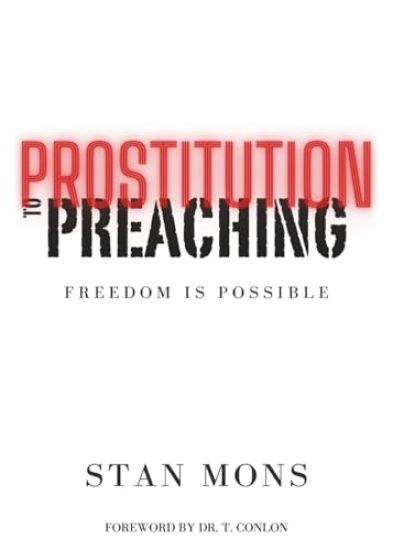
Stan was a young man searching for love and significance, but when he gave his soul to Satan in exchange for making him rich and successful, he could not know the depths of degradation and darkness that would follow. A successful young businessman from a Christian home in Holland, Stan led a double life, going deeper into his sinful lifestyle, drinking and frequenting prostitutes. The control of the dark spirits over his life led him deeper into bondage until he began living as a male prostitute himself. But then God spoke directly to him saying, If you do not come back now, you will never come back. Stan surrendered and was radically saved by Christ's sacrifice on the cross. A new man, he was filled with the Holy Spirit and began telling everyone what God had done in his life. Read the vulnerable, gripping, and unforgettable testimony of a man who went from darkness to light and how God led him step-by-step into service for Christ. This book is more than a mere collection of stories. It is a powerful testimony that deserves to be read and shared with others. It delves into the depths of the human experience, inviting us to embrace our vulnerabilities and discover the transformative power of the enduring love of Christ. -Dr. Teresa Conlon, president, Summit International School of Ministry, the Bible School of Times Square Church, New York City
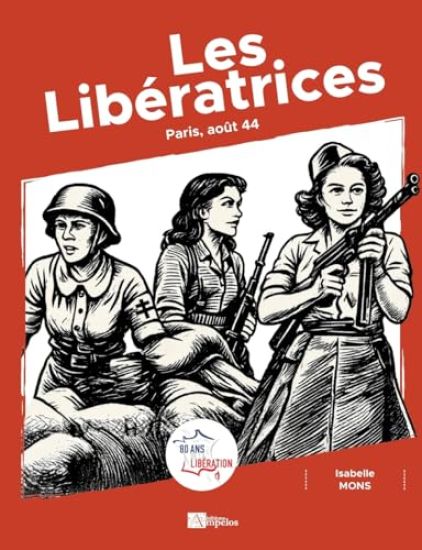
Rol-Tanguy: Les femmes ? Dites bien que sans elles, la moiti de notre travail aurait t impossible . La moiti ? Bien s r, Lucie Aubrac, Berty Albrecht, Genevi ve de Gaulle, Germaine Tillion, Marie-Claude Vaillant-Couturier restent dans nos m moires. Mais qui conna t Brigitte Friang qui, apr s avoir contribu la lib ration de Pierre Brossolette, participa la lib ration de Paris ? Ou bien Edith Thomas, l' crivaine qui rassemblait les po tes de la R sistance dans son appartement de la rue Pierre-Nicole, Catherine Dior (la soeur de Christian) qui resta silencieuse sous la torture, Simone Segouin engag e dans la lutte arm e, Odette Pilpoul, haut fonctionnaire, Charlotte Nadel, l'infatigable typographe de D fense de la France avec H l ne Viannay, Claire Morandat qui s'empara de Matignon, Janine Ni pce qui sur sa bicyclette assurait les liaisons ? Toutes ces femmes et bien d'autres encore anonymes ont contribu la Lib ration de Paris. Dans ce r cit, vous en rencontrerez plus d'une centaine avoir organis la R sistance puis la Lib ration dans une capitale opprim e par l'Occupation. Elles ont eu le courage de parcourir Paris pour livrer armes et messages et leur inventivit n'avait pas de limites. Certaines y ont laiss leur vie. Il reste de toutes ces femmes qui, elles aussi, ont lib r Paris, souvent un seul pr nom, rarement un visage, mais Paris leur doit sa Lib ration.
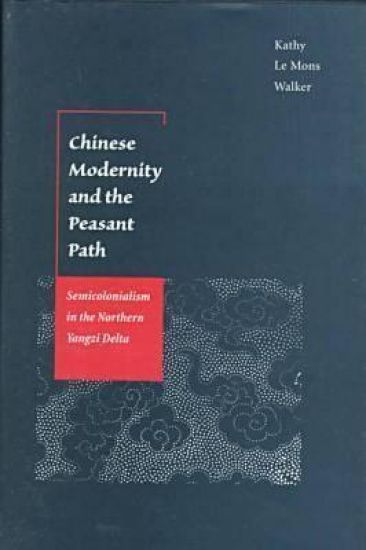
This ambitious work traces a social history of semicolonialism in late-nineteenth- and early-twentieth-century China. It takes as its central concern the intertwining of two antagonistic forces: elite constructions of modernity shaped globally, and an alternate line of peasant resistance and development. Nantong county and the northern portion of the commercially advanced Yangzi Delta form its focal points. Lying in the hinterland of and connected in myriad ways with the treaty port of Shanghai, which in the late nineteenth century became the center of imperialist activity in China, the northern delta is an ideal locale for examining how the acquisition, transmission, and contestation of power may have changed during the extended moment of semicolonial encounter. The author's specific project is to unravel the multiple strands of the semicolonial process and thereby the dominant and alternative histories it embodied. In emphasizing semicolonialism as a structural context shaping events, the book opens up a pivotal but silent area in the history of modern China. In confronting the development of capitalism as a historical phenomenon and suggesting that its consequences for land and labor on a global scale need greater theoretical and historical scrutiny, the book forces a new understanding of China's modernity. The book is in two parts. The first delineates key long-term dynamics in the political, economic, and social history of the area from the late Ming dynasty to the Opium Wars. The second part begins with an examination of the rise of modernist urban power in the context of accelerating growth in the textile and cotton trades, focusing on such topics as economic restructuring under Shanghai's impetus, new forms of economic and political organization, and contention as well as cooperation within the urban elite. Turning to the countryside, the book then examines the regearing of the rural economy to the needs of urban capital, local and global; outlines the emergence of modern landlordism and other rural "capitalisms"; analyzes class formation in the peasantry associated with changes in labor organization, tenurial arrangements, and the gendered division of labor; and traces the coalescence of a distinctive political discourse through which peasants contested certain development schemes and advanced alternative conceptions of community and nation.
Jean-Christian de Mons was born 1941 in Breslau now Wroclaw former Germany. After the escape from the Russians he spent his early period in Lower Saxony/West Germany. The military service at the Air Force followed the attendance of the Hotel Academy and then the practical formation in the hotel business. He joined the merchant navy working on cruise ships followed by receptionist jobs in several renowned European hotels before being called to Mocambique/Portuguese S/E Africa by his granduncle to become a citrus farmer. The agitated situation that ended in the civil war intruduced him to return to Europe. For over three decades he served as Chiefsteward for Lufthansa German Airlines. He invested much time to learn some additional exotic languages besides English and French, completed a management course and learned flying. As councellor he joined the production of two documentary movies in China. With his South Korean wife he is living now near Weilburg/Lahn in Germany.
Mit seinem 5.Buch bertrifft Jean-Christian de Mons seine bisherigen Publikationen. Er l sst die Leser teilhaben an seinen Erfahrungen in exotischen L ndern und seinen Kontakten mit bemerkenswerten Pers nlichkeiten. Au erdem spricht er Probleme an, unter denen unsere wundersch ne Welt durch Gleichg ltigkeit und absichtlicher Missachtung leidet. Ein Buch, welches nicht nur zum Denken anregt, sondern auch immenses Vergn gen bereitet.
- Uh Il Drago Le due bambine, che s'erano messe a giocare presso il muricciolo del ponticello dove la zia le aveva appostate per chiedere l'elemosina ai passanti, alla vista del vecchio che arrivava a cavallo all'asino, s'erano subito rimesse a sedere, la maggiore sul muricciolo, la minore per terra; e ripetevano insieme sottovoce: - Uh Il Drago Il Drago Don Paolo Drago - drago di nome e di fatto, diceva la gente - arrivato davanti a loro, si era fermato, trattenendo l'asino con una leggera tirata della cavezza.- Che fate qui? - le sgrid ; - tornate a casa, e dite a quella strega di vostra zia: Don Paolo non vuole che domandiamo l'elemosina Tornate a casa.E vedendo che le bambine non si movevano, fece una specie di grugnito minaccioso che le impaur .Infatti quella mattina finsero d'andare via zitte zitte, e allo svolto dello stradone si fermarono, aspettando che Don Paolo si fosse allontanato; poi, saltellanti, tornarono al loro posto, la maggiore sul muricciolo, la minore per terra: questa spettinata, scalza, con la camicia a brandelli; l'altra, scalza anche lei, ma un po' pi ravviata, col fazzoletto azzurro di cotone, a palline bianche, avvolto attorno alla testa.Il Drago, come ordinariamente lo chiamavano, abitava di faccia a loro; e la sera, al ritorno dalla campagna, trovatele davanti all'uscio di casa, domand alla maggiore, col tono burbero che gli era abituale: - Dov' quella strega di tua zia? ...