Kirjojen hintavertailu. Mukana 11 699 587 kirjaa ja 12 kauppaa.

Kirjahaku

Etsi kirjoja tekijän nimen, kirjan nimen tai ISBN:n perusteella.

1000 tulosta hakusanalla Moore Stephanie Perry

Old Moore's Almanac 2025

Old Moore's Almanac 2025

Francis Moore

W FOULSHAM CO LTD
2024
nidottu
In 2025, Old Moore's Almanack will be 329 years old and deserves its world record-beating inclusion in the Guinness Book of Records. With such accurate world predictions – the Arab Revolutions and new terror attacks, the 2007/8 banking collapse, and predictions of the comparatively strong progress of UK through the years – Old Moore proves he is the No. 1 Seer. The best of British Astrology plots your key dates through each month of your year ahead. Use it to plan ahead to maximise your opportunities. Accurate, fascinating and appropriate, Old Moore plots you a better year ahead. PLUS – UK events, gardening times, horse-racing , fishing times, UK weather, lighting-up times, UK tides times, plus much, much more. Old Moore’s Almanack 2025 features: • your personal 2025 horoscopes • celebrity astro-profiles • accurate predictions of UK and world affairs • Thunderball and Health Lottery astro-guides • winning periods for jockeys and trainers • best dates for planting by the moon and fishing • lighting-up and high and low water times

Old Moore's Almanac 2026

Old Moore's Almanac 2026

Francis Moore

W FOULSHAM CO LTD
2025
nidottu
In 2026, Old Moore's Almanack will be 330 years old and deserves its world record-beating inclusion in the Guinness Book of Records. With such accurate world predictions – the Arab Revolutions and new terror attacks, the 2007/8 banking collapse, and predictions of the comparatively strong progress of UK through the years – Old Moore proves he is the No. 1 Seer.The best of British Astrology plots your key dates through each month of your year ahead. Use it to plan ahead to maximise your opportunities. Accurate, fascinating and appropriate, Old Moore plots you a better year ahead. PLUS – UK events, gardening times, horse-racing , fishing times, UK weather, lighting-up times, UK tides times, plus much, much more. Old Moore’s Almanack 2025 features:· your personal 2025 horoscopes· celebrity astro-profiles· accurate predictions of UK and world affairs· Thunderball and Health Lottery astro-guides· winning periods for jockeys and trainers· best dates for planting by the moon and fishing· lighting-up and high and low water times
Duke Moore on Zen and Meditation

Duke Moore on Zen and Meditation

Raymond Duke Moore

iUniverse
2005
pokkari
Now back in print, these two classics by Raymond 'Duke" Moore explore the power of Zen and the meditation in the Martial Arts. "Fighting Spirit of Zen" is Duke's 1974 treatise on how the spirit of Zen relates to the martial arts, and life generally. First published in 1980, "Holistic Meditation" tells how this powerful technique can help you succeed in your goals. * Jerry Kunzman: 'Duke was one of a kind and, like the other 'greats of yesteryear', can never be replaced. But his words and teachings can live forever in his writings." * Rick Alemany: 'We were all fortunate to have known Duke. He was way ahead of his time and it was a great loss to the Martial Arts world when he passed." * James Moses: 'This text teaches meditation as a skill that can be learned, taught, practiced, and mastered." * Ferol Arce: 'Duke always had a twinkle in his eyes, and always made you feel as though you were on the right track with what ever you were trying to accomplish."
The Moore Family

The Moore Family

Garry Moore

Silverbird Publishing
2024
pokkari
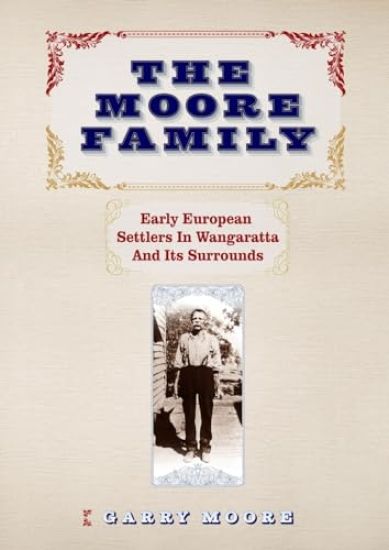
John Moore and his wife, Margaret Moore (n e Considine), were early European pioneers who settled in around 1843 in the North East of what was then known as the Port Phillip District of the Colony of New South Wales and is now the State of Victoria. Like the great majority of their fellow settlers, neither John nor Margaret was born in Australia.John Moore was born in Woodchurch, Kent in 1816. He emigrated from England to New South Wales in 1838 when 22 years of age. In contrast, Margaret Considine was born at Sixmilebridge, County Clare in about 1818. She first arrived from Ireland in New South Wales in 1836 aged 18 years old.Both John and Margaret came from poor rural stock. The prospect of a better life in Australia was no doubt the prime motivation for each to independently migrate across the world to New South Wales.
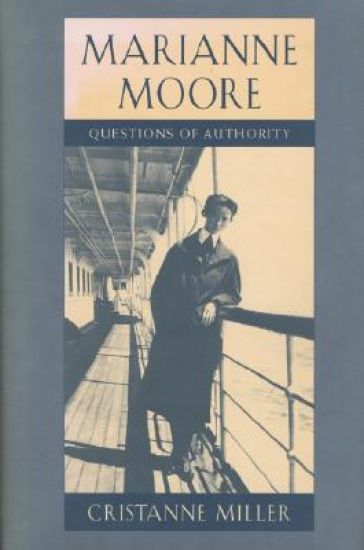
Marianne Moore

Marianne Moore

Cristanne Miller

Harvard University Press
1995
sidottu
Not confessional or autobiographical, not openly political or gender-conscious: all that Marianne Moore’s poetry is not has masked what it actually is. Cristanne Miller’s aim is to lift this mask and reveal the radically oppositional, aesthetic, and political nature of the poet’s work. A new Moore emerges from Miller’s persuasive book—one whose political engagement and artistic experiments, though not cut to the fashion of her time, point the way to an ambitious new poetic.Miller locates Moore within the historical, literary, and family environments that shaped her life and work, particularly her sense and deployment of poetic authority. She shows how feminist notions of gender prevalent during Moore’s youth are reflected in her early poetry, and tracks a shift in later poems when Moore becomes more openly didactic, more personal, and more willing to experiment with language typically regarded as feminine. Distinguishing the lack of explicit focus on gender from a lack of gender-consciousness, Miller identifies Moore as distinctly feminist in her own conception of her work, and as significantly expanding the possibilities for indirect political discourse in the lyric poem. Miller’s readings also reveal Moore’s frequent and pointed critiques of culturally determined power relationships, those involving race and nationality as well as gender.Making new use of unpublished correspondence and employing close interpretive readings of important poems, Miller revises and expands our understanding of Marianne Moore. And her work links Moore—in her radically innovative reactions to dominant constructions of authority—with a surprisingly wide range of late twentieth-century women poets.
Marianne Moore

Marianne Moore

Laurence Stapleton

Princeton University Press
2015
pokkari
This book provides a full-scale interpretation of Marianne Moore's poetry and prose, starting with her early experiments and exploring the range and variety of her artistic achievement. It portrays the self-discipline and the fidelity to experience that were the source of her originality. Laurence Stapleton's study of unpublished manuscripts, including notebooks, drafts of poems, and correspondence, supports her account of Marianne Moore's progress in the mastery of form. Her methods of work in the early satires, in the more openly constructed poems of the 1930s, and in the major ones of World War II, emerge in the context of her life as a professional writer. The spontaneity and inventiveness of her later books resulted from her La Fontaine translation and her response to music, to painting, and to the changing American scene. Constantly in view are Marianne Moore's literary relationships with Ezra Pound, T. S. Eliot, Wallace Stevens, and William Carlos Williams, as well as her appeal to a large circle of readers that made her become "New York's laureate." The insight that may be gained from this book should bring a better understanding of her accomplishment and of her place in American literature. Originally published in 1978. The Princeton Legacy Library uses the latest print-on-demand technology to again make available previously out-of-print books from the distinguished backlist of Princeton University Press. These editions preserve the original texts of these important books while presenting them in durable paperback and hardcover editions. The goal of the Princeton Legacy Library is to vastly increase access to the rich scholarly heritage found in the thousands of books published by Princeton University Press since its founding in 1905.
Marianne Moore

Marianne Moore

Laurence Stapleton

Princeton University Press
2016
sidottu
This book provides a full-scale interpretation of Marianne Moore's poetry and prose, starting with her early experiments and exploring the range and variety of her artistic achievement. It portrays the self-discipline and the fidelity to experience that were the source of her originality. Laurence Stapleton's study of unpublished manuscripts, including notebooks, drafts of poems, and correspondence, supports her account of Marianne Moore's progress in the mastery of form. Her methods of work in the early satires, in the more openly constructed poems of the 1930s, and in the major ones of World War II, emerge in the context of her life as a professional writer. The spontaneity and inventiveness of her later books resulted from her La Fontaine translation and her response to music, to painting, and to the changing American scene. Constantly in view are Marianne Moore's literary relationships with Ezra Pound, T. S. Eliot, Wallace Stevens, and William Carlos Williams, as well as her appeal to a large circle of readers that made her become "New York's laureate." The insight that may be gained from this book should bring a better understanding of her accomplishment and of her place in American literature. Originally published in 1978. The Princeton Legacy Library uses the latest print-on-demand technology to again make available previously out-of-print books from the distinguished backlist of Princeton University Press. These editions preserve the original texts of these important books while presenting them in durable paperback and hardcover editions. The goal of the Princeton Legacy Library is to vastly increase access to the rich scholarly heritage found in the thousands of books published by Princeton University Press since its founding in 1905.
Michael Moore's ""Fahrenheit 9/11

Michael Moore's ""Fahrenheit 9/11

Robert Brent Toplin

University Press of Kansas
2006
sidottu
In the heat of the 2004 presidential election campaign, no single work of speechmaking, writing, or media production fueled the fiery debate over George W. Bush's leadership as much as ""Michael Moore's Fahrenheit 9/11"". Certainly, no American documentary film ever provoked as much political controversy. A noted film scholar now offers a much-needed appraisal of both the film and the furor surrounding it. Robert Brent Toplin first examines the development of Moore's ideas and the evolution of his filmmaking, then dissects ""Fahrenheit 9/11"" and explores the many claims and disagreements about the movie's truthfulness. Toplin considers the ways in which Moore based his arguments on a diverse array of ""primary sources,"" many of which had received scant attention in the mainstream media - including the notorious seven-minute ""Pet Goat"" video depicting President Bush - either deliberately calm or paralyzed - in a Florida classroom on being told of the 9/11 attacks. Finally, Toplin considers the movie's impact, noting that some enthusiasts of the film thought it would help Democrats in the 2004 elections while others argued that Moore's strident approach to issues would turn off swing voters and contribute to a Republican victory. Critics lambasted ""Fahrenheit 9/11"", claiming Moore violated standards of documentary filmmaking through his excessive partisanship. They also berated him for taking events out of context and getting the facts wrong. Toplin contends that partisanship is a well-established tradition in documentary filmmaking, and he shows that the major disagreements between admirers and detractors of ""Fahrenheit 9/11"" revolved around interpretation rather than the factual record. Michael Moore took some controversial risks, Toplin demonstrates, but on many large and small matters - from his treatment of the Bush administration's reactions to 9/11 and war-making in Iraq to disputes about the Saudi flights from the United States after 9/11 - Moore raised many legitimate questions. Toplin's engaging study shows that Michael Moore's film did more than shake up a nation; it also made an indelible contribution to the esteemed tradition of agenda-driven cinema.
Alan Moore and the Gothic Tradition

Alan Moore and the Gothic Tradition

Manchester University Press
2013
sidottu
The first book-length study to address Moore’s significance to the Gothic, this volume is also the first to provide in-depth analyses of his spoken-word performances, poetry and prose, as well as his comics and graphic novels. The essays collected here identify the Gothic tradition as perhaps the most significant cultural context for understanding Moore’s work, providing unique insight into its wider social and political dimensions as well as addressing key theoretical issues in Gothic Studies, Comics Studies and Adaptation Studies. Scholars, students and general readers alike will find fresh insights into Moore’s use of horror and terror, homage and parody, plus allusion and adaptation. The international list of contributors includes leading researchers in the field and the studies presented here enhance the understanding of Moore’s works while at the same time exploring the ways in which these serve to advance a broader appreciation of Gothic aesthetics.
Brian Moore

Brian Moore

Patricia Craig

Bloomsbury Publishing PLC
2004
nidottu
'The only wise prediction to make about a new Brian Moore novel is that it will be unpredictable and wise,' wrote Christopher Ricks reviewing "Black Robe", one of the twenty magnificent novels which put Brian Moore into the first rank of world writers. Northern Ireland may have shaped him, as he grew up one of nine children in a Catholic doctor's Belfast household, but World War II took him to Africa and war-ravaged Europe, and Canada freed him to become a writer. In 1955 he published "The Lonely Passion of Judith Hearne", the first of many novels which led steadily to international critical acclaim. He was a writer's writer, baffling contemporaries with how he pulled off his literary feats. Patricia Craig, who began this authorised biography with the help and blessing of Brian Moore himself, and his wife Jean, pieces together the colourful life that lay behind the novels. She also reveals the droll, romantic, cant-hating, affable and brilliant man who so disarmingly enhanced twentieth-century letters.
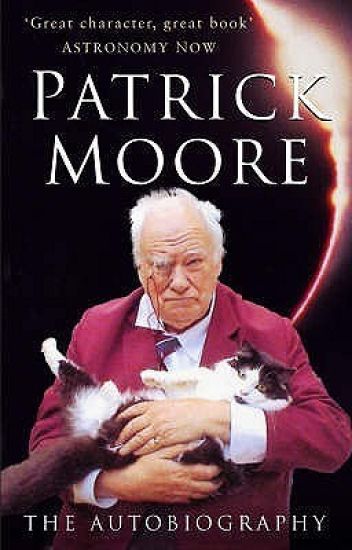
Patrick Moore

Patrick Moore

Patrick Moore

The History Press Ltd
2005
nidottu
Throughout his distinguised career, Patrick Moore has, without a doubt, done more to raise the profile of astronomy amoung the British public than any other figure in the scientific world. As the presenter of The Sky at Night on BBC television for nearly 50 years he was honoured with an OBE in 1968 and a CBE in 1988. In 2001 he was knighted 'for services to the popularisation of science and to broadcasting'. The BBC first aired The Sky at Night in April 1957 and it is now in the record books as the world's longest running TV series with the same presenter. He is also the author of over 60 books on astronomy, all of which, including his autobiography have been written on his 1908 typewriter. Partly thanks to his larger-than-life personality, Sir Patrick's own fame extends far beyond astronomical circles. A self-taught musician and talented composer, he has displayed his xylophone-playing skills at the Royal Variety Performance and as a passionate supporter of cricket, he has played for the Lord's Taverners charity cricket team.
Marianne Moore and the Cultures of Modernity

Marianne Moore and the Cultures of Modernity

Victoria Bazin

Ashgate Publishing Limited
2010
sidottu
Victoria Bazin examines the poetry of Marianne Moore as it is shaped by and responsive to the experience of being a modern woman, of living in the aftermath of the First World War, of being interpellated as a modern consumer and of writing in "the age of mechanical reproduction." She argues that Moore's textual collages and syllabic sculptures are based on the cultural clutter or debris of modernity, on textual extracts and reproductions, on the phantasmagoria of city life revealing something modernism worked hard to conceal: its relation to modernity, more specifically its relation to the new emerging and expanding mass consumer culture. Drawing extensively on archival resources to trace Moore's influences and to describe her own distinctive modernist aesthetic, this book argues that it was her feminist adaptation of pragmatism that shaped her poetic response to modernity. Moore's use of the quoted fragment is conceptualised in relation not only to Walter Benjamin's philosophical history but also to William James's image of the world as a series of "partial stories." As such, this account of Marianne Moore not only contributes to a greater understanding of the poet and her work, but it also offers up a more politicized and historically nuanced understanding of poetic modernism between the wars, one that retains a sense of the formal complexities of poetic language and the poet's own ethical imperatives whilst also recognising the material impact of modernity upon the modernist poem. This book will appeal, therefore, not only to scholars already familiar with Moore's poetry but more widely to those interested in modernism and American culture between the wars.