Kirjojen hintavertailu. Mukana 11 704 953 kirjaa ja 12 kauppaa.

Kirjahaku

Etsi kirjoja tekijän nimen, kirjan nimen tai ISBN:n perusteella.

1000 tulosta hakusanalla Nigel Botterill

Curiosity and the Aesthetics of Travel-Writing, 1770-1840
The decades between 1770 and 1840 are rich in exotic accounts of the ruin-strewn landscapes of Ethiopia, Egypt, India, and Mexico. Yet it is a field which has been neglected by scholars and which - unjustifiably - remains outside the literary canon. In this pioneering book, Nigel Leask studies the Romantic obsession with these 'antique lands', drawing generously on a wide range of eighteenth and nineteenth-century travel books, as well as on recent scholarship in literature, history, geography, and anthropology. Viewing the texts primarily as literary works rather than 'transparent' adventure stories or documentary sources, he sets out to challenge the tendency in modern academic work to overemphasize the authoritative character of colonial discourse. Instead, he addresses the relationship between narrative, aesthetics, and colonialism through the unstable discourse of antiquarianism, exploring the effects of problems of credit worthiness, and the nebulous epistemological claims of 'curiosity' (a leitmotif of the accounts studied here), on the contemporary status of travel writing. Attentive to the often divergent idioms of elite and popular exoticism, Curiosity and the Aesthetics of Travel Writing plots the transformation of the travelogue through the period, as the baroque particularism of curiosity was challenged by picturesque aesthetics, systematic 'geographical narrative', and the emergence of a 'transcendental self' axiomatic to Romantic culture. In so doing it offers an important reformulation of the relations between literature, aesthetics, and empire in the late Enlightenment and Romantic periods.
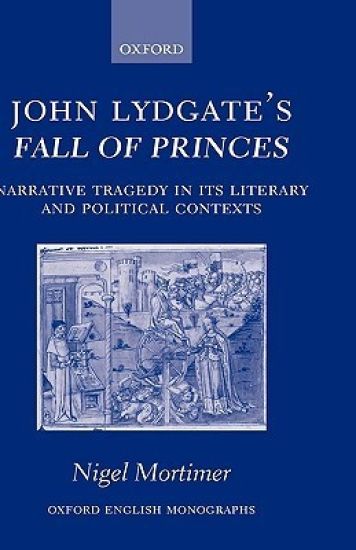
John Lydgate's Fall of Princes

John Lydgate's Fall of Princes

Nigel Mortimer

Clarendon Press
2005
sidottu
The Benedictine monk John Lydgate was the most admired poet of the fifteenth century. He received commissions from some of the most powerful men in the land (including Henry V); he is spoken of with constant admiration; manuscripts of his work are abundant; many of his poems were put into print by England's earliest printers, ensuring that his influence extended well into the sixteenth century. The Fall of Princes, probably the longest poem in the language, is arguably Lydgate's masterwork; yet, until now, it has received only cursory critical attention. This book offers the first extended discussion of the poem. The Fall of Princes accumulates accounts of nearly 500 figures from mythology and history (biblical, classical, and medieval) who have fallen from their positions of fame and power into obscurity, adversity, or poverty. In presenting these tragedies Lydgate probes the causes of the reversal of their fortunes; how far can the caprice of a blind Lady Fortune be blamed? How far are the protagonists themselves responsible for their undoing? Most pressingly of all, why is it that bad things happen to seemingly innocent people? In drawing its conclusions about the downfalls of powerful men and women, Lydgate's poem operates within the popular medieval genre of 'advice to princes' literature. This book locates Lydgate's work within its contexts, exploring the nature of his relationship with the uneasy Lancastrian dynasty during the minority of Henry VI as well as his response to contemporary conflicts between ecclesiastical and secular authority. In particular, this book closely analyses Lydgate's manipulations of his French source text, allowing readers to see in detail for the first time what it is that Lydgate was setting out to achieve. Finally, the book identifies the readership of Lydgate's poem in the fifteenth and sixteenth centuries, discussing its influence on the evolution of narrative tragedy in English.
Law as a Moral Idea

Law as a Moral Idea

Nigel Simmonds

Oxford University Press
2007
sidottu
This book argues that the institutions of law, and the structures of legal thought, are to be understood by reference to a moral ideal. The idea of law is an ideal of freedom, or independence from the power of others. The moral value and justificatory force of law are not contingent upon circumstance, but intrinsic to its character as law. Doctrinal legal arguments are shaped by rival conceptions of the conditions for realisation of the idea of law. In making these claims, the author rejects the viewpoint of much contemporary legal theory, and seeks to move jurisprudence closer to an older tradition of philosophical reflection upon law, exemplified by Hobbes and Kant. Modern analytical jurisprudence has tended to view these older philosophies as confused precisely in so far as they equate an understanding of law's nature with a revelation of its moral basis. According to most contemporary legal theorists, the understanding and analysis of existing institutions is quite distinct from any enterprise of moral reflection. But the relationship between ideals and practices is much more intimate than this approach would suggest. Some institutions can be properly understood only when they are viewed as imperfect attempts to realise moral or political ideals; and some ideals can be conceived only by reference to their expression in institutions.
Courting Violence

Courting Violence

Nigel Fielding

Oxford University Press
2006
sidottu
Courting violence analyses how the courts handle cases of physical violence. It examines how lawyers and judges go about questioning defendants, witnesses and victims, how testimony and physical evidence is used, what victims, witnesses and defendants think of the trial process, and the views of lay and professional participants about violent offences. The book is based on original fieldwork at criminal trials and interviews with those involved. It is known that courtroom language, and the handling of evidence, influences the outcome of cases, and that those unfamiliar with the courts may feel bewildered and intimidated by courtroom language and procedures. The book examines the workings of such processes in cases of physical violence, with careful attention to assumptions made by lawyers, judges and others as they relate to gender, social class, ethnicity, and people exhibiting patterns of behaviour, such as young men who drink heavily in groups. Key findings examine lay participants' understanding of courtroom procedure and language, satisfaction with their ability to participate competently, and willingness to assist the courts again. The book profiles the frustrations caused by the restricted role granted lay participants in trials, and reports problems concerning the experience of minority ethnic groups. Other themes include resource problems; the potential to improve proceedings by technological means; the role of the police, expert witnesses and interpreters; and variations in approaches to the judicial role. Understandings of violence are treated as contingent and legally-reified, and victimisation as a negotiated process. Using accessible and engaging data the book shows readers the contemporary practice of criminal trials in the crown courts, highlights some of the most contentious and sensitive problems in criminal justice, and suggests improvements. It functions both as an accessible overview of the work of the courts and an insight into how society deals with serious crime.
Strategic Customer Management

Strategic Customer Management

Nigel F Piercy; Nikala Lane

Oxford University Press
2009
sidottu
A revolution is taking place in the way companies organize and manage the 'front-end' of their organization, where it meets its customers. Traditional concepts of sales management, account management, and customer service are being overtaken by initiatives like customer business development, the strategic sales organization, and strategic customer management. This book aims to provide insights into how this revolution is unfolding and to provide a framework for executives and management students to address the issues involved. The book focuses on the transformation of the traditional sales organization into a strategic force leading the strategic customer management process in companies. Traditionally, the area of sales management has mainly been treated as a tactical, operational topic in the conventional marketing literature - simply part of the communications mix within the planned marketing programme. However, the emergence of major customers as dominant buyers in many sectors as a result of pressures towards consolidation and enhanced scale of operations, is changing the way in which sales issues are addressed in supplier organizations. The growth of new forms of buyer-seller relationship based on collaboration and partnering has encouraged organizations to reconsider the sales and account management operation as an important source of competitive differentiation in commoditized markets. Increasingly, sales is being perceived as a central part of business strategy and attention given to the challenges in better aligning sales processes with strategy. This has many implications for the design of the sales organization and its management strategy, which go far beyond the confines of conventional marketing views.
Law as a Moral Idea

Law as a Moral Idea

Nigel Simmonds

Oxford University Press
2008
nidottu
This book argues that the institutions of law, and the structures of legal thought, are to be understood by reference to a moral ideal. The idea of law is an ideal of freedom, or independence from the power of others. The moral value and justificatory force of law are not contingent upon circumstance, but intrinsic to its character as law. Doctrinal legal arguments are shaped by rival conceptions of the conditions for realisation of the idea of law. In making these claims, the author rejects the viewpoint of much contemporary legal theory, and seeks to move jurisprudence closer to an older tradition of philosophical reflection upon law, exemplified by Hobbes and Kant. Modern analytical jurisprudence has tended to view these older philosophies as confused precisely in so far as they equate an understanding of law's nature with a revelation of its moral basis. According to most contemporary legal theorists, the understanding and analysis of existing institutions is quite distinct from any enterprise of moral reflection. But the relationship between ideals and practices is much more intimate than this approach would suggest. Some institutions can be properly understood only when they are viewed as imperfect attempts to realise moral or political ideals; and some ideals can be conceived only by reference to their expression in institutions.
Robert Burns and Pastoral

Robert Burns and Pastoral

Nigel Leask

Oxford University Press
2010
sidottu
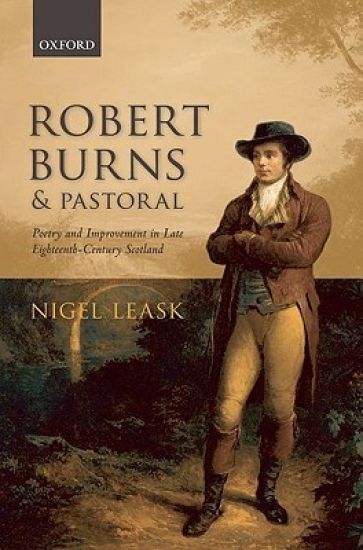
Robert Burns and Pastoral is a full-scale reassessment of the writings of Robert Burns (1759-1796), arguably the most original poet writing in the British Isles between Pope and Blake, and the creator of the first modern vernacular style in British poetry. Although still celebrated as Scotland's national poet, Burns has long been marginalised in English literary studies worldwide, due to a mistaken view that his poetry is linguistically incomprehensible and of interest to Scottish readers only. Nigel Leask challenges this view by interpreting Burns's poetry as an innovative and critical engagement with the experience of rural modernity, namely to the revolutionary transformation of Scottish agriculture and society in the decades between 1760 and 1800, thereby resituating it within the mainstream of the Scottish and European enlightenments. Detailed study of the literary, social, and historical contexts of Burns's poetry explodes the myth of the 'Heaven-taught ploughman', revealing his poetic artfulness and critical acumen as a social observer, as well as his significance as a Romantic precursor. Leask discusses Burns's radical decision to write 'Scots pastoral' (rather than English georgic) poetry in the tradition of Allan Ramsay and Robert Fergusson, focusing on themes of Scottish and British identity, agricultural improvement, poetic self-fashioning, language, politics, religion, patronage, poverty, antiquarianism, and the animal world. The book offers fresh interpretations of all Burns's major poems and some of the songs, the first to do so since Thomas Crawford's landmark study of 1960. It concludes with a new assessment of his importance for British Romanticism and to a 'Four Nations' understanding of Scottish literature and culture.
The Ancient Olympics

The Ancient Olympics

Nigel Spivey

Oxford University Press
2012
nidottu
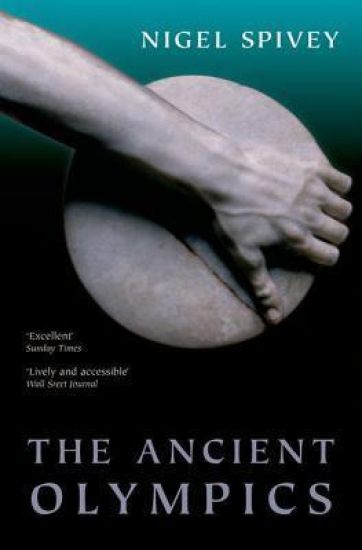
The word 'athletics' is derived from the Greek verb 'to struggle for a prize'. After reading this book, no one will see the Olympics as a graceful display of Greek beauty again, but as war by other means. Nigel Spivey paints a portrait of the Greek Olympics as they really were - fierce contests between bitter rivals, in which victors won kudos and rewards, and losers faced scorn and even assault. Victory was almost worth dying for, and a number of athletes did just that. Many more resorted to cheating and bribery. Contested always bitterly and often bloodily, the ancient Olympics were not an idealistic celebration of unity, but a clash of military powers in an arena not far removed from the battlefield.
English Church Monuments in the Middle Ages

English Church Monuments in the Middle Ages

Nigel Saul

Oxford University Press
2011
nidottu
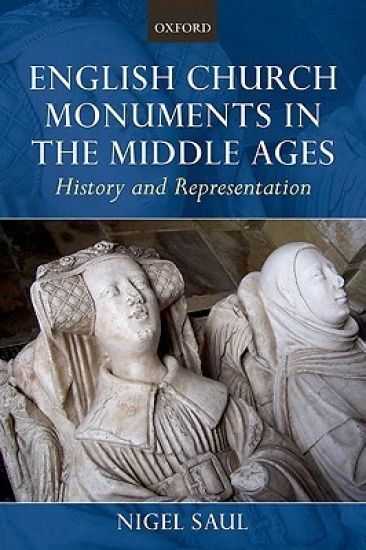
English Church Monuments in the Middle Ages offers a comprehensive survey of English church monuments from the pre-Conquest period to the early sixteenth century. Ground-breaking in its treatment of the subject in an historical context, it explores medieval monuments both in terms of their social meaning and the role that they played in the religious strategies of the commemorated. Attention is given to the production of monuments, the pattern of their geographical distribution, the evolution of monument types, and the role of design in communicating the monument's message. A major theme is the self-representation of the commemorated as reflected in the main classes of effigy-those of the clergy, the knights and esquires, and the lesser landowner or burgess class, while the effigial monuments of women are examined from the perspective of the construction of gender. While seeking to use monuments as windows onto the experiences and lives of the commemorated, it also exploits documentary sources to show what they can tell us about the influences that helped shape the monuments. An innovative chapter looks at the construction of identity in inscriptions, showing how the liturgical role of the monument limited the opportunities for expressions of self. Nigel Saul seeks to place monuments at the very centre of medieval studies, highlighting their importance not only for the history of sculpture and design, but also for social and religious history more generally.
24 hours to save the NHS

24 hours to save the NHS

Nigel Crisp

Oxford University Press
2011
nidottu
24 hours to save the NHS. It was a political slogan but it hid a deeper question. Could the NHS survive? Could it continue to offer free health care for every citizen regardless of their ability to pay? Could the extraordinary, liberating ambition and dream of its founders 50 years before be maintained in the 21st Century - that everyone, no matter how poor or ill, should be freed from worrying about how to pay for their health care. By 2000 the NHS was in decline with falling standards and failing public support. Its supporters were beginning to question its viability, whilst its enemies were eager to catalogue its faults. Five years later we had an answer. Radical change and investment meant that the NHS had survived. Standards were improving and the NHS was expanding. Proof came from outside. Public satisfaction doubled and fewer people opted for private healthcare. Most tellingly, all the major political parties went into the 2010 general election committed to the NHS and to helping it develop and prosper. Today the question has changed. The NHS has survived but can it become sustainable at a time of austerity and as demand for its services grows? 24 hours to save the NHS shows what we can learn from the past, and describes what more we need to do to innovate for the future. It is the inside story of the last reforms written by the man charged with implementing them, and who was given unprecedented authority as both Chief Executive of the NHS and Permanent Secretary of the Department of Health. A very practical book - it describes the successes and failures as well as the pressures and the difficulties of making improvements in the fourth biggest organization in the world which employs 1.3 million people and spends £100 billion a year. It will be of interest to the general reader, health workers, policy makers, academics and students alike.
Marketing Research: Tools and Techniques

Marketing Research: Tools and Techniques

Nigel Bradley

Oxford University Press
2013
nidottu
Building on the success of the previous editions, the third edition of Marketing Research: Tools and Techniques provides an accessible and engaging insight into marketing research. Based on the concept of the Marketing Research Mix, the text is organized around the core themes of research preparation, data collection, analysis and communication of findings, and how skills and techniques are used in different research contexts. The author adopts a sound balance between theory and practice and demonstrates how marketing concepts can be carried out in reality, and which methods are most appropriate for particular types of research. The new edition has been fully revised to reflect the wealth of digital developments and contains new case studies on renowned commercial brands such as BMW, Google, McDonalds, Whiskas, Tesco, The National Student Survey (NSS), Eurobarometer and BMI Healthcare. Supported by a full range of pedagogical features, the author enables students to understand the issues involved in carrying out research and the potential pitfalls to be aware of, thereby ensuring a clear understanding of the overall subject. The book is accompanied by a comprehensive Online Resource Centre which offers the following resources for students and lecturers: For students: Multiple choice questions Questionnaire wizard Online version of Market Researcher's Toolbox Link to clips of author summarising contents of each chapter on YouTube Web links For registered adopters of the text: PowerPoint presentation Illustrations from the book
In Defence of War

In Defence of War

Nigel Biggar

Oxford University Press
2013
sidottu
Pacifism is popular. Many hold that war is unnecessary, since peaceful means of resolving conflict are always available, if only we had the will to look for them. Or they believe that war is wicked, essentially involving hatred of the enemy and carelessness of human life. Or they posit the absolute right of innocent individuals not to be deliberately killed, making it impossible to justify war in practice. Peace, however, is not simple. Peace for some can leave others at peace to perpetrate mass atrocity. What was peace for the West in 1994 was not peace for the Tutsis of Rwanda. Therefore, against the virus of wishful thinking, anti-military caricature, and the domination of moral deliberation by rights-talk In Defence of War asserts that belligerency can be morally justified, even though tragic and morally flawed. Recovering the Christian tradition of reflection running from Augustine to Grotius, this book affirms aggressive war in punishment of grave injustice. Morally realistic in adhering to universal moral principles, it recognises that morality can trump legality, justifying military intervention even in transgression of positive international law-as in the case of Kosovo. Less cynical and more empirically realistic about human nature than Hobbes, it holds that nations desire to be morally virtuous and right, and not only to be safe and fat. And aspiring to practical realism, it argues that love and the doctrine of double effect can survive combat; and that the constraints of proportionality, while real, are nevertheless sufficiently permissive to encompass Britain's belligerency in 1914-18. Finally, in a painstaking analysis of the Iraq invasion of 2003, In Defence of War culminates in an account of how the various criteria of just war should be thought together. It also concludes that, all things considered, the invasion was justified.
The Treatment of Prisoners under International Law

The Treatment of Prisoners under International Law

Nigel Rodley; Matt Pollard

Oxford University Press
2011
nidottu
This is the third edition of the pioneering work that has become the standard text in the field. The first edition was one of the earliest to establish that the newly-developing international law of human rights could be set down as any other branch of international law. It also incorporates the complementary fields of international humanitarian law and international criminal law, while addressing the problems associated with their interaction with human rights law. The book is more than a descriptive analysis of the field. It acknowledges areas of unclarity or where developments may be embryonic. Solutions are offered. Recent developments have confirmed the value of solutions proposed in this edition and the previous one. Central to most of the chapters is the human rights norm of most salience in the treatment of prisoners, namely, the prohibition of torture and cruel, inhuman or degrading treatment or punishment. The early chapters focus on the period of first detention, when detainees are most at risk of having information or confessions, however unreliable, extracted by unlawful means. Voices contemplating the legitimacy of such treatment to combat terrorism have been heard in the wake of the atrocities of 11 September 2001. The book finds that the evidence clearly suggests that the absolute prohibition of such treatment remains firm. Other chapters deal with problems of poor prison conditions and of certain extraordinary penalties, notably corporal and capital punishment. A chapter explores ethical codes for members of professions capable of inflicting or preventing the prohibited behaviour (police and medical and legal professionals). Chapters are also devoted to the extreme practice of enforced disappearance and the contribution of the new convention on this phenomenon, as well as to extra-legal executions.
How Vision Works

How Vision Works

Nigel Daw

Oxford University Press Inc
2012
sidottu
This book covers all aspects of the visual system from sensory aspects to eye movements, attention, and visual memory. There are many books that cover the psychology and physiology of a single aspect of vision, such as color vision or eye movements. Other larger texts may offer encyclopedic coverage of the psychology of all aspects of vision. However, this is the only book on the market covering the psychology, anatomy, and physiology of all aspects of the visual system in 300 pages. Each chapter addresses a separate aspect of vision, describing the basic phenomena, where in the brain this aspect of vision occurs, the properties of the cells in those areas, and the deficits that result from a lesion or stroke in those areas. In addition to extensive illustrations, the book contains the author's selection of the literature, from the classic 19th century papers to the present. This text is designed for graduate students and advanced undergraduates in psychology, optometry, physiology, anatomy, and medicine who want to get a broad view rather than one confined to their particular discipline.
Lectures On Phase Transitions And The Renormalization Group
Covering the elementary aspects of the physics of phases transitions and the renormalization group, this popular book is widely used both for core graduate statistical mechanics courses as well as for more specialized courses. Emphasizing understanding and clarity rather than technical manipulation, these lectures de-mystify the subject and show precisely "how things work." Goldenfeld keeps in mind a reader who wants to understand why things are done, what the results are, and what in principle can go wrong. The book reaches both experimentalists and theorists, students and even active researchers, and assumes only a prior knowledge of statistical mechanics at the introductory graduate level.Advanced, never-before-printed topics on the applications of renormalization group far from equilibrium and to partial differential equations add to the uniqueness of this book.
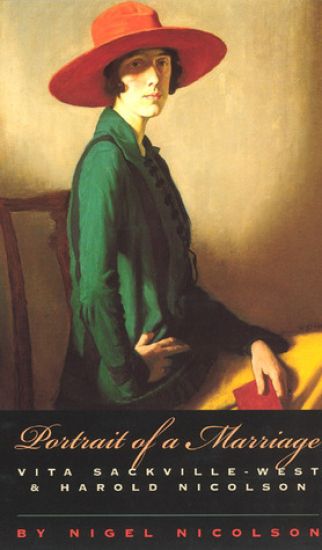
Portrait of a Marriage

Portrait of a Marriage

Nigel Nicolson

University of Chicago Press
1998
nidottu
Vita Sackville-West, novelist, poet and biographer, is best known as the friend of Virginia Woolf, who transformed her into an androgenous time-traveller in "Orlando". This is the story of her marriage to Harold Nicolson. Their son Nigel combines his mother's memoirs with his own explanations and what he learned from their many letters. Even during Vita's various love affairs with women, she maintained a loving marriage with Harold.
Between Kin and Cosmopolis

Between Kin and Cosmopolis

Nigel Biggar

James Clarke Co Ltd
2014
nidottu
The nation-state is here to stay. Thirty years ago it was fashionable to predict its imminent demise, but the sudden break-up of the Soviet Union in the 1990s unshackled long-repressed nationalisms and generated a host of new states. The closer integration of the European Union has given intra-national nationalisms a new lease of life, confirming the viability of small nation-states under a supra-national umbrella - after all, if Ireland and Iceland, then why not Scotland and Catalonia? And then the world stage has seen new and powerful national players moving from the wings to the centre: China, India, and Brazil are full of a sense of growing into their own national destinies and are in no mood either to dissolve into, or to defer to, some larger body. Nations, nationalisms, and nation-states are persistent facts, but what should we think of them morally? Surely humanity, not a nation, should claim our loyalty? How can it be right to exclude foreigners by policing borders? Can a liberal nation-state thrive without a cohering public orthodoxy? Does national sovereignty confer immunity? Is national separatism always justified? These are urgent questions. Between Kin and Cosmopolis offers timely Christian answers.
Take Back Manufacturing

Take Back Manufacturing

Nigel Southway

Tellwell Talent
2022
pokkari
This book is about how in less than one lifetime we have experienced the destruction of the manufacturing sectors in our western societies. and the significant loss of national prosperity, and why the imperative for western economies must be to ....Take Back Manufacturing The globalized manufacturing approach with efficient supply chains supported by liberalized free trade agreements has been the business norm in the last four decades and has been the prime reason for the "hollowing out" of our Western industrial base.But now many experts predict yet another significant change regarding global and national economic conditions that will, for many reasons, provide an opportunity for our western economies to move back to more localized trade blocs, and the reshoring of their manufacturing.Some nations, including Canada, are not considered a logical reshoring destination, and experts predict further decline in manufacturing, but this book provides a perspective and outlook that suggests that with the correct political will and focus they could recover their manufacturing industries and improve future prosperity.