For the Christian faith as well as its theology, the Easter confession of resurrection has always been the fundamental idea. Starting from this elemental perspective and following the notions of internal realism, semiotics and the postmodern paradigm, Petr Gallus reconstructs the central theological locus of Christology as ontological Christology. In so doing, the author examines the traditional Chalcedonian Christology, as well as many Christological concepts of the last decades, following it critically and proposing an original solution. The whole concept is based on the notion that consistent Christology is possible only against the backdrop of the Trinity, which is the necessary framework and, in some points, necessary unloading of Christology.
Die Beratung hat in der padagogischen Berufstatigkeit erheblich an Bedeutung gewonnen. Auch in den Handlungsfeldern der Heilpadagogik hat sie enorm expandiert. Das Buch stellt neben der Grundlegung beraterischen Handelns aus einer humanistischen und konstruktivistischen Denk- und Handlungsweise das spezifische Wissen und Konnen eines beraterisch tatigen Heilpadagogen in den Mittelpunkt der Darstellung und vermittelt entsprechendes Grundwissen und Know-how. Der thematische Bogen wird dabei weit gespannt: vom rechtlichen und institutionellen Rahmen der Beratung uber den Ablauf des Beratungsprozesses und die verschiedenen Beratungsansatze und die Beratungsanlasse bis hin zu den methodischen Hilfsmitteln. Ausfuhrlich und anschaulich wird auf die unterschiedlichen Beratungssettings eingegangen. Das Buch liefert so komprimiert und entlang vieler Praxisbeispiele und Praxisubungen das notwendige Berufswissen fur die wachsenden Aufgaben professioneller Beratungspraxis im Bereich der Heilpadagogik.
In Helfenden Berufen sind Kernkompetenzen im Bereich der Kommunikation und Interaktion grundlegend. Vor allem das "personzentrierte" Auftreten gegenuber zu unterstutzenden Menschen, bei dem es um eine zielgerichtete, reflektierte Mitmenschlichkeit der Fachperson geht, hat sich dabei berufsubergreifend als relevant erwiesen. Das Buch erortert zunachst die theoretischen Grundlagen und Konzepte der Personzentriertheit. Anhand konkreter Praxisbeispiele werden methodische Hinweise zu den Verhaltensweisen von Fachpersonen im alltaglichen Umgang mit den Klienten vermittelt. Berufliche Mitmenschlichkeit durch personzentriertes Arbeiten wird dann als ein Grundelement positiver Wirksamkeit auf den Tatigkeitsfeldern der Heilpadagogik, Pflege und Sozialen Arbeit durchdekliniert.
Standische Landtage waren ein Langzeitphanomen der Habsburgermonarchie. An sieben Beispielen aus den osterreichischen und bohmischen Landern und mit vielfachen komparatistischen Seitenblicken untersucht diese Monographie in einmaliger Tiefe den materiellen Raum sowie soziale und symbolische Raumpraktiken im langen Zeitabschnitt von der Errichtung dauerhafter standischer Sitzungsraume im 16. Jahrhundert bis zur Abschaffung standisch-korporativen Partizipation 1848. Die an der Schnittstelle der Standeforschung, der Bau- und Funktionsgeschichte standischer Gebaudekomplexe und der symbolischen Kommunikationsforschung angesiedelte Studie beleuchtet zeitgenossische Raum-, Rang- und Ordnungsvorstellungen und revidiert anachronistische Annahmen uber die Funktionsweise standischer Landtage.
This book provides a critical introduction to Heidegger’s impact on psychiatry and psychology, and has a focus on the application of his philosophy to psychiatry. This is a complete revision of Heidegger’s existential philosophy in the light of psychopathological phenomena. Readers will find here a philosophical inquiry into the problem of mental disorder, which shows Heidegger’s own philosophy in a new light, uncovering both its strengths and its weak points. The author maps not only Heidegger’s interaction with psychiatric thought, as depicted in his Zollikon Seminars, but also his influence on Swiss phenomenological psychiatry. The work treats Heidegger in a critical way, taking the phenomenon of mental disorder as a touchstone on which Heidegger’s thought is tested. The results of such a critical examination are important, not only for a better understanding of psychopathological phenomena, but also for a new understanding of Heidegger’s approach to human existence. This work treats the phenomenon of mental disorder as a philosophical problem that reflects the ontological character of human existence. Heidegger’s approach to mental disorder is confronted with the conceptions of Foucault, Deleuze and Guattari in a novel way. The book is more than just an historical overview as it highlights the limits of phenomenological thought in the area of psychiatry and it shows a possible way of moving beyond them. This is a philosophical work with an interdisciplinary range. Scholars of philosophy and those in the growing field of philosophy of psychiatry, as well as those with an interest in Heidegger Studies will be particularly interested in this work.
Putting forward an up-to-date waste-to-energy approach that combines experience, sophisticated modeling and technical-economic analysis, this book examines the current need for the maximum utilization of energy from waste and the associated environmental impacts. It outlines step-by-step procedures for a complex and original waste-to-energy approach from the idea to its industrial application. With waste incinerators and industrial plants producing large amounts of pollutants, municipalities as well as smaller decentralized operations are beginning to focus on waste research. The principal advantage of utilizing research findings is the ability to apply a complex approach “from idea to industrial implementation” with respect to the needs of the market established by thorough market analysis. This book builds on this concept with an original approach that takes into consideration geographical aspects, the specifics of regions/micro-regions and technological units and/or equipment. Key areas discussed and analyzed in the text include: strategic planning of energy-source locations according to the nature of the respective region or microregion; types and amounts of wastes; logistics etc. using original mathematical models; consideration of on-site processing of various types of waste, taking into account the character of the region (agricultural, industrial etc.); tailor-made technologies for energy recovery from various types of wastes; implementation of individual technologies with original elements; and support for environmental protection based on advanced flue gas (i.e. off-gas in the case of incineration) cleaning methods.
This book is a source of valuable and useful information on the topics of dynamics of number systems and scientific computation with arbitrary precision. It is addressed to scholars, scientists and engineers, and graduate students. The treatment is elementary and self-contained with relevance both for theory and applications. The basic prerequisite of the book is linear algebra and matrix calculus.
This book provides a critical introduction to Heidegger’s impact on psychiatry and psychology, and has a focus on the application of his philosophy to psychiatry. This is a complete revision of Heidegger’s existential philosophy in the light of psychopathological phenomena. Readers will find here a philosophical inquiry into the problem of mental disorder, which shows Heidegger’s own philosophy in a new light, uncovering both its strengths and its weak points. The author maps not only Heidegger’s interaction with psychiatric thought, as depicted in his Zollikon Seminars, but also his influence on Swiss phenomenological psychiatry. The work treats Heidegger in a critical way, taking the phenomenon of mental disorder as a touchstone on which Heidegger’s thought is tested. The results of such a critical examination are important, not only for a better understanding of psychopathological phenomena, but also for a new understanding of Heidegger’s approach to human existence. This work treats the phenomenon of mental disorder as a philosophical problem that reflects the ontological character of human existence. Heidegger’s approach to mental disorder is confronted with the conceptions of Foucault, Deleuze and Guattari in a novel way. The book is more than just an historical overview as it highlights the limits of phenomenological thought in the area of psychiatry and it shows a possible way of moving beyond them. This is a philosophical work with an interdisciplinary range. Scholars of philosophy and those in the growing field of philosophy of psychiatry, as well as those with an interest in Heidegger Studies will be particularly interested in this work.
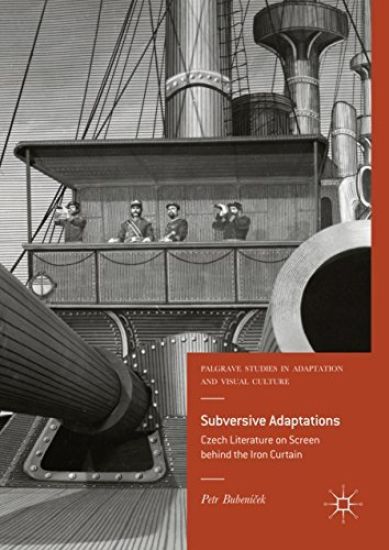
This book deals with film adaptations of literary works created in Communist Czechoslovakia between 1954 and 1969, such as The Fabulous World of Jules Verne (Zeman 1958), Marketa Lazarová (Vlácil 1967), and The Joke (Jireš 1969). Bubenícek treats a historically significant period around which myths and misinformation have arisen. The book is broad in scope and examines aesthetic, political, social, and cultural issues. It sets out to disprove the notion that the state-controlled film industry behind the Iron Curtain produced only aesthetically uniform works pandering to official ideology. Bubenícek’s main aim is to show how the political situation of Communist Czechoslovakia moulded the film adaptations created there, but also how these same works, in turn, shaped the sociocultural conditions of the 1950s and the 1960s.
This book offers a critical analysis of recent developments in the automotive industry of East-Central Europe (ECE). Economists, industry specialists and national governments have considered the rapid development of the automotive industry in ECE in the past twenty years an unqualified success. This rapid growth has been based on large inflows of foreign direct investment (FDI) from Western Europe, North America, Japan and South Korea, and it significantly contributed to GDP growth, created thousands of new jobs, and completely transformed the previously existing automotive industry in the region. This volume offers an analysis that goes beyond uncritical celebratory accounts of this rapid growth. It is based on original, detailed firm-level research conducted by the author in Czechia and Slovakia between 2009 and 2015 that covered assembly firms and the networks of component suppliers. Theoretically and conceptually, the analysis will draw on the globalproduction networks and global value chains perspectives. Drawing on the original empirical data and on additional available information, this volume concentrates on several important questions related to the development of the automotive industry in ECE in the 2000s:• The role of FDI in the rapid development of the automotive industry after 1990 and particularly in the 2000s.• The upgrading of the automotive industry in East-Central Europe through FDI• The position of ECE in the automotive industry research and development (R&D)• The effects of the 2008-2009 economic crisis in the automotive industry of ECE.• The role of state in the rapid development of the automotive industry in ECE in the 1990s and 2000s.• The effects of FDI on domestic firms in the form of linkages between foreign-owned and domestic firms and spillovers from foreign-owned to domestic firms.
This book is a source of valuable and useful information on the topics of dynamics of number systems and scientific computation with arbitrary precision. It is addressed to scholars, scientists and engineers, and graduate students. The treatment is elementary and self-contained with relevance both for theory and applications. The basic prerequisite of the book is linear algebra and matrix calculus.
This book deals with film adaptations of literary works created in Communist Czechoslovakia between 1954 and 1969, such as The Fabulous World of Jules Verne (Zeman 1958), Marketa Lazarová (Vlácil 1967), and The Joke (Jireš 1969). Bubenícek treats a historically significant period around which myths and misinformation have arisen. The book is broad in scope and examines aesthetic, political, social, and cultural issues. It sets out to disprove the notion that the state-controlled film industry behind the Iron Curtain produced only aesthetically uniform works pandering to official ideology. Bubenícek’s main aim is to show how the political situation of Communist Czechoslovakia moulded the film adaptations created there, but also how these same works, in turn, shaped the sociocultural conditions of the 1950s and the 1960s.
This book offers a critical analysis of recent developments in the automotive industry of East-Central Europe (ECE). Economists, industry specialists and national governments have considered the rapid development of the automotive industry in ECE in the past twenty years an unqualified success. This rapid growth has been based on large inflows of foreign direct investment (FDI) from Western Europe, North America, Japan and South Korea, and it significantly contributed to GDP growth, created thousands of new jobs, and completely transformed the previously existing automotive industry in the region. This volume offers an analysis that goes beyond uncritical celebratory accounts of this rapid growth. It is based on original, detailed firm-level research conducted by the author in Czechia and Slovakia between 2009 and 2015 that covered assembly firms and the networks of component suppliers. Theoretically and conceptually, the analysis will draw on the globalproduction networks and global value chains perspectives. Drawing on the original empirical data and on additional available information, this volume concentrates on several important questions related to the development of the automotive industry in ECE in the 2000s:• The role of FDI in the rapid development of the automotive industry after 1990 and particularly in the 2000s.• The upgrading of the automotive industry in East-Central Europe through FDI• The position of ECE in the automotive industry research and development (R&D)• The effects of the 2008-2009 economic crisis in the automotive industry of ECE.• The role of state in the rapid development of the automotive industry in ECE in the 1990s and 2000s.• The effects of FDI on domestic firms in the form of linkages between foreign-owned and domestic firms and spillovers from foreign-owned to domestic firms.
This first-of-its-kind volume revisits current findings on ADHD in terms of classic thinking on developmental neuropsychology for a more rounded concept of brain disorganization. Insights from Freud, Janet, John Hughlings Jackson, and other pioneers help identify mechanisms (e.g., the primitive reflexes) that can cause children with ADHD to be prone to cognitive dissociation when exposed to stressful environments. The authors’ model of the developing distracted brain pinpoints effects of stress on cognitive and affective functions, most notably attention and memory, and suggests situations in which stimuli may facilitate integration between brain and mind. This expanded knowledge opens out new educational possibilities for vulnerable students as well as new opportunities for therapeutic breakthroughs for children with ADHD. Included in the coverage: · Definition, diagnosis, and epidemiology of Attention Deficit and Hyperactivity Disorder. · Historical and recent research on ADHD. · Attentional functions, executive dysfunctions, and stress, implications for ADHD. · Neural dissolution, dissociation, and stress in ADHD. · Attention, brain-mind integration and ADHD. · Implications for education and therapy of ADHD children. ADHD, Stress, and Development ably synthesizes past and current understanding into a robust framework with implications for real-world practice. It offers practitioners and researchers new perspectives and future directions in neuropsychology, psychiatry, child and school psychology, and pediatrics.