Kirjojen hintavertailu. Mukana 12 354 207 kirjaa ja 12 kauppaa.

Kirjahaku

Etsi kirjoja tekijän nimen, kirjan nimen tai ISBN:n perusteella.

1000 tulosta hakusanalla Philo

Philosophy

Philosophy

Edward Craig

Oxford University Press
2020
nidottu
How ought we to live? What really exists? How do we know? This Very Short Introduction discusses some of the key questions philosophy engages with. Edward Craig explores important themes in ethics, and the nature of knowledge and the self, through readings from Plato, Hume, Descartes, Hegel, Darwin, and Buddhist writers. Throughout, he emphasizes why we do phiilosophy, explains how different areas of philosophy are related, and explores the contexts in which philosophy was and is done. This new edition includes a new chapter on free will, discussing determinism and indeterminism in the context of Descartes and Hegel's work. Craig also covers the Problem of Evil, and Kant's argument on the source of moral obligation. ABOUT THE SERIES: The Very Short Introductions series from Oxford University Press contains hundreds of titles in almost every subject area. These pocket-sized books are the perfect way to get ahead in a new subject quickly. Our expert authors combine facts, analysis, perspective, new ideas, and enthusiasm to make interesting and challenging topics highly readable.
Philodemus, On Poems, Books 3-4

Philodemus, On Poems, Books 3-4

Oxford University Press
2020
nidottu
The On Poems by the Epicurean philosopher and poet Philodemus of Gadara (1st century BC) survived amid the library of the Villa of the Papyri at Herculaneum, which was buried by the eruption of Vesuvius in AD 79. The papyrus-rolls in this, the only library that survives from the ancient world, are with the aid of advanced technology at last able to be read, reconstructed, and translated. The On Poems, in five books, offers unique insights into ancient literary criticism from Aristotle to Horace. Book 1 was published in 2000. This volume contains the Greek text, translation, and scholarly commentary on Books 3 and 4, together with the fragments of Aristotle's lost dialogue On Poets, which sheds light on Aristotle's views on such controversial questions as mimesis, catharsis, and the origins of tragedy and comedy.
Philosophizing the Indefensible

Philosophizing the Indefensible

Shmuel Nili

Oxford University Press
2023
sidottu
Philosophizing the indefensible asks what distinctive contributions political philosophers might make when reflecting on blatant moral failures in public policy - the kinds of failures that philosophers usually dismiss as theoretically un-interesting, even if practically important. This book argues that political philosophers can and should craft “strategic” arguments for public policy reforms, showing how morally urgent reforms can be grounded, for the sake of discussion, even in problematic premises associated with their opponents. The book starts by developing the general contours of this approach - defending its general moral value in a democratic society, and examining how far one might go in strategically deploying dubious or even repugnant premises in debating public affairs. The book then applies strategic theorizing to a set of diverse policy issues. These range from the abortion debate and financial regulation in the United States, through controversies surrounding the participation of Arab parties in Israel's political process, to global issues, such as commercial ties with oil-rich dictatorships, and the bearing of such ties on global climate change.
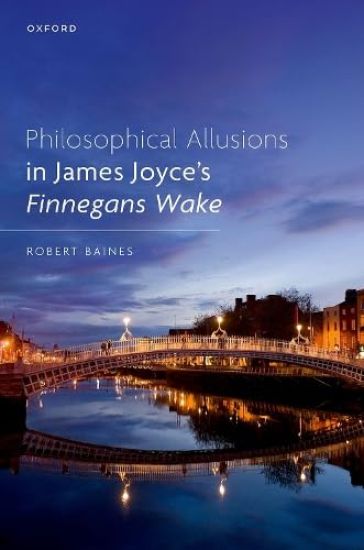
Philosophical Allusions in James Joyce's Finnegans Wake

Philosophical Allusions in James Joyce's Finnegans Wake

Robert Baines

Oxford University Press
2023
sidottu
Philosophical Allusions in James Joyce's Finnegans Wake is the first study to offer complete and comprehensive explanations of the most significant philosophical references in James Joyce's avant-garde masterpiece. Philosophy is important in all of Joyce's works, but it is his final novel which most fully engages with that field. Robert Baines shows the broad range of philosophers Joyce wove into his last work, from Aristotle to Confucius, Bergson to Kant. For each major philosophical allusion in Finnegans Wake, this book explains the original idea and reveals how Joyce first encountered it. Drawing upon extensive research into Joyce's notebooks and drafts, Baines then shows how Joyce developed and adapted that idea through repeated revisions. From here, the final form of the idea as it appears in the Wake is explored. In carefully examining the Wake's key philosophical allusions, essential themes within the novel come into focus, including history, time, language, being, and perception. We see also how those allusions combine to create a network of ideas, thinkers, and texts which has a logic and an integrity. Ultimately, Philosophical Allusions in James Joyce's Finnegans Wake shows that the more one knows of the Wake's philosophical allusions, the more one can find meaning and reason in this famously perplexing book of the night.
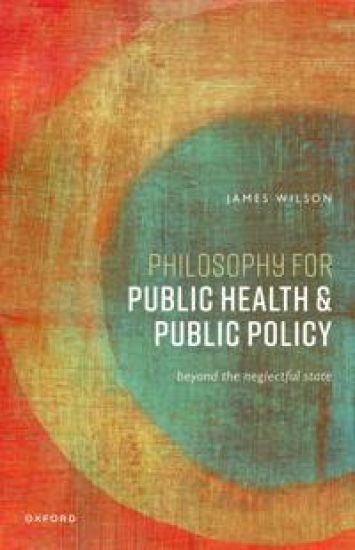
Philosophy for Public Health and Public Policy

Philosophy for Public Health and Public Policy

James Wilson

Oxford University Press
2023
nidottu
Public health has never been more important, or more controversial. What states do, and fail to do, makes a significant difference to the lives we are able to lead. Putting public health first would allow improvements to the health of everyone, especially the worst off. Yet many citizens actively oppose state interference to improve population health, complaining that it encroaches on personal liberty. How should policymakers reconcile these conflicting priorities? This groundbreaking book argues that philosophy is not just useful, but vital, for thinking coherently about priorities in health policy and public policy. Novel, theoretically rigorous, yet practical, Philosophy for Public Health and Public Policy examines why it is so common for public policies to fail in practice to improve the problems they aim to solve, and what to do about this. It argues that a shift to complex systems approaches to policymaking is overdue. Philosophers need to become much more attuned to the contingency and messiness of real-world policymaking, and to the ways in which philosophical tools such as thought experiments are frequently unreliable. The book also provides an ethical framework for public health policy. It argues that public health is a right of citizens, alongside more familiar rights such as liberty and security. Public health should not be thought of merely as interference with the rights that individuals have, but as necessary to protect these rights. Chapters explore implications for resource allocation, personal responsibility, health equity, and the control of communicable disease.
Philosophy as Descartes Found It

Philosophy as Descartes Found It

Brian Copenhaver

Oxford University Press
2024
sidottu
What was philosophy as Descartes found it around 1620? What was philosophy like before Descartes reformed it after 1637? What features of philosophy did he want to fix, and what tools did he use? To answer such questions, how should philosophers do their work today? One answer is surprising: that Descartes wrote picture books, for example. Another is challenging: that philosophers in the present would be better students of their discipline's past if they spent less time on past philosophy as they commonly understand it. The change would be transformative. But big changes have happened in philosophy's past for non-philosophical reasons that need attention from philosophers today, when oblivion has impeded their study of such changes. Attending to understudied causes of philosophical effects will show philosophers how to repair the damage that oblivion has done to their work. Mending stories about philosophy begins in this book with Descartes and his predecessors--mostly the predecessors--on meditation and method. Brian Copenhaver examines these familiar topics from a neglected point of view before introducing a different and unfamiliar Descartes: the author of the Discourse and Meditations as a writer of picture books. Three chapters about these topics--meditation, method, and picturing--are the practice justified by two theoretical chapters, one about how philosophy changes, the other about the oblivion that cancels memories of change.
Philosophical Justice and Reformation Righteousness

Philosophical Justice and Reformation Righteousness

Risto Saarinen

Oxford University Press
2025
sidottu
The churches of the Reformation highlight the righteousness of faith (Iustitia Dei) as the core of their theology. Martin Luther formulated this doctrine as an alternative to the Aristotelian virtue of justice. This volume shows, however, that many different versions of philosophical justice circulated in Luther's days. Some of them already affirm the relational features that characterize later Reformation theology. As Protestant scholarship has not attended to the philosophical commentaries on Aristotle and the formative impact of Anselm and John Duns Scotus in philosophy and theology, the medieval background of imputative and forensic righteousness is much broader than earlier studies assume. This volume argues that a new historical paradigm of Iustitia Dei can be outlined by investigating the complex interaction between Anselmian and Aristotelian thought available in late medieval and Renaissance commentaries. The philosophical trajectory of justice underwent a profound transformation before the sixteenth century. While Thomas Aquinas considers that 'the just' is the object of justice, later scholastic commentators affirm an increasingly subjective and voluntary constitution of justice. In Franciscan thinking, this development leads to a view in which the interplay between the lord and the subjects defines the realm of justice. On the one hand, this interplay is connected to biblical views and the teaching of Anselm. On the other, it permeates the early modern considerations of justice. Therefore, the new paradigm outlined in this study influences both Reformation theology and the broader intellectual history of justice in Western thought.
Philosophy in the Reformation

Philosophy in the Reformation

Peter Adamson

Oxford University Press
2026
sidottu
In this latest volume of A History of Philosophy Without Any Gaps, Peter Adamson presents a lively and accessible introduction to European philosophy during the fifteenth and sixteenth centuries. Philosophy in the Reformation focuses on the parallel and intertwining emergence of humanism and of religious reform, as figures like Erasmus, Luther, and Calvin remade the intellectual and spiritual life of Europe. In the first three parts of the book, philosophical developments in central Europe, France, and Britain are examined. A wide range of topics and controversies are discussed, from debates over free will to the legitimacy of tyrannicide. This was also the time of the Northern Renaissance, which saw a resurgence of ancient concepts like skepticism and atomist theories of matter. The volume's final section charts the Catholic reaction to these epochal events in the Counter-Reformation, and especially the ideas of Spanish thinkers like Molina and Suárez. Quite a few familiar figures are discussed, such as Montaigne and Copernicus. But as always in this series, Adamson lavishes attention on fascinating figures who are often ignored in the history of philosophy, like John Dee, Robert Fludd, and Oliva Sabuco (who is just one of numerous women intellectuals covered). Another feature of the book is its attention to literature and the arts: the reader will learn how the achievements of Dürer, Michelangelo, Shakespeare, and Cervantes relate to philosophical currents of the time. The eighth volume in the A History of Philosophy Without Any Gaps series takes us to the threshold of the early modern era and sets the stage for the developments that unfolded during the Enlightenment.
Philosophical Perspectives on Art

Philosophical Perspectives on Art

Stephen Davies

Clarendon Press
2007
sidottu
Philosophical Perspectives on Art presents a series of essays devoted to two of the most fundamental topics in the philosophy of art: the distinctive character of artworks and what is involved in understanding them as art. In Part I, Stephen Davies considers a wide range of questions about the nature and definition of art. Can art be defined, and if so, which definitions are the most plausible? Do we make and consume art because there are evolutionary advantages to doing so? Has art completed the mission that guided its earlier historical development, and if so, what is to become of it now? Should architecture be classified as an art form? Part II turns to the interpretation and appreciation of art. What is the target and purpose of the critic's interpretation? Is interpretation primarily directed at uncovering artists' intended meanings? Can apparently contradictory interpretations of a given piece both be true? Are interpretative evaluations entailed by descriptions of a work's aesthetic and artistic characteristics? In addition to providing fresh answers to these and other central questions in aesthetics, Davies considers the nature and content of metaphor, and the relation between the expressive qualities of a work of art and the emotions of its creator.
Philosophical Perspectives on Art

Philosophical Perspectives on Art

Stephen Davies

Oxford University Press
2010
nidottu
Philosophical Perspectives on Art presents a series of essays devoted to two of the most fundamental topics in the philosophy of art: the distinctive character of artworks and what is involved in understanding them as art. In Part I, Stephen Davies considers a wide range of questions about the nature and definition of art. Can art be defined, and if so, which definitions are the most plausible? Do we make and consume art because there are evolutionary advantages to doing so? Has art completed the mission that guided its earlier historical development, and if so, what is to become of it now? Should architecture be classified as an art form? Part II turns to the interpretation and appreciation of art. What is the target and purpose of the critic's interpretation? Is interpretation primarily directed at uncovering artists' intended meanings? Can apparently contradictory interpretations of a given piece both be true? Are interpretative evaluations entailed by descriptions of a work's aesthetic and artistic characteristics? In addition to providing fresh answers to these and other central questions in aesthetics, Davies considers the nature and content of metaphor, and the relation between the expressive qualities of a work of art and the emotions of its creator.
Philosophical Perspectives on Technology and Psychiatry
Our lives are dominated by technology. We live with and through the achievements of technology. What is true of the rest of life is of course true of medicine. Many of us owe our existence and our continued vigour to some achievement of medical technology. And what is true in a major way of general medicine is to a significant degree true of psychiatry. Prozac has long since arrived, and in its wake an ever-growing armamentarium of new psychotropics; beyond that, neuroscience promises ever more technological advances for the field. However, the effect of technology on the field of psychiatry remains highly ambiguous. On the one hand there are the achievements, both in the science and practice of psychiatry; on the other hand technology's influence on the field threatens its identity as a humanistic practice. In this ambiguity psychiatry is not unique - major thinkers have for a long time been highly ambivalent and concerned about the technological order that now defines modern society. For the future, the danger is that the psychiatrically real becomes that which can be seen, the symptom, and especially that which can be measured. Disorders and treatments might become reduced to what can be defined by diagnostic criteria and what can be mapped out on a scale. This book exams how technology has come to influence and drive psychiatry forward, and considers at just what cost these developments have been made. It includes a range of stimulating and thought-provoking chapters from a range of psychiatrists and philosophers.
Philosophers on Music

Philosophers on Music

Clarendon Press
2007
sidottu
Philosophers on Music: Experience, Meaning, and Work presents significant new contributions to central issues in the philosophy of music, written by leading philosophers working in the analytic tradition. Music is an increasingly popular object of reflection for professional philosophers, as it raises special questions not only of relevance to music practitioners, theorists, and philosophers of art, but also of wider philosophical interest to those working in metaphysics, the philosophy of emotion, and the philosophy of language, among other areas. The wide range of contributors to this volume reflects this level of interest. It includes both well-known philosophers of music drawing on a wealth of reflection to produce new and often startling conclusions, and philosophers relatively new to the philosophy of music yet eminent in other philosophical fields, who are able to bring a fresh perspective, informed by that background, to their topic of choice. The issues tackled in this volume include what sort of thing a work of music is; the nature of the relation between a musical work and versions of it; the nature of musical expression and its contribution to musical experience; the relation of music to metaphor; the nature of musical irony; the musical status of electro-sonic art; and the nature of musical rhythm. Together these papers constitute some of the best new work in what is an exciting field of research, and one which has much to engage philosophers, aestheticians, and musicologists.
Philosophical and Theological Essays on the Trinity
Classical Christian orthodoxy insists that God is Triune: there is only one God, but there are three divine Persons - Father, Son, and Holy Spirit - who are somehow of one substance with one another. But what does this doctrine mean? How can we coherently believe that there is only one God if we also believe that there are three divine Persons? This problem, sometimes called the 'threeness-oneness problem' or the 'logical problem of the Trinity', is the focus of this interdisciplinary volume. Philosophical and Theological Essays on the Trinity includes a selection of the most important recent philosophical work on this topic, accompanied with a variety of compelling new essays by philosophers and theologians to further the discussion. The book is divided into four parts, the first three dealing in turn with the three most prominent models for understanding the relations between the Persons of the Trinity: Social Trinitarianism, Latin Trinitarianism, and Relative Trinitarianism. Each section includes essays by both proponents and critics of the relevant model. The volume concludes with a section containing essays by theologians reflecting on the current state of the debate.
Philosophy and Religion in Enlightenment Britain
These twelve new studies illustrate some of the techniques employed in intellectual history today. Exploring themes and issues pertaining to religion, philosophy, and their interrelations, as they exercised British thinkers in the long eighteenth century, they further our understanding of the period when some of the most significant works in western philosophy were written, at a time when theory and practice in science, politics, law, and theology were evolving and there was important contact with the Continent. Priority has been given to new work on primary sources. Figures examined range from Locke and Hume to relatively unfamiliar personalities, such as Martin Clifford, Henry Scougal, Samuel Haliday, and Thomas Cooper. Others treated include John Toland, Bernard Mandeville, Francis Hutcheson, Joseph Butler, Henry Home, Adam Smith, Joseph Priestley, Thomas Reid, and Dugald Stewart. Topics include the claims of biblical authority and religious experience as sources of truth; whether beliefs received on the evidence of authority (e.g. about resurrection) can be made intelligible; freedom of thought and conscience in philosophical, religious, and political contexts; shifts in the study of human nature; the claims of justice, and natural law. Contributors include distinguished and established scholars and exciting younger talent, bringing together historians of philosophy with scholars from theology, literature, history, and political science. New transcriptions of two pieces by Hume are included-a new letter illustrating his later attitude to politics and religion, and his early essay on ethics and chivalry.
Philosophy of Science Today
A state-of-the-art guide to the fast-developing area of the philosophy of science. An eminent international team of authors covers a wide range of topics at the intersection of philosophy and the sciences, including causation, realism, methodology, epistemology and the philosophical foundations of physics, biology and psychology. An expanded version of a special issue of the journal "BJPS", this collection should be valuable to advanced students as well as to scholars.
Philosophy of Science Today
Philosophy of Science Today offers a state-of-the-art guide to this fast-developing area. An eminent international team of authors covers a wide range of topics at the intersection of philosophy and the sciences, including causation, realism, methodology, epistemology, and the philosophical foundations of physics, biology, and psychology. An expanded version of a special issue of the leading journal BJPS, this collection will be valuable to advanced students as well as to scholars.
Philosophy of Mind

Philosophy of Mind

Ian Ravenscroft

Oxford University Press
2005
nidottu
Philosophy of Mind: A Beginner's Guide provides the most accessible introduction to the philosophy of mind. Specifically aimed at beginning students with no background knowledge in the subject, Ravenscroft brings together all of the basic concepts and major theories. The text is supported by many pedagogical aids including chapter summaries, a glossary, further reading suggestions and self-assessment questions.
Philosophy of Mind

Philosophy of Mind

Oxford University Press
2003
nidottu
Edited by a renowned scholar in the field, this anthology provides an extensive and varied collection of classical and contemporary readings in the philosophy of mind. Especially noteworthy are the substantial authoritative introductions to each section, which set extracts in context and guide the reader through them. The volume is organised into 12 sections, providing instructors with flexibility in designing and teaching a variety of courses. It contains 50 important writings on the philosophy of mind, with introductions to each section, discussion questions and guides to further reading. Perfect for undergraduate courses, this book offers the ideal, self-contained introduction to the philosophy of mind.
Philodemus: On Poems, Book 1

Philodemus: On Poems, Book 1

Oxford University Press
2003
nidottu
The On Poems by Philodemus (c.110-35 BC), the Epicurean philosopher and poet who taught Virgil and influenced Horace, is our main source for Hellenistic literary theory. In Book 1 Philodemus summarizes a survey of previously unknown poetic and aesthetic theories. Compiled by Crates of Mallos this survey reviews the critical theories of earlier Epicureans, Peripatetics, and Stoics, who argued in some way that sound is the source of poetic excellence, and that the ear, unaided by the mind, can judge it. Philodemus led the reaction against this invasion of Hellenistic literary criticism by musical theory, arguing that form and content are interrelated, and that substantive content, not pretty sound, is what makes poetry worthwhile. The 200 fragments of Book 1 were entirely jumbled after its discovery at the site of Vesuvius' destruction of Herculaneum. This edition reconstitutes their original sequence, according to a new method, while exploiting previously unknown manuscript sources and new techniques for reading the extant pieces. In thus restoring this important aesthetic treatise from antiquity, it makes a major addition to the corpus of classical literature.
Philosophy and Conceptual Art
The fourteen prominent analytic philosophers writing here engage with the cluster of philosophical questions raised by conceptual art. They address four broad questions: What kind of art is conceptual art? What follows from the fact that conceptual art does not aim to have aesthetic value? What knowledge or understanding can we gain from conceptual art? How ought we to appreciate conceptual art? Conceptual art, broadly understood by the contributors as beginning with Marcel Duchamp's ready-mades and as continuing beyond the 1970s to include some of today's contemporary art, is grounded in the notion that the artist's 'idea' is central to art, and, contrary to tradition, that the material work is by no means essential to the art as such. To use the words of the conceptual artist Sol LeWitt, 'In conceptual art the idea of the concept is the most important aspect of the work . . . and the execution is a perfunctory affair'. Given this so-called 'dematerialization' of the art object, the emphasis on cognitive value, and the frequent appeal to philosophy by many conceptual artists, there are many questions that are raised by conceptual art that should be of interest to analytic philosophers. Why, then, has so little work been done in this area? This volume is most probably the first collection of papers by analytic Anglo-American philosophers tackling these concerns head-on. Contributors Margaret Boden, Diarmuid Costello, Gregory Currie, David Davies, Peter Goldie, Robert Hopkins, Matthew Kieran, Peter Lamarque, Dominic McIver Lopes, Derek Matravers, Elisabeth Schellekens, Kathleen Stock, Carolyn Wilde, and the 'Art & Language' group.