
Kirjahaku
Etsi kirjoja tekijän nimen, kirjan nimen tai ISBN:n perusteella.
1000 tulosta hakusanalla Pierre Alexandre Georget





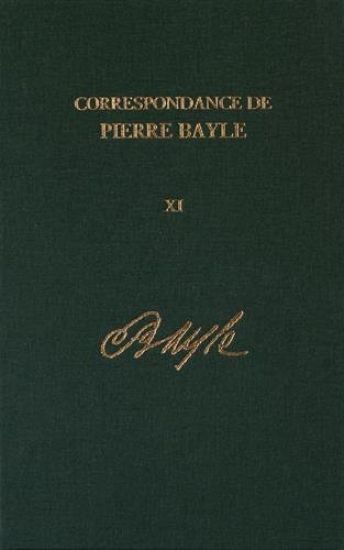
Correspondance De Pierre Bayle: Avril 1696 - Juillet 1697, Lettres 1100-1280 v. 10
Pierre Bayle
Voltaire Foundation
2013
sidottu
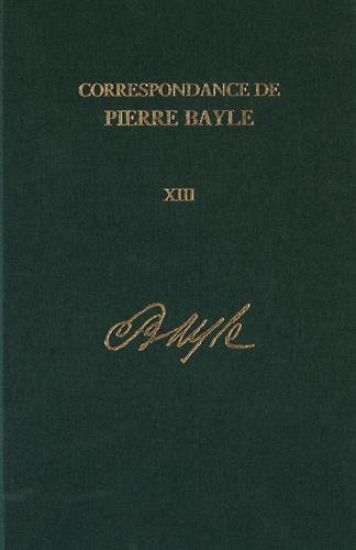
Correspondance de Pierre Bayle: Janvier 1703-1706: No. 13
Pierre Bayle
Voltaire Foundation
2016
sidottu
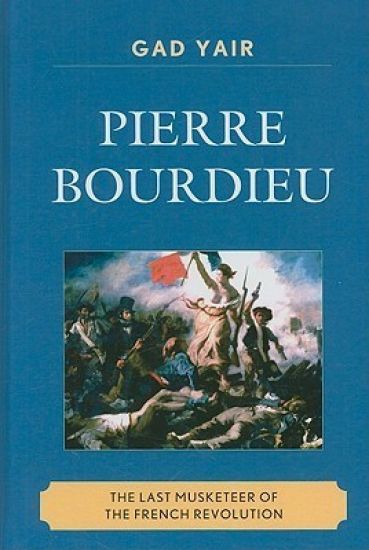
Pierre Bourdieu: The Last Musketeer of the French Revolution argues that Bourdieu appointed himself as the representative of the French people and acted as its National Assembly. In that capacity, he set himself to work with the charter of the preamble toThe Declaration of the Rights of Man and the Citizen to remind the members of the social body of their rights and obligations; to monitor the legislative and executive powers and compare them with the Republican purposes of ideal political and social agendas decreed by the revolutionaries of 1789; and, overall, to maintain the tenets of the French constitution. In that sense, like d'Artagnan in Dumas'The Three Musketeers, Bourdieu took it upon himself to be the fighter for true France, namely the keeper of the Republican tradition of the French Revolution. Bourdieu's entire oeuvre was indeed motivated by the failed promise of the French Revolution and by the demise of its most noble ideals. His passionate analyses—of educational stratification, cultural production and consumption, gender relations, the social structure of the economy, and the effects of globalization—were always carried out with the moral benchmark of the revolution in mind. Bourdieu was indeed passionately tied to the values of the French Revolution, notably to liberty and meritocracy, to social equality and to the democratization and universalization of government. But wherever he looked, he saw those values betrayed by the very people who argued for their implementation, and by the governmental bodies which were devised in order to guarantee their effectiveness. Committed to the values of the Declaration, he was constantly frustrated by the betrayals of universalization by the Fifth Republic.
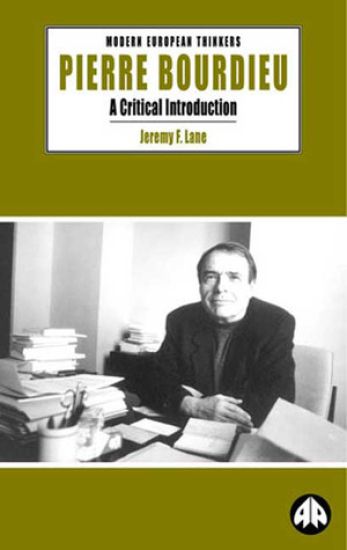
'This beautifully written and lucidly argued study is the most persuasive account of Bourdieu's work yet to be published. Lane illuminates much that can puzzle a foreign readership by expertly situating Bourdieu within a French context. At the same time he points to those aspects of Bourdieu's writing which are of particular relevance to contemporary debates on questions of citizenship and globalisation. He gives a fascinating account of Bourdieu's astonishingly prescient analyses of the impact of the expansion of higher education, the influence of the mass media, the growth of the culture industries, and the changing nature of political and social elites, not just in France, but in the western world.' - Professor Jill Forbes, Queen Mary and Westfield, University of London
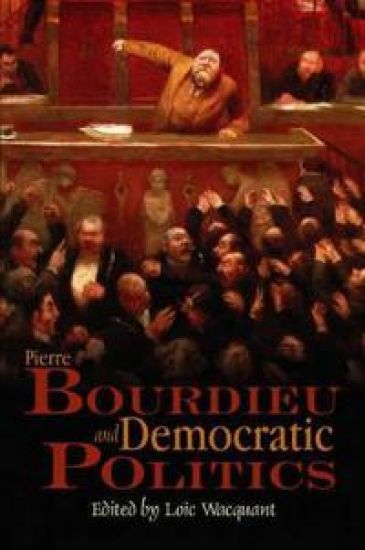
Pierre Bourdieu and Democratic Politics
Polity Press
2005
sidottu
Pierre Bourdieu was a brilliant sociologist and social thinker; he was also an intensely political man whose work is of profound significance for rethinking democracy. This original volume presents and develops Bourdieu’s distinctive contribution to the theory and practice of democratic politics. It explicates and illustrates his core concepts of political field and field of power, his historical model of the bureaucratic state, and his influential analyses of the practices and institutions involved in the paradoxical phenomenon of political representation – starting with the enigma of delegation, or what he called the “mystery of ministry.” The fruitfulness of Bourdieu’s approach is demonstrated in a series of integrated studies of voting, public opinion polls, party dynamics, class rule, and state-building, as well as by careful analyses of Bourdieu’s own civic engagements and his theoretical treatment of the politics of reason and recognition in contemporary society. Charting the connections between Bourdieu’s political views, the main nodes of his sociology of democratic representation, and the implications of this sociology for progressive civic thought and action, this book will be of interest to students and scholars across the gamut of disciplines as well as to citizens concerned with renewing struggles for social justice.
Pierre Bourdieu and Democratic Politics
Polity Press
2005
nidottu
Pierre Bourdieu was a brilliant sociologist and social thinker; he was also an intensely political man whose work is of profound significance for rethinking democracy. This original volume presents and develops Bourdieu’s distinctive contribution to the theory and practice of democratic politics. It explicates and illustrates his core concepts of political field and field of power, his historical model of the bureaucratic state, and his influential analyses of the practices and institutions involved in the paradoxical phenomenon of political representation – starting with the enigma of delegation, or what he called the “mystery of ministry.” The fruitfulness of Bourdieu’s approach is demonstrated in a series of integrated studies of voting, public opinion polls, party dynamics, class rule, and state-building, as well as by careful analyses of Bourdieu’s own civic engagements and his theoretical treatment of the politics of reason and recognition in contemporary society. Charting the connections between Bourdieu’s political views, the main nodes of his sociology of democratic representation, and the implications of this sociology for progressive civic thought and action, this book will be of interest to students and scholars across the gamut of disciplines as well as to citizens concerned with renewing struggles for social justice.
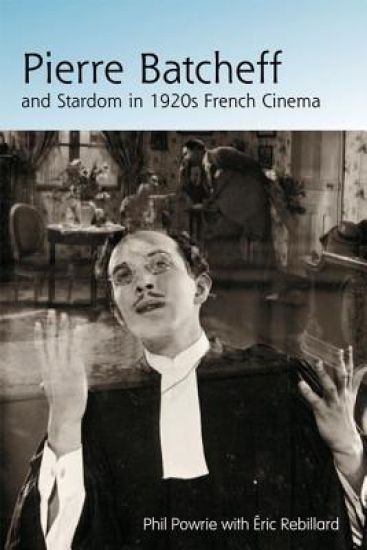
Pierre Batcheff and Stardom in 1920s French Cinema
Phil Powrie; Eric Rebillard
Edinburgh University Press
2009
sidottu
This book is the first major study of a French silent cinema star. It focuses on Pierre Batcheff, a prominent popular cinema star in the 1920s, the French Valentino, best-known to modern audiences for his role as the protagonist of the avant-garde film classic Un chien andalou. Unlike other stars, he was linked to intellectual circles, especially the Surrealists. The book places Batcheff in the context of 1920s popular cinema, with specific reference to male stars of the period. It analyses the tensions he exemplifies between the 'popular' and the 'intellectual' during the 1920s, as cinema - the subject of intense intellectual interest across Europe - was racked between commercialism and 'art'. A number of the major films are studied in detail: Le Double amour (Epstein, 1925), Feu Mathias Pascal (L'Herbier, 1925), Education de prince (Diamant-Berger, 1927), Le Joueur d'echecs (Bernard, 1927), La Sirene des tropiques (Etievant and Nalpas, 1927), Les Deux timides (Clair, 1928), Un chien andalou (Bunuel, 1929), Monte-Cristo (Fescourt, 1929), and Baroud (Ingram, 1932). Key features: *The first major study of a French silent cinema star. *Provides an in-depth analysis of star performance. *Includes extensive appendices of documents from popular cinema magazines of the period.

Pierre Boulez's first piano pieces date from his youth, prior to his studies in Paris with Messiaen, and his subsequent meteoric rise to international acclaim as the leader of the musical avant-garde during the 1950s. His most recent published work is a solo piano piece, Une page d’éphéméride, written some sixty years after his first attempts at composition. The piano has remained central to Boulez's creative work throughout his career, and although his renown as a conductor has to some extent overshadowed his other achievements, it was as a performer of his own piano music that his practical gifts first found expression. Peter O'Hagan has given performances of various unpublished piano works by Boulez, including Antiphonie from the Third Sonata and Trois Psalmodies. In this study, he considers Boulez's writing for the piano in the context of the composer's stylistic evolution throughout the course of his development. Each of the principal works is considered in detail, not only on its own terms, but also as a stage in Boulez's ongoing quest to invent radical solutions to the renewal of musical language and to reinvigorate tradition. The volume includes reference to hitherto unpublished source material, which sheds light on his working methods and on the interrelationship between works.

Pierre Bourdieu
SAGE Publications Inc
2000
muu
Derek Robbins provides the first complete assessment of the sociological achievements of one of the key European sociologists of the 20th century. Bourdieu has made decisive contributions to theory, method and professional practice. All are discussed here, providing an unparalleled distillation of Bourdieu's work. The collection: offers a systematic understanding and evaluation of Bourdieu's sociology; demonstrates the relation of Bourdieu to wider research traditions in the social sciences; faithfully represents Bourdieu's multidisciplinarianism; explains why Bourdieu is a key 20th century sociologist. The collection is edited by one of Europe's leading commentators on Bourdieu. The four volumes stand as the benchmark work on a sociologist who has left an indelible mark on the 20th century and whose legacy will be intensively debated into the next millenium.
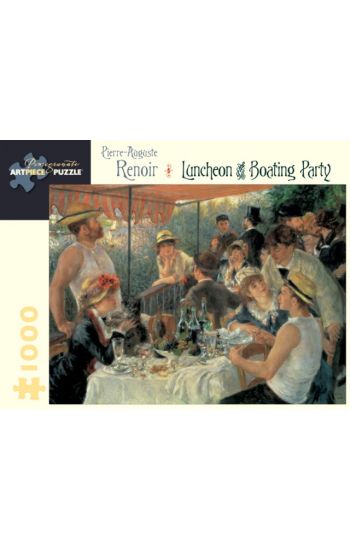
Pierre-Auguste Renoir
Pomegranate Communications Inc,US
2010
muu

Pierre-Esprit Radisson: The Collected Writings, Volume 1
Germaine Warkentin
McGill-Queen's University Press
2012
sidottu
Pierre-Esprit Radisson (1636?-1710) was many men. He was a teenager captured, tortured, and adopted by the Mohawk, and a youth relishing the freedom of the wilderness. He was the French-born servant of an ambitious English trading company and a hapless petitioner at the court of Louis XIV. He was a central figure in the tug-of-war between France and England over Hudson Bay and a pretender to aristocratic status who had to defend his actions before James II. Finally, he was a retired "sea captain" trying to provide for his children, and despite the pension he had fought for, the "decay'd Gentleman" described in his burial record. Radisson's writings, characterized by hubris and contradiction, provoke many questions. Was he a semi-literate woodsman? Are his accounts of Native life ethnographically reliable? Can he be trusted to tell the truth about himself? How important were his explorations? In this first volume of Radisson's complete writings, Germaine Warkentin introduces the life, travels, motivations, and work of this compelling and complicated figure while providing a comprehensive and authoritative edition of his masterpiece - The Voyages. In the four accounts of his travels to the far interior of the Great Lakes and James Bay, Radisson vibrantly depicts his life among the Mohawk, his encounters and relationships with Native peoples, Jesuits, English, French, and Dutch colonists and traders, as well as the hazards of the capricious politics of the New World and the thrilling surprise of discoveries. Striking a superb balance between accessible writing and comprehensive scholarship, this new edition of Radisson's Voyages is indispensable, definitive, and reasserts the important roles that Radisson played in seventeenth-century North American rivalries.

Pierre-Esprit Radisson: The Collected Writings, Volume 2
Germaine Warkentin
McGill-Queen's University Press
2014
sidottu
Pierre-Esprit Radisson (1636?-1710) was many men. He was a teenager captured, tortured, and adopted by the Mohawk, and a youth relishing the freedom of the wilderness. He was the French-born servant of an ambitious English trading company and a hapless petitioner at the court of Louis XIV. He was a central figure in the tug-of-war between France and England over Hudson Bay and a pretender to aristocratic status who had to defend his actions before James II. Finally, he was a retired "sea captain" trying to provide for his children, and despite the pension he had fought for, the "decay'd Gentleman" described in his burial record. Radisson's writings, characterized by hubris and contradiction, provoke many questions. Was he a semi-literate woodsman? Are his accounts of Native life ethnographically reliable? Can he be trusted to tell the truth about himself? How important were his explorations? All these questions are raised in this first critical edition of Radisson's writings in both English and French, which includes previously unknown documents. Volume 1 follows Radisson's account of the decade he spent, in part with his brother-in-law Medard Des Groseilliers, exploring far into the interior of North America. In Volume 2, Radisson recounts his part in the battle over possession of Hudson Bay waged in the 1680s by England and France, his difficulties at the French and English courts, and his struggle with the Hudson's Bay Company for his just reward. Striking a superb balance between accessible writing and comprehensive scholarship, this new edition of Radisson's writing is indispensable, definitive, and reasserts the important roles that Radisson played in seventeenth-century North American rivalries.
This is the first comprehensive description of Pierre Bourdieu's theory of culture and habitus. Within the wider intellectual context of Bourdieu's work, this book provides a systematic reading of his assessment of the role of `cultural capital' in the production and consumption of symbolic goods. Bridget Fowler outlines the key critical debates that inform Bourdieu's work. She introduces his recent treatment of the rules of art, explains the importance of his concept of capital - economic and social, symbolic and cultural - and defines such key terms as habitus, practice and strategy, legitimate culture, popular art and distinction. The book focuses particularly on Bourdieu's account of the nature of capitalist modernity, on the emergence of bohemia and, with the growth of the market, the invention of the artist as the main historical response to the changed place of art.
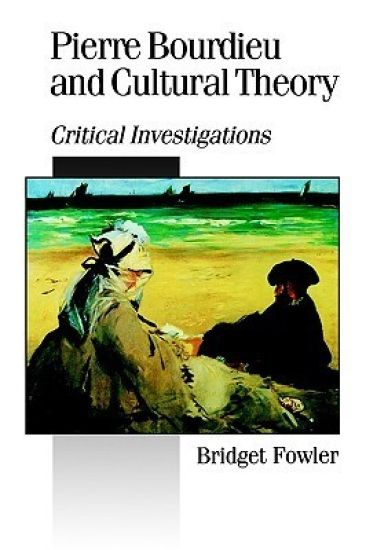
This is the first comprehensive description of Pierre Bourdieu's theory of culture and habitus. Within the wider intellectual context of Bourdieu's work, this book provides a systematic reading of his assessment of the role of `cultural capital' in the production and consumption of symbolic goods. Bridget Fowler outlines the key critical debates that inform Bourdieu's work. She introduces his recent treatment of the rules of art, explains the importance of his concept of capital - economic and social, symbolic and cultural - and defines such key terms as habitus, practice and strategy, legitimate culture, popular art and distinction. The book focuses particularly on Bourdieu's account of the nature of capitalist modernity, on the emergence of bohemia and, with the growth of the market, the invention of the artist as the main historical response to the changed place of art.