Kirjojen hintavertailu. Mukana 12 016 292 kirjaa ja 12 kauppaa.

Kirjahaku

Etsi kirjoja tekijän nimen, kirjan nimen tai ISBN:n perusteella.

1000 tulosta hakusanalla Richard J. Walter

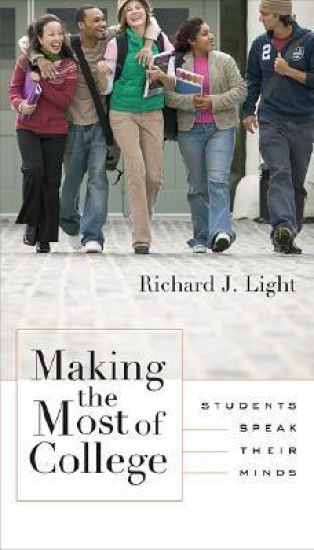
Making the Most of College

Making the Most of College

Richard J. Light

Harvard University Press
2001
sidottu
Why do some students make the most of college, while others struggle and look back on years of missed deadlines and missed opportunities? What choices can students make, and what can teachers and university leaders do, to improve more students’ experiences and help them achieve the most from their time and money? Most important, how is the increasing diversity on campus—cultural, racial, and religious—affecting education? What can students and faculty do to benefit from differences, and even learn from the inevitable moments of misunderstanding and awkwardness?From his ten years of interviews with Harvard seniors, Richard Light distills encouraging—and surprisingly practical—answers to fundamental questions. How can you choose classes wisely? What’s the best way to study? Why do some professors inspire and others leave you cold? How can you connect what you discover in class to all you’re learning in the rest of life? Light suggests, for instance: studying in pairs or groups can be more productive than studying alone; the first and most important skill to learn is time management; supervised independent research projects and working internships offer the most learning and the greatest challenges; and encounters with students of different religions can be simultaneously the most taxing and most illuminating of all the experiences with a diverse student body.Filled with practical advice, illuminated with stories of real students’ self-doubts, failures, discoveries, and hopes, Making the Most of College is a handbook for academic and personal success.
Making the Most of College

Making the Most of College

Richard J. Light

Harvard University Press
2004
nidottu
Why do some students make the most of college, while others struggle and look back on years of missed deadlines and missed opportunities? What choices can students make, and what can teachers and university leaders do, to improve more students’ experiences and help them achieve the most from their time and money? Most important, how is the increasing diversity on campus—cultural, racial, and religious—affecting education? What can students and faculty do to benefit from differences, and even learn from the inevitable moments of misunderstanding and awkwardness?From his ten years of interviews with Harvard seniors, Richard Light distills encouraging—and surprisingly practical—answers to fundamental questions. How can you choose classes wisely? What’s the best way to study? Why do some professors inspire and others leave you cold? How can you connect what you discover in class to all you’re learning in the rest of life? Light suggests, for instance: studying in pairs or groups can be more productive than studying alone; the first and most important skill to learn is time management; supervised independent research projects and working internships offer the most learning and the greatest challenges; and encounters with students of different religions can be simultaneously the most taxing and most illuminating of all the experiences with a diverse student body.Filled with practical advice, illuminated with stories of real students’ self-doubts, failures, discoveries, and hopes, Making the Most of College is a handbook for academic and personal success.
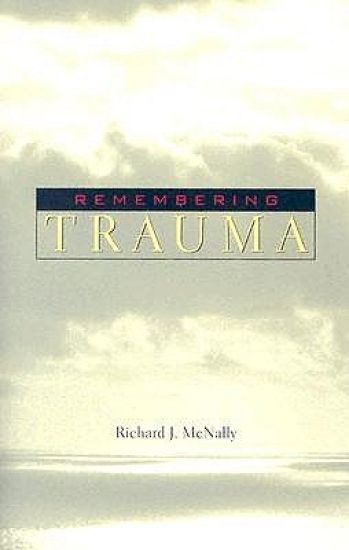
Remembering Trauma

Remembering Trauma

Richard J. McNally

The Belknap Press
2005
nidottu
Are horrific experiences indelibly fixed in a victim’s memory? Or does the mind protect itself by banishing traumatic memories from consciousness? How victims remember trauma is the most controversial issue in psychology today, spilling out of consulting rooms and laboratories to capture headlines, rupture families, provoke legislative change, and influence criminal trials and civil suits. This book, by a clinician who is also a laboratory researcher, is the first comprehensive, balanced analysis of the clinical and scientific evidence bearing on this issue—and the first to provide definitive answers to the urgent questions at the heart of the controversy.Synthesizing clinical case reports and the vast research literature on the effects of stress, suggestion, and trauma on memory, Richard McNally arrives at significant conclusions, first and foremost that traumatic experiences are indeed unforgettable. Though people sometimes do not think about disturbing experiences for long periods of time, traumatic events rarely slip from awareness for very long; furthermore, McNally reminds us, failure to think about traumas—such as early sexual abuse—must not be confused with amnesia or an inability to remember them. In fact, the evidence for repressed memories of trauma—or even for repression at all—is surprisingly weak.A magisterial work of scholarship, panoramic in scope and nonpartisan throughout, this unfailingly lucid work will prove indispensable to anyone seeking to understand how people remember trauma.
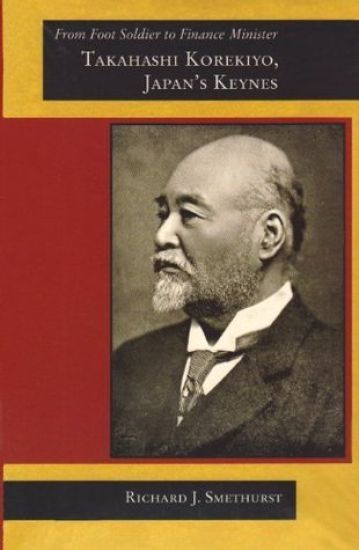
From Foot Soldier to Finance Minister

From Foot Soldier to Finance Minister

Richard J. Smethurst

Harvard University, Asia Center
2009
nidottu
From his birth in the lowest stratum of the samurai class to his assassination at the hands of right-wing militarists, Takahashi Korekiyo (1854-1936) lived through tumultuous times that shaped the course of modern Japanese history. Takahashi is considered "Japan's Keynes" in many circles because of the forward-thinking (and controversial) fiscal and monetary policies--including deficit financing, currency devaluation, and lower interest rates--that he implemented to help Japan rebound from the Great Depression and move toward a modern economy.Richard J. Smethurst's engaging biography underscores the profound influence of the seven-time finance minister on the political and economic development of Japan by casting new light on Takahashi's unusual background, unique talents, and singular experiences as a charismatic and cosmopolitan financial statesman.Along with the many fascinating personal episodes--such as working as a houseboy in California and running a silver mine in the Andes--that molded Takahashi and his thinking, the book also highlights four major aspects of Takahashi's life: his unorthodox self-education, his two decades of service at the highest levels of government, his pathbreaking economic and political policies before and during the Depression, and his efforts to stem the rising tide of militarism in the 1930s. Deftly weaving together archival sources, personal correspondence, and historical analysis, Smethurst's study paints an intimate portrait of a key figure in the history of modern Japan.
What Is Mental Illness?

What Is Mental Illness?

Richard J. McNally

The Belknap Press
2012
nidottu
According to a major health survey, nearly half of all Americans have been mentally ill at some point in their lives—more than a quarter in the last year. Can this be true? What exactly does it mean, anyway? What’s a disorder, and what’s just a struggle with real life?This lucid and incisive book cuts through both professional jargon and polemical hot air, to describe the intense political and intellectual struggles over what counts as a “real” disorder, and what goes into the “DSM,” the psychiatric bible. Is schizophrenia a disorder? Absolutely. Is homosexuality? It was—till gay rights activists drove it out of the DSM a generation ago. What about new and controversial diagnoses? Is “social anxiety disorder” a way of saying that it’s sick to be shy, or “female sexual arousal disorder” that it’s sick to be tired? An advisor to the DSM, but also a fierce critic of exaggerated overuse, McNally defends the careful approach of describing disorders by patterns of symptoms that can be seen, and illustrates how often the system medicalizes everyday emotional life. Neuroscience, genetics, and evolutionary psychology may illuminate the biological bases of mental illness, but at this point, McNally argues, no science can draw a bright line between disorder and distress. In a pragmatic and humane conclusion, he offers questions for patients and professionals alike to help understand, and cope with, the sorrows and psychopathologies of everyday life.
By Design

By Design

Richard J. Light; Judith D. Singer; John B. Willett

Harvard University Press
1990
nidottu
Do students who work longer and harder learn more in college? Does joining a fraternity with a more academic flavor enhance a student's academic performance? When are the results from an innovation that is tried on one campus applicable to other campuses? How many students and faculty members must participate in a research project before findings are valid? Do students learn best when they study alone or in small groups? These are just some more than fifty examples that Richard Light Judith Singer and John Willett explore in By Design, a lively nontechnical sourcebook for learning about colleges and universities. These authors believe that careful design of research on college effectiveness is the single most important step toward producing useful and valid findings. In that spirit, By Design is a pathbreaking textbook of modern research methods that both practitioners and students will find useful.
The Rule of Five

The Rule of Five

Richard J. Lazarus

The Belknap Press
2021
nidottu
Winner of the Julia Ward Howe Prize“The gripping story of the most important environmental law case ever decided by the Supreme Court.”—Scott Turow“In the tradition of A Civil Action, this book makes a compelling story of the court fight that paved the way for regulating the emissions now overheating the planet. It offers a poignant reminder of how far we’ve come—and how far we still must go.”—Bill McKibben, author of The End of NatureOn an unseasonably warm October morning, an idealistic young lawyer working on a shoestring budget for an environmental organization no one had heard of hand-delivered a petition to the Environmental Protection Agency, asking it to restrict greenhouse gas emissions from new cars. The Clean Air Act authorized the EPA to regulate “any air pollutant” thought to endanger public health. But could carbon dioxide really be considered a harmful pollutant? And even if the EPA had the authority to regulate emissions, could it be forced to do so?The Rule of Five tells the dramatic story of how Joe Mendelson and the band of lawyers who joined him carried his case all the way to the Supreme Court. It reveals how accident, infighting, luck, superb lawyering, politics, and the arcane practices of the Supreme Court collided to produce a legal miracle. The final ruling in Massachusetts v. EPA, by a razor-thin 5–4 margin brilliantly crafted by Justice John Paul Stevens, paved the way to important environmental safeguards which the Trump administration fought hard to unravel and many now seek to expand.“There’s no better book if you want to understand the past, present, and future of environmental litigation.”—Elizabeth Kolbert, author of The Sixth Extinction“A riveting story, beautifully told.”—Foreign Affairs“Wonderful…A master class in how the Supreme Court works and, more broadly, how major cases navigate through the legal system.”—Science
Summing Up

Summing Up

Richard J. Light; David B. Pillemer

Harvard University Press
1984
nidottu
How can a scientist or policy analyst summarize and evaluate what is already known about a particular topic? This book offers practical guidance.The amount and diversity of information generated by academic and policy researchers in the contemporary world is staggering. How is an investigator to cope with the tens or even hundreds of studies on a particular problem? How can conflicting findings be reconciled? Richard Light and David Pillemer have developed both general guidelines and step-by-step procedures that can be used to synthesize existing data. They show how to apply quantitative methods, including the newest statistical procedures and simple graphical displays, to evaluate a mass of studies and combine separate data sets. At the same time, they insist on the value of qualitative information, of asking the right questions, and of considering the context in which research is conducted. The authors use exemplary reviews in education, psychology, health, and the policy sciences to illustrate their suggestions.Written in nontechnical language and addressed to the beginning researcher as well as to the practicing professional, Summing Up will set a new standard for valid research reviews and is likely to become a methodological classic.
Who Will Teach?

Who Will Teach?

Richard J. Murnane; Judith D. Singer; John B. Willett; James J. Kemple; Randall J. Olsen

Harvard University Press
1991
sidottu
Will America find enough good teachers to staff its public schools? How can we ensure that all our children will be taught by skilled professionals? The policies that determine who teaches today are a confusing and often conflicting array that includes tougher licensing requirements, higher salaries, mandatory master's degrees, merit pay, and alternative routes to certification. Who Will Teach? examines these policies and separates those that work from those that backfire.The authors present an intriguing portrait of America's teachers and reveal who they are, who they have been, and who they will be. Using innovative statistical methods to track the professional lives of more than 50,000 college graduates, the book describes, in many cases for the first time, just how prospective, current, and former teachers respond to the incentives and disincentives they face. The authors, a group of noted educators, economists, and statisticians, find cause for serious concern. Few academically talented college graduates even try teaching, and many of those who do leave quickly, never to return. Current licensing requirements stifle innovation in training and dissuade many potentially talented teachers at the outset.But Who Will Teach? shows that we can reverse these trends if we get the incentives right. Although better salaries are essential, especially for new teachers, money is not enough. Potential teachers should be offered alternative paths into the classroom. School districts should improve their recruiting strategies. Licensing criteria should assess teaching skills, not just academic achievement and number of courses completed. The authors offer a promising strategy based on high standards and substantial rewards.
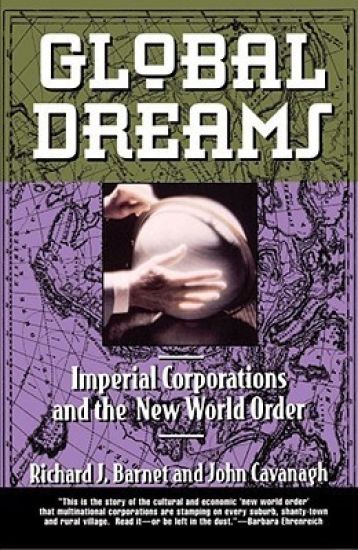
Global Dreams

Global Dreams

Richard J. Barnet

Touchstone
1995
pokkari
From Richard J. Barnet, coauthor of the groundbreaking bestseller Global Reach, and John Cavanagh comes an authoritative portrait of global corporations as they have evolved over the last twenty years.Global Dreams focuses on five companies to reveal the far-reaching impact global corporations have on the world's economy, environment, and people. Today, 300 companies control about 25% of the world's productive assets and governments are losing control of their countries economies. This book illuminates these shadowy areas.
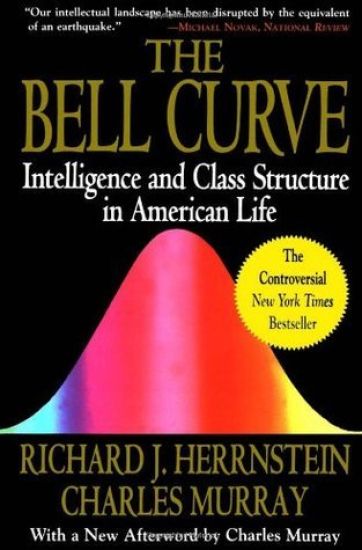
The Bell Curve

The Bell Curve

Richard J. Herrnstein; Charles Murray

Simon Schuster Ltd
1996
pokkari
The controversial book linking intelligence to class and race in modern society, and what public policy can do to mitigate socioeconomic differences in IQ, birth rate, crime, fertility, welfare, and poverty.
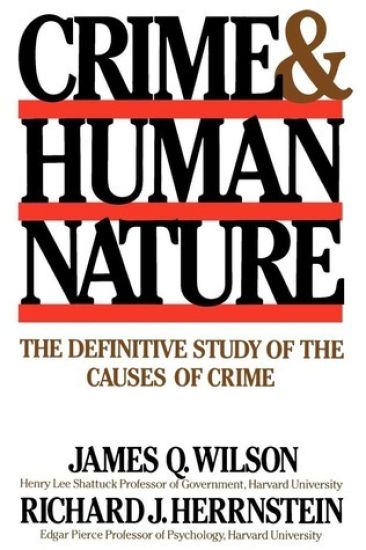
Crime Human Nature

Crime Human Nature

Richard J. Herrnstein; James Q. Wilson

The Free Press
1998
sidottu
From Simon & Schuster, Crime & Human Nature is the definitive study of the causes of crime.Assembling the latest evidence from the fields of sociology, criminology, economics, medicine, biology, and psychology and exploring the effects of such factors as gender, age, race, and family, two eminent social scientists frame a groundbreaking theory of criminal behavior.
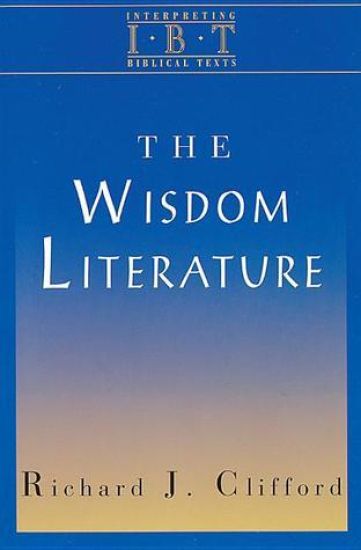
Interpreting Biblical Texts

Interpreting Biblical Texts

Richard J. Clifford

Abingdon Press
1998
pokkari
In this volume, Richard J. Clifford seeks to make the biblical wisdom literature intelligible to modern readers. It is easy to quote the occasional proverb, say a few things about "the problem of evil" in Job, or quote "vanity of vanities, " but far more rewarding to read the whole book with an appreciative and informed eye. Opening chapters of The Wisdom Literature comment on the striking similarities between ancient and modern "wisdom literature" and on the comparable literature from ancient Mesopotamia, Egypt, and Canaan. Thereafter, a chapter is devoted to each biblical book (Proverbs, Job, Ecclesiastes, Song of Songs, Sirach, and Wisdom of Solomon), studying not only its content but also its rhetoric - how it engages the reader.
Psalms 73-150

Psalms 73-150

Richard J. Clifford

Abingdon Press
2003
sidottu
This second volume completes Richard Clifford's Commentary on the Psalms. The rich imagery of the Psalms has guided and molded pray-ers since ancient times. As we seek to understand the threads and colors of the Psalms, Clifford helps us see their inner dramatic logic, how they organize the experience and desires of the pray-er, and how they seek to move us. His primary concern is to help readers see the pattern and progression within the Psalms, while attending to their complex, evocative nature.
The Senate of Imperial Rome

The Senate of Imperial Rome

Richard J.A. Talbert

Princeton University Press
1987
pokkari
Richard J. A. Talbert examines the composition, procedure, and functions of the Roman senate during the Principate (30 B.C.-A.D. 238). Although it is of central importance to the period, this great council has not previously received such scholarly treatment. Offering a fresh approach to major ancient authors (Pliny and Tacitus in particular), the book also draws on inscriptions and legal writers never before fully exploited for the study of the senate.
The I Ching

The I Ching

Richard J. Smith

Princeton University Press
2012
sidottu
The I Ching originated in China as a divination manual more than three thousand years ago. In 136 BCE the emperor declared it a Confucian classic, and in the centuries that followed, this work had a profound influence on the philosophy, religion, art, literature, politics, science, technology, and medicine of various cultures throughout East Asia. Jesuit missionaries brought knowledge of the I Ching to Europe in the seventeenth century, and the American counterculture embraced it in the 1960s. Here Richard Smith tells the extraordinary story of how this cryptic and once obscure book became one of the most widely read and extensively analyzed texts in all of world literature. In this concise history, Smith traces the evolution of the I Ching in China and throughout the world, explaining its complex structure, its manifold uses in different cultures, and its enduring appeal. He shows how the indigenous beliefs and customs of Japan, Korea, Vietnam, and Tibet "domesticated" the text, and he reflects on whether this Chinese classic can be compared to religious books such as the Bible or the Qur'an. Smith also looks at how the I Ching came to be published in dozens of languages, providing insight and inspiration to millions worldwide--including ardent admirers in the West such as Leibniz, Carl Jung, Philip K. Dick, Allen Ginsberg, Hermann Hesse, Bob Dylan, Jorge Luis Borges, and I. M. Pei. Smith offers an unparalleled biography of the most revered book in China's entire cultural tradition, and he shows us how this enigmatic ancient classic has become a truly global phenomenon.
Becoming Great Universities

Becoming Great Universities

Richard J. Light; Allison Jegla

PRINCETON UNIVERSITY PRESS
2022
sidottu
How campus communities of every kind can transform themselves from good to greatBecoming Great Universities highlights ten core challenges that all colleges and universities face and offers practical steps that everyone on campus—from presidents to first-year undergraduates—can take to enhance student life and learning.This incisive book, written in a friendly and engaging style, draws on conversations with presidents, deans, and staff at hundreds of campuses across the country as well as scores of in-depth interviews with students and faculty. Providing suggestions that all members of a campus community can implement, Richard Light and Allison Jegla cover topics such as how to build a culture of innovation on campus, how to improve learning outcomes through experimentation, how to help students from under-resourced high schools succeed in college, and how to attract students from rural areas who may not be considering colleges far from their communities. They offer concrete ways to facilitate constructive interactions among students from different backgrounds, create opportunities for lifelong learning and engagement, and inspire students to think globally. And most of the ideas presented in this book can be implemented at little to no cost.Featuring a wealth of evidence-based examples, Becoming Great Universities offers actionable suggestions for everyone to have a positive impact on college life regardless of whether their campus is urban or rural, private or public, large or small, wealthy or not.
Becoming Great Universities

Becoming Great Universities

Richard J. Light; Allison Jegla

PRINCETON UNIVERSITY PRESS
2024
pokkari
How campus communities of every kind can transform themselves from good to greatBecoming Great Universities highlights ten core challenges that all colleges and universities face and offers practical steps that everyone on campus—from presidents to first-year undergraduates—can take to enhance student life and learning.This incisive book, written in a friendly and engaging style, draws on conversations with presidents, deans, and staff at hundreds of campuses across the country as well as scores of in-depth interviews with students and faculty. Providing suggestions that all members of a campus community can implement, Richard Light and Allison Jegla cover topics such as how to build a culture of innovation on campus, how to improve learning outcomes through experimentation, how to help students from under-resourced high schools succeed in college, and how to attract students from rural areas who may not be considering colleges far from their communities. They offer concrete ways to facilitate constructive interactions among students from different backgrounds, create opportunities for lifelong learning and engagement, and inspire students to think globally. And most of the ideas presented in this book can be implemented at little to no cost.Featuring a wealth of evidence-based examples, Becoming Great Universities offers actionable suggestions for everyone to have a positive impact on college life regardless of whether their campus is urban or rural, private or public, large or small, wealthy or not.
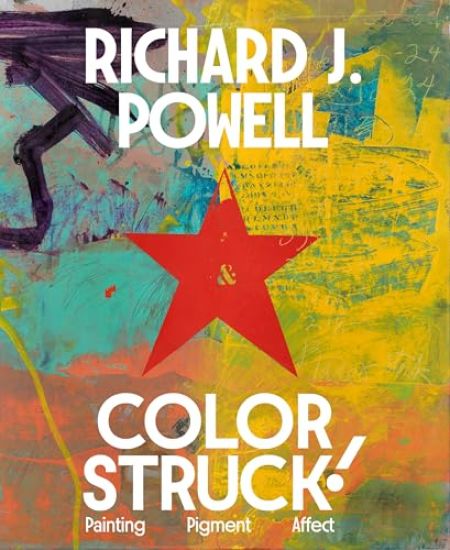
Colorstruck!

Colorstruck!

Richard J. Powell

PRINCETON UNIVERSITY PRESS
2026
sidottu
How Black painters use color to stir emotion, provoke remembrance, and uplift the spirit Color does more than capture a viewer’s attention. It assaults one’s equilibrium physically and psychologically. In this stunning book, Richard Powell draws on the concept of “colorstruck,” a twentieth-century slang term describing prejudice toward people with darker skin complexions, to provide a new history of Black American art. Powell charts the dynamics of paint and pigment in the works of important Black artists such as Jacob Lawrence, Alma Thomas, Raymond Saunders, Sam Gilliam, Hervé Télémaque, Jean-Michel Basquiat, Lynette Yiadom-Boakye, Nina Chanel Abney, and Henry Taylor. Using blue, green, yellow, orange, black, red, brown, and their combinations, he shows how the vibrant palettes of these artists collide with the undercurrents of race in unanticipated and though-provoking ways. Demonstrating how the term “colorstruck” takes on multiple and varied associations when adapted to painting, Powell shares compelling insights into the powerful chromatic forces manifested through artists’ actions and viewers’ reactions. A landmark work by an acclaimed art historian, this richly illustrated book offers a dazzling look at the transformative use of color by some of today’s most exciting painters, revealing how hue and pigmentation strike a chord for freedom and reclamation in life as well as art. Published in association with the Center for Advanced Study in the Visual Arts, National Gallery of Art, Washington, DC
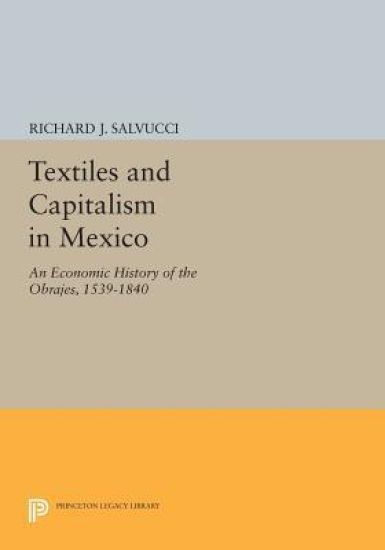
Textiles and Capitalism in Mexico

Textiles and Capitalism in Mexico

Richard J. Salvucci

Princeton University Press
2014
pokkari
The obrajes, or native textile manufactories, were primary agents of developing capitalism in colonial Mexico. Drawing on previously unknown or unexplored archival sources, Richard Salvucci uses standard economic theory and simple measurement to analyze the obraje and its inability to survive Mexico's integration into the world market after 1790. Originally published in 1988. The Princeton Legacy Library uses the latest print-on-demand technology to again make available previously out-of-print books from the distinguished backlist of Princeton University Press. These editions preserve the original texts of these important books while presenting them in durable paperback and hardcover editions. The goal of the Princeton Legacy Library is to vastly increase access to the rich scholarly heritage found in the thousands of books published by Princeton University Press since its founding in 1905.