Kirjojen hintavertailu. Mukana 11 244 527 kirjaa ja 12 kauppaa.

Kirjahaku

Etsi kirjoja tekijän nimen, kirjan nimen tai ISBN:n perusteella.

1000 tulosta hakusanalla Rodney Timms

The Stonehenge People

The Stonehenge People

Rodney Castleden

Routledge
1990
nidottu
First published in 1990. Of all the monuments left by the past, Stonehenge is the most evocative, the most memorable and the most mysterious. Whilst the monuments of other cultures have gradually surrendered their mysteries, Stonehenge alone seems to stimulate endless conjecture. Rodney Castleden's vivid presentation of the world of the megaliths answers many of the most baffling questions about Stonehenge. There are, he stresses, few absolute certainties, but from the vast body of evidence assembled during the last hundred years it is now possible to get much closer to the truth than ever before. Who built the monuments and for what purpose? How were the bluestones moved from the sacred mountains of the west to Salisbury Plain? Who were the people responsible for this amazing undertaking, and what did they think and believe?
Political Ideas in Modern Britain

Political Ideas in Modern Britain

Rodney Barker

Routledge
1997
nidottu
The rise of the New Right and the collapse of state communism in 1989 has fundamentally changed political thinking in the late twentieth century. Rodney Barker has revised and extended his classic text - Political Ideas in Modern Britain - in the light of these changes. His accessible account of political thinking in Britain since the 1880s now includes detailed analysis of:* the demise of traditional conservatism and socialism* the rise and decline of the New Right* the growth of feminism, liberalism and pluralismPolitical Ideas in Modern Britain charts the changing intellectual landscape of political thinking, illustrating how contemporary political thought is both rooted in tradition and a radical transformation of it. Whether the future is liberal, communitarian, pluralist, or simply uncertain, this is an essential guide for students of British politics.Rodney Barker is Senior Lecturer in Government at the London School of Economics and Political Science.
The Making of Stonehenge

The Making of Stonehenge

Rodney Castleden

Routledge
1993
sidottu
Every generation has created its own interpretation of Stonehenge, but rarely do these relate to the physical realities of the monument. Rodney Castleden begins with those elements which made possible the building of this vast stone circle: the site, the materials and the society that undertook the enormous task of transporting and raising the great vertical stones, then capping them, all to a carefully contrived plan. What emerges from this detailed examination is a much fuller sense of Stonehenge, both in relation to all the similar sites close by, and in terms of the uses to which it was put. Castleden suggests that there is no one 'meaning' or 'purpose' for Stonehenge, that from its very beginning it has filled a variety of needs. The Romans saw it as a centre of resistance; the antiquaries who 'rediscovered' it in the seventeenth century saw a long line of continuity leading back into the nation's past. The archaeologists see it as a subject for rational, scientific investigation; The National Trust and English Heritage view it as an unfailing magnet for visitors; UNESCO has declared it a World Heritage Site, the cultural property of the whole of humanity. Lost to view amid competing interests over the millenia are the uses it has served for those who live within its penumbra, for whom Stonehenge has never been 'lost' or 'rediscovered'. It exists in local myth and legend, stretching back beyond history.
Political Ideas in Modern Britain

Political Ideas in Modern Britain

Rodney Barker

Routledge
1997
sidottu
The rise of the New Right and the collapse of state communism in 1989 has fundamentally changed political thinking in the late twentieth century. Rodney Barker has revised and extended his classic text - Political Ideas in Modern Britain - in the light of these changes. His accessible account of political thinking in Britain since the 1880s now includes detailed analysis of:* the demise of traditional conservatism and socialism* the rise and decline of the New Right* the growth of feminism, liberalism and pluralismPolitical Ideas in Modern Britain charts the changing intellectual landscape of political thinking, illustrating how contemporary political thought is both rooted in tradition and a radical transformation of it. Whether the future is liberal, communitarian, pluralist, or simply uncertain, this is an essential guide for students of British politics.Rodney Barker is Senior Lecturer in Government at the London School of Economics and Political Science.
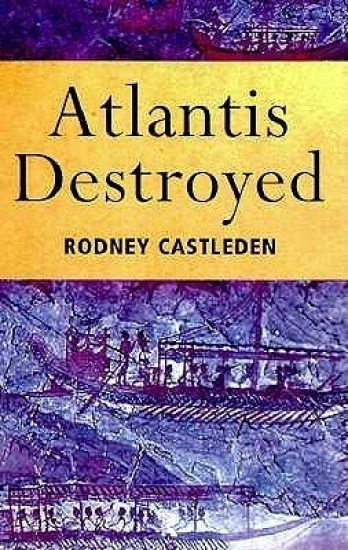
Atlantis Destroyed

Atlantis Destroyed

Rodney Castleden

Routledge
1998
sidottu
Plato's legend of Atlantis has become notorious among scholars as the absurdest lie in literature. Atlantis Destroyed explores the possibility that the account given by Plato is historically true. Rodney Castleden first considers the location of Atlantis re-examining two suggestions put forward in the early twentieth century; Minoan Crete and Minoan Thera. He outlines the latest research findings on Knossos and Bronze Age Thera, discussing the material culture, trade empire and agricultural system, writing and wall paintings, art, religion and society of the Minoan civilization. Castleden demonstrates the many parallels between Plato's narrative and the Minoan Civilization in the Aegean.Fired by the imagination a new vision of Atlantis has arisen over the last one hundred and fifty years as a lost utopia. Rodney Castleden discusses why this picture arose and xplains how it has become confused with Plato's genuine account.
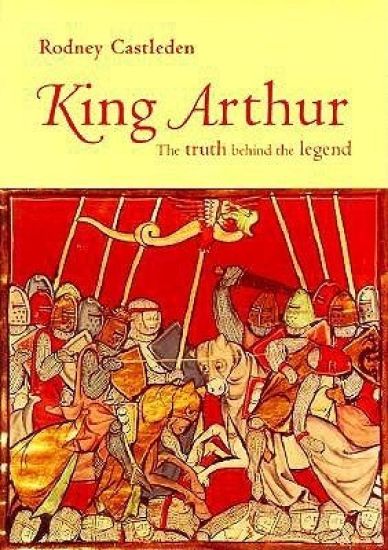
King Arthur

King Arthur

Rodney Castleden

Routledge
1999
sidottu
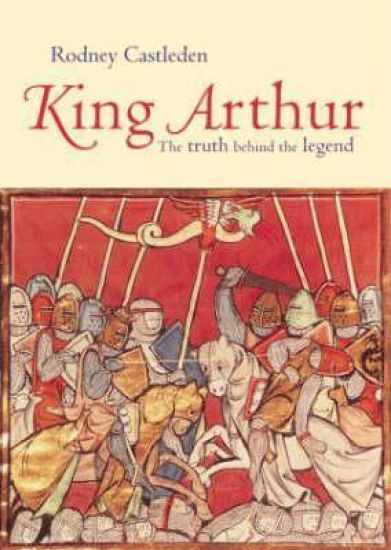
King Arthur is often written off as a medieval fantasy, the dream of those yearning for an age of strong, just rulers and a contented kingdom. Those who accept his existence at all generally discard the stories that surround him. This exciting new investigation argues not only that Arthur did exist, as a Dark Age chieftain, but that many of the romantic tales - of Merlin, Camelot and Excalibur - are rooted in truth.In his quest for the real King Arthur, Rodney Castleden uses up-to-date archaeological and documentary evidence to recreate the history and society of Dark Age Britain and its kings. He revives the possibility that Tintagel was an Arthurian legend, and proposes a radical new theory - that Arthur escaped alive from his final battle. A location is even suggested for perhaps the greatest mystery, the whereabouts of Arthur's grave.King Arthur: The Truth Behind the Legend offers a more complete picture of Arthur's Britain and his place in it than ever before. The book's bold approach and compelling arguments will be welcomed by all readers with an interest in Arthuriana.
Atlantis Destroyed

Atlantis Destroyed

Rodney Castleden

Routledge
2001
nidottu
Plato's legend of Atlantis has become notorious among scholars as the absurdest lie in literature. Atlantis Destroyed explores the possibility that the account given by Plato is historically true. Rodney Castleden first considers the location of Atlantis re-examining two suggestions put forward in the early twentieth century; Minoan Crete and Minoan Thera. He outlines the latest research findings on Knossos and Bronze Age Thera, discussing the material culture, trade empire and agricultural system, writing and wall paintings, art, religion and society of the Minoan civilization. Castleden demonstrates the many parallels between Plato's narrative and the Minoan Civilization in the Aegean.Fired by the imagination a new vision of Atlantis has arisen over the last one hundred and fifty years as a lost utopia. Rodney Castleden discusses why this picture arose and xplains how it has become confused with Plato's genuine account.
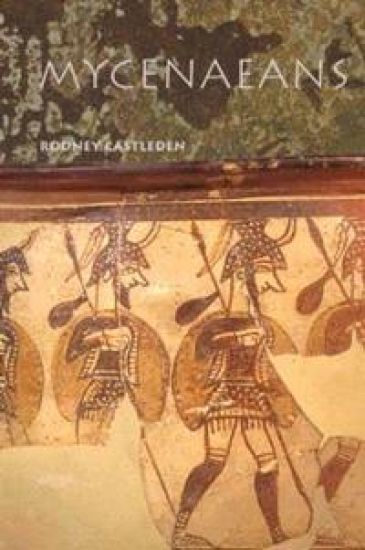
The Mycenaeans

The Mycenaeans

Rodney Castleden

Routledge
2005
sidottu
Following on from Rodney Castleden's best-selling study Minoans, this major contribution to our understanding of the crucial Mycenaean period clearly and effectively brings together research and knowledge we have accumulated since the discovery of the remains of the civilization of Mycenae in the 1870s.In lively prose, informed by the latest research and using a full bibliography and over 100 illustrations, this vivid study delivers the fundamentals of the Mycenaean civilization including its culture, hierarchy, economy and religion. Castleden introduces controversial views of the Mycenaean palaces as temples, and studies their impressive sea empire and their crucial interaction with the outside Bronze Age world before discussing the causes of the end of their civilization. Providing clear, easy information and understanding, this is a perfect starting point for the study of the Greek Bronze Age.
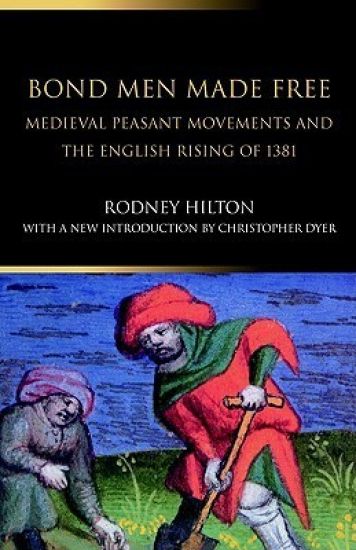
Bond Men Made Free

Bond Men Made Free

Rodney Hilton

Routledge
2003
nidottu
Rodney Hilton's account of the Peasant's Revolt of 1381 remains the classic authoritative text on the 'English Rising'. Hilton views the revolt in the context of a general European pattern of class conflict. He demonstrates that the peasant movements that disturbed the Middle Ages were not mere unrelated outbreaks of violence but had their roots in common economic and political conditions and in a recurring conflict of interest between peasants and landowners.Now with a new introduction by Christopher Dyer, this survey remains the leading source for students of medieval English peasantry.
King Arthur

King Arthur

Rodney Castleden

Routledge
2003
nidottu
King Arthur is often written off as a medieval fantasy, the dream of those yearning for an age of strong, just rulers and a contented kingdom. Those who accept his existence at all generally discard the stories that surround him. This exciting new investigation argues not only that Arthur did exist, as a Dark Age chieftain, but that many of the romantic tales - of Merlin, Camelot and Excalibur - are rooted in truth.In his quest for the real King Arthur, Rodney Castleden uses up-to-date archaeological and documentary evidence to recreate the history and society of Dark Age Britain and its kings. He revives the possibility that Tintagel was an Arthurian legend, and proposes a radical new theory - that Arthur escaped alive from his final battle. A location is even suggested for perhaps the greatest mystery, the whereabouts of Arthur's grave.King Arthur: The Truth Behind the Legend offers a more complete picture of Arthur's Britain and his place in it than ever before. The book's bold approach and compelling arguments will be welcomed by all readers with an interest in Arthuriana.
Remarks and Inventions

Remarks and Inventions

Rodney Needham

Routledge
2004
sidottu
This volume scrutinizes the questions of conceptualization, method and history in the fields of kinship, social anthropology and structuralism. It puts forward a radical revision of the conventional approaches and criteria. Exploring analysis and method in the disparity between relative age and kinship categories as means of social classification, the book makes theoretical readjustments, largely inspired by the precepts of Wittgenstein. Originally published in 1971.
Discourse in Action

Discourse in Action

Rodney H Jones; Sigrid Norris

Routledge
2005
sidottu
From emails relating to adoption over the Internet to discussions in the airline cockpit, the spoken or written texts we produce can have significant social consequences. The area of Mediated Discourse Analysis considers texts in their social and cultural contexts to explore the actions individuals take with texts - and the consequences of those actions. Discourse in Action: brings together leading scholars from around the world in the area of Mediated Discourse Analysis reveals ways in which its theory and methodology can be used in research into contemporary social situationsexplores real situations and draws on real data in each chaptershows how analysis of texts in their social contexts broadens our understanding of the real world.Taken together, the chapters provide a comprehensive overview to the field and present a range of current studies that address some of the most important questions facing students and researchers in linguistics, education, communication studies and other fields.
The Mycenaeans

The Mycenaeans

Rodney Castleden

Routledge
2005
nidottu
Following on from Rodney Castleden's best-selling study Minoans, this major contribution to our understanding of the crucial Mycenaean period clearly and effectively brings together research and knowledge we have accumulated since the discovery of the remains of the civilization of Mycenae in the 1870s.In lively prose, informed by the latest research and using a full bibliography and over 100 illustrations, this vivid study delivers the fundamentals of the Mycenaean civilization including its culture, hierarchy, economy and religion. Castleden introduces controversial views of the Mycenaean palaces as temples, and studies their impressive sea empire and their crucial interaction with the outside Bronze Age world before discussing the causes of the end of their civilization. Providing clear, easy information and understanding, this is a perfect starting point for the study of the Greek Bronze Age.
Discourse in Action

Discourse in Action

Rodney H Jones; Sigrid Norris

Routledge
2005
nidottu
From emails relating to adoption over the Internet to discussions in the airline cockpit, the spoken or written texts we produce can have significant social consequences. The area of Mediated Discourse Analysis considers texts in their social and cultural contexts to explore the actions individuals take with texts - and the consequences of those actions. Discourse in Action: brings together leading scholars from around the world in the area of Mediated Discourse Analysis reveals ways in which its theory and methodology can be used in research into contemporary social situationsexplores real situations and draws on real data in each chaptershows how analysis of texts in their social contexts broadens our understanding of the real world.Taken together, the chapters provide a comprehensive overview to the field and present a range of current studies that address some of the most important questions facing students and researchers in linguistics, education, communication studies and other fields.
The Knossos Labyrinth

The Knossos Labyrinth

Rodney Castleden

Routledge
2011
nidottu
Knossos, like the Acropolis or Stonehenge, is a symbol for an entire culture. The Knossos Labyrinth was first built in the reign of a Middle Kingdom Egyptian pharaoh, and was from the start the focus of a glittering and exotic culture. Homer left elusive clues about the Knossian court and when the lost site of Knossos gradually re-emerged from obscurity in the nineteenth century, the first excavators - Minos Kalokairinos, Heinrich Schliemann, and Arthur Evans - were predisposed to see the site through the eyes of the classical authors. Rodney Castleden argues that this line of thought was a false trail and gives an alternative insight into the labyrinth which is every bit as exciting as the traditional explanations, and one which he believes is much closer to the truth. Rejecting Evans' view of Knossos as a bronze age royal palace, Castleden puts forward alternative interpretations - that the building was a necropolis or a temple - and argues that the temple interpretation is the most satisfactory in the light of modern archaeological knowledge about Minoan Crete.
The Official History of the British Civil Service
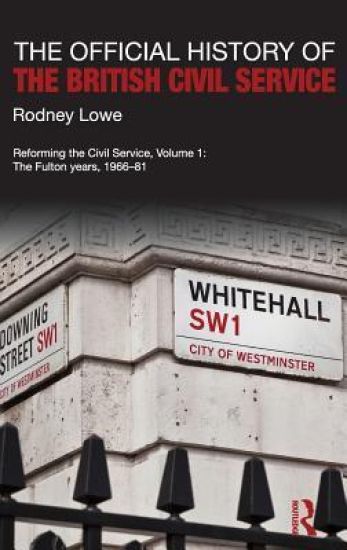
This first volume of the Official History of the UK Civil Service covers its evolution from the Northcote-Trevelyan Report of 1854 to the first years of Mrs Thatcher’s government in 1981.Despite current concerns with good governance and policy delivery, little serious attention has been paid to the institution vital to both: the Civil Service. This Official History is designed to remedy this by placing present problems in historical context and by providing a helpful structure in which others, and particularly former officials, may contribute to the debate. Starting with the seminal 1854 Northcote-Trevelyan Report, it covers the ‘lost opportunity’ of the 1940s when the Service failed to adapt the needs of ‘big government’ as advocated by Beveridge and Keynes. It then examines, in greater detail, the belated attempts at modernisation in the 1960s, the Service’s vilification in the 1970s and the final destruction of the ‘old order’ during the first years of Mrs Thatcher’s government. Particular light is shed on the origins of such current concerns as the role of special advisersthe need for a Prime Minister’s Departmentthe evolution of Parliamentary Select Committees to resolve the potential tension between bureaucracy and Parliamentary democracy.This Official History is based on extensive research into both recently released and unreleased papers as well as interviews with leading participants. It has important lessons to offer all those, both inside and outside the UK, seeking to improve the quality of democratic government.This book will be of great interest to all students of British history, British government and politics, and of public administration in general.
Heritage

Heritage

Rodney Harrison

Routledge
2012
sidottu
Historic sites, memorials, national parks, museums…we live in an age in which heritage is ever-present. But what does it mean to live amongst the spectral traces of the past, the heterogeneous piling up of historic materials in the present? How did heritage grow from the concern of a handful of enthusiasts and specialists in one part of the world to something which is considered to be universally cherished? And what concepts and approaches are necessary to understanding this global obsession? Over the decades, since the adoption of the World Heritage Convention, various ‘crises’ of definition have significantly influenced the ways in which heritage is classified, perceived and managed in contemporary global societies. Taking an interdisciplinary approach to the many tangible and intangible ‘things’ now defined as heritage, this book attempts simultaneously to account for this global phenomenon and the industry which has grown up around it, as well as to develop a ‘toolkit of concepts’ with which it might be studied. In doing so, it provides a critical account of the emergence of heritage studies as an interdisciplinary field of academic study. This is presented as part of a broader examination of the function of heritage in late modern societies, with a particular focus on the changes which have resulted from the globalisation of heritage during the late twentieth and early twenty-first centuries. Developing new theoretical approaches and innovative models for more dialogically democratic heritage decision making processes, Heritage: Critical Approaches unravels the relationship between heritage and the experience of late modernity, whilst reorienting heritage so that it might be more productively connected with other pressing social, economic, political and environmental issues of our time.
Heritage

Heritage

Rodney Harrison

Routledge
2012
nidottu
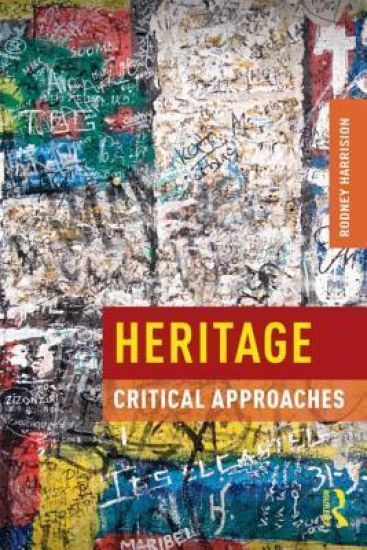
Historic sites, memorials, national parks, museums…we live in an age in which heritage is ever-present. But what does it mean to live amongst the spectral traces of the past, the heterogeneous piling up of historic materials in the present? How did heritage grow from the concern of a handful of enthusiasts and specialists in one part of the world to something which is considered to be universally cherished? And what concepts and approaches are necessary to understanding this global obsession? Over the decades, since the adoption of the World Heritage Convention, various ‘crises’ of definition have significantly influenced the ways in which heritage is classified, perceived and managed in contemporary global societies. Taking an interdisciplinary approach to the many tangible and intangible ‘things’ now defined as heritage, this book attempts simultaneously to account for this global phenomenon and the industry which has grown up around it, as well as to develop a ‘toolkit of concepts’ with which it might be studied. In doing so, it provides a critical account of the emergence of heritage studies as an interdisciplinary field of academic study. This is presented as part of a broader examination of the function of heritage in late modern societies, with a particular focus on the changes which have resulted from the globalisation of heritage during the late twentieth and early twenty-first centuries. Developing new theoretical approaches and innovative models for more dialogically democratic heritage decision making processes, Heritage: Critical Approaches unravels the relationship between heritage and the experience of late modernity, whilst reorienting heritage so that it might be more productively connected with other pressing social, economic, political and environmental issues of our time.
The Making of Stonehenge

The Making of Stonehenge

Rodney Castleden

Routledge
2015
nidottu
Every generation has created its own interpretation of Stonehenge, but rarely do these relate to the physical realities of the monument. Rodney Castleden begins with those elements which made possible the building of this vast stone circle: the site, the materials and the society that undertook the enormous task of transporting and raising the great vertical stones, then capping them, all to a carefully contrived plan. What emerges from this detailed examination is a much fuller sense of Stonehenge, both in relation to all the similar sites close by, and in terms of the uses to which it was put. Castleden suggests that there is no one 'meaning' or 'purpose' for Stonehenge, that from its very beginning it has filled a variety of needs. The Romans saw it as a centre of resistance; the antiquaries who 'rediscovered' it in the seventeenth century saw a long line of continuity leading back into the nation's past. The archaeologists see it as a subject for rational, scientific investigation; The National Trust and English Heritage view it as an unfailing magnet for visitors; UNESCO has declared it a World Heritage Site, the cultural property of the whole of humanity. Lost to view amid competing interests over the millenia are the uses it has served for those who live within its penumbra, for whom Stonehenge has never been 'lost' or 'rediscovered'. It exists in local myth and legend, stretching back beyond history.