The legend that was Robert Sparks Walker began in a log cabin outside Chattanooga called Spring Frog Cabin, a humble abode built by a Cherokee naturalist in 1750. Walker would continue in the footsteps of that Cherokee to become synonymous both with Chattanooga and nature, penning thousands of articles, poems and books as a naturalist. Nominated for a Pulitzer Prize, Walker gained international fame for his work, yet his largest impact remains in his native Tennessee. He helped to found the Chattanooga Audubon Society, including preserving his childhood home through Audubon Acres. Walker is remembered throughout the state for his nationally syndicated nature column, and the Lifetime Achievement Award for Environmental Stewardship is given in his name. His life was one of adventure, reflection and a deep devotion to the understanding and preservation of nature. Local author Alexandra Walker Clark, granddaughter of Robert Sparks Walker, celebrates the life of this Scenic City pioneer.
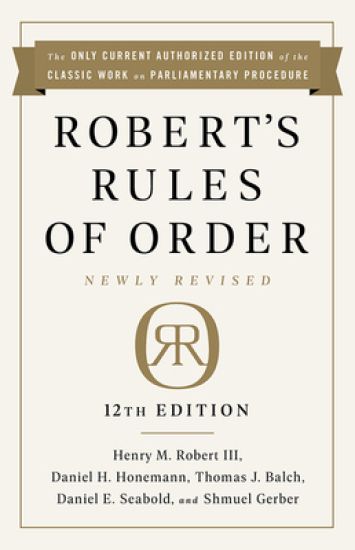
The only current authorized edition of the classic work on parliamentary procedure--now in a new updated editionRobert's Rules of Order is the recognized guide to smooth, orderly, and fairly conducted meetings. This 12th edition is the only current manual to have been maintained and updated since 1876 under the continuing program established by General Henry M. Robert himself. As indispensable now as the original edition was more than a century ago, Robert's Rules of Order Newly Revised is the acknowledged "gold standard" for meeting rules.New and enhanced features of this edition include:* Section-based paragraph numbering to facilitate cross-references and e-book compatibility* Expanded appendix of charts, tables, and lists* Sample rules for electronic meetings* Helpful summary explanations about postponing a motion, reconsidering a vote, making and enforcing points of order and appeals, and newly expanded procedures for filling blanks* New provisions regarding debate on nominations, reopening nominations, and completing an election after its scheduled time* Dozens more clarifications, additions, and refinements to improve the presentation of existing rules, incorporate new interpretations, and address common inquiriesCoinciding with publication of the 12th edition, the authors of this manual have once again published an updated (3rd) edition of Robert's Rules of Order Newly Revised In Brief, a simple and concise introductory guide cross-referenced to it.
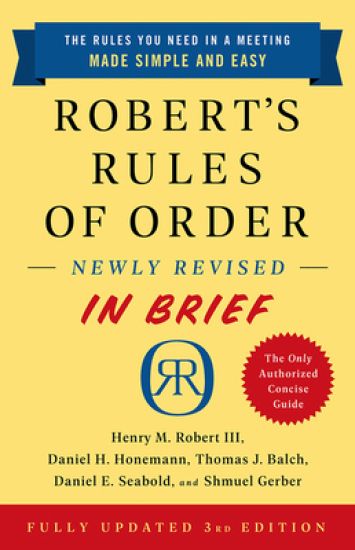
A short, concise and user-friendly guide to the essential procedures of conducting a meeting, written by the authors of Robert's Rules of Order Newly Revised, the only authorized edition of the classic work on parliamentary procedureOriginally published in 1876, General Henry M. Robert's guide to smooth, orderly, and fairly conducted meetings has sold over six million copies in eleven editions. Robert's Rules of Order is the book on parliamentary proceedings, yet those not well versed on what has now become a rather thick document can find themselves lost-and delayed-while trying to locate the most important rules. The solution? Robert's Rules of Order Newly Revised in Brief.Written by the same authorship team behind the officially sanctioned Robert's Rules of Order, this short and user-friendly edition takes readers through the rules most often needed at meetings--from debates to amendments to nominations. With sample dialogues and a guide to using the complete edition, Robert's Rules of Order Newly Revised in Brief is the essential handbook for parliamentary proceedings.
The only current authorized edition of the classic work on parliamentary procedure--now in a new updated editionRobert's Rules of Order is the recognized guide to smooth, orderly, and fairly conducted meetings. This 12th edition is the only current manual to have been maintained and updated since 1876 under the continuing program established by General Henry M. Robert himself. As indispensable now as the original edition was more than a century ago, Robert's Rules of Order Newly Revised is the acknowledged "gold standard" for meeting rules. New and enhanced features of this edition include: Section-based paragraph numbering to facilitate cross-references and e-book compatibility Expanded appendix of charts, tables, and listsSample rules for electronic meetingsHelpful summary explanations about postponing a motion, reconsidering a vote, making and enforcing points of order and appeals, and newly expanded procedures for filling blanksNew provisions regarding debate on nominations, reopening nominations, and completing an election after its scheduled timeDozens more clarifications, additions, and refinements to improve the presentation of existing rules, incorporate new interpretations, and address common inquiries Coinciding with publication of the 12th edition, the authors of this manual have once again published an updated (3rd) edition of Robert's Rules of Order Newly Revised In Brief, a simple and concise introductory guide cross-referenced to it.
The only current authorized edition of the classic work on parliamentary procedure--now in a new updated editionRobert's Rules of Order is the recognized guide to smooth, orderly, and fairly conducted meetings. This 12th edition is the only current manual to have been maintained and updated since 1876 under the continuing program established by General Henry M. Robert himself. As indispensable now as the original edition was more than a century ago, Robert's Rules of Order Newly Revised is the acknowledged "gold standard" for meeting rules.New and enhanced features of this edition include:* Section-based paragraph numbering to facilitate cross-references and e-book compatibility* Expanded appendix of charts, tables, and lists* Sample rules for electronic meetings* Helpful summary explanations about postponing a motion, reconsidering a vote, making and enforcing points of order and appeals, and newly expanded procedures for filling blanks* New provisions regarding debate on nominations, reopening nominations, and completing an election after its scheduled time* Dozens more clarifications, additions, and refinements to improve the presentation of existing rules, incorporate new interpretations, and address common inquiriesCoinciding with publication of the 12th edition, the authors of this manual have once again published an updated (3rd) edition of Robert's Rules of Order Newly Revised In Brief, a simple and concise introductory guide cross-referenced to it.
Robots and automatons in myth, in fiction, in movies and in reality have fascinated and frightened human beings for millennia from The Argonautica by Apollonius of Rhodes to The Blade Runner and Terminator movies. Ideas about intelligent automated beings have appeared in novels by Isaac Asimov and even in physical reality such as the Francine automaton built by the philosopher Rene Descartes and today's Atlas and Asimo robots. In Adam's Creatures, or The Book of Robots: The Rise of Robots, Intelligent Agents and Machines that Learn from Humans, Robert J. Betts explores the evolution of robots, automatons, artificial intelligence and also various ideas that human writers and scientists both have explored about them throughout Western history. Here one spans centuries of myth and fiction to actual facts about real robots and artificial intelligence, from the bronze automaton named Talos in The Argonautica to the Voyager space probes, industrial robots, Marvin Minsky's perceptrons, self-driving cars and Watson. We learn also about the contributions from some of the most important personalities in computing, computer science and AI like Charles Babbage, Ada Lovelace, Alan Turing, Marvin Minsky and John McCarthy. But in Adam's Creatures: The Book of Robots, we see also that many writers even centuries and decades ago, anticipated how things can go horribly wrong when humans are careless enough to let their intelligent machines first learn the wrong things then act on them. In Frankenstein, or the Modern Prometheus, the Monster behaved exactly like many human psychopaths today behave who, when motivated by egotism, personal offense or anger, are determined to obtain what they want through bullying or violence. In the film Metropolis the German film director Fritz Lang predicted how increased mechanization can lead to the dehumanization of human workers and that even the most attractive and human looking machine like his Maria "Doppelgaengerin" can be used to deceive human beings into doing evil and violent things. Then too everyone remembers how the Hal 9000 computer turned homicidal in the movie: 2001, A Space Odyssey. In the television series Star Trek: The Next Generation, the good android Data had his evil and egotistical android twin named Lor. Moreover there are very serious future dangers that lie ahead with the use of intelligent robots and AI by men and women, but not because of the development of robots and AI in itself. Rather this is because human history is replete already with examples of what happens when humans, even world leaders, use brand new technologies in the wrong ways. One day: 1. Malicious software such as viruses, worms and Trojans will become intelligent. 2. Robots with which humans have had sex can become jealous or violent. 3. Self-Driving cars suddenly can be possessed" by intelligent malware to kill people on roads and highways. 4. Attractive looking robot maids and butlers can be programmed by enemy countries to kill, to blackmail or to deceive foreign political leaders or diplomats. Intelligent machines learn how to act from intelligent humans. Like father, like son. In Adam's Creatures: The Book of Robots, all humanity, including robotics and AI developers, is confronted with a dire warning as to what inevitable future horrors will happen if the human race never succeeds in managing its own darker moral impulses.
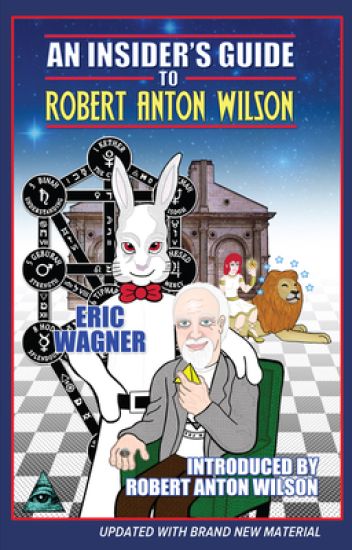
A fair and balanced look at the writing of Robert Anton Wilson and its relationship with the Kaballah, Finnegans Wake, General Semantics, Quantum Mechanics, Ezra Pound, The Wizard of Oz, Aleister Crowley, and a zillion other subjects. Whether you are a newcomer or already familiar with Dr. Wilson's work, welcome to the Weird and Wonderful World of Wilson. This book provides many pointers to ways people can deepen their understanding of the fields which shaped Dr. Wilson's world-view.
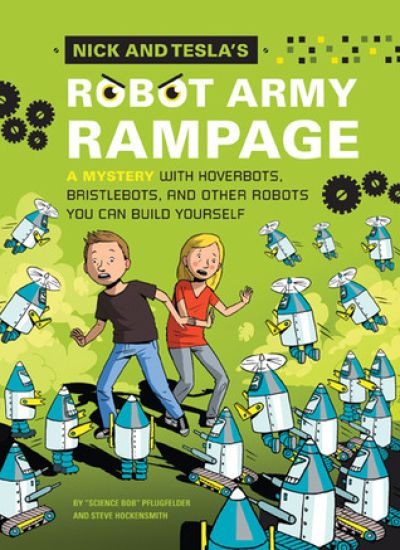
In this second novel of the Nick and Tesla series, the precocious brother-and-sister duo find themselves solving another baffling mystery. As the story opens, their Uncle Newt takes a consulting gig at a cut-rate amusement park, engineering animatronic figures for a cheap Hall of Presidentsknockoff. One perk of the job is that Nick and Tesla have unlimited access to the amusement park all summer long-but the kids quickly discover that one of the park employees has a sinister plan. They'll have to build a few robots of their own to foil him! Readers are invited to join in the fun as each story contains instructions and blueprints for five different projects. Learning about science has never been so dangerous-or so much fun!
Something had gone wrong when they'd loaded the ship, and the rations hadn't quite lasted long enough to make the outbound end of the uranium prospecting trip. Then they found an abandoned world, and landed the ship on an old warehouse facility . . . and tried to found somehting to eat.Not an easy thing to do, going through an alien warehouse when they could barely read the manuals, and had not much cluse as to the nature of the local biology.They would have eaten a horse, if there'd been one. But there wasn't. And that was probably for the best -- it might have eaten them first
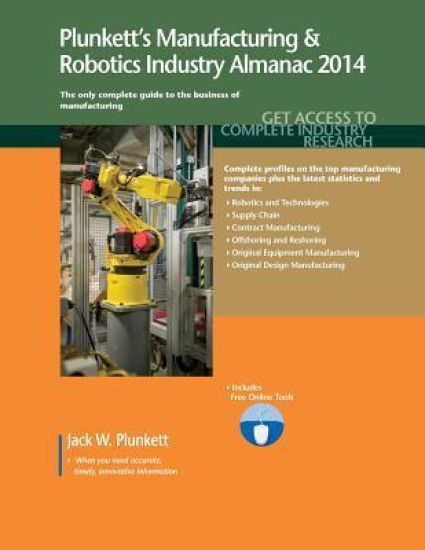
The manufacturing and robotics sectors have become tightly intertwined in recent years, thanks to the rapidly growing importance of factory automation. On factory floors ranging from machine shops to automobile plants to electronics factories, computer driven equipment plays a vital role in manufacturing worldwide. The sophistication of the equipment ranges from relatively simple computer-aided machinery that cuts fabric prior to it being sewn into final garments, to robots that make highly accurate and sophisticated welds in car factories, to robots that can rapidly assemble tiny electronics components and solder them in place.The ever growing drive for efficiency and quality, both at the factory and in the supply chain, will make automation technologies more and more vital. Meanwhile, computer-driven “additive manufacturing” may accelerate a trend of local, just in time manufacturing.This book is a complete reference and research package for the manufacturing industry robotics. We include analysis, trends, forecasts, statistics, technologies, production, company profiles and contacts.