Kirjojen hintavertailu. Mukana 12 016 292 kirjaa ja 12 kauppaa.

Kirjahaku

Etsi kirjoja tekijän nimen, kirjan nimen tai ISBN:n perusteella.

1000 tulosta hakusanalla SIDNEY RANDALL

Writing after Sidney

Writing after Sidney

Gavin Alexander

Oxford University Press
2010
nidottu
Writing After Sidney examines the literary response to Sir Philip Sidney (1554-86), author of the Arcadia, Astrophil and Stella, and The Defence of Poesy, and the most immediately influential writer of the Elizabethan period. It does so by looking closely both at Sidney and at four writers who had an important stake in his afterlife: his sister Mary Sidney, his brother Robert Sidney, his best friend Fulke Greville, and his niece Mary Wroth. At the same time as these authors wrote their own works in response to Sidney they presented his life and writings to the world, and were shaped by other writers as his literary and political heirs. Readings of these five central authors are embedded in a more general study of the literary and cultural scene in the years after Sidney's death, examining the work of such writers as Spenser, Jonson, Daniel, Drayton, and Herbert. The study uses a wide range of manuscript and printed sources, and key use is made of perspectives from Renaissance literary theory, especially Renaissance rhetoric. The book aims to come to a better understanding of the nature of Sidney's impact on the literature of the fifty or so years after his death in 1586; it also aims to improve our understanding both of Sidney and of the other writers discussed by developing a more nuanced approach to the questions of imitation and example so central to Renaissance literature. It thereby adds to the general store of our understanding of how writing of the English Renaissance offered examples to later readers and writers, and of how it encountered and responded to such examples itself.
Sir Philip Sidney, Cultural Icon

Sir Philip Sidney, Cultural Icon

R. Hillyer

Palgrave Macmillan
2010
sidottu
This study analyzes Sir Philip Sidney's reputation from his own day to the present by discussing his reception in the work of authors as diverse in time and type as Sir Fulke Greville, Christopher Hill, Charles Lamb, Edmund Waller, and Thomas Warton the elder.
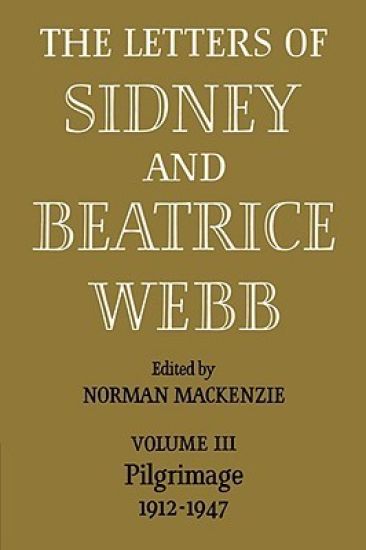
The Letters of Sidney and Beatrice Webb: Volume 3, Pilgrimage 1912–1947
This is the third and final volume of the letters of Sidney and Beatrice Webb. As leading figures in the Fabian Society, prominent historians and public figures, they numbered among their correspondents some of the most outstanding personalities of their day, including E. M. Forster, H. G. Wells, J. M. Keynes, William Beveridge and Leonard Woolf. The letters in this volume run from 1912, when the Webbs signalled a fresh start in British politics by founding the New Statesman, to the death of Beatrice in 1943 and Sidney in 1947.
The Letters of Sidney and Beatrice Webb: Volume 2, Partnership 1892–1912
Sidney and Beatrice Webb were among the outstanding political personalities in the period 1890–1945. They were leading figures in the Fabian Society, prominent historians, and founders of the London School of Economics and the New Statesman. They exchanged letters with many of the leading figures in the political, intellectual and literary worlds of the time, among them Herbert Asquith, Ramsay MacDonald, George Bernard Shaw and Bertrand Russell. Volume II of the letters covers the years between the Webb marriage and their return from Asia in 1912. They were the prime years of the partnership, in which the Webbs came to dominate the Fabian Society, founded the London School of Economics and launched their campaign for the reform of the Poor Law.
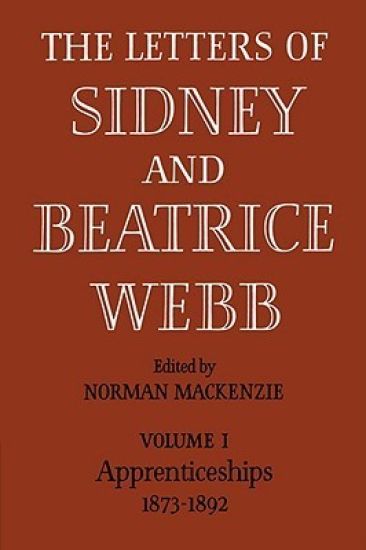
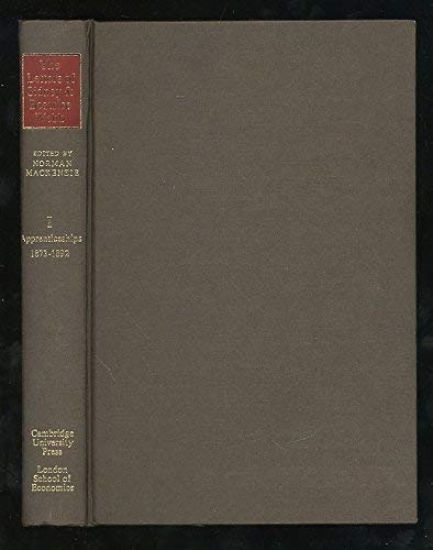
The Letters of Sidney and Beatrice Webb: Volume 1, Apprenticeships 1873-1892
The Webbs were a unique partnership. Their idea of 'the inevitability of gradualness' dominated the Fabian Society and Labour thinking for half a century, though their theory of political permeation also led them into close association with Liberal and Conservative politicians. They were scholars as well as propagandists, writing massive histories of trade unionism and local government, and the famous Minority Report of the Royal Commission on the Poor Law which paved the way for the welfare state. They were the founders of the London School of Economics and of the New Statesman. This crowded public life is reflected in the hundreds of letters they exchanged in their long lifetimes, as well as in their correspondence with many of the outstanding personalities of their day, including Herbert Asquith, Joseph Chamberlain, William Beveridge, E. M. Forster, R. B. Haldane, J. M. Keynes, Ramsay MacDonald, Alfred Marshall, Sydney Olivier, G. B. Shaw, Charlotte Shaw, Bertrand Russell, Herbert Samuel, Herbert Spencer, Graham Wallas, H. G. Wells and Leonard Woolf. Their letters also reveal the hidden but intense emotional character of their relationship.
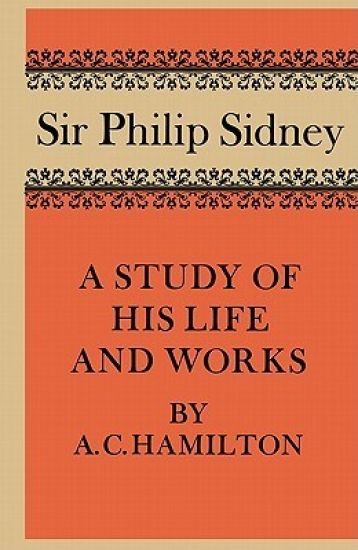
Sir Philip Sidney

Sir Philip Sidney

Hamilton A. C.

Cambridge University Press
2012
pokkari
A general critical study of Sidney's life and works, first published in 1977: his life in relation to his works and both in relation to his age. In the late 1570s and early 1580s, when the literary scene in England was barren, Sidney emerged as the right man at the right moment to establish a national literature. In his Defence of Poetry he formulated a poetic which showed 'why and how' imaginative literature could be written in Protestant England; and in his poetry and prose, chiefly in Astrophel and Stella and the two versions of The Countess of Pembroke's Arcadia, he revealed that the English language was, as he claimed, 'indeed capable of any excellent exercising of it'. Through the influence of his personality, his critical insight, and his brilliant achievement in both poetry and prose - which Professor Hamilton in this study establishes through careful analysis - Sidney became the central figure of the English literary Renaissance.
Life Of Sir Philip Sidney (1862)

Life Of Sir Philip Sidney (1862)

Julius Lloyd

Nobel Press
2010
nidottu
This book, "The Life Of Sir Philip Sidney (1862)", by Julius Lloyd, is a replication of a book originally published before 1862. It has been restored by human beings, page by page, so that you may enjoy it in a form as close to the original as possible. This book was created using print-on-demand technology. Thank you for supporting classic literature.
The Sign in Sidney Brustein's Window

The Sign in Sidney Brustein's Window

Lorraine Hansberry

Samuel French
2021
pokkari
This is the probing, hilarious and provocative story of Sidney, a disenchanted Greenwich Village intellectual, his wife Iris, an aspiring actress, and their colorful circle of friends and relations. Set against the shenanigans of a stormy political campaign, the play follows its characters in their unorthodox quests for meaningful lives in an age of corruption, alienation and cynicism. With compassion, humor and poignancy, the author examines questions concerning the fragility of love, morality and ethics, interracial relationships, drugs, rebellion, conformity and especially withdrawal from or commitment to the world.