Kirjojen hintavertailu. Mukana 11 416 874 kirjaa ja 12 kauppaa.

Kirjahaku

Etsi kirjoja tekijän nimen, kirjan nimen tai ISBN:n perusteella.

1000 tulosta hakusanalla Sandra Dinter

The Western Lit Survival Kit

The Western Lit Survival Kit

Sandra Newman

Penguin Books Ltd
2012
pokkari
There they sit, the great tomes of classical literature, taunting you with their length and difficulty, as you ask: which books are the most important and why - and what's actually any good? Why does most writing about the classics have words like 'seminal' or 'oeuvre' in it? What does postmodernism mean? Can I get away with just reading the introduction?Now you can enjoy the classics without fear. This survival kit will guide you painlessly through the Western literary canon, century by century: from Ancient Greek drama to the modern novel, via Beowulf, Chaucer, Shakespeare, Romantic poetry, Tolstoy and Proust. There are entertaining plot summaries, unpretentious definitions of literary movements and fresh insights into authors' lives. With each work assigned ratings from 1 to 10 on Importance, Accessibility and Fun, you'll discover what's really worth bothering with and what you can safely discard without guilt.This book will make the things you've read clearer, inspire you to tackle the ones you've always meant to and make you sound far cleverer than you really are.

The Scene Book: A Primer for the Fiction Writer
A treasure-trove of scene-writing wisdom from award-winning author and teacher Sandra Scofield To write a good scene, you have to know the following: - Every scene has an EVENT - Every scene has a FUNCTION in the narrative - Every scene has a STRUCTURE: a beginning, middle, and end - Every scene has a PULSE The Scene Book is a fundamental guide to crafting more effective scenes in fiction. In clear, simple language, Sandra Scofield shows both the beginner and the seasoned writer how to build better scenes, the underpinning of any good narrative.
The Last Draft: A Novelist's Guide to Revision
The definitive handbook for the novelist who is ready to revise This wise and friendly guide shows writers how to turn first-draft manuscripts into the novels of their dreams. A critic, longtime teacher, and award-winning novelist, Sandra Scofield illustrates how to reread a work of fiction with a view of its subject and vision, and how to take it apart and put it back together again, stronger and deeper. Scofield builds her explanations around helpful concepts like narrative structure, character agency, and core scenes, using models from classic and contemporary writers. The detailed, step-by-step plan laid out in The Last Draft offers invaluable advice to both novice and experienced writers alike. In Scofield, they will find a seasoned, encouraging mentor to steer them through this emotional and intellectual journey.
Blue Glass

Blue Glass

Sandra Tyler

HOUGHTON MIFFLIN
1993
nidottu
A novel that vividly brings to life the inherently adversarial nature of the mother-daughter relationship and its yearnings. "This strong, thoughtful first novel...develops with quiet momentum" (Publishers Weekly). Named a Notable Book of the Year by the New York Times. Harvest American Writing series
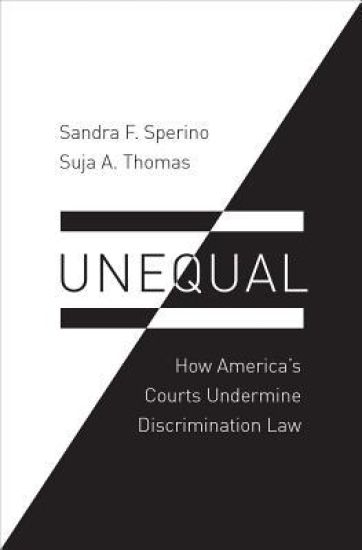
Unequal

Unequal

Sandra F. Sperino; Suja A. Thomas

Oxford University Press Inc
2017
sidottu
It is no secret that since the 1980s, American workers have lost power vis-a-vis employers through the well-chronicled steep decline in private sector unionization. American workers have also lost power in other ways. Those alleging employment discrimination have fared increasingly poorly in the courts. In recent years, judges have dismissed scores of cases in which workers presented evidence that supervisors referred to them using racial or gender slurs. In one federal district court, judges dismissed more than 80 percent of the race discrimination cases filed over a year. And when juries return verdicts in favor of employees, judges often second guess those verdicts, finding ways to nullify the jury's verdict and rule in favor of the employer. Most Americans assume that that an employee alleging workplace discrimination faces the same legal system as other litigants. After all, we do not usually think that legal rules vary depending upon the type of claim brought. The employment law scholars Sandra A. Sperino and Suja A. Thomas show in Unequal that our assumptions are wrong. Over the course of the last half century, employment discrimination claims have come to operate in a fundamentally different legal system than other claims. It is in many respects a parallel universe, one in which the legal system systematically favors employers over employees. A host of procedural, evidentiary, and substantive mechanisms serve as barriers for employees, making it extremely difficult for them to access the courts. Moreover, these mechanisms make it fairly easy for judges to dismiss a case prior to trial. Americans are unaware of how the system operates partly because they think that race and gender discrimination are in the process of fading away. But such discrimination still happens in the workplace, and workers now have little recourse to fight it legally. By tracing the modern history of employment discrimination, Sperino and Thomas provide an authoritative account of how our legal system evolved into an institution that is inherently biased against workers making rights claims.
Reconstructing Schopenhauer's Ethics

Reconstructing Schopenhauer's Ethics

Sandra Shapshay

Oxford University Press Inc
2019
sidottu
At the apex of his influence, from about 1860 up to the start of World War I, Schopenhauer was known first and foremost as a philosopher of pessimism. Still today, his main reputation is as one of the few philosophers to have argued that it would have been better never to have been. Sandra Shapshay aims to complicate and challenge this predominant picture of Schopenhauer's ethical thought, arguing that while the pessimistic, resigned Schopenhauer represents one side of the thinker, there is another, more hopeful side that is equally important to his legacy and essential to fully understanding his philosophy. Schopenhauer's ethical thought contains a hopeful, progressive strand, and the main task of this book is to reconstruct it. The resulting position, which Shapshay terms "compassionate moral realism," offers a hybrid Kantian moral realist/sentimentalist theory and a Schopenhauerian value ontology of degrees of inherent value. The reconstruction is novel in three main ways. First, it views Schopenhauer as a more faithful Kantian than most commentators have been apt to recognize. Second, it sees Schopenhauer's philosophy as an evolving rather than static body of thought, especially with respect to the place of the Platonic Ideas in his system; Schopenhauer's views in the philosophy of nature changed as he encountered proto-Darwinian thought, and this change weakens Schopenhauer's own grounds for pessimism. A third novelty is the claim, concerning his ethical thought, that there are really two Schopenhauers rather than one: the "Knight of Despair" and the "Knight of Hope" distinction introduced in this book helps to capture the incompatibility between the resignationist and the compassionate moral realist sides of Schopenhauer's ethical thought.
Qualitative Methods in Communication and Media

Qualitative Methods in Communication and Media

Sandra L. Faulkner; Joshua D. Atkinson

OXFORD UNIVERSITY PRESS INC
2024
sidottu
Qualitative Methods in Media and Communication offers a learning-centered guide to designing, conducting, and evaluating qualitative communication and media research methods. Drawing upon years of teaching qualitative research methods, Sandra L. Faulkner and Joshua D. Atkinson introduce and unpack qualitative communication research method design, analysis, representation, writing, and evaluation using extended examples and clear discussion. The authors use key terms, extended examples, discussion questions, student-tested writing and research activities, examples of student work and questions, and suggested resources to help readers design, do, and analyze qualitative research. As a textbook, its pedagogical goals for the student include: (1) becoming a critical reader of research studies by understanding the epistemologies and methodological assumptions used by researchers, (2) learning the various methods, strategies, and approaches for doing qualitative research, (3) developing a strong basic vocabulary and understanding of concepts relating to qualitative and humanistic research methods, (4) understanding special concerns related to particular research methods, and (5) designing, executing, and representing original qualitative research projects. With numerous elements intended to engage students and enrich the learning process, the book provides examples of how to do qualitative and critical analyses, including arts-based and media and textual analyses to understand, describe, and query communication and media research in a variety of communication areas. There is also an extensive discussion of ethics in qualitative research and spotlights with renowned researchers on hot topics in qualitative research.
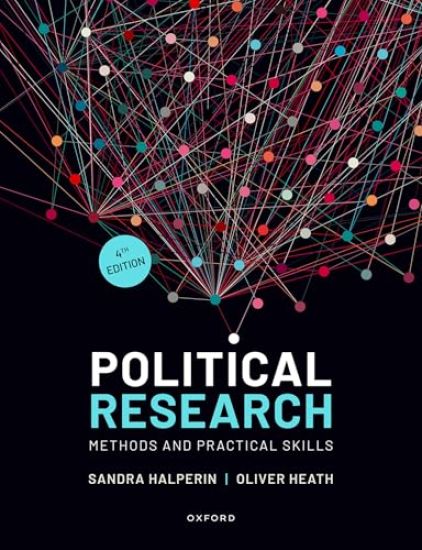
Political Research

Political Research

Sandra Halperin; Oliver Heath

Oxford University Press
2025
nidottu
The most accessible and practical guide to research methods written especially for politics and international relations students. Key features - Discusses step-by-step how to conduct research to support students through the entire research process - Broad coverage of both quantitative and qualitative methods makes it relevant to any research project - Discussion of key debates of theory, methodology, and the philosophy of social science to broaden students' knowledge of research methods - Includes a range of learning features such as chapter summaries and test questions to re-enforce students' understanding of research methods - Also available as an e-book with functionality, navigation features, and links that offer extra learning support New to this Edition - New content on mixed methods in Chapter 6 to highlight the advantages of using different methods or approaches as part of the same study. - Additional coverage of recent debates and concerns about transparency in research and ‘open science’, digital data, and analysing social media content. - Updated examples throughout to cover topical issues in political research, such as the rise of far-right movements and parties, issues relating to immigration and refugees, and the intergenerational transmission of political preferences. - Now available as an enhanced ebook, featuring video reflections from recent graduates who share their experience of conducting independent research, self-test questions, and flashcard glossaries. Digital formats and resources Political Research: Methods and Practical Skills is available for students and institutions to purchase in a variety of formats, and it is supported by online resources. The following additional resources are available to students: - Other Students Say videos, where graduate students in Politics and International Relations share their experience conducting research - Self-test questions at the end of each chapter section allow students to check and consolidate their knowledge - Flashcard glossaries improve understanding of content - Example datasets to prompt active engagement and hands-on experience Adopting lecturers will have access to the following teaching support resources: - Seminar questions and activities - Tutorials for data analysis software - Test bank of questions - PowerPoint slides
Land Law Directions

Land Law Directions

Sandra Clarke; Sarah Greer

Oxford University Press
2022
nidottu
Does land law's specialized and historic vocabulary make it hard for your students to engage? Designed to support a progressive learning experience, Land Law Directions provides a lively introduction to the subject and makes this often daunting area clear and engaging. The Directions series has been written with students in mind. The ideal guide as they approach the subject for the first time, this book will help them: - Gain a complete understanding of the topic: just the right amount of detail conveyed clearly - Understand the law in context: with scene-setting introductions and highlighted case extracts, the practical importance of the law becomes clear - Identify when and how to evaluate the law critically: they'll be introduced to the key areas of debate and given the confidence to question the law - Deepen and test knowledge: visually engaging learning and self-testing features aid understanding and help students tackle assessments with confidence - Elevate their learning: with the ground-work in place they can aspire to take learning to the next level, with direction provided on how to go further Digital formats and resources This eighth edition is available for students and institutions to purchase in a variety of formats and is supported by online resources. The e-book offers a mobile experience and convenient access along with functionality tools, navigation features and links that offer extra learning support: www.oxfordtextbooks.co.uk/ebooks The online resources are available at www.oup.com/he/landlaw_directions8e/ and include: - New scenario questions aimed at helping to apply the law in practice - New animated diagrams providing visual explanation of complex topics - Guidance on answering the end-of-chapter questions - Quick fire self-test questions with answer feedback - Links to further reading suggestions - Flashcard glossary to revise key terms - Additional material and discussion of advanced topics including adverse possession, and easements and profits
Peace in the US Republic of Letters, 1840-1900

Peace in the US Republic of Letters, 1840-1900

Sandra M. Gustafson

Oxford University Press
2023
sidottu
Peace in the US Republic of Letters, 1840-1900 explores the early peace movement as it captured the imagination of leading writers. The book charts the rise of the peace cause from its sources in the works of William Penn and John Woolman, through the founding of the first peace societies in 1815 and the mid-century peace congresses, to the postbellum movement's consequential emphasis on arbitration. The Civil War is the central axis for the book, with three chapters organized around readings of novels by James Fenimore Cooper, Harriet Beecher Stowe, and Nathaniel Hawthorne spanning the period from 1840 to 1865. Cooper had personal connections to the movement and thought deeply about the issues it addressed. Literary interest in peace at times overlapped with abolitionism, as was true for Stowe. And, in the case of Hawthorne, attention to peace advocacy arose out of a mixture of skepticism regarding perfectionist impulses, a desire to explore the nature and limits of violence, and fear of civil conflict. The volume also explores fiction engaged with problems that arose in the aftermath of that war, including novels by Henry Adams and John Hay on political corruption and class conflict; works on the failures of Reconstruction by Albion Tourgée and Charles Chesnutt; and the varied treatments of Indigenous experience in Helen Hunt Jackson's Ramona and Simon Pokagon's Queen of the Woods. All of these writers focused on issues related to the cause of peace, expanding its thematic reach and anticipating key insights of twentieth-century peace scholars.
Teaching English as an International Language

Teaching English as an International Language

Sandra Lee McKay

Oxford University Press
2002
nidottu
English is the main language of international communication, and almost everyone wants to learn it. But which English should we teach, and how? In this book, Sandra Lee McKay challenges the cultural assumptions underlying much of the English teaching currently taking place. She looks at the implications of the spread of English as an international language for what we teach and how we teach it.
Rape, Race, and Lynching

Rape, Race, and Lynching

Sandra Gunning

Oxford University Press Inc
1997
sidottu
In the late nineteenth century, the stereotype of the black male as sexual beast functioned for white supremacists as an externalized symbol of social chaos against which all whites would unite for the purpose of national renewal. The emergence of this stereotype in American culture and literature during and after Reconstruction was related to the growth of white-on-black violence, as white lynch mobs acted in "defence" of white womanhood, the white family, and white nationalism. In Rape, Race, and Lynching Sandra Gunning investigates American literary encounters with the conditions, processes, and consequences of such violence through the representation of not just the black rapist stereotype, but of other crucial stereotypes in mediating moments of white social crisis: "lascivious" black womanhood; avenging white masculinity; and passive white femininity. Gunning argues that these figures together signify the tangle of race and gender representation emerging from turn-of-the-century American literature. The book brings together Charles W. Chestnutt, Kate Chopin, Thomas Dixon, David Bryant Fulton, Pauline Hopkins, Mark Twain, and Ida B. Wells: famous, infamous, or long-neglected figures who produced novels, essays, stories, and pamphlets in the volatile period of the 1890s to the early 1900s, and who contributed to the continual renegotiation and redefinition of the terms and boundaries of a national dialogue on racial violence.
No One Was Turned Away

No One Was Turned Away

Sandra Opdycke

Oxford University Press Inc
1999
sidottu
For more than a century, New York City's public hospitals have played a major role in ensuring that people of every class have had a place to turn for care. This comparison of the history of Bellevue Hospital with that of the private New York Hospital illuminates the unique contribution that public hospitals have made to the city and confirms their continued value today. Portraying the hospital as an urban institution that reflects the social, political, economic, demographic, and physical changes of the surrounding city, this book links the role of public hospitals to the ongoing debate about the place of public institutions in American society.
No One Was Turned Away

No One Was Turned Away

Sandra Opdycke

Oxford University Press Inc
2000
nidottu
No One Was Turned Away is a book about the importance of public hospitals to New York City. At a time when less and less value seems to be placed on public institutions, argues author Sandra Opdycke, it is both useful and prudent to consider what this particular set of public institutions has meant to this particular city over the last hundred years, and to ponder what its loss might mean as well. Opdycke suggests that if these public hospitals close or convert to private management--as is currently being discussed--then a vital element of the civic life of New York City will be irretrievably lost. The story is told primarily through the history of Bellevue Hospital, the largest public hospital in the city and the oldest in the nation. Following Bellevue through the twentieth century, Opdycke meticulously charts the fluctuating fortunes of the city's public hospital system. Readers will learn how medical technology, urban politics, changing immigration patterns, economic booms and busts, labor unions, health insurance, Medicaid, and managed care have interacted to shape both the social and professional environments of New York's public hospitals. Having entered the twentieth century with high hopes for a grand expansion, Bellevue now faces financial and political pressures so acute that its very future is in doubt. In order to give context to the Bellevue experience, Opdycke also tracks the history of a private facility over the same century: New York Hospital. By noting the points at which the paths of these two mighty institutions have overlapped--as well as the ways in which they have diverged--this book clearly and persuasively highlights the significance of public hospitals to the city. No One Was Turned Away shows that private facilities like New York Hospital have generally provided superb care for their patients, but that in every era they have also excluded certain groups. This exclusion has occurred for various reasons, such as patients' diagnoses, their social characteristics, behavior, or financial status--or simply because of a lack of unoccupied beds. Fortunately, however, year in and year out, Bellevue and its fellow public facilities have acted as the city's medical safety net. Opdycke's book maintains that public hospitals will be as essential in the future as they have been in the past. This is a thoughtful and well-written study that will appeal to anyone interested in the history of medicine, public policy, urban affairs, or the City of New York.
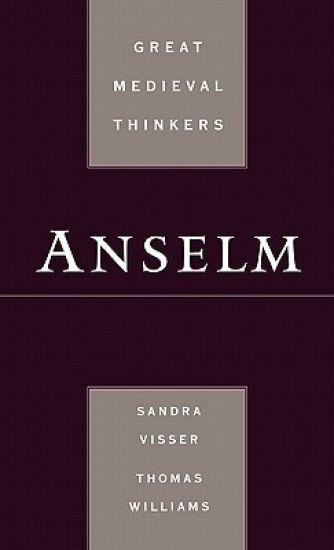
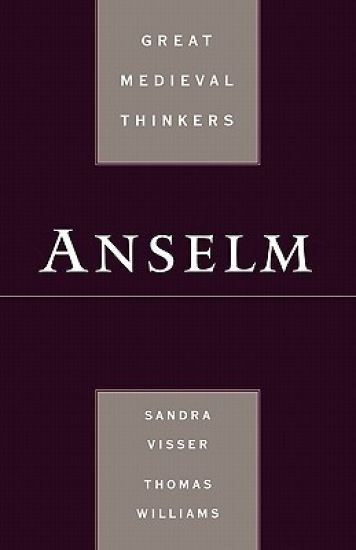
Anselm

Anselm

Sandra Visser; Thomas Williams

Oxford University Press Inc
2009
sidottu
Sandra Visser and Thomas Williams offer a brief, accessible introduction to the life and thought of St. Anselm (c. 1033-1109). Anselm, who was Archbishop of Canterbury for the last 16 years of his life, is unquestionably one of the foremost philosopher-theologians of the Middle Ages. Indeed he may have been the greatest Christian thinker in the 800 years between Augustine and Aquinas. His keen and rigorous thinking earned him the title 'The Father of Scholasticism.' The influence of his contributions to ethics and philosophical theology is clearly discernible in figures as various as Thomas Aquinas, John Duns Scotus, the voluntarists of the late-thirteenth and fourteenth centuries, and the Protestant Reformers. The prevalence of self-identified Anselmians - and anti-Anselmians - in contemporary philosophy of religion attests to the enduring importance of his approach to the divine nature. Visser and Williams's book falls into two main parts. The first will elucidate Anselm's metaphysics, concluding with an examination of Anselm's account of truth, which serves as a capstone for his metaphysical system. The second part focuses on Anselm's theory of knowledge. Topics considered include Anselm's general account of cognition and his odd but compelling theory of language-acquisition and the role it plays in discourse about the divine. The third section of the book is devoted to the moral life. Anselm's account of the foundations of ethics is philosophically of great interest, the authors show, because it effectively combines insights that contemporary philosophers have thought to be antithetical. In the fourth and last section, they turn to Anselm's philosophical explorations of Christian doctrine, including Redemption, the Trinity, and the Incarnation. They show how Anselm puts his metaphysical system to work in establishing the coherence of Christian doctrine and explain how his philosophical theology rests on his theory of knowledge.
Anselm

Anselm

Sandra Visser; Thomas Williams

Oxford University Press Inc
2008
nidottu
Sandra Visser and Thomas Williams offer a brief, accessible introduction to the life and thought of St. Anselm (c. 1033-1109). Anselm, who was Archbishop of Canterbury for the last 16 years of his life, is unquestionably one of the foremost philosopher-theologians of the Middle Ages. Indeed he may have been the greatest Christian thinker in the 800 years between Augustine and Aquinas. His keen and rigorous thinking earned him the title 'The Father of Scholasticism.' The influence of his contributions to ethics and philosophical theology is clearly discernible in figures as various as Thomas Aquinas, John Duns Scotus, the voluntarists of the late-thirteenth and fourteenth centuries, and the Protestant Reformers. The prevalence of self-identified Anselmians - and anti-Anselmians - in contemporary philosophy of religion attests to the enduring importance of his approach to the divine nature. Visser and Williams's book falls into two main parts. The first will elucidate Anselm's metaphysics, concluding with an examination of Anselm's account of truth, which serves as a capstone for his metaphysical system. The second part focuses on Anselm's theory of knowledge. Topics considered include Anselm's general account of cognition and his odd but compelling theory of language-acquisition and the role it plays in discourse about the divine. The third section of the book is devoted to the moral life. Anselm's account of the foundations of ethics is philosophically of great interest, the authors show, because it effectively combines insights that contemporary philosophers have thought to be antithetical. In the fourth and last section, they turn to Anselm's philosophical explorations of Christian doctrine, including Redemption, the Trinity, and the Incarnation. They show how Anselm puts his metaphysical system to work in establishing the coherence of Christian doctrine and explain how his philosophical theology rests on his theory of knowledge.
Handbook to Life in Renaissance Europe

Handbook to Life in Renaissance Europe

Sandra Sider

Oxford University Press Inc
2007
nidottu
The word renaissance means "rebirth," and the most obvious example of this phenomenon was the regeneration of Europe's classical Roman roots. The Renaissance began in northern Italy in the late 14th century and culminated in England in the early 17th century. Emphasis on the dignity of man (though not of woman) and on human potential distinguished the Renaissance from the previous Middle Ages. In poetry and literature, individual thought and action were prevalent, while depictions of the human form became a touchstone of Renaissance art. In science and medicine the macrocosm and microcosm of the human condition inspired remarkable strides in research and discovery, and the Earth itself was explored, situating Europeans within a wider realm of possibilities. Organized thematically, the Handbook to Life in Renaissance Europe covers all aspects of life in Renaissance Europe: History; religion; art and visual culture; architecture; literature and language; music; warfare; commerce; exploration and travel; science and medicine; education; daily life.
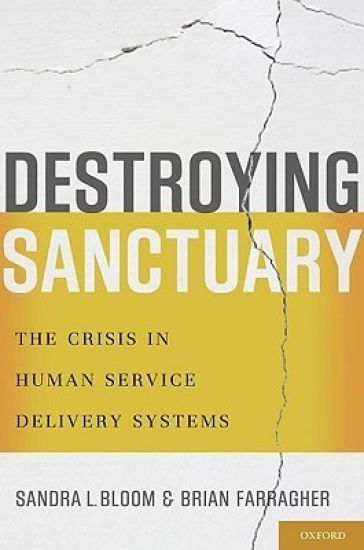
Destroying Sanctuary

Destroying Sanctuary

Sandra L. Bloom; Brian Farragher

Oxford University Press Inc
2010
sidottu
For the last thirty years, the nation's mental health and social service systems have been under relentless assault, with dramatically rising costs and the fragmentation of service delivery rendering them incapable of ensuring the safety, security, and recovery of their clients. The resulting organizational trauma both mirrors and magnifies the trauma-related problems their clients seek relief from. Just as the lives of people exposed to chronic trauma and abuse become organized around the traumatic experience, so too have our social service systems become organized around the recurrent stress of trying to do more under greater pressure: they become crisis-oriented, authoritarian, disempowered, and demoralized, often living in the present moment, haunted by the past, and unable to plan for the future. Complex interactions among traumatized clients, stressed staff, pressured organizations, and a social and economic climate that is often hostile to recovery efforts recreate the very experiences that have proven so toxic to clients in the first place. Healing is possible for these clients if they enter helping, protective environments, yet toxic stress has destroyed the sanctuary that our systems are designed to provide. This thoughtful, impassioned critique of business as usual begins to outline a vision for transforming our mental health and social service systems. Linking trauma theory to organizational function, Destroying Sanctuary provides a framework for creating truly trauma-informed services. The organizational change method that has become known as the Sanctuary Model lays the groundwork for establishing safe havens for individual and organizational recovery. The goals are practical: improve clinical outcomes, increase staff satisfaction and health, increase leadership competence, and develop a technology for creating and sustaining healthier systems. Only in this way can our mental health and social service systems become empowered to make a more effective contribution to the overall health of the nation. Destroying Sanctuary is a stirring call for reform and recovery, required reading for anyone concerned with removing the formidable barriers to mental health and social services, from clinicians and administrators to consumer advocates.