Kirjojen hintavertailu. Mukana 11 342 296 kirjaa ja 12 kauppaa.

Kirjahaku

Etsi kirjoja tekijän nimen, kirjan nimen tai ISBN:n perusteella.

1000 tulosta hakusanalla Seth Neblett

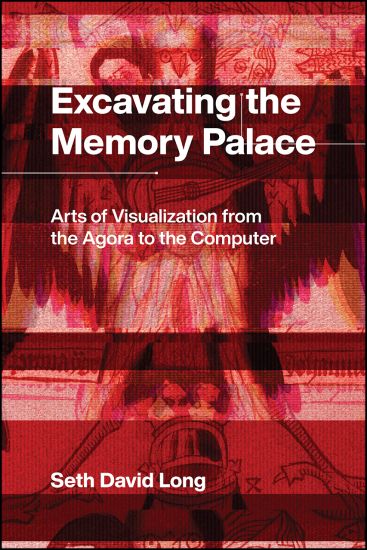
Excavating the Memory Palace

Excavating the Memory Palace

Seth Long

University of Chicago Press
2020
nidottu
With the prevalence of smartphones, massive data storage, and search engines, we might think of today as the height of the information age. In reality, every era has faced its own challenges of storing, organizing, and accessing information. While they lacked digital devices, our ancestors, when faced with information overload, utilized some of the same techniques that underlie our modern interfaces: they visualized and spatialized data, tying it to the emotional and sensory spaces of memory, thereby turning their minds into a visual interface for accessing information. In Excavating the Memory Palace, Seth David Long mines the history of Europe’s arts of memory to find the origins of today’s data visualizations, unearthing how ancient constructions of cognitive pathways paved the way for modern technological interfaces. Looking to techniques like the memory palace, he finds the ways that information has been tied to sensory and visual experience, turning raw data into lucid knowledge. From the icons of smart phone screens to massive network graphs, Long shows us the ancestry of the cyberscape and unveils the history of memory as a creative act.
Plantation Goods

Plantation Goods

Seth Rockman

THE UNIVERSITY OF CHICAGO PRESS
2024
sidottu
A Pulitzer Prize finalist in History, this eye-opening rethinking of nineteenth-century American history reveals the interdependence of the Northern industrial economy and Southern slave labor. The industrializing North and the agricultural South—that’s how we have been taught to think about the United States in the early nineteenth century. But in doing so, we overlook the economic ties that held the nation together before the Civil War. We miss slavery’s long reach into small New England communities, just as we fail to see the role of Northern manufacturing in shaping the terrain of human bondage in the South. Using plantation goods—the shirts, hats, hoes, shovels, shoes, axes, and whips made in the North for use in the South—historian Seth Rockman locates the biggest stories in American history in the everyday objects that stitched together the lives and livelihoods of Americans—white and Black, male and female, enslaved and free—across an expanding nation. By following the stories of material objects, such as shoes made by Massachusetts farm women that found their way to the feet of a Mississippi slave, Rockman reveals a national economy organized by slavery—a slavery that outsourced the production of its supplies to the North, and a North that outsourced its slavery to the South. Melding business and labor history through powerful storytelling, Plantation Goods brings northern industrialists, southern slaveholders, enslaved field hands, and paid factory laborers into the same picture. In one part of the country, entrepreneurs envisioned fortunes to be made from “planter’s hoes” and rural women spent their days weaving “negro cloth” and assembling “slave brogans.” In another, enslaved people actively consumed textiles and tools imported from the North to contest their bondage. In between, merchants, marketers, storekeepers, and debt collectors laid claim to the profits of a thriving interregional trade. Examining producers and consumers linked in economic and moral relationships across great geographic and political distances, Plantation Goods explores how people in the nineteenth century thought about complicity with slavery while showing how slavery structured life nationwide and established a modern world of entrepreneurship and exploitation. Rockman brings together lines of American history that have for too long been told separately, as slavery and capitalism converge in something as deceptively ordinary as a humble pair of shoes.
Plato's "Laws"

Plato's "Laws"

Seth Benardete

THE UNIVERSITY OF CHICAGO PRESS
2024
nidottu
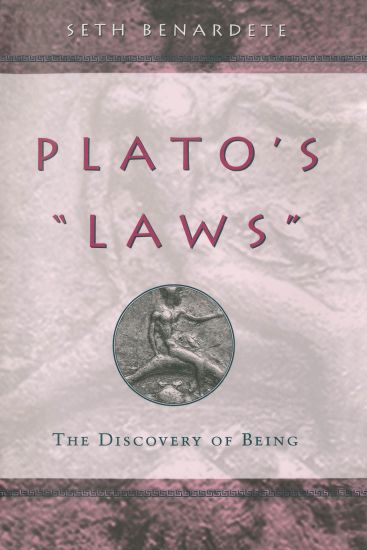
An insightful commentary on Plato’s Laws, his complex final work. The Laws was Plato’s last work, his longest, and one of his most difficult. In contrast to the Republic, which presents an abstract ideal, the Laws appears to provide practical guidelines for the establishment and maintenance of political order in the real world. Classicist Seth Benardete offers a rich analysis of each of the twelve books of the Laws, which illuminates Plato’s major themes and arguments concerning theology, the soul, justice, and education. Most importantly, Benardete shows how music in a broad sense, including drama, epic poetry, and even puppetry, mediates between reason and the city in Plato’s philosophy of law. Benardete also uncovers the work’s concealed ontological dimension, explaining why it is hidden and how it can be brought to light. In establishing the coherence and underlying organization of Plato’s last dialogue, Benardete makes a significant contribution to Platonic studies.
The Argument of the Action

The Argument of the Action

Seth Benardete

THE UNIVERSITY OF CHICAGO PRESS
2024
nidottu
This volume brings together Seth Benardete’s studies of Hesiod, Homer, and Greek tragedy, eleven Platonic dialogues, and Aristotle’s Metaphysics.The Argument of the Action spans four decades of Seth Benardete’s work, documenting its impressive range. Benardete’s philosophic reading of the poets and his poetic reading of the philosophers share a common ground, guided by the key he found in the Platonic dialogue: probing the meaning of speeches embedded in deeds, he uncovers the unifying intention of the work by tracing the way it unfolds through a movement of its own. Benardete’s original interpretations of the classics are the fruit of this discovery of the “argument of the action.”
The Librarian's Atlas

The Librarian's Atlas

Seth Kimmel

THE UNIVERSITY OF CHICAGO PRESS
2024
sidottu
A history of early modern libraries and the imperial desire for total knowledge. Medieval scholars imagined the library as a microcosm of the world, but as novel early modern ways of managing information facilitated empire in both the New and Old Worlds, the world became a projection of the library. In The Librarian’s Atlas, Seth Kimmel offers a sweeping material history of how the desire to catalog books coincided in the sixteenth and seventeenth centuries with the aspiration to control territory. Through a careful study of library culture in Spain and Morocco—close readings of catalogs, marginalia, indexes, commentaries, and maps—Kimmel reveals how the booklover’s dream of a comprehensive and well-organized library shaped an expanded sense of the world itself.
The Last Mixtape

The Last Mixtape

Seth Long

THE UNIVERSITY OF CHICAGO PRESS
2025
sidottu
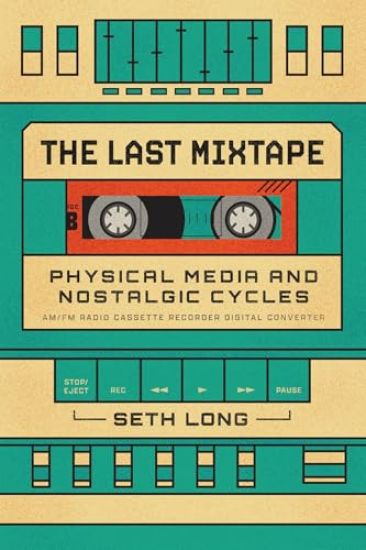
A reflection on the evolution of physical media into metaphor, through the history of music curation. Obsolescence makes the heart grow fonder, at least in the case of the mixtape. Not all technologies are so lucky. Some (say, wax cylinders) fade almost completely from cultural memory. A lucky few pass into metaphor: we still “hang up” our smartphones, “cut” film, and “patch” computer code. As digital streaming completes the obsolescence of physical media, what will become of the humble cassette? In The Last Mixtape, Seth Long offers a microhistory of music curation, anchored by the cassette, from which he explores the meanings of obsolescence, ownership, nostalgia, and the speed of cultural change. A moving meditation on our relationship with music, memory, and curation in the digital century, Long ultimately calls for a return to the media ecology represented by the mixtape: a world in which media is cheap and abundant but tactile and meaningfully engaged.
The Last Mixtape

The Last Mixtape

Seth Long

THE UNIVERSITY OF CHICAGO PRESS
2025
nidottu
A reflection on the evolution of physical media into metaphor, through the history of music curation. Obsolescence makes the heart grow fonder, at least in the case of the mixtape. Not all technologies are so lucky. Some (say, wax cylinders) fade almost completely from cultural memory. A lucky few pass into metaphor: we still “hang up” our smartphones, “cut” film, and “patch” computer code. As digital streaming completes the obsolescence of physical media, what will become of the humble cassette? In The Last Mixtape, Seth Long offers a microhistory of music curation, anchored by the cassette, from which he explores the meanings of obsolescence, ownership, nostalgia, and the speed of cultural change. A moving meditation on our relationship with music, memory, and curation in the digital century, Long ultimately calls for a return to the media ecology represented by the mixtape: a world in which media is cheap and abundant but tactile and meaningfully engaged.
Plantation Goods

Plantation Goods

Seth Rockman

THE UNIVERSITY OF CHICAGO PRESS
2026
nidottu
A Pulitzer Prize finalist in History, this eye-opening rethinking of nineteenth-century American history reveals the interdependence of the Northern industrial economy and Southern slave labor. The industrializing North and the agricultural South—that’s how we have been taught to think about the United States in the early nineteenth century. But in doing so, we overlook the economic ties that held the nation together before the Civil War. We miss slavery’s long reach into small New England communities, just as we fail to see the role of Northern manufacturing in shaping the terrain of human bondage in the South. Using plantation goods—the shirts, hats, hoes, shovels, shoes, axes, and whips made in the North for use in the South—historian Seth Rockman locates the biggest stories in American history in the everyday objects that stitched together the lives and livelihoods of Americans—white and Black, male and female, enslaved and free—across an expanding nation. By following the stories of material objects, such as shoes made by Massachusetts farm women that found their way to the feet of a Mississippi slave, Rockman reveals a national economy organized by slavery—a slavery that outsourced the production of its supplies to the North, and a North that outsourced its slavery to the South. Melding business and labor history through powerful storytelling, Plantation Goods brings northern industrialists, southern slaveholders, enslaved field hands, and paid factory laborers into the same picture. In one part of the country, entrepreneurs envisioned fortunes to be made from “planter’s hoes” and rural women spent their days weaving “negro cloth” and assembling “slave brogans.” In another, enslaved people actively consumed textiles and tools imported from the North to contest their bondage. In between, merchants, marketers, storekeepers, and debt collectors laid claim to the profits of a thriving interregional trade. Examining producers and consumers linked in economic and moral relationships across great geographic and political distances, Plantation Goods explores how people in the nineteenth century thought about complicity with slavery while showing how slavery structured life nationwide and established a modern world of entrepreneurship and exploitation. Rockman brings together lines of American history that have for too long been told separately, as slavery and capitalism converge in something as deceptively ordinary as a humble pair of shoes.
Error and the Academic Self

Error and the Academic Self

Seth Lerer

Columbia University Press
2003
sidottu
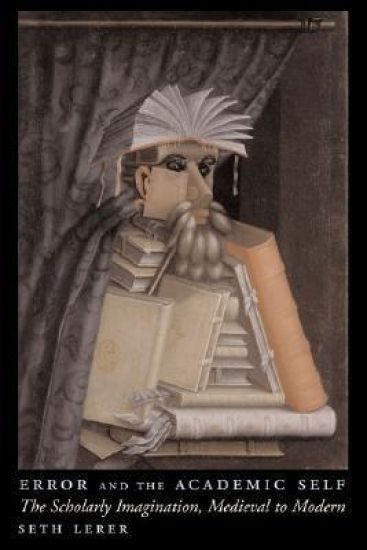
How and why did the academic style of writing, with its emphasis on criticism and correctness, develop? Seth Lerer suggests that the answer lies in medieval and Renaissance philology and, more specifically, in mistakes. For Lerer, erring is not simply being wrong, but being errant, and this book illuminates the wanderings of exiles, emigres, dissenters, and the socially estranged as they helped form the modern university disciplines of philology and rhetoric, literary criticism, and literary theory. Examining a diverse group that includes Thomas More, Stephen Greenblatt, George Hickes, Seamus Heaney, George Eliot, and Paul de Man, Error and the Academic Self argues that this critical abstraction from society and retreat into ivory towers allowed estranged individuals to gain both a sense of private worth and the public legitimacy of a professional identity.
Error and the Academic Self

Error and the Academic Self

Seth Lerer

Columbia University Press
2003
pokkari
How and why did the academic style of writing, with its emphasis on criticism and correctness, develop? Seth Lerer suggests that the answer lies in medieval and Renaissance philology and, more specifically, in mistakes. For Lerer, erring is not simply being wrong, but being errant, and this book illuminates the wanderings of exiles, emigres, dissenters, and the socially estranged as they helped form the modern university disciplines of philology and rhetoric, literary criticism, and literary theory. Examining a diverse group that includes Thomas More, Stephen Greenblatt, George Hickes, Seamus Heaney, George Eliot, and Paul de Man, Error and the Academic Self argues that this critical abstraction from society and retreat into ivory towers allowed estranged individuals to gain both a sense of private worth and the public legitimacy of a professional identity.
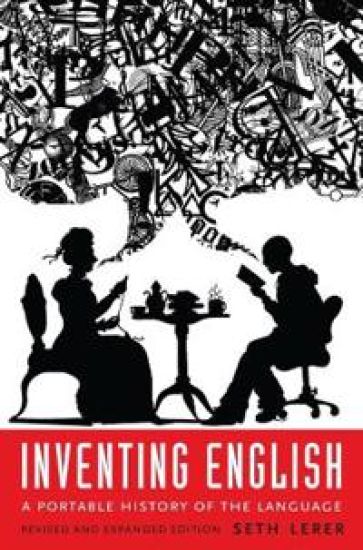
Inventing English

Inventing English

Seth Lerer

Columbia University Press
2007
sidottu
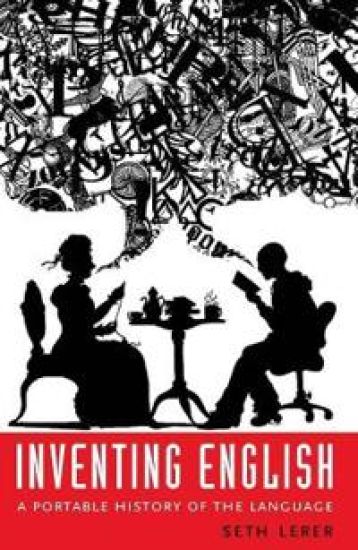
Why is there such a striking difference between English spelling and English pronunciation? How did our seemingly relatively simple grammar rules develop? What are the origins of regional dialect, literary language, and everyday speech, and what do they have to do with you? Seth Lerer's Inventing English is a masterful, engaging history of the English language from the age of Beowulf to the rap of Eminem. Many have written about the evolution of our grammar, pronunciation, and vocabulary, but only Lerer situates these developments in the larger history of English, America, and literature. Lerer begins in the seventh century with the poet Caedmon learning to sing what would become the earliest poem in English. He then looks at the medieval scribes and poets who gave shape to Middle English. He finds the traces of the Great Vowel Shift in the spelling choices of letter writers of the fifteenth century and explores the achievements of Samuel Johnson's Dictionary of 1755 and The Oxford English Dictionary of the late nineteenth and early twentieth centuries. He describes the differences between English and American usage and, through the example of Mark Twain, the link between regional dialect and race, class, and gender. Finally, he muses on the ways in which contact with foreign languages, popular culture, advertising, the Internet, and e-mail continue to shape English for future generations. Each concise chapter illuminates a moment of invention-a time when people discovered a new form of expression or changed the way they spoke or wrote. In conclusion, Lerer wonders whether globalization and technology have turned English into a world language and reflects on what has been preserved and what has been lost. A unique blend of historical and personal narrative, Inventing English is the surprising tale of a language that is as dynamic as the people to whom it belongs.
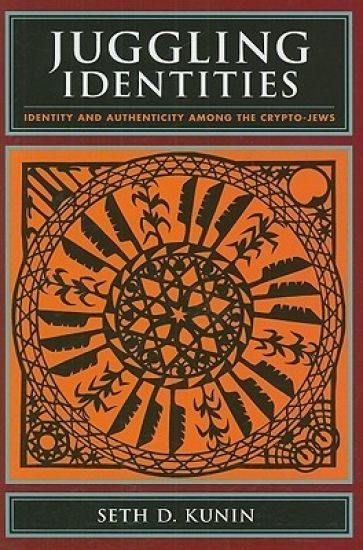
Juggling Identities

Juggling Identities

Seth D. Kunin

Columbia University Press
2009
sidottu
Juggling Identities is an extensive ethnography of the crypto-Jews who live deep within the Hispanic communities of the American Southwest. Critiquing scholars who challenge the cultural authenticity of these individuals, Seth D. Kunin builds a solid link between the crypto-Jews of New Mexico and their Spanish ancestors who secretly maintained their Jewish identity after converting to Catholicism, offering the strongest evidence yet of their ethnic and religious origins. Kunin adopts a unique approach to the lives of modern crypto-Jews, concentrating primarily on their understanding of Jewish tradition and the meaning they ascribe to ritual. He illuminates the complexity of this community, in which individuals and groups perform the same practice in diverse ways. Kunin supplements his ethnographic research with broader theories concerning the nature of identity and memory, which is especially applicable to crypto-Jews, whose culture resides mainly in memory. Kunin's work has wider implications, not only for other forms of crypto-Judaism (such as that found in the former Soviet Union) but also for the study of Judaism's fluid nature, which helps adherents adapt to new circumstances and knowledge. Kunin draws fascinating comparisons between the intricate ancestry of crypto-Jews and those of other ethnic communities living in the United States.
Disaster Deferred

Disaster Deferred

Seth Stein

Columbia University Press
2010
sidottu
In the winter of 1811-12, a series of large earthquakes in the New Madrid seismic zone-often incorrectly described as the biggest ever to hit the United States-shook the Midwest. Today the federal government ranks the hazard in the Midwest as high as California's and is pressuring communities to undertake expensive preparations for disaster. Coinciding with the two-hundredth anniversary of the New Madrid earthquakes, Disaster Deferred revisits these earthquakes, the legends that have grown around them, and the predictions of doom that have followed in their wake. Seth Stein clearly explains the techniques seismologists use to study Midwestern quakes and estimate their danger. Detailing how limited scientific knowledge, bureaucratic instincts, and the media's love of a good story have exaggerated these hazards, Stein calmly debunks the hype surrounding such predictions and encourages the formulation of more sensible, less costly policy. Powered by insider knowledge and an engaging style, Disaster Deferred shows how new geological ideas and data, including those from the Global Positioning System, are painting a very different-and much less frightening-picture of the future.
Disaster Deferred

Disaster Deferred

Seth Stein

Columbia University Press
2012
pokkari
In the winter of 1811-12, a series of large earthquakes in the New Madrid seismic zone-often incorrectly described as the biggest ever to hit the United States-shook the Midwest. Today the federal government ranks the hazard in the Midwest as high as California's and is pressuring communities to undertake expensive preparations for disaster. Coinciding with the two-hundredth anniversary of the New Madrid earthquakes, Disaster Deferred revisits these earthquakes, the legends that have grown around them, and the predictions of doom that have followed in their wake. Seth Stein clearly explains the techniques seismologists use to study Midwestern quakes and estimate their danger. Detailing how limited scientific knowledge, bureaucratic instincts, and the media's love of a good story have exaggerated these hazards, Stein calmly debunks the hype surrounding such predictions and encourages the formulation of more sensible, less costly policy. Powered by insider knowledge and an engaging style, Disaster Deferred shows how new geological ideas and data, including those from the Global Positioning System, are painting a very different-and much less frightening-picture of the future.
Inventing English

Inventing English

Seth Lerer

Columbia University Press
2015
pokkari
Seth Lerer tells a masterful history of the English language from the age of Beowulf to the rap of Eminem. Many have written about the evolution of grammar, pronunciation, and vocabulary, but only Lerer situates these developments within the larger history of English, America, and literature. This edition features a new chapter on the influence of biblical translation and an epilogue on the relationship of English speech to writing. A unique blend of historical and personal narrative, Inventing English is the surprising tale of a language that is as dynamic as the people to whom it belongs.
We Are All Weird

We Are All Weird

Seth Godin

Penguin Books Ltd
2015
nidottu
We Are All Weird is Seth Godin's cult classic on celebrating (and marketing to) the individual, now repackaged and relaunchedWorld of Warcrafters, LARPers, Settlers of Catan? Weird.Beliebers, Swifties, Directioners? Weirder.Paleos, vegans, carb loaders, ovolactovegetarians? Definitely weird.Face it. We're all weird.So why are companies still trying to build products for the masses?Why are we still acting like the masses even exist?Weird is the new normal. And only companies that figure that out have any chance of survival. In this book, Seth Godin shows you how.'Read this book slowly and read it again, for the lessons are rich and wise' Jacqueline Novogratz, founder, Acumen
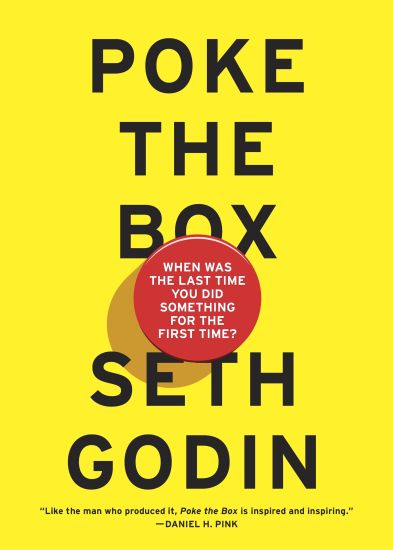
Poke the Box

Poke the Box

Seth Godin

Penguin Books Ltd
2015
nidottu
Poke the Box is Seth Godin's spirited call to action for anybody too afraid to try something new, now relaunched and repackagedIf you are happy being just a dreamer, perhaps you don't need this book.If you're enjoying the status quo, don't even consider reading this book.If you are content waiting for success to find you, please put this book down and go find something else to read.Why has Poke the Box become a cult classic?Because it's a book that dares readers to do something they're afraid of.It could be what you need, too.'Like the man who produced it, Poke the Box is inspired and inspiring' Daniel H. Pink'A one-two punch! Half kick in the ass, half cheerleading encouragement' Steven Pressfield, author of The War of Art
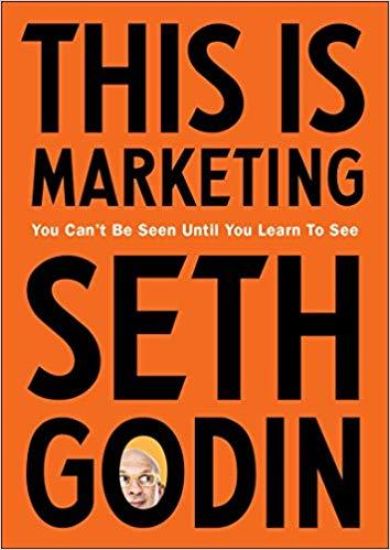
This is Marketing

This is Marketing

Seth Godin

Penguin
2018
pokkari
Marketing is all around us. From your very first memories to the moment before you opened this book, you've been inundated by marketing. You learned to read from the logos on the side of the road, and you spend your time and your money in response to what marketers have paid to put in front of you. Marketing, more than a lake or a forest, is the landscape of our modern lives. Because marketing has been done to us for so long, we take it for granted. This is Marketing turns that upside down and opens the door for you to do something with marketing. To make something better. To cause a change you'd like to see in the world. To grow your project, but mostly to serve the people you care about.
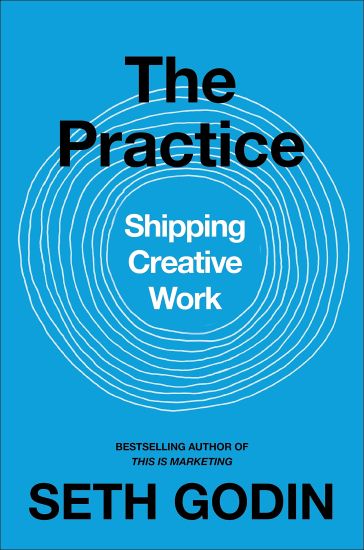
Practice

Practice

Seth Godin

Penguin Books Ltd.
2020
pokkari
From the bestselling author of Purple Cow and This is Marketing comes an elegant little book that will inspire artists, writers, and entrepreneurs to stretch and commit to putting their best work out into the world. Creative work doesn't come with a guarantee. But there is a pattern to who succeeds and who doesn't. And engaging in the consistent practice of its pursuit is the best way forward. Based on the breakthrough Akimbo workshop pioneered by legendary author Seth Godin, The Practice will help you get unstuck and find the courage to make and share creative work. Godin insists that writer's block is a myth, that consistency is far more important than authenticity, and that experiencing the imposter syndrome is a sign that you're a well-adjusted human. Most of all, he shows you what it takes to turn your passion from a private distraction to a productive contribution, the one you've been seeking to share all along. With this book as your guide, you'll learn to dance with your fear. To take the risks worth taking. And to embrace the empathy required to make work that contributes with authenticity and joy.