

Kirjahaku
Etsi kirjoja tekijän nimen, kirjan nimen tai ISBN:n perusteella.
1000 tulosta hakusanalla Sharad Mathur

...carefully argued, this book will have special appeal to graduate students, faculty, social psychologists (notably those yearning for Lewinian Approaches), and group-oriented sociologists. —Choice What kind of shared beliefs in a society are of importance to social systems? What functions do they fulfill? How are they informed and disseminated? What are the societal consequences of shared beliefs? All of these questions are addressed in this book in which Daniel Bar-Tal develops the notion of societal psychology, which he states can contribute a social-psychological perspective to the study of a wide range of social problems in a society. He shows how societal psychology can fulfill the promise of early social psychologists by directing attention to the societal and cultural contexts in which individuals live and by examining the reciprocal influence between these contexts and individuals. In this comprehensive volume, four themes of societal belief: patriotism, security, siege mentality, and deligitimization, are examined through well-defined examples and systematic analysis. Researchers, students and practitioners in social psychology, sociology, political science and anthropology will be stimulated and engaged by this important contribution to the field.

...carefully argued, this book will have special appeal to graduate students, faculty, social psychologists (notably those yearning for Lewinian Approaches), and group-oriented sociologists. —Choice What kind of shared beliefs in a society are of importance to social systems? What functions do they fulfill? How are they informed and disseminated? What are the societal consequences of shared beliefs? All of these questions are addressed in this book in which Daniel Bar-Tal develops the notion of societal psychology, which he states can contribute a social-psychological perspective to the study of a wide range of social problems in a society. He shows how societal psychology can fulfill the promise of early social psychologists by directing attention to the societal and cultural contexts in which individuals live and by examining the reciprocal influence between these contexts and individuals. In this comprehensive volume, four themes of societal belief: patriotism, security, siege mentality, and deligitimization, are examined through well-defined examples and systematic analysis. Researchers, students and practitioners in social psychology, sociology, political science and anthropology will be stimulated and engaged by this important contribution to the field.
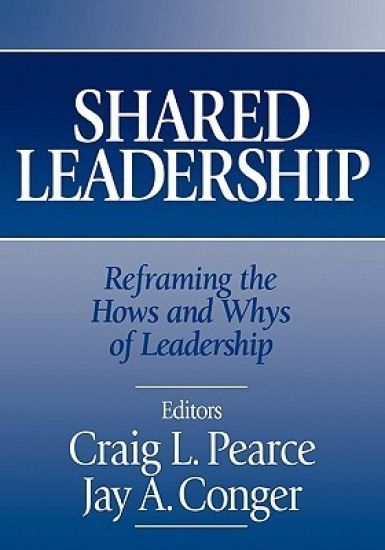
"Shared Leadership offers a much-needed shift in our thinking about how leadership happens in teams and organizations. Pearce and Conger have brought together a diverse group of authors who collectively offer a comprehensive view of developing, implementing, and studying shared leadership in organizations. This volume is sure to fulfill its goal of "jump-starting" our knowledge of the shared leadership phenomenon." --Cynthia D. McCauley, Ph.D., Vice President, Leadership Development, Center for Creative Leadership"How leadership is shared in teams and organizations is an important subject, but one that has received little attention in most of the leadership literature. This timely book provides a rich and varied perspective on the subject. The highly qualified collection of scholars provide a good theoretical foundation to guide the future study of shared leadership."--Gary Yukl, State University of New York at Albany"The time is as ripe as ever for a new paradigm of leadership that the authors simply call 'shared leadership.' This timely volume effectively 'jumpstarts' our knowledge of this emerging field by presenting a number of critical perspectives examining shared leadership using conceptual, empirical, and applied lenses."--Joe Raelin, Asa. S. Knowles Chair of Practice-Oriented Education, Northeastern University, and author of Creating Leaderful Organizations: How to Bring Out Leadership in Everyone"This volume redefines the essence of leadership. Pearce and Conger have assembled a cast of 'scholar-entrepreneurs' whose pioneering work firmly establishes the theoretical foundations for the study of leadership now and well into the future. This book is a must read for anyone interested in leadership in the age of teamwork."--Henry P. Sims, University of MarylandIn recent years, scholars have argued that leadership is an activity shared or distributed among members of a group or organization. This line of thinking is gaining attention among leadership scholars, yet our understanding of the dynamics and opportunities for shared leadership is still quite primitive. Given the infancy of the field, it is timely to introduce a volume on the subject that significantly enhances our knowledge.Shared Leadership: Reframing the Hows and Whys of Leadership brings together the foremost thinkers on the subject and is the first book of its kind to address the conceptual, methodological, and practical issues for shared leadership. Its aim is to advance understanding along many dimensions of the shared leadership phenomenon: its dynamics, moderators, appropriate settings, facilitating factors, contingencies, measurement, practice implications, and directions for the future. The volume provides a realistic and practical discussion of the benefits, as well as the risks and problems, associated with shared leadership. It will serve as an indispensable guide for researchers and practicing managers in identifying where and when shared leadership may be appropriate for organizations and teams.Edited by leading authorities Craig L. Pearce and Jay A. Conger, with contributions from the top experts in the field, Shared Leadership is an ideal text for management, education, and communication courses in leadership, teamwork, organizational behavior, and small groups. In addition, practicing consultants will find this an invaluable reference in their leadership and team development programs.

A super-secret co-journal with dozens of questions for teen and tween friends to answer individually and together. Welcome to the Diary Society, where there is always something new to learn about your best friend! This creative co-journal starts with a fun initiation where friends pledge to be open and honest as they take turns responding to questions about their hopes, thoughts, dreams, and fears. Each chapter starts with a brief introduction followed by thought-provoking questions to answer individually and collectively. Whether sharing lighthearted memories or deep struggles, friends will get to know themselves—and each other—better and better! The beautiful hardcover package with lay-flat binding, high-quality journaling paper, an embossed cover, and four-color illustration throughout make this a friend gift to get and give.

Global power structures are changing. The United States and Europe are losing ground, as countries such as China and India increase their global reach. At the same time that new global players emerge, multinational corporations, global civil society organizations, and international media carve out their own spaces in international affairs. How will these changes impact the legitimacy of the United Nations? In Shared Responsibility, Carsten Staur examines the ability of the UN to combine its normative functions - defining global objectives, rules, and standards - with practical assistance for its 193 member states. Staur focuses on transformative global challenges, where the UN has the potential to play a critical role in assisting vulnerable countries in the aftermath of conflict, in further developing the concept of "responsibility to protect," in creating a more forceful system of accountability for mass atrocity crimes, and in re-launching sustainable development as the future's principal global development approach and as the basis for dealing effectively with both climate change and the responsible management of global resources. An insider's look at the UN, Shared Responsibility details the problems faced by the United Nations and presents solutions for the organization to remain relevant, legitimate, and action-oriented in the twenty-first century.

Shared Responsibility
Carsten Staur; Steven (TRN) Harris
McGill-Queen's University Press
2013
pokkari
Global power structures are changing. The United States and Europe are losing ground, as countries such as China and India increase their global reach. At the same time that new global players emerge, multinational corporations, global civil society organizations, and international media carve out their own spaces in international affairs. How will these changes impact the legitimacy of the United Nations? In Shared Responsibility, Carsten Staur examines the ability of the UN to combine its normative functions - defining global objectives, rules, and standards - with practical assistance for its 193 member states. Staur focuses on transformative global challenges, where the UN has the potential to play a critical role in assisting vulnerable countries in the aftermath of conflict, in further developing the concept of "responsibility to protect," in creating a more forceful system of accountability for mass atrocity crimes, and in re-launching sustainable development as the future's principal global development approach and as the basis for dealing effectively with both climate change and the responsible management of global resources. An insider's look at the UN, Shared Responsibility details the problems faced by the United Nations and presents solutions for the organization to remain relevant, legitimate, and action-oriented in the twenty-first century.

The 1900 edition of Polk's Seattle City Directory listed four apartment buildings. By 1939, that number had grown to almost 1,400. This study explores the circumstances that prompted the explosive growth of this previously unknown form of housing in Seattle and takes an in-depth look at a large number of different apartment buildings, from the small and simple to the large and grand. Illustrated with numerous contemporary and vintage photographs and sketches, this volume preserves an intimate record of these under-studied and under-appreciated buildings and will inspire an appreciation for their history and architectural variety, and for their preservation as an integral part of Seattle's urban landscape.

Shared Grace
Susan Bonfiglio; Harold G Koenig; Marion A Bilich; Steven D Carlson
Routledge Member of the Taylor and Francis Group
2000
sidottu
Learn how theology and psychology can work together to provide effective therapy!Shared Grace provides a framework within which mental health professionals and clergy can work together to provide people in need with appropriate psychological services and spiritual interventions. Breaking down the walls between psychology and religion, this guide offers you proven and tried methods and models from the authors’collaborative work. Comprehensive and intelligent, this vital book will help therapists incorporate a spiritual dimension to their sessions and give patients successful and effective services.Shared Grace is also a book about the healing power of love. It is the very personal, intense account of the authors’ work to help a woman who suffered from dissociative identity disorder heal from the effects of her childhood abuse. Through this poignant story, you’ll find that adding a spiritual dimension into psychotherapy brings increased richness and depth to the therapeutic process. Step-by-step practical suggestions for collaboration between therapist and clergy are included. Issues brought to light in Shared Grace include:transforming damaged and dysfunctional images of God the establishment of support systems within the religious community the use of guided imagery the creation of healthy rituals and ceremoniesShared Grace will help therapists and clergy alike and enable each to obtain the support, education, and training to make interdisciplinary collaboration successful.

Shared Grace
Susan Bonfiglio; Harold G Koenig; Marion A Bilich; Steven D Carlson
Routledge Member of the Taylor and Francis Group
2000
nidottu
Learn how theology and psychology can work together to provide effective therapy!Shared Grace provides a framework within which mental health professionals and clergy can work together to provide people in need with appropriate psychological services and spiritual interventions. Breaking down the walls between psychology and religion, this guide offers you proven and tried methods and models from the authors’collaborative work. Comprehensive and intelligent, this vital book will help therapists incorporate a spiritual dimension to their sessions and give patients successful and effective services.Shared Grace is also a book about the healing power of love. It is the very personal, intense account of the authors’ work to help a woman who suffered from dissociative identity disorder heal from the effects of her childhood abuse. Through this poignant story, you’ll find that adding a spiritual dimension into psychotherapy brings increased richness and depth to the therapeutic process. Step-by-step practical suggestions for collaboration between therapist and clergy are included. Issues brought to light in Shared Grace include:transforming damaged and dysfunctional images of God the establishment of support systems within the religious community the use of guided imagery the creation of healthy rituals and ceremoniesShared Grace will help therapists and clergy alike and enable each to obtain the support, education, and training to make interdisciplinary collaboration successful.

Church scandals relating to sexual boundary violations by clergy have made all professionals more aware of the underlying dynamics of the pastoral relationship. Pamela Cooper-White plumbs these depths and proposes a framework for understanding the relationship and the root causes of misconduct and effective care.

Fort Belknap reservation in Montana is home to both the Gros Ventre and Assiniboine Indian tribes. The two thousand inhabitants of the reservation recognize an array of symbols—political, ritual, and sacred—which have meaning and emotional impact for all; yet there is sharp disagreement between the two tribes and among the various age groups about the interpretation of these symbols. Anthropologist Loretta Fowler here examines the history and culture of the Gros Ventres over two centuries, seeking to discover why the residents of Fort Belknap ascribe different and often opposing meanings to their shared cultural symbols and how these differences have influenced Gros Ventre identity.

Fort Belknap reservation in Montana is home to both the Gros Ventre and Assiniboine Indian tribes. The two thousand inhabitants of the reservation recognize an array of symbols—political, ritual, and sacred—which have meaning and emotional impact for all; yet there is sharp disagreement between the two tribes and among the various age groups about the interpretation of these symbols. Anthropologist Loretta Fowler here examines the history and culture of the Gros Ventres over two centuries, seeking to discover why the residents of Fort Belknap ascribe different and often opposing meanings to their shared cultural symbols and how these differences have influenced Gros Ventre identity.

Shared Cognition in Organizations
Psychology Press
1999
sidottu
Written for those interested in the topic of "shared knowledge" in organizations, this edited volume brings together a variety of themes and perspectives that emerge when multidisciplinary scholars examine this important subject. The papers were presented at a conference designed to bring together behavioral scientists who were interested in the creation, conversation, distribution, and protection of knowledge in organizations. The editors bring together a distinguished group of social psychologists who have made important contributions to social cognition and group processes. They cast a wide net in terms of the topics covered and challenged the authors to think about how their research applies to the management or mismanagement of knowledge in organizations. The volume is divided into three sections: knowledge systems, emotional-motivational systems, and communication and behavioral systems. A final conclusion chapter discusses and integrates the various contributions.

Shared Cognition in Organizations
Psychology Press
1999
nidottu
Written for those interested in the topic of "shared knowledge" in organizations, this edited volume brings together a variety of themes and perspectives that emerge when multidisciplinary scholars examine this important subject. The papers were presented at a conference designed to bring together behavioral scientists who were interested in the creation, conversation, distribution, and protection of knowledge in organizations. The editors bring together a distinguished group of social psychologists who have made important contributions to social cognition and group processes. They cast a wide net in terms of the topics covered and challenged the authors to think about how their research applies to the management or mismanagement of knowledge in organizations. The volume is divided into three sections: knowledge systems, emotional-motivational systems, and communication and behavioral systems. A final conclusion chapter discusses and integrates the various contributions.


Shared Prosperity in America's Communities
University of Pennsylvania Press
2016
sidottu
While the nation's GDP has doubled in the last thirty years, significant increases in family income have been restricted to a small subset of the American population. This disjunct between national economic growth and stagnating incomes in all but the very top tier of the population corresponds with increasing economic inequality and a lack of social and economic mobility. As a consequence, neighborhoods and metropolitan areas have become more polarized. Stark geographic differences in levels of poverty, income, health outcomes, job opportunities, lifetime earning potential, and educational attainment highlight the degree to which place matters in terms of social and economic opportunity. Shared Prosperity in America's Communities examines this place-based disparity of opportunity and suggests what can be done to ensure that the benefits of economic growth are widely shared. Contributors' essays explore social and economic mobility throughout the country to illuminate the changing geography of inequality, offer a portfolio of strategies to address the challenges of place-based inequality, and show how communities across the nation are implementing change and building a future of shared prosperity. Approaching the problem from the vantage point of economics, sociology, and public policy, Shared Prosperity in America's Communities offers a timely analysis of the country's growing socioeconomic and geographic division and shows how communities can respond to the challenge of economic inequality to build a nation of opportunity for all. Contributors: J. Cameron Anglum, Timothy J. Bartik, Chris Benner, Angela Glover Blackwell, Anthony P. Carnevale, Raj Chetty, Rebecca Diamond, Lei Ding, Paul A. Jargowsky, David N. Karp, Elizabeth Kneebone, Douglas S. Massey, Jeremy Nowak, Manuel Pastor, Victor Rubin, Chris Schildt, Nicole Smith, Margery Austin Turner, Susan M. Wachter, Zachary D. Wood.

This book traces the often tumultuous history of U.S-Indonesian relations as experienced by those who witnessed it in the making. Incorporating the perspectives of participants from both nations, Paul Gardner focuses on a number of key phases in the relationship: the U.S. role in Indonesia's struggle for independence the strains of the Cold War era, including covert U.S. support for Indonesian rebels in Sumatra and Sulawesi U.S. mediation of the dispute over western New Guinea the communist coup" in 1965 and its violent aftermath and the crucial U.S. role in organizing a multinational recovery effort for Indonesia's economy after the creation of its New Order in 1968. The book also addresses current issues, including economic differences, democratic development, and East Timor, and other human rights concerns.Gardner, himself a witness of key events, draws on interviews, personal papers, and recently declassified documents to provide an intimate view of the aspirations, insights, and acts of courage that built the Indonesian relationship the fears, intrigue, and blunders that threatened it and the complex issues the two nations face today.

The book explores the concept of shared power arrangements as ways in which public issues are, or can be, addressed. One series of chapters focuses on major conceptual or theoretical topics that cut across all policy areas and levels of analysis; while another series of chapters explores power sharing within particular policy areas, so that the meaning and the limits of power sharing might be addressed across policy domains. Contents: Introduction and Overview; Managing Interconnectedness, Current Institutional Arrangements that Create or Require Shared Power; Policy Coordination and Interorganizational Relations; Towards a Synergistic Model of Power; Urban Planning in Shared Power Settings; Power Sharing and System Change: The Case of Public Education; Schooling and Shared Power Among Organizations; Industrial Policy, Full Employment Policy; Macroeconomics Stabilization, Industrial Policy and Shared Power; Sharing Power in the Federal System: The American Status in World Affairs; Shared Power in International Arenas; Power Sharing Regimes and Strategic Arms Control; Conclusions and New Directions.

Shared Histories
Virginia Dickinson Reynolds; Virginia Potter
University of Georgia Press
2006
pokkari
A mother writes to her faraway daughter: "I keep all your letters. Someday you might want to do something with them." Those words foretold Shared Histories, although neither woman would live to see the book. This is the first known published collection of letters to include correspondence between civilian family members on both sides of the Atlantic during World War II. Separated for most of their adult lives, Virginia Dickinson Reynolds and her daughter, Virginia Potter, wrote to each other for nearly forty years. This selection from their long exchange is filled with unguarded reflections on current events, fashion, food, travel, domestic life, leisure, and the upheaval of war. Readers will also encounter various prominent English people and members of the aristocracy, the American southern elite, and such familiar names as Martha Graham, Walt Disney, and Ellen Glasgow.Both women were born in Richmond, Virginia, and raised in privileged circumstances. Virginia Dickinson Reynolds was the child of a Confederate Army officer and was also a distant cousin of poet Emily Dickinson. Virginia Potter traveled widely until she married an English Army officer and settled in his country. The women's intensely close bond shines through Shared Histories as, from time to time, do their class-conscious, Anglo-Saxon sensibilities. Sometimes poignant, sometimes bristling, always candid, these letters portray private worlds of tradition confronted with global change.