Kirjojen hintavertailu. Mukana 11 627 670 kirjaa ja 12 kauppaa.

Kirjahaku

Etsi kirjoja tekijän nimen, kirjan nimen tai ISBN:n perusteella.

1000 tulosta hakusanalla Sharon Monteith

Coping with Breast Cancer

Coping with Breast Cancer

Sharon L. Manne; Jamie S. Ostroff

Oxford University Press Inc
2008
nidottu
Early stage breast cancer can be stressful and upsetting for both the woman dealing with the disease and her partner. This illness can also place a strain on a couple's relationship. However, couples who are able to provide effective support to one another are more likely to adapt well. Focusing on the couple as a unit can promote effective coping for both patients and their partners. This couples-focused group program aims to improve a couple's functioning as a "team" and provides a supportive environment for couples facing similar breast cancer-related issues. Over the course of six sessions, couples learn support and communication skills, as well as techniques to manage stress and enhance intimacy. Modelling by group leaders and other couples facilitates skill acquisition. With continued use, the skills learned in group can have long-term benefits for couples. This guide, along with the corresponding workbook, provides all the information needed to implement this group program. It contains step-by-step instructions for running the group, as well as sample group leader dialogues, in-session activities, and homework assignments. The couple's workbook is designed to be shared by both partners as they work together through the program. By the end of the six weeks, couples will be better equipped as a team to cope with the stresses of cancer and the challenges that may lie ahead.
Coping with Breast Cancer: Workbook for Couples

Coping with Breast Cancer: Workbook for Couples

Sharon L. Manne; Jamie S. Ostroff

Oxford University Press Inc
2008
nidottu
As a couple coping with early stage breast cancer, it is important that you face the stresses and challenges together. To support each other during this difficult time, you and your partner may benefit from enhancing your relationship and stress management skills. This couples-focused group program will help you and your partner become an effective coping "team". To strengthen your relationship, you and your partner will learn how to better support and communicate with one another using proven relationship-enhancing techniques. You will also learn to strengthen emotional intimacy by taking the time to discover each other's needs and engaging in "wish list" activities to bring you closer together. Relaxation techniques will help you and your partner manage stress so you are better able to deal with the challenges of cancer. The group format provides a supportive environment and gives you a chance to learn from other couples dealing with similar issues. This workbook is designed to be shared by you and your partner, as you work together as a team. It includes all the forms and information you will need during the six-week program. Exercises will help you apply what you learned in group to coping with cancer and your life as a couple. By the end of the program you will have acquired many useful skills that will benefit you, your partner, and your relationship for a lifetime.
Once and Future Giants

Once and Future Giants

Sharon Levy

Oxford University Press Inc
2011
sidottu
Until about 13,000 years ago, Europe and North America were home to a menagerie of massive mammals. Mammoths, camels, and lions walked the ground that has become our cities and streets. Then, just as the first humans reached the Americas, these Ice Age giants vanished forever. In Once and Future Giants, science writer Sharon Levy digs through the evidence surrounding Pleistocene large animal ("megafauna") extinction events worldwide, showing that understanding this history--and our part in it--is crucial for protecting the elephants, polar bears, and other great creatures at risk today. These surviving relatives of the Ice Age beasts now face an intensified replay of that great die-off, as our species usurps the planet's last wild places while driving a warming trend more extreme than any in mammalian history. Inspired by a passion for the lost Pleistocene giants, some scientists advocate bringing wolves back to Scotland, and elephants to America's Great Plains as stand-ins for their extinct native brethren. By reintroducing big browsers and carnivores to colder climes, they argue, we could rescue some of the planet's most endangered animals while restoring healthy prairie ecosystems. Critics, including biologists enmeshed in the struggle to restore native species see the proposal as a dangerous distraction from more realistic and legitimate conservation efforts. Deftly navigating competing theories and emerging evidence, Once and Future Giants examines the extent of human influence on megafauna extinctions past and present, and explores innovative conservation efforts around the globe. The key to modern-day conservation, Levy suggests, may lie fossilized right under our feet.
Rising Road

Rising Road

Sharon Davies

Oxford University Press Inc
2010
sidottu
In Birmingham, Alabama in 1921, an unstable and fiercely anti-Catholic Methodist minister named Edwin Stephenson shot and killed James Coyle, an Irish Catholic priest, in broad daylight on the rectory steps of his church. As it so happened, the fiercely intelligent priest had married the minister's 18-year headstrong daughter Ruth -who secretly turned to Catholicism at the age of 12-to Pedro Gussman, a 42-year old Puerto Rican of indeterminate racial ancestry. The resulting trial has virtually disappeared from historical memory, but it was a sensation at the time. It featured all of the elements of intolerance that dominated the era: Southern racism, anti-Catholicism, and xenophobia. Adding to the intrigue, the minister, a member of the recently revived Ku Kluxl Klan, hired future Supreme Court Justice Hugo Black as his defense attorney. Black would become a legendary champion of civil rights later in life, but in 1921, he was a few years away from joining the Klan himself. Entering a plea of temporary insanity, Black based based his claim on his belief that the Puerto Rican husband was black, which not only was an affront to the Southern racial order, but clearly in violation of the state's anti-miscegenation laws. Sharon Davies tells this incredible story through a narrative of the romantic relationship between Ruth Stephenson and Pedro Gussman, but she positions it in its historical context: the hard-but-fraying racial and religious orders of 1920s America. Through the story of a heinous crime and its aftermath, Davies provides an epic account of the consequences of prejudice at the height of the Jim Crow era.
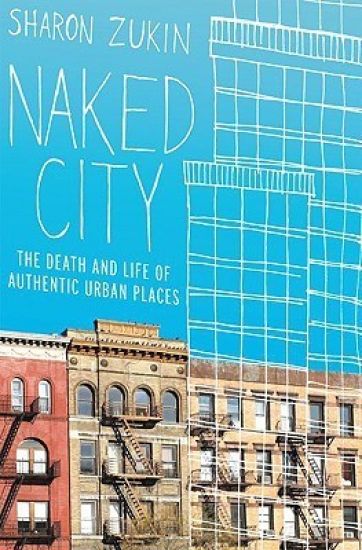
Naked City

Naked City

Sharon Zukin

Oxford University Press Inc
2010
sidottu
As cities have gentrified, educated urbanites have come to prize what they regard as "authentic" urban life: aging buildings, art galleries, small boutiques, upscale food markets, neighborhood old-timers, funky ethnic restaurants, and old, family-owned shops. These signify a place's authenticity, in contrast to the bland standardization of the suburbs and exurbs. But as Sharon Zukin shows in Naked City, the rapid and pervasive demand for authenticity--evident in escalating real estate prices, expensive stores, and closely monitored urban streetscapes--has helped drive out the very people who first lent a neighborhood its authentic aura: immigrants, the working class, and artists. Zukin traces this economic and social evolution in six archetypal New York areas--Williamsburg, Harlem, the East Village, Union Square, Red Hook, and the city's community gardens--and travels to both the city's first IKEA store and the World Trade Center site. She shows that for followers of Jane Jacobs, this transformation is a perversion of what was supposed to happen. Indeed, Naked City is a sobering update of Jacobs' legendary 1962 book, The Death and Life of Great American Cities. Like Jacobs, Zukin looks at what gives neighborhoods a sense of place, but argues that over time, the emphasis on neighborhood distinctiveness has become a tool of economic elites to drive up real estate values and effectively force out the neighborhood "characters" that Jacobs so evocatively idealized. With a journalist's eye and the understanding of a longtime critic and observer, Zukin's panoramic survey of contemporary New York explains how our desire to consume authentic experience has become a central force in making cities more exclusive.
Lovers in Essence

Lovers in Essence

Sharon Krishek

OXFORD UNIVERSITY PRESS INC
2022
sidottu
Romantic love is a defining phenomenon in human existence, and an object of heightened interest for literature, art, popular culture, and psychology. But what is romantic love and why is it typically experienced as so central? Sharon Krishek's primary aim in this work is to explore the nature of romantic love through the philosophy of Søren Kierkegaard, and in doing so, to defend it as a moral phenomenon. She does so by developing a connection between love and selfhood, here explained in terms of one's distinct individuality. To be a self, she claims, is to possess a "name," that is, an individual essence. It is when we love that we regard people by their names; we respond to who they truly are. Therefore, love is a correspondence between essences: if Jane Eyre loves Edward Rochester, she responds to him being "who he is," by virtue of her being "who she is." The conception of being thus correspondent has important implications as to the moral and spiritual value of romantic love. Relying on Kierkegaard's analysis of the self, of faith, and of love--even if sometimes in a way that departs from Kierkegaard's explicit position--Krishek explores these implications, construing romantic love as a desirable phenomenon, emotionally, morally, and spiritually.
The Cost of Belonging

The Cost of Belonging

Sharon J Yoon

OUP INDIA
2020
pokkari
In the past ten years, China has rapidly emerged as South Korea's most important economic partner. With the surge of goods and resources between the two countries, large waves of Korean migrants have opened small ethnic firms in Beijing's Koreatown, turning a once barren wasteland into the largest Korean enclave in the world. The Cost of Belonging: An Ethnography of Solidarity and Mobility in Beijing's Koreatown fills a critical gap in East Asian and migration studies through an investigation of how the rise of transnationalism has impacted the social and economic lives of South Koreans searching for wealth and stability in China. Based off in-depth ethnographic fieldwork, this book studies the tensions, relationships, and perceptions in the ethnic enclave of Wangjing between Korean Chinese cultural brokers and South Koreans starting out as entrepreneurs. Expanding upon classic anthropological theories of community and space, Yoon broadens our understanding of the migrant middle class in the era of global capitalism and neoliberal markets. The transnational enclave was once an incubator of the middle class dream, but does it continue to provide its inhabitants with the emotional resources to achieve both wealth and community? The Cost of Belonging challenges theoretical assumptions that transnationalism leads to a renaissance of ethnic identity and greater opportunities for migrants, unpacking how these entrepreneurs and dreamers coexist and evolve, both emotionally and financially, in the era of globalization. The Cost of Belonging is a volume in the series ISSUES OF GLOBALIZATION: CASE STUDIES IN CONTEMPORARY ANTHROPOLOGY, which examines the experiences of individual communities in our contemporary world. Each volume offers a brief and engaging exploration of a particular issue arising from globalization and its cultural, political, and economic effects on certain peoples or groups.
Causal Inference and the People's Health

Causal Inference and the People's Health

Sharon Schwartz; Seth J. Prins

OXFORD UNIVERSITY PRESS INC
2025
sidottu
An essential introduction to concepts of causation and causal inference that explores how our definitions of causes in epidemiology influence how we go about finding them and estimating their effects. A key goal of epidemiologic research is to uncover the causes of diseases and other health-related outcomes. But exactly what we mean by a "cause" and what types of phenomena qualify as causes, differ across historical periods, and is a contentious topic. The causal status of social phenomena has been, and continues to be, particularly precarious. In Causal Inference and the People's Health, Sharon Schwartz and Seth J. Prins offer both a synthesis of the dominant school of thought around causality and propose an approach that keeps causal concepts as an organizing principle without marginalizing social phenomena. The authors examine the implications of the "Causal Revolution,"--introduced in epidemiology as the Potential Outcomes framework--which initiated a paradigm shift across the social sciences. As the authors show, this shift influences the questions we ask, the methods we use, the narratives we construct about our study results, and thus the knowledge we use to fight for the people's health. The guiding principle of the Causal Revolution is simple but profound: researchers should specify if their goal is description, prediction, or causation. In other words, researchers should declare their causal goals even for observational studies. This principle not only produced important innovations, but it also reignited debates about the definition of causation, the causal status of important social constructs like class and gender, and the role of manipulation or intervention in causal inference. Interrogating these debates and embracing causal questions that identify and explain etiologic processes, Causal Inference and the People's Health offers a path forward that expands causal inference to include social forces as causes of the people's health, and therefore reinvigorates epidemiology's historical role in targeting systems and structures for change.
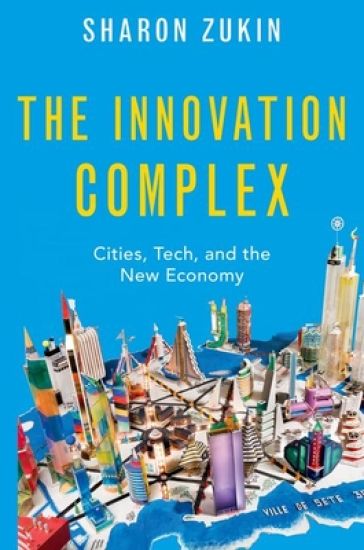
The Innovation Complex

The Innovation Complex

Sharon Zukin

OXFORD UNIVERSITY PRESS INC
2022
nidottu
An in-depth look at how New York adopted "innovation" and became a destination for startups and large tech companies. In recent years, the language of "innovation" has spurred visions of urban economic revival led by digital technology. Investors, mayors, and tech evangelists transform the city into an "innovation complex" that expands the tech industry while struggling to control its power. No city has been more ambitious in this pursuit than New York. In The Innovation Complex, Sharon Zukin looks to the people who created New York's tech economy and the places where it took root. She traces its origins to the city's response to the 2008 financial crisis and the aggressive leveraging of wealth from the US and overseas. Through interviews with venture capitalists, startup founders, and economic development officials, she explores the spaces where the rules of the new economy are made--transforming the city but increasing dependence on Big Tech firms, siphoning public subsidies, and enabling the rise of a new meritocratic elite. Updated with a preface on the effects of Covid-19, Zukin's provocative interpretation of the innovation complex is a warning to cities around the world.
The Right of Conquest

The Right of Conquest

Sharon Korman

Clarendon Press
1996
sidottu
This is an enquiry into the place of the right of conquest in international relations since the early sixteenth century, and the causes and consequences of its demise in the twentieth century. It was a recognized principle of international law until the early years of this century that a state that emerges victorious in a war is entitled to claim sovereignty over territory which it has taken possession. Sharon Korman shows how the First World War - which led to the rise of self-determination and to calls for the prohibition of way - prompted the reconstruction of international law and the consequent abolition of the title by conquest. Her conclusion, which highlights the merits and defects of the modern law as a vehicle for discouraging war by denying the title to the conqueror, challenges many of the assumptions that have come to constitute part of the conventional wisdom of our times. This is a study, not of international law narrowly conceived, but of the place of a changing legal principle in international history and the contemporary world.
Rollercoasters The Skin I'm In

Rollercoasters The Skin I'm In

Sharon G Flake

Oxford University Press
2007
nidottu
Maleeka Madison is a child with very low self-esteem due to the fact that she is darker skinned than most other black girls. In her new teacher, Miss Saunders, she encounters someone who, she feels, is worse off than she is, as Miss Saunders' skin is blotched with a rare skin condition. The teacher withstands the snickers and shouts from the students but can Maleeka accept friendship and accept the skin she's in?
Oxford Reading Tree: Level 8: Fireflies: Musician: Vanessa Mae
This book is part of the Oxford Reading Tree Fireflies series which offer a wide range of stimulating non-fiction titles for young children. It includes a variety of topics covering all areas of the curriculum, from science to citizenship. The books have a bright modern page design, and are illustrated with colour photographs. They are carefully graded across 10 levels and contain built-in progression and vocabulary repetition throughout. Each book includes notes for parents/carers and teaching assistants on the inside covers. Help with childrens reading development is also available at www.oxfordowl.co.uk. This book is also available as part of a mixed pack of 6 different books or a class pack of 36 books of the same ORT level. CD-ROM versions of Fireflies titles are also available as eFireflies.
Oxford Reading Tree Word Sparks: Level 8: Stargazey Pie

Oxford Reading Tree Word Sparks: Level 8: Stargazey Pie

Sharon Tregenza

Oxford University Press
2020
nidottu
A huge storm leaves the village hungry, until Tom braves the waves. Using the world's largest known database of writing for and by children, our experts have defined 300 ambitious words to help children succeed at school. We've combined these with finelly levelled books that help you develop support comprehension and fluency, while inspiring and engaging your young readers.
Sexual and Marital Metaphors in Hosea, Jeremiah, Isaiah, and Ezekiel
Sharon Moughtin-Mumby considers the often unrecognised impact of different approaches to metaphor on readings of the prophtic sexual and marital metaphorical language. She outlines a practical and consciously simplified approach to metaphor, placing strong emphasis on the influence of literary context on metaphorical meaning. Drawing on this approach, she read Hosea 4-14, Jeremiah 2:1-4:4, Isaiah, Ezekiel 16 and 23, and Hosea 1-3 with fresh eyes. Her lucid new readings reveal the way in which scholarship has repeatedly stifled the prophetic metaphorical language by reading it within the 'default contexts' of 'the marriage metaphor' and 'cultic prostitution', which for so many years have been simply assumed. Readers are encouraged instead to read these diverse metaphors and similes within their distinctive literary contexts in which they have the potential to rise vividly to life, provoking the question: how are we to respond to these disquieting, powerful texts in the midst of the Hebrew Bible?
The Interplay of Morphology and Phonology

The Interplay of Morphology and Phonology

Sharon Inkelas

Oxford University Press
2014
sidottu
This book presents a phenomenon-oriented survey of the interaction between phonology and morphology. It examines the ways in which morphology, i.e. word formation, demonstrates sensitivity to phonological information and how phonological patterns can be sensitive to morphology. Chapters focus on morphologically conditioned phonology, process morphology, prosodic templates, reduplication, infixation, phonology-morphology interleaving effects, prosodic-morphological mismatches, ineffability, and other cases of phonology-morphology interaction. The overview discusses the relevance of a variety of phenomena for theoretical issues in the field. These include the debate over item-based vs. realizational approaches to morphology; the question of whether cyclic effects can be subsumed under paradigmatic effects; whether reduplication is phonological copying or morphological doubling; whether infixation and suppletive allomorphy are phonologically optimizing, and more. The book is intended to be used in graduate or advanced undergraduate courses or as a reference for those pursuing individual topics in the phonology-morphology interface.
The Interplay of Morphology and Phonology

The Interplay of Morphology and Phonology

Sharon Inkelas

Oxford University Press
2014
nidottu
This book presents a phenomenon-oriented survey of the interaction between phonology and morphology. It examines the ways in which morphology, i.e. word formation, demonstrates sensitivity to phonological information and how phonological patterns can be sensitive to morphology. Chapters focus on morphologically conditioned phonology, process morphology, prosodic templates, reduplication, infixation, phonology-morphology interleaving effects, prosodic-morphological mismatches, ineffability, and other cases of phonology-morphology interaction. The overview discusses the relevance of a variety of phenomena for theoretical issues in the field. These include the debate over item-based vs. realizational approaches to morphology; the question of whether cyclic effects can be subsumed under paradigmatic effects; whether reduplication is phonological copying or morphological doubling; whether infixation and suppletive allomorphy are phonologically optimizing, and more. The book is intended to be used in graduate or advanced undergraduate courses or as a reference for those pursuing individual topics in the phonology-morphology interface.
The Role of National Courts in Applying International Humanitarian Law
International law is increasingly applied in domestic courts. This can result in situations where the courts are being asked to rule on politically sensitive issues, especially issues which involve actions during armed conflicts. Domestic courts do not show a uniformity of approach in addressing cases concerning international humanitarian law, and can often be seen to differ markedly in their response. The book argues that different national courts demonstrate different functional roles in different countries. These can be situated on a scale from apology to utopia, which can be set out as follows: (1) the apologist role of courts, in which they serve as a legitimating agency of the state's actions; (2) the avoiding role of courts, in which they, for policy considerations, avoid exercising jurisdiction over a case; (3) The deferral role of courts, in which courts defer back to the other branches of the government the responsibility of finding an appropriate remedy (4) the normative application role of courts, in which they apply international humanitarian law as required by the rule of law; and (5) the utopian role of courts, in which they introduce moral judgments in favour of the protection of the individual, beyond the requirements of the law. The book investigates the rulings of five key domestic courts, those of the UK, the USA, Canada, Italy, and Israel, to understand how their approaches differ, and where their practice can be placed on the methological scale. This analysis has been assisted by the author's extensive field work, notably in Israel and in the Occupied Palestinian Territories. Providing a detailed understanding each court's function, the book offers a critical analysis of the courts' rulings, in which both the legal arguments and the political context of cases they have ruled on are examined. The book shows that the functional role of the national courts is a combination of contradictions and mixed attitudes, and that national courts are in the process of defining their own role as enforcing organs of international humanitarian law.
Classic and Contemporary Perspectives in Social Psychology

Classic and Contemporary Perspectives in Social Psychology

Sharon E. Preves; Jeylan T. Mortimer

Oxford University Press Inc
2010
nidottu
Classic and Contemporary Perspectives in Social Psychology illuminates the dynamic linkages among social organization, interaction processes, attitudes, and the self. It exposes students to the broad range of topics of interest to social psychologists and to the diverse methods that they use. Bringing together a wide variety of captivating classic and contemporary selections, this anthology includes work from a symbolic interactionist perspective as well as studies informed by expectation states theory, experimental social psychology, and life course sociology. The selections address the social psychological underpinnings and outcomes of group dynamics, social stratification, bureaucracy, deviant behavior, globalization, and technological change. The reader's innovative structure allows students to experience the foundational work of influential sociologists and psychologists through the lens of cutting-edge issues. This groundbreaking collection features brief excerpts from the classic literature of social psychology (by Emory Bogardus, Melvin Kohn, Stanley Milgram, Muzafer Sherif, Philip Zimbardo, and others). These texts are paired with explanatory comments by the editors and contemporary writings that show the earlier studies' relevance to contemporary social issues. Classic and Contemporary Perspectives in Social Psychology is enhanced by several pedagogical features, including introductory comments that highlight the connections between the classic and contemporary selections, highly engaging discussion questions for each article and unit, and a wide variety of supplemental resources (readings, websites, films, and radio programs). It is ideal for both undergraduate and graduate courses in social psychology.
Nonviolent Revolutions

Nonviolent Revolutions

Sharon Erickson Nepstad

Oxford University Press Inc
2011
sidottu
In the spring of 1989, Chinese workers and students captured global attention as they occupied Tiananmen Square, demanded political change, and then experienced a tragic crackdown at the hands of the Chinese army. Months later, East German civilians rose up nonviolently, bringing down the Berlin Wall and dismantling their regime. Although both movements used the tactics of civil resistance, their outcomes were different. In Nonviolent Revolutions, Sharon Erickson Nepstad examines these two movements, along with citizen uprisings in Panama, Chile, Kenya, and the Philippines. Through a comparative approach that includes both successful and failed cases, she analyzes the effects of movements' strategies along with the counter-strategies that regimes developed to retain power. Nepstad concludes that security force defections have a significant influence on revolutionary outcomes since those regimes that maintained troop loyalty were the least likely to collapse. Through a close analysis of these cases, she explores the reasons why soldiers defect or remain loyal and the conditions that increase the likelihood of mutiny. She also examines the impact of international sanctions, arguing that they sometimes harm movements by generating new allies for authoritarian leaders or by shifting the locus of power from local civil resisters to international actors. In conclusion, Nepstad finds that the dynamics of nonviolent revolution are not adequately captured by theories that have largely been derived from studies of armed struggles. Nonviolent Revolutions offers insights into the distinctive challenges that civil resisters face and it explores the reasons why some of these insurrectionary movements failed. As this form of struggle has increased in recent years--with the explosion of "color revolutions " in Serbia, Georgia, Ukraine, Lebanon, Kyrgyzstan and Burma--this book provides a valuable new framework for understanding civil resistance and nonviolent revolt.
Nonviolent Revolutions

Nonviolent Revolutions

Sharon Erickson Nepstad

Oxford University Press Inc
2011
nidottu
In the spring of 1989, Chinese workers and students captured global attention as they occupied Tiananmen Square, demanded political change, and then experienced a tragic crackdown at the hands of the Chinese army. Months later, East German civilians rose up nonviolently, bringing down the Berlin Wall and dismantling their regime. Although both movements used the tactics of civil resistance, their outcomes were different. In Nonviolent Revolutions, Sharon Erickson Nepstad examines these two movements, along with citizen uprisings in Panama, Chile, Kenya, and the Philippines. Through a comparative approach that includes both successful and failed cases, she analyzes the effects of movements' strategies along with the counter-strategies that regimes developed to retain power. Nepstad concludes that security force defections have a significant influence on revolutionary outcomes since those regimes that maintained troop loyalty were the least likely to collapse. Through a close analysis of these cases, she explores the reasons why soldiers defect or remain loyal and the conditions that increase the likelihood of mutiny. She also examines the impact of international sanctions, arguing that they sometimes harm movements by generating new allies for authoritarian leaders or by shifting the locus of power from local civil resisters to international actors. In conclusion, Nepstad finds that the dynamics of nonviolent revolution are not adequately captured by theories that have largely been derived from studies of armed struggles. Nonviolent Revolutions offers insights into the distinctive challenges that civil resisters face and it explores the reasons why some of these insurrectionary movements failed. As this form of struggle has increased in recent years--with the explosion of "color revolutions " in Serbia, Georgia, Ukraine, Lebanon, Kyrgyzstan and Burma--this book provides a valuable new framework for understanding civil resistance and nonviolent revolt.