Kirjojen hintavertailu. Mukana 11 717 486 kirjaa ja 12 kauppaa.

Kirjahaku

Etsi kirjoja tekijän nimen, kirjan nimen tai ISBN:n perusteella.

1000 tulosta hakusanalla Sharon Stuart

Art & Science in the Choral Rehearsal

Art & Science in the Choral Rehearsal

Sharon J. Paul

Oxford University Press Inc
2020
nidottu
In recent decades, cognitive neuroscience research has increased our understanding of how the brain learns, retains, and recalls information. At the same time, social psychologists have developed insights into group dynamics, exploring what motivates individuals in a group to give their full effort, or conversely, what might instead inspire them to become free loaders. Art and Science in the Choral Rehearsal explores the idea that choral conductors whobetter understand how the brain learns, and how individuals within groups function, can lead more efficient, productive, and enjoyable rehearsals. Armed with this knowledge, conductors can create rehearsal techniques which take advantage of certain fundamental brain and social psychology principles. Through suchapproaches, singers will become increasingly engaged physically and mentally in the rehearsal process. Art and Science in the Choral Rehearsal draws from a range of scientific studies to suggest and encourage effective, evidence-based techniques, and can help serve to reset and inspire new approaches toward teaching. Each chapter outlines exercises and creative ideas for conductors and music teachers, including the importance of embedding problem solving into rehearsal, the use of multiple entry points for newly acquired information, techniques to encourage an emotional connection tothe music, and ways to incorporate writing exercises into rehearsal. Additional topics include brain-compatible teaching strategies to complement thorough score study, the science behind motivation, the role imagination plays in teaching, the psychology of rehearsal, and conducting tips and advice. All of thesebrain-friendly strategies serve to encourage singers' active participation in rehearsals, with the goal of motivating beautiful, inspired, and memorable performances.
Writing Measurable Outcomes in Psychotherapy

Writing Measurable Outcomes in Psychotherapy

Sharon Kopyc

Oxford University Press Inc
2020
nidottu
Writing Measurable Outcomes in Psychotherapy is an accessible and critical text for mental health counselors, clinical social workers, psychiatric nurses and others in behavioral health who write measureable objectives in treatment planning. Undergraduate and graduate students as well as those working in the field will find this an essential companion for writing meaningful and measurable goals and objectives for treatment plan outcomes. The key component in this text is the presentation of the CDRS (Cognitive Domain Rating Scale), an efficient and logical model that is presented as key to writing measurable objectives. The CDRS, based on Bloom's Taxonomy of Six Cognitive Domains, is rooted in cognitive psychology. It is a method to "situate client's thinking about their problem" and quickly identifies action(s) for creating measurable outcomes. This text is keen for neophyte and veteran therapists with illustrations of case examples and treatment plans and includes a discussion of Evidence Based Practices. It is a succinct text that integrates three key elements significant for successful psychotherapy: the therapeutic alliance, a person-centered approach and feedback by using outcome rating scales. . Case examples, dialogue and treatment plans are included and is aimed at future counselors, social workers, and psychologists as well as those already practicing in the field.
African-American Art

African-American Art

Sharon F. Patton

Oxford University Press
1998
nidottu
African-American art has made an increasingly vital contribution to the art of the United States from the time of its origins in early-eighteenth-century slave communities. Folk and decorative arts such as ceramics, furniture, and quilts are discussed alongside fine art -- sculpture, painting, and photography -- produced by African Americans, both enslaved and free, throughout the nineteenth century. Twentieth-century developments are given full coverage, particularly the New Negro Movement of the 1920s, the Era of Civil Rights and Black Nationalism through the 1960s and 1970s, and the emergence of new black artists and theorists in the 1980s and 1990s. New evidence has provided an exciting myriad of perspectives about African-American art, confirming that it represents the culture and society from which it emerges. Professor Patton explores significant issues such as the relationship of art and politics, the influence of galleries and museums, the growth of black universities, critical theory, the impact of artists' collectives, and the assortment of art practices since the 1960s. African-American Art shows that in its cultural diversity and synthesis of cultures it mirrors those in American society as a whole. `African-American Art should be read by teachers, students, and writers, and on the shelves of every library. Professor Patton begins this impressive book with the slave ships that brought Africans to this country and gives evidence of the fine metalworking, carving, carpentry, basketry, weaving, and clay building skills passed from Africa through the works of valued but nameless slave-artisans. She tells how we learned accidentally about a few named artists like the slave, Scipio Moorhead, who in 1773 engraved the only surviving image of poet, Phyllis Wheatley. She describes the portraitists, furniture makers and highly skilled artisans. Sharon Patton follows a path leading from great African formal styles, which, mixed with the powerful expressive force of struggle and opposition, led to distinctive new ideasfrom the quilts of Harriet Powers in the late 1800s to the paintings of Jean Michel Basquiat in the 1980s. She helps the reader to think and search for the evidence of the art-making skills that not only survived the Middle Passage, but the many erasings of the auction block and racism's lack, little and denial. In a fine survey of contemporary African-American art and ideas complete with words from the artists themselvesPatton takes us first through its foundations and the through the movements, people and ideas that surrounded and generated this art. An art historian, curator, and scholar, Patton has produced a volume which, like no other, can be used both as an unusual reference book and a good read on an important part of American art. The illustrations are a special treat.' Emma Amos, Artist Professor of Art, Rutgers University `For a long period of time there has been an acknowledged need for a comprehensive text that integrates the full range of African American artistry, the building crafts, slave craftsmanship, the decorative and the fine arts tradition into one scholarly document. Professor Patton has brought those elements of history into her text that are often omitted in the available texts on the subject of African-American art and much of what she has written is primary information not previously recorded outside the context of social history. The cultural context in which Professor Patton has written accounts of the artistry of African-American artists and craftsmen from the period of American slavery to the present is illuminating, analytically sound, and well documented. She has brought to the attention of the reader a number of topics such as 'Art Institutions and the Artist's Groups' that have not been thoroughly discussed in previous texts on the subject. A subject such as 'The Plantation House', the place where many decorative arts originated in the slave society is a welcomed addition to Professor Patton's historical overview.' David Driskell, Artist Distinguished University Professor of Art, University of Maryland `Sharon Patton has written a much needed text which surveys the broad scope of the history of African-American art from slavery to the present. She has followed a different tack, tracing art themes and their development throughout the history, rather than the influences of specific artists or periods. Thus, she shows how ideas such as crafts, formal painting and sculpture, or architecture, co-existed with equal importance to the culture from the times of the Colonies. In so doing, she breaks down the barrier between folk and formal art, and articulates an interrelationship of both concepts to African-American people and their culture. Her book expands the framework for the visual arts in the United States in the last two centuries.' Professor Keith Morrison, Dean, College of Creative Arts, San Francisco State University
Patrons, Brokers, and Clients in Seventeenth-Century France

Patrons, Brokers, and Clients in Seventeenth-Century France

Sharon Kettering

Oxford University Press Inc
1986
sidottu
A bold new study of politics and power in 17th-century France, this book argues that the French Crown centralized its power nationally by changing the way it delegated its royal patronage in the provinces. During this period, the royal government of Paris gradually extended its sphere of control by taking power away from the powerful and potentially disloyal provincial governors and nobility and instead putting it in the hands of provincial power brokers--regional notables who cooperated with the Paris ministers in exchange for their patronage. The new alliances between the Crown's ministers and loyal provincial elites functioned as political machines on behalf of the Crown, leading to smoother regional-national cooperation and foreshadowing the bureaucratic state that was to follow.
Strategic Management for Nonprofit Organizations

Strategic Management for Nonprofit Organizations

Sharon M. Oster

Oxford University Press Inc
1995
sidottu
Nonprofit organizations in the U.S. earn more than $100 billion annually, and number over a million different organizations. They face increasing competition for donor's dollars and many of the issues they confront are similar to those confronted by for-profit organizations. This book applies powerful concepts of strategic management developed originally in the for-profit sector to the management of nonprofits. It describes the preparation of a strategic plan consistent with the resources available; it analyses the operational tasks in executing the plan; and describes the ways in which nonprofits need to change in order to remain competitive. The book draws clear distinctions between the different challenges encountered by nonprofits operating in different industries. It will be useful for managers in such diverse organizations as the Santa Fe Opera, the Salvation Army, and the National Football League.
Clinical Social Work Practice

Clinical Social Work Practice

Sharon B. Berlin

Oxford University Press Inc
2002
sidottu
Although social workers have been using cognitive methods of intervention for decades, the use of cognitive therapy in social work settings often requires difficult, on-the-spot juggling. In these cases, it is the social worker's job to relate cognitive therapy's internally focused explanations and interventions to the client's particular social situation, which often encompasses severe environmental demands and deprivations. Clinical Social Work Practice: A Cognitive-Integrative Perspective presents a comprehensive cognitive perspective on social work clinical practice that emphasises the role of the environment in shaping personal meaning. This perspective combines cognitive psychology's internal focus on how people think about themselves with a look outward toward the environment. It draws on a number of theoretical approaches to explain how the mind works and integrates these perspectives within a framework that suggests that people operate according to their sense of what things mean. The theoretical grounding for this cognitive-integrative approach is drawn from a range of neurological, social, psychological, and social work theories. It is laid out clearly and carefully and balanced with a generous offering of detailed clinical examples and practice guidelines. By acknowledging the influence of the larger environment on personal problems, this book offers a framework that is likely to be welcomed by social workers. It will also have strong appeal to a range of other helping professionals who see the need for this kind of conceptual bridge to guide therapeutic work along the interactive dimensions of personal meanings and environmental realities. Clinical Social Work Practice: A Cognitive-Integrative Perspective is a perfect introduction to cognitive therapy for both social work students in advanced social work practice courses and practising social work therapists.
Modern Competitive Analysis

Modern Competitive Analysis

Sharon M. Oster

Oxford University Press Inc
1999
sidottu
This book shows that combining a sound understanding of economic and managerial principles can make a striking difference in the quality of the strategic planning of an organization and provide guidelines for effective corporate strategies. Covering new and important areas in economics not treated in other management and strategic planning books, Modern Competitive Analysis is a fundamental resource to the managers of today and tomorrow. The Third Edition includes new material in game theory, added value analysis and strategic intent. Examples are drawn from modern network industries and more attention is paid to newly deregulated markets.
Convictions of the Soul

Convictions of the Soul

Sharon Erickson Nepstad

Oxford University Press Inc
2004
sidottu
Many U.S. Christians were profoundly moved by the liberation struggles in Central America in the 1980s. Most learned about the situation from missionaries who had worked in the area and witnessed the repression firsthand. These missionaries, Sharon Erickson Nepstad shows, employed the church's institutional resources and the symbolic capital of Christianity to seize the attention of American congregations and remind them of the moral obligations of their faith. Drawing on in-depth interviews with fifty activists in eight separate solidarity organizations around the country, Nepstad offers a rich analysis of the experiences of religious leaders and church members in the solidarity movement. Shedding new light on the genesis and evolution of this important activist movement, Convictions of the Soul will be of interest to students and scholars of social movements, religion, and politics.
Flat Broke with Children

Flat Broke with Children

Sharon Hays

Oxford University Press Inc
2004
nidottu
Hailed as a great success, welfare reform resulted in a dramatic decline in the welfare rolls--from 4.4 million families in 1996 to 2 million in 2003. But what does this "success" look like to the welfare mothers and welfare caseworkers who experienced it? In Flat Broke With Children, Sharon Hays tells us the story of welfare reform from inside the welfare office and inside the lives of welfare mothers, describing the challenges that welfare recipients face in managing their work, their families, and the rules and regulations of welfare reform. Welfare reform, experienced on the ground, is not a rosy picture. The majority of adult welfare clients are mothers--over 90 percent--and the time limits imposed by welfare reform throw millions of these mostly unmarried, desperate women into the labor market, where they must accept low wages, the most menial work, the poorest hours, with no benefits, and little flexibility. Hays provides a vivid portrait of their lives--debunking many of the stereotypes we have of welfare recipients--but she also steps back to explore what welfare reform reveals about the meaning of work and family life in our society. In particular, she argues that an inherent contradiction lies at the heart of welfare policy, which emphasizes traditional family values even as its ethic of "personal responsibility" requires women to work and leave their children in childcare or at home alone all day long. Hays devoted three years to visiting welfare clients and two welfare offices, one in a medium-sized town in the Southeast, another in a large, metropolitan area in the West. Drawing on this hands-on research, Flat Broke With Children is the first book to explore the impact of welfare reform on motherhood, marriage, and work in women's lives, and the first book to offer us a portrait of how welfare reform plays out in thousands of local welfare offices and in millions of homes across the nation.
Families Across Time: A Life Course Perspective: Readings

Families Across Time: A Life Course Perspective: Readings

Sharon J. Price; Patrick C. McKenry; Megan J. Murphy

Oxford University Press
2000
nidottu
Using a consistent theoretical orientation, Families Across Time explores the "life course" approach to family life--including parent-child, spousal, and sibling relationships. It reflects the diversity represented in contemporary families as they grapple with changes and transitions in family relationships during the life cycle. This volume of seventeen original essays is unique in its integration of research, theory, and application in a variety of topic areas related to family life. The contributors to this volume, which include prominent and established scholars as well as young professionals, address a diversity of family forms as well as all stages of family life--in contrast to the traditional emphasis on early stages. The essays in this book represent a breadth of content and scholarship; at the same time, they are student-friendly and highly readable. Extensive case scenarios and other examples augment the content of each essay, serving as examples to enhance the reader's ability to understand the challenges families face over the life course. The book's approach emphasizes transitions and tasks in lieu of focusing on the characteristics of stages associated with family development. Different aspects of family life are examined up-close and across the life span for each topic covered. Editors Sharon J. Price, Patrick C. McKenry, and Megan J. Murphy offer introductions to each section, which frame each set of essays and provide context for the reader. Discussion questions are included at the end of each chapter.
Coping with Breast Cancer

Coping with Breast Cancer

Sharon L. Manne; Jamie S. Ostroff

Oxford University Press Inc
2008
nidottu
Early stage breast cancer can be stressful and upsetting for both the woman dealing with the disease and her partner. This illness can also place a strain on a couple's relationship. However, couples who are able to provide effective support to one another are more likely to adapt well. Focusing on the couple as a unit can promote effective coping for both patients and their partners. This couples-focused group program aims to improve a couple's functioning as a "team" and provides a supportive environment for couples facing similar breast cancer-related issues. Over the course of six sessions, couples learn support and communication skills, as well as techniques to manage stress and enhance intimacy. Modelling by group leaders and other couples facilitates skill acquisition. With continued use, the skills learned in group can have long-term benefits for couples. This guide, along with the corresponding workbook, provides all the information needed to implement this group program. It contains step-by-step instructions for running the group, as well as sample group leader dialogues, in-session activities, and homework assignments. The couple's workbook is designed to be shared by both partners as they work together through the program. By the end of the six weeks, couples will be better equipped as a team to cope with the stresses of cancer and the challenges that may lie ahead.
Coping with Breast Cancer: Workbook for Couples

Coping with Breast Cancer: Workbook for Couples

Sharon L. Manne; Jamie S. Ostroff

Oxford University Press Inc
2008
nidottu
As a couple coping with early stage breast cancer, it is important that you face the stresses and challenges together. To support each other during this difficult time, you and your partner may benefit from enhancing your relationship and stress management skills. This couples-focused group program will help you and your partner become an effective coping "team". To strengthen your relationship, you and your partner will learn how to better support and communicate with one another using proven relationship-enhancing techniques. You will also learn to strengthen emotional intimacy by taking the time to discover each other's needs and engaging in "wish list" activities to bring you closer together. Relaxation techniques will help you and your partner manage stress so you are better able to deal with the challenges of cancer. The group format provides a supportive environment and gives you a chance to learn from other couples dealing with similar issues. This workbook is designed to be shared by you and your partner, as you work together as a team. It includes all the forms and information you will need during the six-week program. Exercises will help you apply what you learned in group to coping with cancer and your life as a couple. By the end of the program you will have acquired many useful skills that will benefit you, your partner, and your relationship for a lifetime.
Once and Future Giants

Once and Future Giants

Sharon Levy

Oxford University Press Inc
2011
sidottu
Until about 13,000 years ago, Europe and North America were home to a menagerie of massive mammals. Mammoths, camels, and lions walked the ground that has become our cities and streets. Then, just as the first humans reached the Americas, these Ice Age giants vanished forever. In Once and Future Giants, science writer Sharon Levy digs through the evidence surrounding Pleistocene large animal ("megafauna") extinction events worldwide, showing that understanding this history--and our part in it--is crucial for protecting the elephants, polar bears, and other great creatures at risk today. These surviving relatives of the Ice Age beasts now face an intensified replay of that great die-off, as our species usurps the planet's last wild places while driving a warming trend more extreme than any in mammalian history. Inspired by a passion for the lost Pleistocene giants, some scientists advocate bringing wolves back to Scotland, and elephants to America's Great Plains as stand-ins for their extinct native brethren. By reintroducing big browsers and carnivores to colder climes, they argue, we could rescue some of the planet's most endangered animals while restoring healthy prairie ecosystems. Critics, including biologists enmeshed in the struggle to restore native species see the proposal as a dangerous distraction from more realistic and legitimate conservation efforts. Deftly navigating competing theories and emerging evidence, Once and Future Giants examines the extent of human influence on megafauna extinctions past and present, and explores innovative conservation efforts around the globe. The key to modern-day conservation, Levy suggests, may lie fossilized right under our feet.
Rising Road

Rising Road

Sharon Davies

Oxford University Press Inc
2010
sidottu
In Birmingham, Alabama in 1921, an unstable and fiercely anti-Catholic Methodist minister named Edwin Stephenson shot and killed James Coyle, an Irish Catholic priest, in broad daylight on the rectory steps of his church. As it so happened, the fiercely intelligent priest had married the minister's 18-year headstrong daughter Ruth -who secretly turned to Catholicism at the age of 12-to Pedro Gussman, a 42-year old Puerto Rican of indeterminate racial ancestry. The resulting trial has virtually disappeared from historical memory, but it was a sensation at the time. It featured all of the elements of intolerance that dominated the era: Southern racism, anti-Catholicism, and xenophobia. Adding to the intrigue, the minister, a member of the recently revived Ku Kluxl Klan, hired future Supreme Court Justice Hugo Black as his defense attorney. Black would become a legendary champion of civil rights later in life, but in 1921, he was a few years away from joining the Klan himself. Entering a plea of temporary insanity, Black based based his claim on his belief that the Puerto Rican husband was black, which not only was an affront to the Southern racial order, but clearly in violation of the state's anti-miscegenation laws. Sharon Davies tells this incredible story through a narrative of the romantic relationship between Ruth Stephenson and Pedro Gussman, but she positions it in its historical context: the hard-but-fraying racial and religious orders of 1920s America. Through the story of a heinous crime and its aftermath, Davies provides an epic account of the consequences of prejudice at the height of the Jim Crow era.
Naked City

Naked City

Sharon Zukin

Oxford University Press Inc
2010
sidottu
As cities have gentrified, educated urbanites have come to prize what they regard as "authentic" urban life: aging buildings, art galleries, small boutiques, upscale food markets, neighborhood old-timers, funky ethnic restaurants, and old, family-owned shops. These signify a place's authenticity, in contrast to the bland standardization of the suburbs and exurbs. But as Sharon Zukin shows in Naked City, the rapid and pervasive demand for authenticity--evident in escalating real estate prices, expensive stores, and closely monitored urban streetscapes--has helped drive out the very people who first lent a neighborhood its authentic aura: immigrants, the working class, and artists. Zukin traces this economic and social evolution in six archetypal New York areas--Williamsburg, Harlem, the East Village, Union Square, Red Hook, and the city's community gardens--and travels to both the city's first IKEA store and the World Trade Center site. She shows that for followers of Jane Jacobs, this transformation is a perversion of what was supposed to happen. Indeed, Naked City is a sobering update of Jacobs' legendary 1962 book, The Death and Life of Great American Cities. Like Jacobs, Zukin looks at what gives neighborhoods a sense of place, but argues that over time, the emphasis on neighborhood distinctiveness has become a tool of economic elites to drive up real estate values and effectively force out the neighborhood "characters" that Jacobs so evocatively idealized. With a journalist's eye and the understanding of a longtime critic and observer, Zukin's panoramic survey of contemporary New York explains how our desire to consume authentic experience has become a central force in making cities more exclusive.
Lovers in Essence

Lovers in Essence

Sharon Krishek

OXFORD UNIVERSITY PRESS INC
2022
sidottu
Romantic love is a defining phenomenon in human existence, and an object of heightened interest for literature, art, popular culture, and psychology. But what is romantic love and why is it typically experienced as so central? Sharon Krishek's primary aim in this work is to explore the nature of romantic love through the philosophy of Søren Kierkegaard, and in doing so, to defend it as a moral phenomenon. She does so by developing a connection between love and selfhood, here explained in terms of one's distinct individuality. To be a self, she claims, is to possess a "name," that is, an individual essence. It is when we love that we regard people by their names; we respond to who they truly are. Therefore, love is a correspondence between essences: if Jane Eyre loves Edward Rochester, she responds to him being "who he is," by virtue of her being "who she is." The conception of being thus correspondent has important implications as to the moral and spiritual value of romantic love. Relying on Kierkegaard's analysis of the self, of faith, and of love--even if sometimes in a way that departs from Kierkegaard's explicit position--Krishek explores these implications, construing romantic love as a desirable phenomenon, emotionally, morally, and spiritually.
The Cost of Belonging

The Cost of Belonging

Sharon J Yoon

OUP INDIA
2020
pokkari
In the past ten years, China has rapidly emerged as South Korea's most important economic partner. With the surge of goods and resources between the two countries, large waves of Korean migrants have opened small ethnic firms in Beijing's Koreatown, turning a once barren wasteland into the largest Korean enclave in the world. The Cost of Belonging: An Ethnography of Solidarity and Mobility in Beijing's Koreatown fills a critical gap in East Asian and migration studies through an investigation of how the rise of transnationalism has impacted the social and economic lives of South Koreans searching for wealth and stability in China. Based off in-depth ethnographic fieldwork, this book studies the tensions, relationships, and perceptions in the ethnic enclave of Wangjing between Korean Chinese cultural brokers and South Koreans starting out as entrepreneurs. Expanding upon classic anthropological theories of community and space, Yoon broadens our understanding of the migrant middle class in the era of global capitalism and neoliberal markets. The transnational enclave was once an incubator of the middle class dream, but does it continue to provide its inhabitants with the emotional resources to achieve both wealth and community? The Cost of Belonging challenges theoretical assumptions that transnationalism leads to a renaissance of ethnic identity and greater opportunities for migrants, unpacking how these entrepreneurs and dreamers coexist and evolve, both emotionally and financially, in the era of globalization. The Cost of Belonging is a volume in the series ISSUES OF GLOBALIZATION: CASE STUDIES IN CONTEMPORARY ANTHROPOLOGY, which examines the experiences of individual communities in our contemporary world. Each volume offers a brief and engaging exploration of a particular issue arising from globalization and its cultural, political, and economic effects on certain peoples or groups.
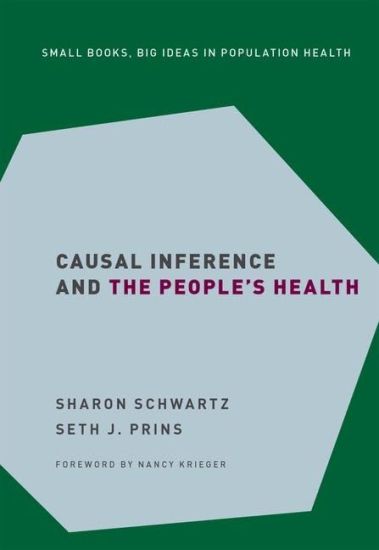
Causal Inference and the People's Health

Causal Inference and the People's Health

Sharon Schwartz; Seth J. Prins

OXFORD UNIVERSITY PRESS INC
2025
sidottu
An essential introduction to concepts of causation and causal inference that explores how our definitions of causes in epidemiology influence how we go about finding them and estimating their effects. A key goal of epidemiologic research is to uncover the causes of diseases and other health-related outcomes. But exactly what we mean by a "cause" and what types of phenomena qualify as causes, differ across historical periods, and is a contentious topic. The causal status of social phenomena has been, and continues to be, particularly precarious. In Causal Inference and the People's Health, Sharon Schwartz and Seth J. Prins offer both a synthesis of the dominant school of thought around causality and propose an approach that keeps causal concepts as an organizing principle without marginalizing social phenomena. The authors examine the implications of the "Causal Revolution,"--introduced in epidemiology as the Potential Outcomes framework--which initiated a paradigm shift across the social sciences. As the authors show, this shift influences the questions we ask, the methods we use, the narratives we construct about our study results, and thus the knowledge we use to fight for the people's health. The guiding principle of the Causal Revolution is simple but profound: researchers should specify if their goal is description, prediction, or causation. In other words, researchers should declare their causal goals even for observational studies. This principle not only produced important innovations, but it also reignited debates about the definition of causation, the causal status of important social constructs like class and gender, and the role of manipulation or intervention in causal inference. Interrogating these debates and embracing causal questions that identify and explain etiologic processes, Causal Inference and the People's Health offers a path forward that expands causal inference to include social forces as causes of the people's health, and therefore reinvigorates epidemiology's historical role in targeting systems and structures for change.
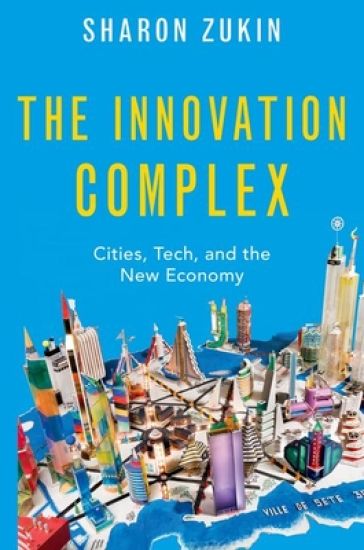
The Innovation Complex

The Innovation Complex

Sharon Zukin

OXFORD UNIVERSITY PRESS INC
2022
nidottu
An in-depth look at how New York adopted "innovation" and became a destination for startups and large tech companies. In recent years, the language of "innovation" has spurred visions of urban economic revival led by digital technology. Investors, mayors, and tech evangelists transform the city into an "innovation complex" that expands the tech industry while struggling to control its power. No city has been more ambitious in this pursuit than New York. In The Innovation Complex, Sharon Zukin looks to the people who created New York's tech economy and the places where it took root. She traces its origins to the city's response to the 2008 financial crisis and the aggressive leveraging of wealth from the US and overseas. Through interviews with venture capitalists, startup founders, and economic development officials, she explores the spaces where the rules of the new economy are made--transforming the city but increasing dependence on Big Tech firms, siphoning public subsidies, and enabling the rise of a new meritocratic elite. Updated with a preface on the effects of Covid-19, Zukin's provocative interpretation of the innovation complex is a warning to cities around the world.
The Right of Conquest

The Right of Conquest

Sharon Korman

Clarendon Press
1996
sidottu
This is an enquiry into the place of the right of conquest in international relations since the early sixteenth century, and the causes and consequences of its demise in the twentieth century. It was a recognized principle of international law until the early years of this century that a state that emerges victorious in a war is entitled to claim sovereignty over territory which it has taken possession. Sharon Korman shows how the First World War - which led to the rise of self-determination and to calls for the prohibition of way - prompted the reconstruction of international law and the consequent abolition of the title by conquest. Her conclusion, which highlights the merits and defects of the modern law as a vehicle for discouraging war by denying the title to the conqueror, challenges many of the assumptions that have come to constitute part of the conventional wisdom of our times. This is a study, not of international law narrowly conceived, but of the place of a changing legal principle in international history and the contemporary world.