

Kirjahaku
Etsi kirjoja tekijän nimen, kirjan nimen tai ISBN:n perusteella.
1000 tulosta hakusanalla Stephen Kozeniewski

Stephen Crane, 1871-1900: An Exhibition of His Writings Held in the Columbia University Libraries, September 17, 1956 to November 30, 1956
Joan H. Baum; Lewis Leary
Literary Licensing, LLC
2013
nidottu
Stephen J. Field: Craftsman of the Law
Carl Brent Swisher; Harold G. Moulton
Literary Licensing, LLC
2013
nidottu
Stephen Foster: Songs for Boys and Girls
Ella Herbert Bartlett; Mario Agnolucci
Literary Licensing, LLC
2013
sidottu
The Leacock Roundabout: A Treasury of the Best Works of Stephen Leacock
Stephen Leacock
Literary Licensing, LLC
2013
sidottu
Stephen Foster: Songs for Boys and Girls
Ella Herbert Bartlett; Mario Agnolucci
Literary Licensing, LLC
2013
nidottu
Stephen L. Stetson Co V. John B. Stetson Co U.S. Supreme Court Transcript of Record with Supporting Pleadings
Martin Conboy; Maurice Bower Saul
Gale, U.S. Supreme Court Records
2011
pokkari

Stephen L. Kreznar Et Al. V. United States. U.S. Supreme Court Transcript of Record with Supporting Pleadings
Sidney Dickstein; Archibald Cox
Gale, U.S. Supreme Court Records
2011
pokkari
Gaskin (Stephen) V. Tennessee U.S. Supreme Court Transcript of Record with Supporting Pleadings
Stephen Gaskin; David M Pack
Gale Ecco, U.S. Supreme Court Records
2011
pokkari
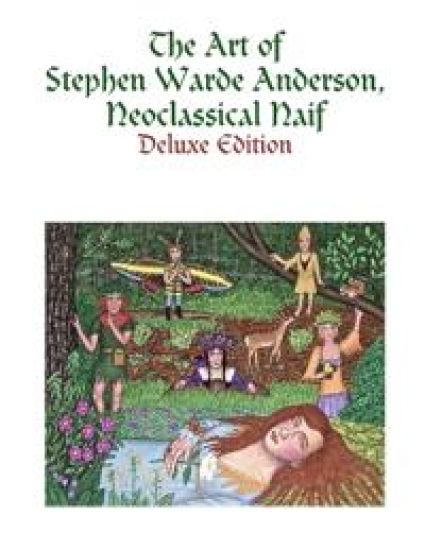
Deluxe, illustrated edition of a brief, quirky memoir of Stephen Warde Anderson, self-taught Midwestern outsider/folk artist featuring commentary on his career, his background, his inspirations, and his eccentric lifestyle. Included are hundreds of images of paintings executed in the past twenty-five years.
Philosophy has long embraced epistemology as one of its central elements. What is knowledge? How do we gain it? Can we gain it? Or do we always deceive ourselves when thinking that we have knowledge? Are we too deeply fallible ever to know something? For centuries, these questions have helped to define and motivate epistemological research. This volume engages strikingly with them, offering some unusual answers. Stephen Hetherington’s prominent career within epistemology has been a series of bold, varied and provocative arguments and ideas. Bringing together some elements of his unique body of writing for the first time, this collection features previously published as well as new material displaying and extending some of his highly original approaches to key issues including knowledge, justification, fallibility, scepticism and the Gettier Problem. Advancing our understanding of the systemic nature of Hetherington’s thinking, Stephen Hetherington on Epistemology presents his distinctive perspective on some of philosophy’s central questions about knowledge – an inviting blend of forensic detail and ‘big picture’ proposals.
Philosophy has long embraced epistemology as one of its central elements. What is knowledge? How do we gain it? Can we gain it? Or do we always deceive ourselves when thinking that we have knowledge? Are we too deeply fallible ever to know something? For centuries, these questions have helped to define and motivate epistemological research. This volume engages strikingly with them, offering some unusual answers. Stephen Hetherington’s prominent career within epistemology has been a series of bold, varied and provocative arguments and ideas. Bringing together some elements of his unique body of writing for the first time, this collection features previously published as well as new material displaying and extending some of his highly original approaches to key issues including knowledge, justification, fallibility, scepticism and the Gettier Problem. Advancing our understanding of the systemic nature of Hetherington’s thinking, Stephen Hetherington on Epistemology presents his distinctive perspective on some of philosophy’s central questions about knowledge – an inviting blend of forensic detail and ‘big picture’ proposals.

The Life of Sir John Leake, Knt. Admiral of the Fleet, &c. By Stephen Martin-Leake, Esq;
Stephen Martin Leake
Gale Ecco, Print Editions
2018
sidottu
The 18th century was a wealth of knowledge, exploration and rapidly growing technology and expanding record-keeping made possible by advances in the printing press. In its determination to preserve the century of revolution, Gale initiated a revolution of its own: digitization of epic proportions to preserve these invaluable works in the largest archive of its kind. Now for the first time these high-quality digital copies of original 18th century manuscripts are available in print, making them highly accessible to libraries, undergraduate students, and independent scholars.Rich in titles on English life and social history, this collection spans the world as it was known to eighteenth-century historians and explorers. Titles include a wealth of travel accounts and diaries, histories of nations from throughout the world, and maps and charts of a world that was still being discovered. Students of the War of American Independence will find fascinating accounts from the British side of conflict. ++++The below data was compiled from various identification fields in the bibliographic record of this title. This data is provided as an additional tool in helping to insure edition identification: ++++British LibraryT146998With two final leaves of errata and addenda.London: printed, 1750. viii,464, 4]p., plates: map; 8

The Militant Christian; or, the Good Soldier of Jesus Christ, Described in his Arms Compleat; ... Carefully Abridged From the Original of Mr. Stephen Coven,
Stephen Coven
Gale Ecco, Print Editions
2018
sidottu
The 18th century was a wealth of knowledge, exploration and rapidly growing technology and expanding record-keeping made possible by advances in the printing press. In its determination to preserve the century of revolution, Gale initiated a revolution of its own: digitization of epic proportions to preserve these invaluable works in the largest archive of its kind. Now for the first time these high-quality digital copies of original 18th century manuscripts are available in print, making them highly accessible to libraries, undergraduate students, and independent scholars.The Age of Enlightenment profoundly enriched religious and philosophical understanding and continues to influence present-day thinking. Works collected here include masterpieces by David Hume, Immanuel Kant, and Jean-Jacques Rousseau, as well as religious sermons and moral debates on the issues of the day, such as the slave trade. The Age of Reason saw conflict between Protestantism and Catholicism transformed into one between faith and logic -- a debate that continues in the twenty-first century.++++The below data was compiled from various identification fields in the bibliographic record of this title. This data is provided as an additional tool in helping to insure edition identification: ++++British LibraryT104429 Sherborne]: London: printed in the year 1668. Sherborne: re-printed by R. Goadby and Co., 1781. ix, 1],81, 1]p.; 12
Short Principles for the Architecture of Stone-bridges. With Practical Observations, ... In Twelve Sections, Illustrated With Figures. By Stephen Riou,
Stephen Riou
Gale Ecco, Print Editions
2018
sidottu
The 18th century was a wealth of knowledge, exploration and rapidly growing technology and expanding record-keeping made possible by advances in the printing press. In its determination to preserve the century of revolution, Gale initiated a revolution of its own: digitization of epic proportions to preserve these invaluable works in the largest archive of its kind. Now for the first time these high-quality digital copies of original 18th century manuscripts are available in print, making them highly accessible to libraries, undergraduate students, and independent scholars.Medical theory and practice of the 1700s developed rapidly, as is evidenced by the extensive collection, which includes descriptions of diseases, their conditions, and treatments. Books on science and technology, agriculture, military technology, natural philosophy, even cookbooks, are all contained here.++++The below data was compiled from various identification fields in the bibliographic record of this title. This data is provided as an additional tool in helping to insure edition identification: ++++British LibraryT128168London: printed for C. Hitch and L. Hawes, 1760. xx,100p, IV plates: ill.; 8

A Treatise on Ventilators. Wherein an Account is Given of the Happy Effects of the Several Trials That Have Been Made of Them, ... Part Second. By Stephen Hales,
Stephen Hales
Gale Ecco, Print Editions
2018
sidottu
The 18th century was a wealth of knowledge, exploration and rapidly growing technology and expanding record-keeping made possible by advances in the printing press. In its determination to preserve the century of revolution, Gale initiated a revolution of its own: digitization of epic proportions to preserve these invaluable works in the largest archive of its kind. Now for the first time these high-quality digital copies of original 18th century manuscripts are available in print, making them highly accessible to libraries, undergraduate students, and independent scholars.Medical theory and practice of the 1700s developed rapidly, as is evidenced by the extensive collection, which includes descriptions of diseases, their conditions, and treatments. Books on science and technology, agriculture, military technology, natural philosophy, even cookbooks, are all contained here.++++The below data was compiled from various identification fields in the bibliographic record of this title. This data is provided as an additional tool in helping to insure edition identification: ++++British LibraryT100918A continuation of the author's 'Description of ventilators', 1743. With an index. At foot of p.1: 'Vol.II.'. Paragraphs numbered 237-731.London: printed for Richard Manby, 1758. 2],346, 4]p., plates; 8
An Inquiry Into the Reasons for and Against Inclosing Open-fields. By Stephen Addington. The Second Edition
Stephen Addington
Gale Ecco, Print Editions
2018
sidottu
The 18th century was a wealth of knowledge, exploration and rapidly growing technology and expanding record-keeping made possible by advances in the printing press. In its determination to preserve the century of revolution, Gale initiated a revolution of its own: digitization of epic proportions to preserve these invaluable works in the largest archive of its kind. Now for the first time these high-quality digital copies of original 18th century manuscripts are available in print, making them highly accessible to libraries, undergraduate students, and independent scholars.Medical theory and practice of the 1700s developed rapidly, as is evidenced by the extensive collection, which includes descriptions of diseases, their conditions, and treatments. Books on science and technology, agriculture, military technology, natural philosophy, even cookbooks, are all contained here.++++The below data was compiled from various identification fields in the bibliographic record of this title. This data is provided as an additional tool in helping to insure edition identification: ++++British LibraryT142750Coventry: printed for the author, at Harborough, by J. W. Piercy; and sold by J. Buckland, and G. Robinson, 1772. iv,60p.; 8
An Attempt to Translate and Explain the Difficult Passages in the Song of Deborah, With the Assistance of Kennicott's Collations, Rossi's Versions, and Critical Conjecture. By the Rev. Stephen Weston,
Stephen Weston
Gale Ecco, Print Editions
2018
sidottu
The 18th century was a wealth of knowledge, exploration and rapidly growing technology and expanding record-keeping made possible by advances in the printing press. In its determination to preserve the century of revolution, Gale initiated a revolution of its own: digitization of epic proportions to preserve these invaluable works in the largest archive of its kind. Now for the first time these high-quality digital copies of original 18th century manuscripts are available in print, making them highly accessible to libraries, undergraduate students, and independent scholars.Western literary study flows out of eighteenth-century works by Alexander Pope, Daniel Defoe, Henry Fielding, Frances Burney, Denis Diderot, Johann Gottfried Herder, Johann Wolfgang von Goethe, and others. Experience the birth of the modern novel, or compare the development of language using dictionaries and grammar discourses. ++++The below data was compiled from various identification fields in the bibliographic record of this title. This data is provided as an additional tool in helping to insure edition identification: ++++British LibraryT080372The separately-paginated notes begin on a verso.Exeter: printed and sold by Payne and Son, Faulder, Edwards, and Thorn, 1788. 2], iv,5,15p.; 4