
![Mary Stuart. [A Poem.]](/covers/9781241025786.jpg)
Kirjahaku
Etsi kirjoja tekijän nimen, kirjan nimen tai ISBN:n perusteella.
1000 tulosta hakusanalla Stuart A Marks
![Mary Stuart. [A Poem.] Second Edition](/covers/9781241028169.jpg)
Mary Stuart. [A Poem.] Second Edition
Elizabeth Wright MacAuley
British Library, Historical Print Editions
2011
pokkari
![Mary Stuart. [A Poem.]](/covers/9781241536251.jpg)
Title: Mary Stuart. A poem.]Publisher: British Library, Historical Print EditionsThe British Library is the national library of the United Kingdom. It is one of the world's largest research libraries holding over 150 million items in all known languages and formats: books, journals, newspapers, sound recordings, patents, maps, stamps, prints and much more. Its collections include around 14 million books, along with substantial additional collections of manuscripts and historical items dating back as far as 300 BC.The POETRY & DRAMA collection includes books from the British Library digitised by Microsoft. The books reflect the complex and changing role of literature in society, ranging from Bardic poetry to Victorian verse. Containing many classic works from important dramatists and poets, this collection has something for every lover of the stage and verse. ++++The below data was compiled from various identification fields in the bibliographic record of this title. This data is provided as an additional tool in helping to insure edition identification: ++++ British Library Macauley, Elizabeth Wright; 1823. 8 . 11646.h.14.

Violet Stuart, a Tale of Gibraltar.
Harriet Eleanor Phillimore
British Library, Historical Print Editions
2011
pokkari

Marie Stuart, Queen of Scots: A Concise Bibliography, V2
Samuel Aaron Tannenbaum; Dorothy R. Tannenbaum
Literary Licensing, LLC
2013
nidottu
![The Revd. [Reverend] John Stuart, D.D., U.E.L., of Kingston, U.C. and his Family; a Genealogical Study,](/covers/9781378640326.jpg)
The Revd. [Reverend] John Stuart, D.D., U.E.L., of Kingston, U.C. and his Family; a Genealogical Study,
A H B 1863 Young
Palala Press
2018
pokkari
This work has been selected by scholars as being culturally important, and is part of the knowledge base of civilization as we know it. This work was reproduced from the original artifact, and remains as true to the original work as possible. Therefore, you will see the original copyright references, library stamps (as most of these works have been housed in our most important libraries around the world), and other notations in the work.This work is in the public domain in the United States of America, and possibly other nations. Within the United States, you may freely copy and distribute this work, as no entity (individual or corporate) has a copyright on the body of the work.As a reproduction of a historical artifact, this work may contain missing or blurred pages, poor pictures, errant marks, etc. Scholars believe, and we concur, that this work is important enough to be preserved, reproduced, and made generally available to the public. We appreciate your support of the preservation process, and thank you for being an important part of keeping this knowledge alive and relevant.

Maria Stuart. A Tragedy by Fr. V. Schiller. With Explanatory Notes by J.C. Oehlschlaeger ...
Friedrich Schiller
University of Michigan Library
2006
pokkari
A Reply to the Review of Whitman's Letters to Professor Stuart in the Spirit of the Pilgrim
Bernard Whitman
Kessinger Pub
2007
pokkari
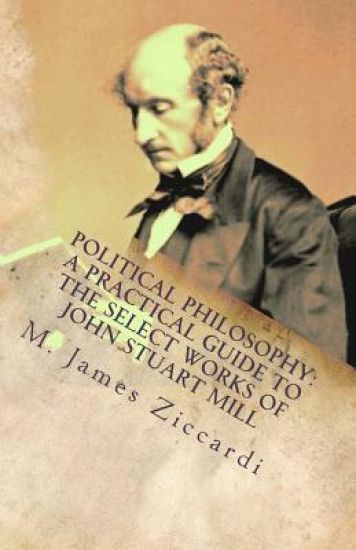
Political Philosophy: A Practical Guide to the Select Works of John Stuart Mill
M. James Ziccardi
Createspace Independent Publishing Platform
2012
nidottu
With good reason, John Stuart Mill is widely regarded as the most influential philosopher of the nineteenth century. In Political Philosophy: A Practical Guide to the Select Works of John Stuart Mill, M. James Ziccardi presents the key passages and principal ideas which are put forward in four of John Stuart Mill

"FOR VIRGINIA" A Virginian who Rode with General Jeb Stuart during the Civil War
Mike Wood
Outskirts Press
2015
pokkari
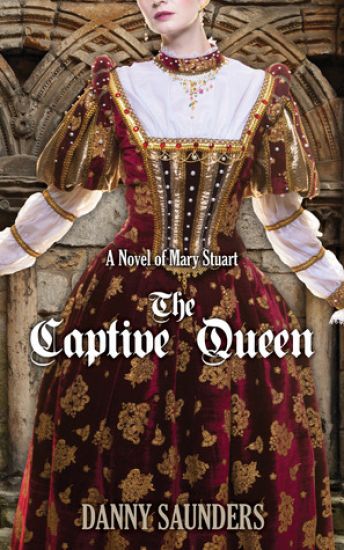
The Captive Queen: A Novel of Mary Stuart
Danny Saunders
Createspace Independent Publishing Platform
2014
nidottu

On Liberty By: John Stuart Mill: On Liberty is a philosophical work in the English language by 19th century philosopher John Stuart M
John Stuart Mill
Createspace Independent Publishing Platform
2018
nidottu
On Liberty is a philosophical work by the English philosopher John Stuart Mill, originally intended as a short essay. The work, published in 1859, applies Mill's ethical system of utilitarianism to society and the state.Mill attempts to establish standards for the relationship between authority and liberty. He emphasizes the importance of individuality, which he conceived as a prerequisite to the higher pleasures-the summum bonum of utilitarianism. Furthermore, Mill criticizes the errors of past attempts to defend individuality where, for example, democratic ideals resulted in the "tyranny of the majority." Among the standards established in this work are Mill's three basic liberties of individuals, his three legitimate objections to government intervention, and his two maxims regarding the relationship of the individual to society. On Liberty was a greatly influential and well received work, although it did not go without criticism. Some attacked it for its apparent discontinuity with Utilitarianism, while others criticized its vagueness. The ideas presented in On Liberty have remained the basis of much liberal political thought. It has remained in print continuously since its initial publication. To this day, a copy of On Liberty is passed to the president of the British Liberal Democrats as a symbol of office. A copy of the same book is also presented to and then held by the president of the Liberal Party as a symbol of office. Mill's marriage to his wife Harriet Taylor Mill greatly influenced the concepts in On Liberty, which was largely finished prior to her death, and published shortly after she died.............. John Stuart Mill (20 May 1806 - 8 May 1873) was a British philosopher, political economist and civil servant. One of the most influential thinkers in the history of liberalism, he contributed widely to social theory, political theory and political economy. Dubbed "the most influential English-speaking philosopher of the nineteenth century," Mill's conception of liberty justified the freedom of the individual in opposition to unlimited state and social control. Mill was a proponent of utilitarianism, an ethical theory developed by his predecessor Jeremy Bentham. He contributed to the investigation of scientific methodology, though his knowledge of the topic was based on the writings of others, notably William Whewell, John Herschel and Auguste Comte, and research carried out for Mill by Alexander Bain. Mill engaged in written debate with Whewell. 8] A member of the Liberal Party, he was also the first Member of Parliament to call for women's suffrage. Works: A System of Logic Main article: A System of Logic Mill joined the debate over scientific method which followed on from John Herschel's 1830 publication of A Preliminary Discourse on the study of Natural Philosophy, which incorporated inductive reasoning from the known to the unknown, discovering general laws in specific facts and verifying these laws empirically. William Whewell expanded on this in his 1837 History of the Inductive Sciences, from the Earliest to the Present Time followed in 1840 by The Philosophy of the Inductive Sciences, Founded Upon their History, presenting induction as the mind superimposing concepts on facts. Laws were self-evident truths, which could be known without need for empirical verification.....
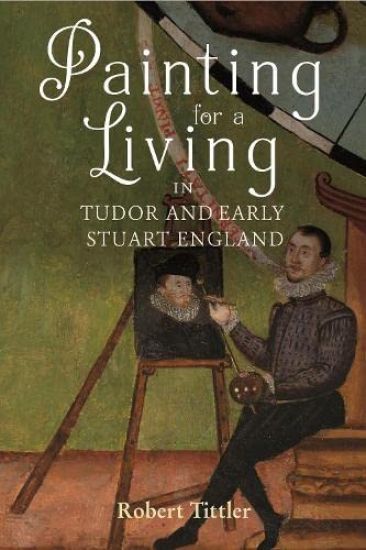
Painting for a Living in Tudor and Early Stuart England
Robert Tittler
BOYDELL BREWER LTD
2022
sidottu
A rare examination of the political, social, and economic contexts in which painters in Tudor and Early Stuart England lived and worked While famous artists such as Holbein, Rubens, or Van Dyck are all known for their creative periods in England or their employment at the English court, they still had to make ends meet, as did the less well-known practitioners of their craft. This book, by one of the leading historians of Tudor and Stuart England, sheds light on the daily concerns, practices, and activities of many of these painters. Drawing on a biographical database comprising nearly 3000 painters and craftsmen - strangers and native English, Londoners and provincial townsmen, men and sometimes women, celebrity artists and 'mere painters' - this book offers an account of what it meant to paint for a living in early modern England. It considers the origins of these painters as well as their geographical location, the varieties of their expertise, and the personnel and spatial arrangements of their workshops. Engagingly written, the book captures a sense of mobility and exchange between England and the continent through the considerable influence of stranger-painters, undermining traditional notions about the insular character of this phase in the history of English art. By showing how painters responded to the greater political, religious, and economic upheavals of the time, the study refracts the history of England itself through the lens of this particular occupation.


Mary Stuart. A Tragedy
Algernon Charles Swinburne; George Francis Savage-Armstrong
Outlook Verlag
2024
nidottu

Mary Stuart. A Tragedy
Outlook Verlag
2024
sidottu