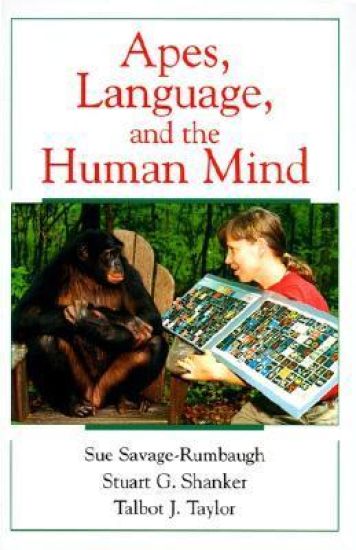
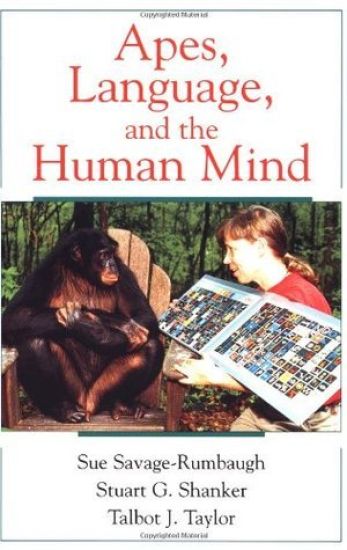
For more than twenty years, Sue Savage-Rumbaugh has been studying the linguistic and cognitive skills of a number of laboratory-reared primates. Recently, her work with Kanzi (a bonobo) has been acknowledged as having achieved a scientific breakthrough of stunning proportions: Kanzi has acquired linguistic and cognitive skills equal to those of a 2-1/2 year-old human child. Apes, Language and the Human Mind skillfully combines the exciting narrative regarding the Kanzi research with incisive critical analysis of the research's broader linguistic, psychological, and anthropological implications. Sure to be controversial, this exciting new volume offers a radical revision of the sciences of language and mind.
Current primate research has yielded stunning results that not only threaten our underlying assumptions about the cognitive and communicative abilities of nonhuman primates, but also bring into question what it means to be human. At the forefront of this research, Sue Savage-Rumbaugh recently has achieved a scientific breakthrough of impressive proportions. Her work with Kanzi, a laboratory-reared bonobo, has led to Kanzi's acquisition of linguistic and cognitive skills similar to those of a two and a half year-old human child. Apes, Language, and the Human Mind skillfully combines a fascinating narrative of the Kanzi research with incisive critical analysis of the research's broader linguistic, psychological, and anthropological implications. The first part of the book provides a detailed, personal account of Kanzi's infancy, youth, and upbringing, while the second part addresses the theoretical, conceptual, and methodological issues raised by the Kanzi research. The authors discuss the challenge to the foundations of modern cognitive science presented by the Kanzi research; the methods by which we represent and evaluate the abilities of both primates and humans; and the implications which ape language research has for the study of the evolution of human language. Sure to be controversial, this exciting new volume offers a radical revision of the sciences of language and mind, and will be important reading for all those working in the fields of primatology, anthropology, linguistics, philosophy of mind, and cognitive and developmental psychology.
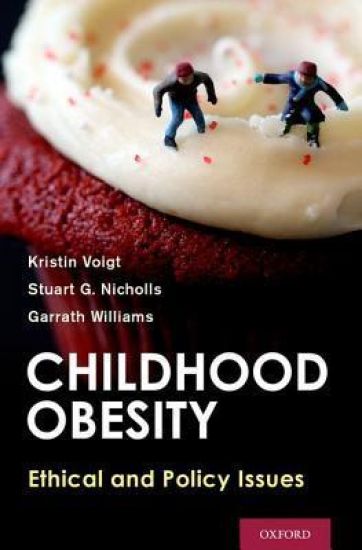
Childhood obesity has become a central concern in many countries and a range of policies have been proposed or implemented to address it. This co-authored book is the first to focus on the complex set of ethical and policy issues that childhood obesity raises. Throughout the book, authors Kristin Voigt, Stuart G. Nicholls, and Garrath Williams emphasize that childhood obesity is a multi-faceted phenomenon, and just one of many issues that parents, schools and societies face. They argue that it is important to acknowledge the resulting complexities and not to think in terms "single-issue" policies. After first reviewing some of the factual uncertainties about childhood obesity, the authors explore central ethical questions. What priority should be given to preventing obesity? To what extent are parents responsible? How should we think about questions of stigma and inequality? In the second part of the book, the authors consider key policy issues, including the concept of the âobesogenic environment,â debates about taxation and marketing, and the role that schools can play in obesity prevention. The authors argue that political debate is needed to decide the importance given to childhood obesity and how to divide responsibilities for action. These debates have no simple answers. Nonetheless, the authors argue that there are reasons for hope. There are a wide range of opportunities for action. Many of these options also promise wider social benefits. "This book provides a welcome re-appraisal of commonly-held beliefs about child obesity and misconceptions about what needs to be done. The authors expose the futility of holding parents responsible for children's unhealthy behaviour, they challenge the assumption that education and family support will solve the problem, and they condemn the prejudice and stigma which surround the narrative of blame. The book shows convincingly how the causes of obesity - and the range of associated diseases - lie in the fabric of the modern market economy: in the food supply which shapes our diets, the social and physical environment which encourages sedentary behaviour, and in the media which promote ever greater consumption. Obesity is not the problem: it is the symptom of a more complex social and economic malaise encouraging poor health. The case for interventions by governments to promote health and wellbeing above crude economic growth is comprehensively proven." - Dr. Tim Lobstein, Director of Policy and Programmes, The International Association for the Study of Obesity and The International Obesity Task Force A well-researched, highly critical, but carefully balanced examination of everyday assumptions about childhood obesity and its prevention from an intensely moral perspective. Although the authors demonstrate that no intervention is without ethical complications or effective entirely on its own, they call for immediate actions to reduce the stigma of childhood obesity, support parents, and create food environments healthier for children, adults, and the environment.- Marion Nestle, Paulette Goddard Professor of Nutrition, Food Studies, and Public Health, NYU Steinhardt School of Culture, Education, and Human Development
This open access book about the Zadeh Project demonstrates and explores a core question in clinical ethics: how can ethics consultants be accountable in the face of a robust plurality of ethical standpoints, especially those that underwrite practices and methods for doing ethics consultation as well as those viewpoints and values encountered in daily clinical ethics practice? Underscoring this question is the recognition that the field of clinical ethics consultation has arrived at a crucial point in its maturation. Many efforts are underway to more formally "professionalize" the field, with most aimed toward stabilizing a specific set of institutional considerations. Stretched between these institutional and practical initiatives resides a crucial set of of ethical considerations, chief among them the meaning and scope of responsibility for clinical ethics consultants. Developed around a long-form case scenario, the Zadeh Project provides a multi-layered series of "peer-reviews" critique of the actions of the case scenario's ethics consultant; reflection on clinical ethics method; examination of the many ways that commitments to method and practice can, and do, intersect, overlap, and alter one another. The design and format of this book thus models a key element for clinical ethics practice: the need and ability to provide careful and thoughtful explanation of core moral considerations that emerge among diverse standpoints. Specifically designed for those studying to become and those who are ethics consultants, this book, with its innovative and multi-layered approach, allows readers to share a peer-review-like experience that shows accountability to be what it is, an ethical, not merely procedural or administrative, undertaking. This work was published by Saint Philip Street Press pursuant to a Creative Commons license permitting commercial use. All rights not granted by the work's license are retained by the author or authors.
This open access book about the Zadeh Project demonstrates and explores a core question in clinical ethics: how can ethics consultants be accountable in the face of a robust plurality of ethical standpoints, especially those that underwrite practices and methods for doing ethics consultation as well as those viewpoints and values encountered in daily clinical ethics practice? Underscoring this question is the recognition that the field of clinical ethics consultation has arrived at a crucial point in its maturation. Many efforts are underway to more formally "professionalize" the field, with most aimed toward stabilizing a specific set of institutional considerations. Stretched between these institutional and practical initiatives resides a crucial set of of ethical considerations, chief among them the meaning and scope of responsibility for clinical ethics consultants. Developed around a long-form case scenario, the Zadeh Project provides a multi-layered series of "peer-reviews" critique of the actions of the case scenario's ethics consultant; reflection on clinical ethics method; examination of the many ways that commitments to method and practice can, and do, intersect, overlap, and alter one another. The design and format of this book thus models a key element for clinical ethics practice: the need and ability to provide careful and thoughtful explanation of core moral considerations that emerge among diverse standpoints. Specifically designed for those studying to become and those who are ethics consultants, this book, with its innovative and multi-layered approach, allows readers to share a peer-review-like experience that shows accountability to be what it is, an ethical, not merely procedural or administrative, undertaking. This work was published by Saint Philip Street Press pursuant to a Creative Commons license permitting commercial use. All rights not granted by the work's license are retained by the author or authors.
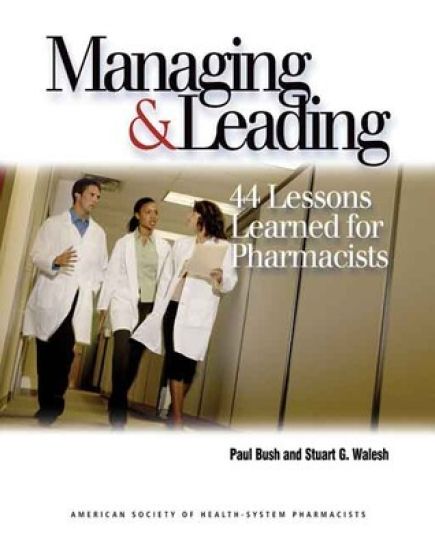
Managing and Leading: 44 Lessons Learned for Pharmacists offers useful ideas and tools for pharmacists, residents and students to improve their managing and leading skills, and more effectively approach the non-technical or ""soft-side"" aspects of working with colleagues, administrators, vendors, clients, and patients. Each of the 44 lessons in this guide contains an essay that offers at least one idea or principle for honing management and leadership effectiveness. Following each lesson are practical suggestions for ways to apply the ideas using application tools and techniques such as action items, guidelines, do and don'ts, checklists, forms, and resource materials such as articles, papers, books, e-newsletters, and websites.Lessons are focused in the following areas:Personal Roles, Goals, and DevelopmentCommunicationLearning and TeachingImproving Personal and Organizational ProductivityMeetings and AgendasMarketing Models
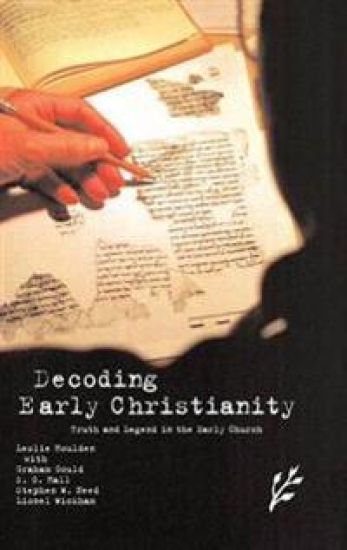
The extraordinary success of The Da Vinci Code has dramatically intensified interest in the mysterious origins of Christianity. But in fact there has always been huge curiosity about a wide range of contentious issues concerning Jesus and early Church history. Who was the 'real' Jesus? How much do we really know about his disciples? What is written in the 'secret' early Christian writings, such as the Gnostic Gospels? How did the Church Fathers decide which beliefs were heretical and which weren't? Who were the first Popes and how did they take control of the early Church? Decoding Early Christianity addresses all such questions, separating truth from legend, and showing how the early Church Fathers and Popes interpreted competing views and traditions to produce, over time, an approved and codified view of Jesus and his followers, and developed an accepted liturgy with which to worship him. Expertly written by a team of highly distinguished authors, it is a clear and engaging exploration of fact and fiction for anyone who wants to be reliably informed on the subject. The authors show how speculative fancies arise from a mixture of tenuous evidence and wishful thinking, and bring the issues back to the solid - but no less extraordinary - evidence in the main canon of the Gospels and the Acts. After Leslie Houlden's Introduction, which briefly explores the nature and context of the different issues, nine chapters, each written by an expert, tackle the evidence: 'What Did Jesus Do and Teach?' (Leslie Houlden), 'Who Were the Disciples?' (Stephen Need), 'Who Were the First Popes?' (Graham Gould), 'What is the Apocryphal New Testament?' (Stuart Hall), 'What was Gnosticism?' (Stuart Hall), 'What Was the Qumran Sect and Did Jesus Share their Beliefs?' (Stephen Need), 'How Did the Early Christians Worship?' (Graham Gould), 'Who Were the Heretics and What Did they Believe?' (Lionel Wickham) and 'What Did Constantine Do for Christianity?' (Graham Gould).
Irrigation with Reclaimed Municipal Wastewater - A Guidance Manual is for use in the planning, design, and operation of agricultural and landscape irrigation systems using reclaimed municipal wastewater. It is written for civil and sanitary engineers, agricultural engineers, and agricultural extension workers and consultants. The manual is also useful as a reference for public works officials, municipal wastewater treatment plant operators, and students at colleges and universities. The text emphasizes irrigation for the purpose of optimizing crop production; therefore, it includes detailed instruction in the calculation of crop water requirements. Furthermore, the benefits and limitations of using reclaimed municipal wastewater for agricultural and landscape irrigation are discussed, as are other topics of special interest, including water management for salinity and sodicity control, and economic and legal aspects of reclaimed wastewater irrigation.
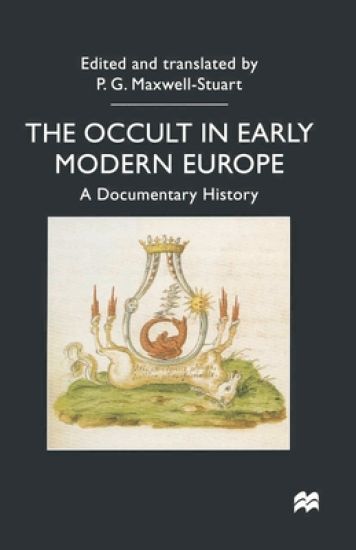
Witchcraft and the occult sciences are areas which have benefited enormously from the spread of more sophisticated cultural studies in recent years. The old debate as to whether or not witches were really believed to exist has collapsed in the face of the overwhelming bodies of evidence suggesting a genuine and widespread acceptance of the occult in a notionally Christian Europe.This excellent and wide-ranging documentary anthology shows the genuinely pan-European nature of the phenomenon, its spread through all classes and its importance in people's thinking about the natural world. It covers magic, witchcraft, astrology, alchemy and other related occult themes and presents them, not as disparate elements of folkloric belief and intellectual aberrations, but as parts of a coherent, intellectually rigorous and scientifically challenging world-view, consistently argued in accordance with its given basic principles. This collection is drawn from a very wide range of authors from the early modern period and includes many newly translated documents which appear in English here for the first time.
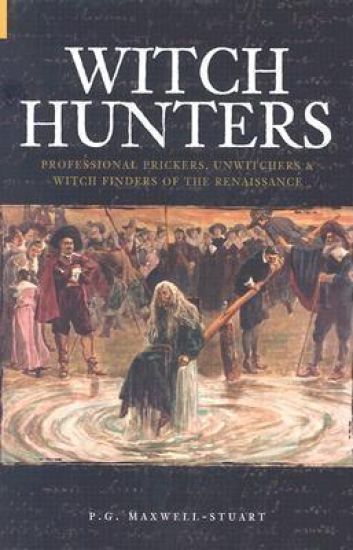
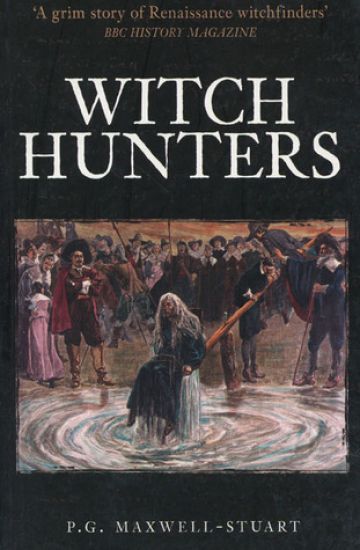
The history of a unique reign of terror. A thoroughly readable book on the lives and careers of possibly the most sadistic group of people of the sixteenth and seventeenth centuries, the great age of witch-hunting in Europe and North America. From the doyen of witch-hunters, the Jesuit del Rio, to the British Matthew Hopkins, not to mention Pierre de Lancre, a judge who was responsible for burning 600 women, Maxwell-Stuart charts the progress of these fierce and dangerous zealots, while providing an insight into the world they perceived as evil and which they sought to destroy.
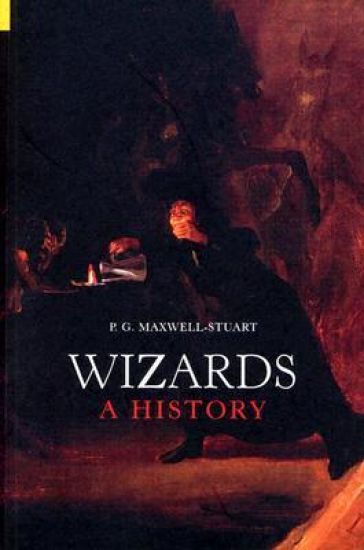
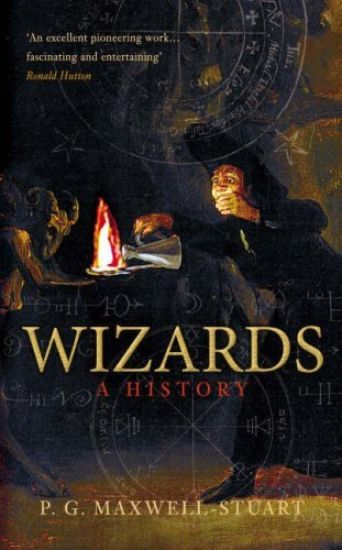
Throughout the ages the wizard, magician, sorcerer, has claimed to defy scientific explanation. The rich diversity of Wizards offers new insights into our continuing fascination with magic.
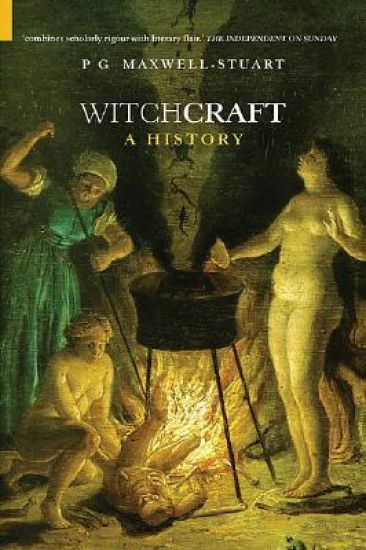
Witches, like the poor, are always with us. From ancient times to the present the aged, ugly crone has worked her evil magic and been burned at the stake by an outraged authority, or cured her neighbours and their animals with the help of gentle herbs and beneficent spells. Such, at any rate, is the popular picture. But not much of that picture is true. At the very least, it is misleading. Many witches were young; many witches were men; many witches came to court and were acquitted. There is no clear distinction between so-called white magic and black.Witches were not universally persecuted or tortured; it is not true that millions died; and the time they were most at risk covered less than a hundred years. So much more interesting than the cartoon stereotype, the real witch was a complex figure whose genuine story is only now starting to be unraveled, and this book offers the reader a fresh prospect of that intriguing narrative.
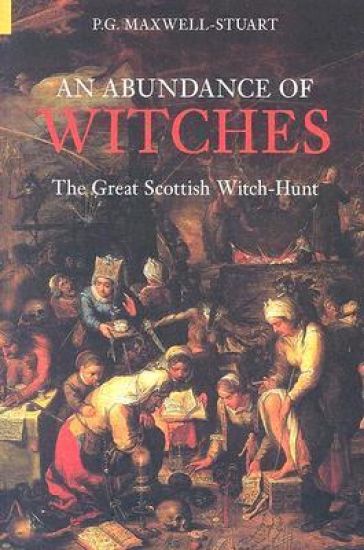
The first history of the most intense period of witch-hunting in Scotland between 1658-62. Scotland, in common with the rest of Europe, was troubled from time to time by outbreaks of witchcraft which the authorities sought to contain and then to suppress, and the outbreak of 1658-1662 is generally agreed to represent the high water mark of Scottish persecution. These were peculiar years for Scotland. For nine years Scotland was effectively an English province with largely English officials in charge.In 1660 this suddenly changed. So the threat to Church and state from a plague of witches was particularly disturbing. The tension between imported official English attitudes to witchcraft and the revived fervour of Calvinist religion combined to produce a peculiar atmosphere in which the activities of witches drew hostile attention to an unprecedented degree.
The history of a unique reign of terror. A thoroughly readable book on the lives and careers of possibly the most sadistic group of people of the sixteenth and seventeenth centuries, the 'great age' of witch-hunting in Europe and North America. From the doyen of witch-hunters, the Jesuit del Rio, to the British Matthew Hopkins, not to mention Pierre de Lancre, a judge who was responsible for burning 600 women, Maxwell-Stuart charts the progress of these fierce and dangerous zealots, while providing an insight into the world they perceived as evil and which they sought to destroy.
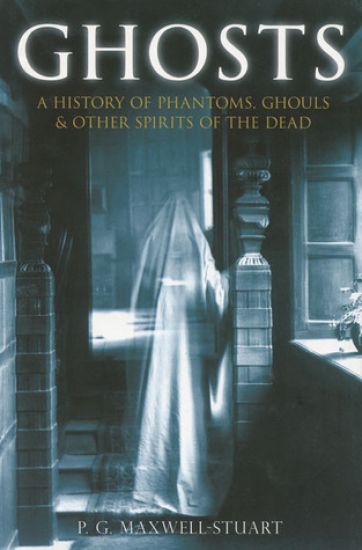
Traces the history of ghost phenomena from the ancient world and the ways in which people have tried to deal with the hope, the fear, the curiosity, and the disbelief which ghosts have aroused.
Features the history of the wizard from ancient times. This work shows how extraordinary a character the wizard has proved to be - not merely a conjuring trickster or malicious egotist in league with Satan, but also a deeply religious person intent on using magic the better to understand the mind of God.
Traces the history of ghost phenomena through the ages and the ways in which people have tried to deal with the hope, the fear, the curiosity, and the disbelief which ghosts have aroused.