Parenting is not only the most important job you'll ever have, it can be both the most challenging and most rewarding one, too. It seems that for most people, parenting is like a combination of immense joy combined with bouts of feeling overwhelmed, jolts of panicky "How do I handle this?" and occasional intellectual boredom ("I really miss the interaction with my friends at work..."). The purpose of Eye to Eye Volume Three is to show you how to sharply increase your joy and ease while sharply reducing the overwhelm, the panicky not-knowing how and any intellectual boredom that may arise while parenting. Eye to Eye Volumes One, Two and the forthcoming Volume Four present Gloria's advice. In contrast, Volume Three presents my proven ways of sharply increasing the ease, effectiveness and joy of your parenting. Among other key skills I'll teach you is how to change what I call your Blockers - your Self-Defeating Unconscious Habit Patterns, into self-supporting ones. Blockers that many parents frequently encounter include such things as: -Feeling overwhelmed. -Feeling exhausted. -Feeling like you don't have any time for yourself. -Not knowing how to handle a situation. -Finding it hard to balance your work as a parent with your paying job. -Feeling like you're not doing a good enough job as a parent. -Actually putting to work what you know will work when you're challenged. -Feeling like your relationship with your parenting partner has somehow gotten lost or diminished. -Missing intellectual stimulation. Do you encounter any of these in parenting your child? If so, which is most difficult for you to handle? Would you like to learn to rapidly and permanently change these Blockers into ease, effectiveness, bountiful energy and plenty of time for yourself and your relationship?
The history of the use of ultrasound in medicine has been one of evolution of technology and innovative methods of applying this technology to imaging body structures. Many scientists and clinicians have contributed to this evolution. Ophthalmic ultrasound has become an indispensible tool in ophthalmic practice, with its own instrumentation and techniques. Ultrasound frequencies used in ophthalmology have generally been higher than those used in general medicine because of a requirement for higher resolution and a lesser need for deep penetration. Most ophthalmic diagnostic equipment uses frequencies in the 10 MHz range. The use of ultrasound frequencies in the 50-100 MHz range is a relatively new development in ultrasound imaging of the eye. This technique has been developed in our laboratories over the past several years. We have progressed from the theoretical description of the basic science required, past the first in-vitro experiments in eye bank eyes, to the construction of an instrument capable of clinical application. We have gained broad clinical experience with this instrument in normal patients and patients with ocular disease. A commercial instrument based on our original clinical scanner has recently become available, allowing other clinicians to apply this tool to ophthalmic research and clinical practice. We have applied the term ultrasound biomicroscopy to this new imaging technique because of similarities to optical biomicroscopy, i. e. , the observation of living tissue at microscopic resolution.
Gottfried Wilhelm Leibniz was one of the first modern philosophers and one of the most important. His contributions were often groundbreaking, and his impact remains in such fields as logic, mathematics, science, international law, and ethics.Historical Dictionary of Leibniz's Philosophy, Second Edition contains a chronology, an introduction, and an extensive bibliography. The dictionary section has more than 500 cross-referenced entries on Leibniz’s philosophy, written work, teachers, contemporaries, and philosophers influenced by him. This book is an excellent resource for students, researchers, and anyone wanting to know more about Leibniz's Philosophy.
In the words of two individuals suffering from schizophrenia (Geiser and Emmons), this book gives first-hand insight into the process and effects of the disease. Throughout the narratives, poetry, and artwork, Kaplan and Harrow (psychotherapists who have worked professionally with people with schizophrenia) add comments illuminating the meaning and psychological significance of the stories. This is the second book in the psychological disorders series, each covering a single mental health disorder from the perspective of the sufferers themselves. It is written in a manner that will make the information accessible to family, friends, caretakers, mental health workers, and in this particular book those who actually have schizophrenia.
Improve your game's code with design patterns to make it more readable, reusable, modular, and optimized, guided by an Unreal Authorized Instructor to enhance your overall use of C++ with Unreal Engine Key Features Explore programming patterns, structures, and principles and their applications in Unreal Engine 5 game development Translate code from Blueprint to C++ to implement performant solutions in game development Build a decoupled communications hierarchy and become a better game developer Purchase of the print or Kindle book includes a free PDF eBook Book DescriptionDesign patterns serve as a toolkit of techniques and practices that enable you to write code that’s not only faster, but also more manageable. With this book, you’ll explore a range of design patterns and learn how to apply them to projects developed in Unreal Engine 5. You’ll begin by delving into the foundational principles of coding and develop a solid understanding of the concepts, challenges, and benefits of using patterns in your code. As you progress, you’ll identify patterns that are woven into the core of Unreal Engine 5 such as Double Buffer, Flyweight, and Spatial Partitioning, followed by some of the existing tool sets that embody patterns in their design and usage including Component, Behavior Tree, and Update. In the next section of the book, you’ll start developing a series of gameplay use cases in C++ to implement a variety of design patterns such as Interface and Event-based Observers to build a decoupled communications hierarchy. You’ll also work with Singleton, Command, and State, along with Behavioral Patterns, Template, Subclass Sandbox, and Type Object. The final section focuses on using design patterns for optimization, covering Dirty Flag, Data Locality, and Object Pooling. By the end, you’ll be proficient in designing systems with the perfect C++/Blueprint blend for maintainable and scalable systems.What you will learn Grasp the essence of design patterns and their inherent utility Understand the layers within UE 5 and how they work together Identify the relationship between C++ code and Blueprint in Unreal Engine 5 Recognize the design patterns found within existing Unreal Engine 5 functions Explore design patterns to understand their purpose and application within Unreal Engine 5 Creatively apply design patterns to existing code to overcome common challenges Who this book is forIf you are a beginner or intermediate game developer working with Unreal Engine and looking to improve your C++ coding practices, this book is tailor-made to help you produce clean, reusable code through the application of design patterns. While this book will cover introductory tasks to show the fundamentals of Unreal Engine 5, its primary purpose is not to teach Unreal Engine from scratch. Prior experience with Unreal Engine will be beneficial, but don’t fret if your knowledge isn’t in-depth; the book will introduce tools and features as needed.
Greek Folk-Songs from the Turkish Provinces of Greece - Albania, Thessaly - not yet wholly free - and Macedonia, literal and metrical translations is an unchanged, high-quality reprint of the original edition of 1885. Hansebooks is editor of the literature on different topic areas such as research and science, travel and expeditions, cooking and nutrition, medicine, and other genres. As a publisher we focus on the preservation of historical literature. Many works of historical writers and scientists are available today as antiques only. Hansebooks newly publishes these books and contributes to the preservation of literature which has become rare and historical knowledge for the future.
This book has been considered by academicians and scholars of great significance and value to literature. This forms a part of the knowledge base for future generations. So that the book is never forgotten we have represented this book in a print format as the same form as it was originally first published. Hence any marks or annotations seen are left intentionally to preserve its true nature.
This work has been selected by scholars as being culturally important, and is part of the knowledge base of civilization as we know it. This work was reproduced from the original artifact, and remains as true to the original work as possible. Therefore, you will see the original copyright references, library stamps (as most of these works have been housed in our most important libraries around the world), and other notations in the work. This work is in the public domain in the United States of America, and possibly other nations. Within the United States, you may freely copy and distribute this work, as no entity (individual or corporate) has a copyright on the body of the work. As a reproduction of a historical artifact, this work may contain missing or blurred pages, poor pictures, errant marks, etc. Scholars believe, and we concur, that this work is important enough to be preserved, reproduced, and made generally available to the public. We appreciate your support of the preservation process, and thank you for being an important part of keeping this knowledge alive and relevant.
This new reference covers the top 100 pearls in cutaneous oncologic, nail and cosmetic dermatologic surgery, giving you at-a-glance access to some of the best know-how in the field. Organized in a consistent format, and illustrated with full color photographs and explanatory line drawings, this is the perfect tool to help you improve the level of care you offer your patients. Whether you're new to the field or you've been practicing dermatologic surgery for years, you'll consider this book one of your most valuable resources. Fills a gap in the field by bringing together material that is rarely gathered in one book. Includes expert hints and tips on avoiding common pitfalls in cosmetic and dermatologic surgery. Illustrates each pearl with line drawings and photographs to put it into clinical context.
This book is concerned with the configuration of polymers at the interfacial zone between two other phases or immiscible components. In recent years, developments in technology combined with increased attention from specialists in a wide range of fields have resulted in a considerable increase in our understanding of the behavior of polymers at interfaces. Inevitably these advances have generated a wealth of literature and although there have been numerous reviews, a critical treatment with adequate descriptions of both theory and experiment, including detailed analysis of the two, has been missing. This text hopes to fill this gap, providing a timely and comprehensive account of the field as it stands today. This long needed work will be invaluable to experts as well as newcomers in the broad field of polymers, interfaces and colloids, both in industry and academia. Whilst industrial laboratories involved in this field will find it indispensable, it will be equally important to anyone with an interest in interfacial polymer or colloidal research.
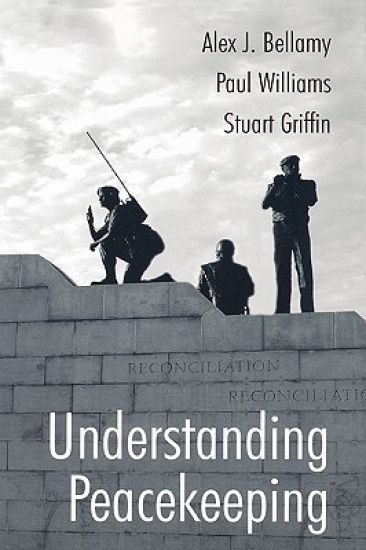
Understanding Peacekeeping provides a comprehensive and up to date introduction to the theory, practice and politics of contemporary peacekeeping. It evaluates the changing characteristics of the contemporary environment in which peacekeepers operate, what role peacekeeping plays in wider processes of global politics, the growing impact of non-state actors, and the major challenges facing peacekeepers in the future. Drawing on a wide range of historical and contemporary case studies, including: Afghanistan; Cambodia, Cyprus; the Democratic Republic of Congo; East Timor; El Salvador; Haiti, Liberia; Rwanda; Sierra Leone; Somalia; and the former Yugoslavia, this book develops an original conceptual framework to chart the evolution of the role of peacekeeping in global politics, and highlights the unique characteristics of different types of peacekeeping operations. Part 1 examines concepts and issues related to peacekeeping in global politics. Part 2 charts the historical development of peacekeeping from 1945 to the present. In Part 3, separate chapters are devoted to different types of peacekeeping operations: traditional peacekeeping; managing transition; wider peacekeeping; peace enforcement; and peace support operations. Part 4 looks forward and examines developments in global politics that are presenting serious challenges to the concept and practice of peacekeeping, namely, globalization, the privatization of security, preventing violent conflict, and the establishment of protectorates. Understanding Peacekeeping will be essential reading for students and scholars of peace and conflict studies, security studies, and international relations.
Peace operations are now a principal tool for managing armed conflict and building world peace. The fully revised, expanded and updated second edition of Understanding Peacekeeping provides a comprehensive and up-to-date introduction to the theory, practice and politics of contemporary peace operations. Drawing on more than twenty-five historical and contemporary case studies, this book evaluates the changing characteristics of the contemporary environment in which peacekeepers operate, what role peace operations play in wider processes of global politics, the growing impact of non-state actors, and the major challenges facing today's peacekeepers. All the chapters have been revised and expanded and eight new chapters have been added. Part 1 summarizes the central concepts and issues related to peace operations. It includes a new discussion of the theories of peace operations and analysis of the emerging responsibility to protect norm. Part 2 charts the historical development of peacekeeping from 1945 and includes a new chapter on peace operations in the 21st century.In Part 3, separate chapters analyze seven different types of peace operations: preventive deployments; traditional peacekeeping; assisting transition; transitional administrations; wider peacekeeping; peace enforcement; and peace support operations. Part 4 looks forward and examines the central challenges facing today's peacekeepers, namely, globalization, the regionalization of peace operations, the privatization of security, civilian protection, policing and gender issues. The second edition of Understanding Peacekeeping will be essential reading for students and scholars of peace and conflict studies, security studies, and international relations.
Balancing both technical proficiency and ethical sensibility, Accounting Ethics provides a decision model approach throughout, aiding both student comprehension and supporting the instructor in emphasizing the key elements of the decision process that shapes the technically and ethically competent professional accountant.