2 Timothy offers a fresh approach to the letter through the use of an innovative chiastic outline. Interacting with the most insightful voices from the past and present, this commentary reflects on the ""aftermath"" of 1 Timothy, pondering the question of endurance in the face of apostasy: What do you do when you lose after having done everything possible to pursue righteousness? The apostle answers this question from a uniquely personal and richly theological perspective, offering wisdom equally applicable to all today that aspire to live a godly life in Christ Jesus.
Join Michael Baughen in this undated 30-day devotional on 2 Timothy as he focuses on Paul's final words. Paul is in prison, near to death, dictating this letter to Luke for his young friend Timothy. As he sits chained to a Roman soldier, Paul's passion for the gospel shines out. He uses his farewell message to urge Timothy to maintain his focus on the basics of the faith. This intensely personal letter allows us to hear Paul's last words and ask ourselves about the legacy that we will one day leave to others. We learn day by day how we can benefit from the lessons to Timothy.
The role of women within the church has been a heated, ongoing debate. There are two views. We have the equal ministry opportunity for both men and women (egalitarian view) and the ministry roles distinguished by gender (complementarian view). This biblically grounded introduction will acquaint the reader with the biblical view: what does the Bible say about the woman's role in the church? Both views mention the teachings of the apostle Paul in 1 Timothy 2:12 in order to support their viewpoint. Andrews will furnish the reader with a clear and thorough presentation of the biblical evidence for the woman's role in the church so we can better understand the biblical viewpoint.
The year was AD 67; persecution was rampant and false teachers saturated the church. Many believers no longer desired to hear sound doctrine and, therefore, heaped up teachers to simply itch their ears (2 Tim 4:2-4). Timothy, a pastor in the church of Ephesus, most likely, was discouraged (1:7, 2:1). With some of his last words, Paul writes from prison to encourage his disciple, Timothy, to complete his ministry (4:5). He commands him to be like a good soldier (2:3-4), a victorious athlete (2:5), and a hardworking farmer (2:6). Above all, Timothy needed to stay faithful to Scripture: he was to guard it (1:14) and teach it to others (2:2, 4:1). God's Word was to be his chief priority. Our times are not much different. Persecution towards Christians continues to grow, and many, from within the faith community, twist Scripture to fit the rapidly changing culture. Just like Timothy, we need to hear the apostle's charge to guard the Good Deposit with the help of the Holy Spirit (1:14). As you consider Paul's final letter, may our Lord sharpen, refresh, and encourage you for the task at hand and may you be found approved unto God (2:15). "Expositional, theological, and candidly practical I highly recommend The Bible Teacher's Guide for anyone seeking to better understand or teach God's Word." -Dr. Young-Gil Kim, Founding President of Handong Global University "Helpful to both the layman and the serious student, The Bible Teacher's Guide, by Dr. Greg Brown, is outstanding " -Dr. Neal Weaver, President of Louisiana Baptist University
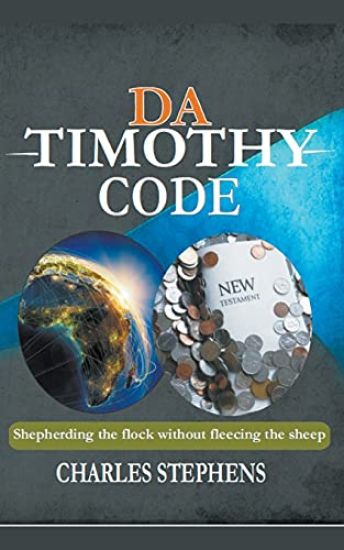
The five main chapters are about East Africa, North Africa, West Africa, Central Africa and South Africa, in that order. The oldest bio's are from East Africa (e.g. Ethiopia, Nubia). Then from Egypt across to the Berbers (e.g. St Augustine was of Berber descent). Then to the Canary Islands and down/around the West Africa coast to Nigeria. Then the Bakongo kingdom and around to Mozambique and up the Zambezi into deep central Africa. Then finally South Africa, starting at the Cape and workingeast and north from there. It ends up in current events of 2021, with some leaders who are in the news. So it is very much a book of African hagiography. Short biographical sketches - some shorter than others, just honourable mention. But these roll out in a way that makes for a coherent narrative of church history all around the continent. The book also chases a theme, which is the subtitle: "Shepherding the flock without fleecing the sheep". Basically it asks the question "who moved the goalposts?" because 90 percent of the bio's over a 2000-year period are about church leaders who sacrificed so much - even their lives. Then since 1950, pastors have become rich -owning airplanes and launching universities. This concern is not answered dogmatically, rather it is probed. The extraordinary contradiction is noted, and the implied questions explored. The baseline that is used to illuminate this contrast is I Timothy chapter 3 (which I call " Timothy Code", a book title that tries to resonate with The Da Vinci Code). This theme is presented and wrapped up in a coherent way that ties all the biographicalsketches together. The structure is a collage - a mosaic. So that when you stand back and look at it, there is a message that makes all the pieces hang together.
In an early-church era filled with temptations toward compromise and confusion, Timothy and his fellow believers faced mounting pressure to loosen their grip on the gospel. But the apostle Paul, writing from a Roman jail and nearing death, urged his young prot g to stand firm--to guard the truth, endure suffering, and pass on the message of Jesus. In this twelve-week study, you will journey through Paul's final letter and discover what it means to live with gospel resolve in a culture that resists it. When so many abandon sound teaching for spiritual speculation, we can remain faithful. But first, we must embrace the sufficiency of Scripture, God's promise of preservation, and the power of grace. The Christian life isn't a sprint; it's a long obedience in the same direction. And by God's strength, you can finish well. The Verse by Verse series, based on Alistair Begg's expository Bible teaching and preaching, captures the heart of Truth For Life's mission, providing yet another way to teach the Bible with clarity and relevance. Study participants will more fully grasp the value of God's Word in their lives as they grow in their ability to read and understand Scripture before applying it in their walk with the Lord.
Living by and for the Gospel...Follow Dr. Jeremiah through the letters of 1 and 2 Timothy and Titus in a chapter-by-chapter study that will help you understand what it meant to the people at the time it was written, and what it means to Christians today. The apostle Paul founded many churches in the Roman Empire, but it is clear he did not do this work alone. Rather, he relied on trusted companions such as Timothy and Titus to support the ongoing work in these communities.As Paul neared the end of his life, he wrote personal letters to these men to encourage them in their ministry and provide final guidelines for how live and lead for Christ. In particular, we find him urging these men to maintain purity in the church, faithfully endure for the gospel, preach sound doctrine, pursue godliness, and maintain order as they built up other leaders. Paul's words compel believers today to also pursue their calling in the church . . . even when that means dealing with hardheaded and unruly fellow believers!Each of this study's twelve lessons is clearly organized to include:Getting Started: An opening question to introduce you to the lesson.Setting the Stage: A short reflection to explain the context of the study.Exploring the Text: The Scripture reading for the lesson with related study questions.Reviewing the Story: Questions to help you identify key points in the reading.Applying the Message: Questions to help you apply the key ideas to their lives.Reflecting on the Meaning: A closing reflection on the key teachings in the lesson.—ABOUT THE SERIES—The Jeremiah Bible Study Series captures Dr. David Jeremiah's forty-plus years of commitment in teaching the Word of God. In each study, you'll gain insights into the text, identify key stories and themes, and be challenged to apply the truths you uncover to your life. By the end of each study, you'll come away with a clear and memorable understanding of that Bible book.Each study also contains a Leader's Guide.
Leading People into the Way of Jesus "Scot McKnight is one of my absolute favorite New Testament scholars and his Everyday Bible Study series is akin to Einstein creating a user-friendly version of the Theory of Relativity!"—Lisa Harper, award-winning author and Bible teacherYou might not immediately think of yourself as a "leader," but the apostle Paul likely would. When Paul uses the term leader in a church context he includes anyone who mentors or cares for people into the way of Jesus.In this volume of the New Testament Everyday Bible Study series, Scot McKnight explores four letters written by Paul to three pastoral leaders—Timothy, Titus, and Philemon—and how they model wise advice for leaders in the churches of Ephesus, Crete, and Colossae.Throughout the study of these four letters, McKnight reveals important elements of leadership for us today through Paul's mentoring of these three leaders. The first three letters are commonly referred to as the Pastoral Epistles, as Paul pastors Timothy and Titus on how to lead churches in Ephesus and Crete, and in the fourth letter, Paul pastors Philemon to lead a house church through a challenge.While these letters are specific to their contexts, they offer timeless wisdom for all sorts of church leaders, from parents and teachers to pastors and business leaders.In the New Testament Everyday Bible Study Series, widely respected biblical scholar Scot McKnight combines interpretive insights with pastoral wisdom for all the books of the New Testament. Each volume provides:Original Meaning. Brief, precise expositions of the biblical text and offers a clear focus for the central message of each passage.Fresh Interpretation. Brings the passage alive with fresh images and what it means to follow King Jesus.Practical Application. Biblical connections and questions for reflection and application for each passage.
Over 75 generations of ancestors traveled from the wilds of ancient Wales, England, Scotland, Normandy and Germany to the high hillbilly country of Greene Co., Tennessee and Kentucky. Tim's ancestry includes people of several religions; Quaker, Presbyterian, Episcopal, Lutheran and Druid. The people ranged from common folk tilling the soil to Knights, Kings and Queens of Sweden, Scotland, England, Wales and Normandy, many of whom were Freemasons in the early years of the American Nation. One of his ancestors was Robert Burns, the national poet of Scotland. Tim's Warren Freemason ancestors played an integral part in the making of a new nation in Massachusetts and Pennsylvania during the American Revolutionary War. One ancestor died at Bunker Hill and his remaining family was taken care of by Benedict Arnold. Others supported the Revolution, on both sides; Loyalist and Patriot. Enjoy the journey as you identify ancestors that you've always heard about, but had no idea that you were related to.
The ancestors of Timothy Hogan can be traced from Greene County, Tennessee before the Civil War to Haddon Hall in Derbyshire, England where his ancestors were Lords and Ladies of ancient England and Wales. Many lines go back to the ancient leaders of Wales including Rhys aps Griffith and to the Merovingian Kings and Queens of Normandy, France. Timothy's Swedish line, which came to Iowa in the USA, came directly from Sweden where they can be traced back to the sea kings of Uppsala, Sweden in about 500 AD.Continuing back some of his European ancestors, they can be traced to Seleucus Nicator in ancient Syria, the father of Helen of Troy. It is easy to imagine that some of the members of the Hogan Family retained the ambition and traits of their ancient ancestors. Many of his forefathers in Colonial America were Freemasons and instrumental in forming the burgeoning American Nation.Front cover photo - Margarette Falls, Greene Co., TNRear cover photo -Haddon Hall in Derbyshire England
From Philip K. Dick, the Hugo Award-winning author of The Man in the High Castle and Do Androids Dream of Electric Sheep -- the basis for the film Blade Runner -- comes The Transmigration of Timothy Archer, the conclusion of the VALIS trilogy, bringing the author's search for the identity and nature of God to a close. The novel follows Bishop Timothy Archer as he travels to Israel, ostensibly to examine ancient scrolls bearing the words of Christ. But more importantly, this leads him to examine the decisions he made during his life and how they may have contributed to the suicides of his mistress and son. This introspective book is one of Dick's most philosophical and literary, delving into the mysteries of religion and of faith itself. As one of Dick's final works, it also provides unique insight into the mind of a genius, whose work was still in the process of maturing at the time of his death.