Kirjojen hintavertailu. Mukana 11 699 587 kirjaa ja 12 kauppaa.

Kirjahaku

Etsi kirjoja tekijän nimen, kirjan nimen tai ISBN:n perusteella.

30 tulosta hakusanalla "Disko"

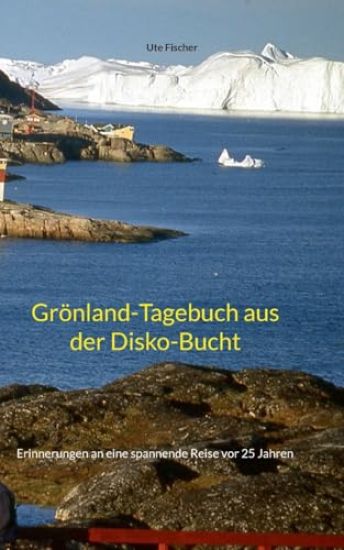
Grönland-Tagebuch aus der Disko-Bucht: Erinnerungen an eine spannende Reise vor 25 Jahren
Dies ist die Nacherz hlung des Reiseprotokolls einer Reisejournalistin, niedergeschrieben im Jahr 2000, als Gr nland zwar schon einige US-Bases aufwies, aber das Leben noch sehr beschaulich war. In einem waren die Gr nl nder uns allerdings damals voraus: Sie wiesen die h chste Computerdichte der Welt auf. Einer, der diese ganze Entwicklung speziell in der Disko-Bucht miterlebte, ist der geb rtige Mannheimer Willi Gemander. Mit ihm war diese Reisegruppe an mehreren Tagen unterwegs und er war auch 2026 noch zu erreichen und verhalf diesem Tagebuch zu einem spannenden Update. In eigener Sache: Reisejournalisten reisen anders. Bestimmt nicht bequemer, sondern ziemlich schnell und heftig, damit sie innerhalb k rzester Zeit m glichst viel Hintergrundinformationen, Interviews und meistens auch Bilder mitbringen. Reisejournalisten reisen umsonst, meinen viele. Richtig ist, dass wir f r die Reise nach Gr nland die Fl ge, Schiffspassagen, Ausfl ge und bernachtungen gestellt bekamen. Aber wir waren sechs Tage unterwegs, an denen wir freien Journalisten weder Honorar noch Gehalt erhielten, w hrend unsere Kosten zuhause weiterliefen. Damals gab es noch keine Digital-Kameras. Wir mussten also gen gend Munition an Diafilmen mitbringen. Professionelle Diafilme kosteten zu D-Mark-Zeiten nicht unter 8,90 pro St ck. Ohne Entwicklung. Ohne Rahmung. Eine Grobrechnung unter Fotografen besagte damals, dass es ein tolles Ergebnis sei, wenn man drei verwertbare Fotos pro Film erzielte. 38 sind hier enthalten.

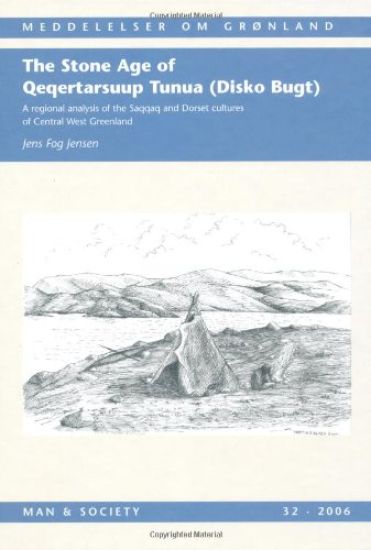
Stone Age of Qeqertarsuup Tunua (Disko Bugt)

Stone Age of Qeqertarsuup Tunua (Disko Bugt)

Jens Fog Jensen

MUSEUM TUSCULANUM PRESS
2009
sidottu
The Stone Age occupations of Qeqertarsuup Tunua (Disko Bugt) are among the most thoroughly surveyed and best known in Greenland. This volume presents the results of the author's research on a regional scale as well as on the scale of a single camp site. It focuses on the horizontal dimensions rather than stratigraphies.
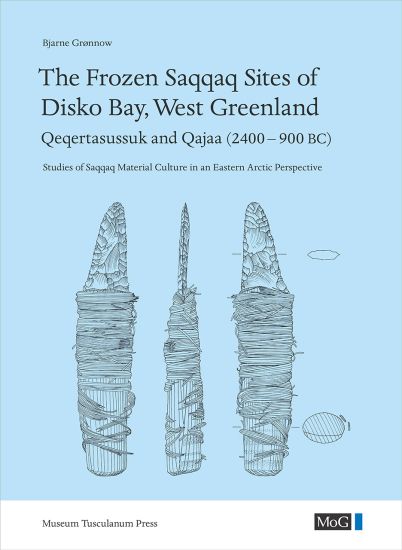
The Frozen Saqqaq Sites of Disko Bay, West Greenland

The Frozen Saqqaq Sites of Disko Bay, West Greenland

Bjarne Gr¿nnow

Museum Tusculanum Press
2017
sidottu
Qeqertasussuk and Qajaa are the only known sites of the Early Arctic Small Tool tradition in the Eastern Arctic, where all kinds of organic materials wood, bone, baleen, hair, skin are preserved in permafrozen culture layers. Together, the sites cover the entire Saqqaq era in Greenland (c. 2400900 BC). Technological and contextual analyses of the excellently preserved archaeological materials from the frozen layers form the core of this publication. Bjarne Gronnow draws a new picture of a true Arctic pioneer society with a remarkably complex technology. The Saqqaq hunting tool kit, consisting of bows, darts, lances, harpoons, and throwing boards, as well as kayak-like sea-going vessels, is described for the first time. A wide variety of hand tools and household utensils as well as lithic and organic refuse and animal bones were found on the intact floor of a midpassage dwelling at Qeqertasussuk. These materials provide entirely new information on the daily life and subsistence of the earliest hunting groups in Greenland. Comparative studies put the Saqqaq Culture into a broad cultural-historical perspective as one of the pioneer societies of the Eastern Arctic.
Sabine Scho, Sebastian Felix Ernst, Golden Diskó Ship

Sabine Scho, Sebastian Felix Ernst, Golden Diskó Ship

Deutsche Akademie Villa Massimo

Hatje Cantz
2021
sidottu
Gravity always wins in battle and architecture. When the Boxer, a rare ancient bronze, was excavated on the south side of the Quirinal Hill in Rome in 1885, it seemed “as if he was awakening again after a long pause in the fighting.” Seated and heavy, he still awaits his next round. In contrast, the Palazzetto dello Sport, built out of prefabricated parts by Pier Luigi Nervi for the 1960 Olympic Games, seems to defy gravity. These two icons of Rome were brought together in the imagination through architecture, poetry, and music tracks: surrounded by a palazzettino woven together out of carbon bars, the Boxer from the Quirinal gets a new home in an architectural sound-poetry installation. This book documents the collaboration of the Rome Prize winners Sabine Scho, Sebastian Felix Ernst, and Golden Diskó Ship, and is being produced by the Deutsche Akademie Rom Villa Massimo.
The Devil's Wheels

The Devil's Wheels

Sasha Disko

Berghahn Books
2016
sidottu
During the high days of modernization fever, among the many disorienting changes Germans experienced in the Weimar Republic was an unprecedented mingling of consumption and identity: increasingly, what one bought signaled who one was. Exemplary of this volatile dynamic was the era’s burgeoning motorcycle culture. With automobiles largely a luxury of the upper classes, motorcycles complexly symbolized masculinity and freedom, embodying a widespread desire to embrace progress as well as profound anxieties over the course of social transformation. Through its richly textured account of the motorcycle as both icon and commodity, The Devil’s Wheels teases out the intricacies of gender and class in the Weimar years.
The Devil's Wheels

The Devil's Wheels

Sasha Disko

Berghahn Books
2019
nidottu
During the high days of modernization fever, among the many disorienting changes Germans experienced in the Weimar Republic was an unprecedented mingling of consumption and identity: increasingly, what one bought signaled who one was. Exemplary of this volatile dynamic was the era’s burgeoning motorcycle culture. With automobiles largely a luxury of the upper classes, motorcycles complexly symbolized masculinity and freedom, embodying a widespread desire to embrace progress as well as profound anxieties over the course of social transformation. Through its richly textured account of the motorcycle as both icon and commodity, The Devil’s Wheels teases out the intricacies of gender and class in the Weimar years.