This open access book, originally published in Portuguese in 1988 and now available in English for the first time, describes the Brazilian educator, Antonio Leal's, experiences teaching so-called “unteachable” children in Rio de Janeiro’s favelas. A Voice for Maria Favela tells the story of how Leal considers what the children bring to the class, gradually engaging them in developing a narrative about Maria Favela, a single mother and housemaid. Leal uses the sounds within the story to draw out the students’ abilities to see enunciation and articulation as a process of becoming literatized. A contemporary and admirer of Paulo Freire, Leal nevertheless recognised that his students’ needs could not be theorized along Freirean lines of oppressor/oppressed. He devised an emancipatory approach that is more focussed on the individual child and their capacity for self-expression than those often found in critical pedagogy. The book puts forward a unique type of radical pedagogy and philosophy of education, developed through direct classroom observation. The book includes a substantial introduction written by the translator Alexis Gibbs (University of Winchester, UK) and preface by Inny Accioly (Fluminense Federal University, Brazil). The ebook editions of this book are available open access under a CC BY-NC-ND 4.0 licence on bloomsburycollections.com.
For the first time available in English, Licia do Prado Valladares's classic anthropological study of Brazil's vast, densely populated urban living environments reveals how the idea of the favela became an internationally established—and even attractive and exotic—representation of poverty. The study traces how the term ""favela"" emerged as an analytic category beginning in the mid-1960s, showing how it became the object of immense popular debate and sustained social science research. But the concept of the favela so favored by social scientists is not, Valladares argues, a straightforward reflection of its social reality, and it often obscures more than it reveals.The established representation of favelas undercuts more complex, accurate, and historicized explanations of Brazilian development. It marks and perpetuates favelas as zones of exception rather than as integral to Brazil's modernization over the past century. And it has had important repercussions for the direction of research and policy affecting the lives of millions of Brazilians. Valladares's foundational book will be welcomed by all who seek to understand Brazil's evolution into the twenty-first century.
For the first time available in English, Licia do Prado Valladares's classic anthropological study of Brazil's vast, densely populated urban living environments reveals how the idea of the favela became an internationally established—and even attractive and exotic—representation of poverty. The study traces how the term ""favela"" emerged as an analytic category beginning in the mid-1960s, showing how it became the object of immense popular debate and sustained social science research. But the concept of the favela so favored by social scientists is not, Valladares argues, a straightforward reflection of its social reality, and it often obscures more than it reveals.The established representation of favelas undercuts more complex, accurate, and historicized explanations of Brazilian development. It marks and perpetuates favelas as zones of exception rather than as integral to Brazil's modernization over the past century. And it has had important repercussions for the direction of research and policy affecting the lives of millions of Brazilians. Valladares's foundational book will be welcomed by all who seek to understand Brazil's evolution into the twenty-first century.
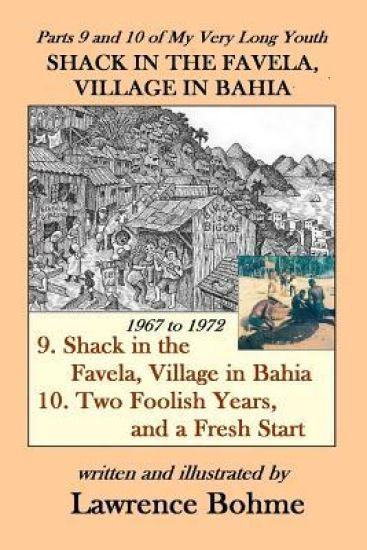
The year 1967 finds Lawrence alone in Rio, having quarrelled both with Jonathon, his New York friend in Brazil on a linguistics grant, and the wealthy Brazilian who, thanks again to Olimpio, has let him stay at his flat on Copacabana Beach. Having in the meantime befriended a fisherman's family, in their shack on a hillside in Ipanema, Lawrence agrees to teach English to young Joaninha in exchange for room and board, living in a cobbler's shop shared "with the cobbler by day and the rats by night". But his unglazed window gloriously overlooks the entrance to the bay, of which Lawrence makes several drawings with his pen (shown among the illustrations). As the sole truly white man in the favela and having already learned some samba steps, Lawrence is recruited to take part in the carnival parade, disguised as a legendary Portuguese plantation owner who marries his beautiful mulatta slave. His costume - "fantasia" - consists of a top hat and a large "diamond" brooch on his cravate, as well as a blue "silk" coat... At the language school where Lawrence teaches English, he befriends a Japanese immigrant, Yukio, who works in the crafts boutique next door. Soon the two friends set up a factory employing the favela people to make leather sandals and handbags, and move into a one-room Copacabana apartment "so we could entertain our girlfriends in privacy". Lawrence's mother comes from California and soon persuades her devoted son to spend a year in a fishing village in Bahia, where they can paint and write... The two rent a house surrounded with coconut trees in a village up the coast from Salvador, where the fishermen go out on spindly rafts called "jangadas" and bring back groupers and octopus, which Joan's favourite "pescador" cooks in coconut milk and palm oil for their dinner. After five years in Brazil, though, Lawrence decides it is time to go back "to civilization" to find a publisher for the book he's been writing about Brazilian life. By the end of 1970 he's back in Lower Manhattan in a rent-controlled tenement flat where he practices his new trade as a custom-made leather goods maker with success. But after two fruitless years of searching for a publisher, he throws the only copy of his manuscript into a garbage can on Spring Street, and desperately resolves - "for lack of anything better to do with my life" - to set off on a new adventure, in the Black Republic Haiti, just two years after the ruthless dictator "Papa Doc" Duvalier has been replaced by his relatively benign son "Baby Doc".Lawrence Bohme's whimsically told but scrupulously faithful "personal history" of his first 41 years is entitled My Very Long Youth because "due to a force beyond my control I only started growing up, or calming down, after that age". The eclectic author - "a half-European, half-American child of the second half of the 20th century" - describes his opus as simultaneously "a retrospective diary, an eye-witness history book, an idiosyncratic collection of drawings and photographs, a one-way, slow-motion travel guide, a movie made up of stills and, to put it politely, a partially contrite confession of compulsive concupiscence"...
Andre Diniz tells the extraordinary story of Mauricio Hora, who lives in one of the most dangerous slums (favelas) in Rio, Brazil. In spite of the odds, Hora has made a name for himself internationally as a photographer. We are led from his challenging childhood living with his drug dealer father up to the present day.
Ju, uma menina esperta e cheia de sonhos, encontra Mingau, um palha o que trocou a alegria pela tristeza depois que o circo no qual trabalhava fechou. Perdido, ele perambulava pela cidade at chegar favela onde mora Ju. Ela, que nunca havia visto um palha o de perto, tem uma grande ideia, que surpreender a todos. Ao final, o leitor ter uma incr vel revela o nessa hist ria que transborda supera o e solidariedade, conhecendo mais sobre o artista que inspirou Ot vio Jr: Beijo Moleque, interpretado por Benjamim de Oliveira, o primeiro palha o negro do Brasil.
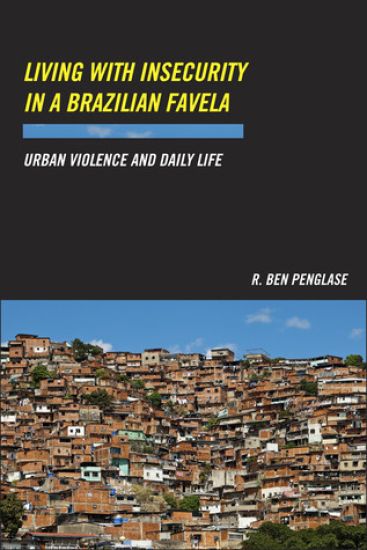
The residents of Caxambu, a squatter neighborhood in Rio de Janeiro, live in a state of insecurity as they face urban violence. Living with Insecurity in a Brazilian Favela examines how inequality, racism, drug trafficking, police brutality, and gang activities affect the daily lives of the people of Caxambu. Some Brazilians see these communities, known as favelas, as centers of drug trafficking that exist beyond the control of the state and threaten the rest of the city. For other Brazilians, favelas are symbols of economic inequality and racial exclusion. Ben Penglase’s ethnography goes beyond these perspectives to look at how the people of Caxambu themselves experience violence. Although the favela is often seen as a war zone, the residents are linked to each other through bonds of kinship and friendship. In addition, residents often take pride in homes and public spaces that they have built and used over generations. Penglase notes that despite poverty, their lives are not completely defined by illegal violence or deprivation. He argues that urban violence and a larger context of inequality create a social world that is deeply contradictory and ambivalent. The unpredictability and instability of daily experiences result in disagreements and tensions, but the residents also experience their neighborhood as a place of social intimacy. As a result, the social world of the neighborhood is both a place of danger and safety.
The residents of Caxambu, a squatter neighborhood in Rio de Janeiro, live in a state of insecurity as they face urban violence. Living with Insecurity in a Brazilian Favela examines how inequality, racism, drug trafficking, police brutality, and gang activities affect the daily lives of the people of Caxambu. Some Brazilians see these communities, known as favelas, as centers of drug trafficking that exist beyond the control of the state and threaten the rest of the city. For other Brazilians, favelas are symbols of economic inequality and racial exclusion. Ben Penglase’s ethnography goes beyond these perspectives to look at how the people of Caxambu themselves experience violence. Although the favela is often seen as a war zone, the residents are linked to each other through bonds of kinship and friendship. In addition, residents often take pride in homes and public spaces that they have built and used over generations. Penglase notes that despite poverty, their lives are not completely defined by illegal violence or deprivation. He argues that urban violence and a larger context of inequality create a social world that is deeply contradictory and ambivalent. The unpredictability and instability of daily experiences result in disagreements and tensions, but the residents also experience their neighborhood as a place of social intimacy. As a result, the social world of the neighborhood is both a place of danger and safety.
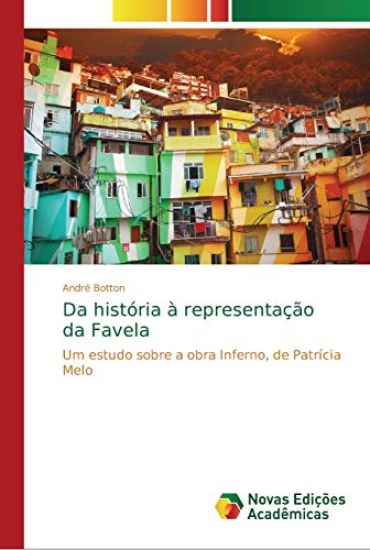
O espa o urbano brasileiro contempor neo tem sido tema de v rias obras liter rias que representam uma realidade, em que os habitantes tiveram que se acostumar com os problemas urban sticos, sociais, pol ticos e de viol ncia. Como a arte reflexo daquilo que est acontecendo na realidade, justifica-se o presente trabalho, pois a partir do problema de como a favela carioca est representada na obra Inferno, de Patr cia Melo, faz-se necess rio refletir sobre a sociedade e o espa o urbano no Brasil. A partir disso, pretende-se analisar a hist ria do surgimento das favelas no Rio de Janeiro desde o final da Monarquia, bem como estudar o conceito de "representa o", para, desse modo, analisar esse espa o urbano - e sua dinamicidade - retratado na obra Inferno. O estudo de obras te ricas sobre a hist ria da favela, sobre o Rio de Janeiro, sobre o conceito de "representa o" e m mese, bem como a pesquisa acerca da viol ncia urbana e, por fim, da an lise da obra liter ria Inferno, de Patr cia Melo, com base em estudos sobre a teoria da literatura contribui para a reflex o a respeito da representa o das periferias brasileiras na literatura brasileira contempor nea.