Kirjojen hintavertailu. Mukana 11 244 527 kirjaa ja 12 kauppaa.

Kirjahaku

Etsi kirjoja tekijän nimen, kirjan nimen tai ISBN:n perusteella.

74 tulosta hakusanalla "Informality"

Urban Informality

Urban Informality

Lexington Books
2003
sidottu
The turn of the century has been a moment of rapid urbanization. Much of this urban growth is taking place in the cities of the developing world and much of it in informal settlements. This book presents cutting-edge research from various world regions to demonstrate these trends. The contributions reveal that informal housing is no longer the domain of the urban poor; rather it is a significant zone of transactions for the middle-class and even transnational elites. Indeed, the book presents a rich view of 'urban informality' as a system of regulations and norms that governs the use of space and makes possible new forms of social and political power. The book is organized as a 'transnational' endeavor. It brings together three regional domains of research—the Middle East, Latin America, and South Asia—that are rarely in conversation with one another. It also unsettles the hierarchy of development and underdevelopment by looking at some First World processes of informality through a Third World research lens.
Urban Informality

Urban Informality

Lexington Books
2003
nidottu
The turn of the century has been a moment of rapid urbanization. Much of this urban growth is taking place in the cities of the developing world and much of it in informal settlements. This book presents cutting-edge research from various world regions to demonstrate these trends. The contributions reveal that informal housing is no longer the domain of the urban poor; rather it is a significant zone of transactions for the middle-class and even transnational elites. Indeed, the book presents a rich view of "urban informality" as a system of regulations and norms that governs the use of space and makes possible new forms of social and political power. The book is organized as a "transnational" endeavor. It brings together three regional domains of research—the Middle East, Latin America, and South Asia—that are rarely in conversation with one another. It also unsettles the hierarchy of development and underdevelopment by looking at some First World processes of informality through a Third World research lens.
Economic Informality

Economic Informality

Ana Maria Oviedo

World Bank Publications
2009
nidottu
In this survey, we assemble recent theoretical and empirical advances in the literature on economic informality, analyzing the causes and costs of informality in developed and developing economies. In accordance with recent evidence, we discuss the nature and the roots of informal economic activity across countries distinguishing between informality as the result of 'exclusion' and 'exit'. We then provide an extensive review of recent international experience with policies aimed at reducing informality, in particular policies that: facilitate the formalization process, create a framework for the transition from informality to formality, lend support to newly created firms, reduce or eliminate inconsistencies across regulation and government agencies, increase information flows, and increase enforcement.
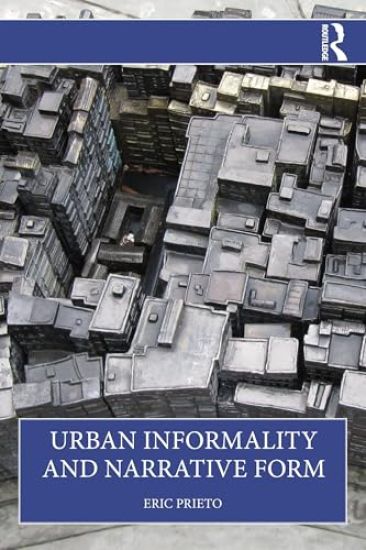
Urban Informality and Narrative Form

Urban Informality and Narrative Form

Eric Prieto

TAYLOR FRANCIS LTD
2026
sidottu
Urban Informality and Narrative Form brings together literary analysis and spatial planning theory in an interdisciplinary study of urban informality. It examines a diverse array of literary and cinematic fictions from across the globe--West and North Africa, West and South Asia, the Caribbean and Latin America--in dialogue with influential social scientific studies of urban informality. Leading scholar Eric Prieto explores the formal and representational strategies authors have used to address the realities of life in the informal city. He demonstrates the ability of literary texts to provide significant insights into the kinds of real-world concerns that preoccupy planning and policy specialists but that have remained resistant to the more traditional methodologies of urban studies and planning. The book sheds new light on the forces that have led to the prevalence of urban informality in the Global South, while also debunking some common misconceptions about the phenomenon, highlighting the great diversity of subjective experiences hidden behind the euphemistic "informal settlement" (or the more pejorative "slum"), and identifying some of the most promising ways forward for the urban poor. At a time when over half of all city dwellers in the Global South live in an in informal settlement of some kind, the urgency of the topic could not be clearer. With its global breadth and novel methodology (using urban theory as literary theory), this book will be of interest to scholars of urban literature, postcolonial and world literature, and to social scientists working in the spatial planning and policy fields.
Urban Informality and Narrative Form

Urban Informality and Narrative Form

Eric Prieto

TAYLOR FRANCIS LTD
2026
nidottu
Urban Informality and Narrative Form brings together literary analysis and spatial planning theory in an interdisciplinary study of urban informality. It examines a diverse array of literary and cinematic fictions from across the globe--West and North Africa, West and South Asia, the Caribbean and Latin America--in dialogue with influential social scientific studies of urban informality. Leading scholar Eric Prieto explores the formal and representational strategies authors have used to address the realities of life in the informal city. He demonstrates the ability of literary texts to provide significant insights into the kinds of real-world concerns that preoccupy planning and policy specialists but that have remained resistant to the more traditional methodologies of urban studies and planning. The book sheds new light on the forces that have led to the prevalence of urban informality in the Global South, while also debunking some common misconceptions about the phenomenon, highlighting the great diversity of subjective experiences hidden behind the euphemistic "informal settlement" (or the more pejorative "slum"), and identifying some of the most promising ways forward for the urban poor. At a time when over half of all city dwellers in the Global South live in an in informal settlement of some kind, the urgency of the topic could not be clearer. With its global breadth and novel methodology (using urban theory as literary theory), this book will be of interest to scholars of urban literature, postcolonial and world literature, and to social scientists working in the spatial planning and policy fields.
Maximum Informality

Maximum Informality

John O'Loughlin

Createspace Independent Publishing Platform
2014
pokkari
The text of this work of aphoristic philosophy is not only stylistically less formal but thematically more complex than its predecessor, 'Informal Maxims' (1993), as we proceed through some 1133 maxims, including an appendix/coda, of disparate length in what is, by any standards, a demandingly mind-expanding philosophical adventure - A Centretruths editorial
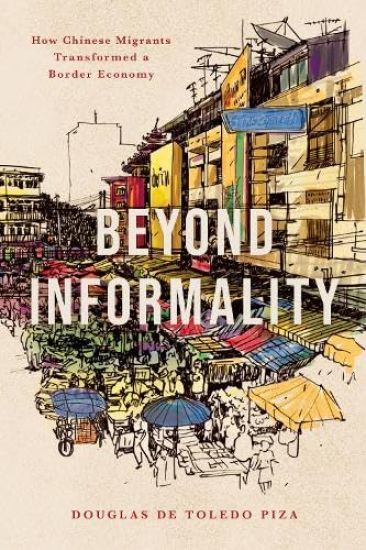
Beyond Informality

Beyond Informality

Douglas de Toledo Piza

STANFORD UNIVERSITY PRESS
2025
sidottu
Chinese migrants are playing increasingly large, stratified roles in the informal economies of South America. One of the clearest examples of this phenomenon is in the region's largest informal economy of counterfeit and smuggled goods, spanning from Ciudad del Este, the Paraguayan border city, to São Paulo, Brazil's largest metropolis. Here, Chinese vendors, on the one hand, are some of the most marginalized workers facing a doubly difficult landscape due to their precarious immigration status and their illegal economic activities. They bear the brunt of working on the margins of the law, and as a result do not always reap the benefits of their own labor. A transnational elite of Chinese businesspeople, on the other hand, profits and profiteers from the booming market. They leverage their economic, social, and political power to bend the law to their favor and get away with irregularities, violations, and criminal behavior. In Beyond Informality Douglas de Toledo Piza reveals the complex ways these actors interact with each other, and how the law shapes those interactions. He argues that structural inequalities in the global economy push Chinese migrants to South America, while placing them, surprisingly, in positions to overhaul markets and tip the scales of deep-seated power structures in the global South.
Beyond Informality

Beyond Informality

Douglas de Toledo Piza

STANFORD UNIVERSITY PRESS
2025
pokkari
Chinese migrants are playing increasingly large, stratified roles in the informal economies of South America. One of the clearest examples of this phenomenon is in the region's largest informal economy of counterfeit and smuggled goods, spanning from Ciudad del Este, the Paraguayan border city, to São Paulo, Brazil's largest metropolis. Here, Chinese vendors, on the one hand, are some of the most marginalized workers facing a doubly difficult landscape due to their precarious immigration status and their illegal economic activities. They bear the brunt of working on the margins of the law, and as a result do not always reap the benefits of their own labor. A transnational elite of Chinese businesspeople, on the other hand, profits and profiteers from the booming market. They leverage their economic, social, and political power to bend the law to their favor and get away with irregularities, violations, and criminal behavior. In Beyond Informality Douglas de Toledo Piza reveals the complex ways these actors interact with each other, and how the law shapes those interactions. He argues that structural inequalities in the global economy push Chinese migrants to South America, while placing them, surprisingly, in positions to overhaul markets and tip the scales of deep-seated power structures in the global South.
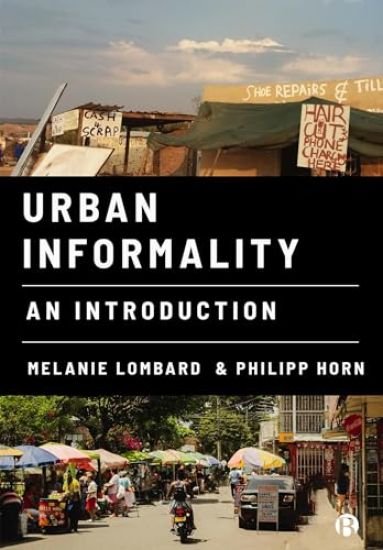
Urban Informality

Urban Informality

Melanie Lombard; Philipp Horn

Bristol University Press
2024
sidottu
This book is the first to provide an introductory overview to the concept of ‘urban informality’, taking an international perspective across the global North and South. It explores theoretical understandings of the term, and looks at how it affects ways of living, such as land use, housing and basic services, working lives and politics. Using a broad range of material to bring the topic to life, including non-conventional sources – such as fiction, poetry, photography, interviews and other media – the book helps students, practitioners and scholars develop learning and research on this topic. The book also includes interjections from diverse voices of practitioners, community activists and regional experts.
Urban Informality

Urban Informality

Melanie Lombard; Philipp Horn

Bristol University Press
2024
nidottu
This book is the first to provide an introductory overview to the concept of ‘urban informality’, taking an international perspective across the global North and South. It explores theoretical understandings of the term, and looks at how it affects ways of living, such as land use, housing and basic services, working lives and politics. Using a broad range of material to bring the topic to life, including non-conventional sources – such as fiction, poetry, photography, interviews and other media – the book helps students, practitioners and scholars develop learning and research on this topic. The book also includes interjections from diverse voices of practitioners, community activists and regional experts.
Urban Informality in South Africa and Zimbabwe

Urban Informality in South Africa and Zimbabwe

Inocent Moyo; Trynos Gumbo

Springer Nature Switzerland AG
2021
sidottu
This book adds to the research of urban informality in the Global South with a specific focus on South Africa and Zimbabwe. It addresses the agency and the potential transformative capacity of the phenomenon of urban informality in connection with Southern African cities and towns. It adopts a political economy approach to analyse the evolution of informality in cities and its implications for urban planning. It brings to bear how the South African and Zimbabwean historical and/or ideological and contemporary political and economic trajectories have impacted on the ever changing nature of urban informality, both spatially and structurally and/or compositionally; thus resulting in unique urban materialities, which are aspects that have scarcely been studied or discussed in the extant literature. This book, therefore, seeks to close the academic gap by dealing with the dearth of literature on spatial (re)locational discourses of urban informality.The work positions urban informality as a resilient force with potency in terms of political mobilisation and (re) shaping urban spaces. Though these are fundamental issues, they have received comparatively little attention, especially in literature that focuses on the Southern African region. Accordingly, undergraduate and post-graduate students, as well as academics in the fields of Urban Geography, Political Science, Development Studies, Sociology, Town and Regional Planning among others, will find the range of topics and depth of coverage in this book particularly valuable. Similarly, practitioners and activists on issues of urban informality and urban governance will find the book very useful.
Urban Informality in South Africa and Zimbabwe

Urban Informality in South Africa and Zimbabwe

Inocent Moyo; Trynos Gumbo

Springer Nature Switzerland AG
2022
nidottu
This book adds to the research of urban informality in the Global South with a specific focus on South Africa and Zimbabwe. It addresses the agency and the potential transformative capacity of the phenomenon of urban informality in connection with Southern African cities and towns. It adopts a political economy approach to analyse the evolution of informality in cities and its implications for urban planning. It brings to bear how the South African and Zimbabwean historical and/or ideological and contemporary political and economic trajectories have impacted on the ever changing nature of urban informality, both spatially and structurally and/or compositionally; thus resulting in unique urban materialities, which are aspects that have scarcely been studied or discussed in the extant literature. This book, therefore, seeks to close the academic gap by dealing with the dearth of literature on spatial (re)locational discourses of urban informality.The work positions urban informality as a resilient force with potency in terms of political mobilisation and (re) shaping urban spaces. Though these are fundamental issues, they have received comparatively little attention, especially in literature that focuses on the Southern African region. Accordingly, undergraduate and post-graduate students, as well as academics in the fields of Urban Geography, Political Science, Development Studies, Sociology, Town and Regional Planning among others, will find the range of topics and depth of coverage in this book particularly valuable. Similarly, practitioners and activists on issues of urban informality and urban governance will find the book very useful.
Urban Informality

Urban Informality

Ahmed M. Soliman; Hernando De Soto; Nezar Al Sayyad

Springer Nature Switzerland AG
2021
sidottu
This professional book introduces an analytical framework of urban informality perspectives in the Middle East that is aligned with the Global South. The context of Egypt, Lebanon, and Jordan—in the Middle East— is the transregional focus of this book. In these contexts, the book opens a new arena of academic discussion on the theory and practice of urban informality.Urban Informality: Experiences and Urban Sustainability Transitions in Middle East Cities questions urban informality, "as a site of transitions", interrelated and interlinked with urban sustainability transitions in speedy changes in a given environment. The book presents ‘urban informality sustainability transitions’ regarding resilience and adaptability that require shifts in urban systems. Shifts from a static process to a dynamic process that eradicates the fragmentation between the tensions, anxieties, and pressures of four modes of production, reproduction, consumptions, and distribution of goods and services in the city and its practices. Finally, through eleven chapters, the concluding remarks explore to what extent and how can urban informality transitions be sustainable.
Urban Informality

Urban Informality

Ahmed M. Soliman; Hernando De Soto; Nezar Al Sayyad

Springer Nature Switzerland AG
2022
nidottu
This professional book introduces an analytical framework of urban informality perspectives in the Middle East that is aligned with the Global South. The context of Egypt, Lebanon, and Jordan—in the Middle East— is the transregional focus of this book. In these contexts, the book opens a new arena of academic discussion on the theory and practice of urban informality.Urban Informality: Experiences and Urban Sustainability Transitions in Middle East Cities questions urban informality, "as a site of transitions", interrelated and interlinked with urban sustainability transitions in speedy changes in a given environment. The book presents ‘urban informality sustainability transitions’ regarding resilience and adaptability that require shifts in urban systems. Shifts from a static process to a dynamic process that eradicates the fragmentation between the tensions, anxieties, and pressures of four modes of production, reproduction, consumptions, and distribution of goods and services in the city and its practices. Finally, through eleven chapters, the concluding remarks explore to what extent and how can urban informality transitions be sustainable.
Urban Informality

Urban Informality

Springer International Publishing AG
2023
sidottu
This book analyzes the informal practices of contemporary cities through a close dialogue between different research perspectives, with the shared goal of giving voice to informality and evaluating its benefits and potential in a multidimensional key of social factors. Recently, the human sciences have seen the emergence of this new term “informality,” at first sight in conflict with their function of giving order and form to social phenomena. A term with which, in this book, the authors, having as reference the Italian and European experience, specifically identify those unsatisfied social demands and those collective actions “from below” that aim at the recovery of urban space and the renewal of its organization, often not following the trajectories of legality and institutions. By means of a close dialogue between different areas of social research, this book attempts to establish the different declinations and applications of the term, evaluating the causes and effects, benefits, and potential of the phenomena attributable to it, within a multidimensional analysis that calls into question the regeneration and collective use of spaces, political-institutional confrontation and conflict, legal innovation, and social-economic benefits.
Urban Informality

Urban Informality

Springer International Publishing AG
2024
nidottu
This book analyzes the informal practices of contemporary cities through a close dialogue between different research perspectives, with the shared goal of giving voice to informality and evaluating its benefits and potential in a multidimensional key of social factors. Recently, the human sciences have seen the emergence of this new term “informality,” at first sight in conflict with their function of giving order and form to social phenomena. A term with which, in this book, the authors, having as reference the Italian and European experience, specifically identify those unsatisfied social demands and those collective actions “from below” that aim at the recovery of urban space and the renewal of its organization, often not following the trajectories of legality and institutions. By means of a close dialogue between different areas of social research, this book attempts to establish the different declinations and applications of the term, evaluating the causes and effects, benefits, and potential of the phenomena attributable to it, within a multidimensional analysis that calls into question the regeneration and collective use of spaces, political-institutional confrontation and conflict, legal innovation, and social-economic benefits.
Economic Informality and World Literature

Economic Informality and World Literature

Josh Jewell

Springer International Publishing AG
2024
sidottu
This book analyses the impact of economic informality on the novel form across the modern world-system, looking specifically at works by Antonio de Almeida, Machado de Assis, Dany Laferrière, Ngugi wa Thiong’o, Nadine Gordimer, and Masande Ntshanga. It sees the representation of informal economies as a structural homology of world-literature. In chapters on the figure of the agregado in the nineteenth-century Brazilian novel; sex work in Haitian fiction; the politics of the informal economy in the post-apartheid South African novel; and Ngugi’s representation African occult economies, Josh Jewell explores the relationship between the rise of improvised economic activity—and its consolidation under neoliberalism in postcolonial nations—and literary form. He shows how informal economies can be grasped as locations of strategy and improvisation whose subjects must shift constantly between officialdom and underground networks; between the realms of the licit and illicit. This produces highly heterogenous narratives oscillating between different tones and registers (unserious and tragic), social spaces (working-class and elite), and conceptions of reality. By comparing the various situated aesthetics of informality, this book instrumentalises the Warwick Research Collective’s compelling but nebulous idea of a world-literature that “variously registers” a “singular modernity”.