Kirjojen hintavertailu. Mukana 11 244 527 kirjaa ja 12 kauppaa.

Kirjahaku

Etsi kirjoja tekijän nimen, kirjan nimen tai ISBN:n perusteella.

157 tulosta hakusanalla "Mario Vargas Llosa"

Literatur Und Politik - Mario Vargas Llosa

Literatur Und Politik - Mario Vargas Llosa

Sabine Köllmann

Verlag Peter Lang
1996
nidottu
Die Romane Mario Vargas Llosas bewegen sich ebenso wie seine Essays und Interviews zwischen den Polen Literatur und Politik, Fiktion und Realitat, kunstlerische Freiheit und politisches Engagement. Diese Arbeit untersucht, in welcher Beziehung seine literaturtheoretischen und politischen Ausserungen zur romanhaften Verarbeitung der Frage nach der Rolle des Intellektuellen, der Aufgabe der Literatur im politischen Kontext und den gesellschaftlichen Bedingungen fur das Schreiben stehen. Sie zeigt Kontinuitaten und Diskrepanzen zwischen Theorie und literarischer Praxis, aber auch zwischen der Darstellung der Politik in den Romanen und Vargas Llosas eigenen Erfahrungen als Prasidentschaftskandidat. Die parallele Interpretation von politischer und metaliterarischer Ebene des Romanwerks stellt den inneren Zusammenhang der beiden Bereiche heraus: Vargas Llosas Ideologiekritik entspricht seiner Ablehnung einer eindimensionalen Sicht der Welt und dem daraus folgenden Multiperspektivismus seiner Romane. Die Ambiguitat der literarischen Wahrheit steht der Fragwurdigkeit politisch-ideologischer Wahrheiten gegenuber."
Teoría de la novela y pensamiento político de Mario Vargas Llosa

Teoría de la novela y pensamiento político de Mario Vargas Llosa

Carlos Arturo Caballero Medina

Editorial Academica Espanola
2013
pokkari
Un trabajo de investigaci n que pretenda abordar la obra de Mario Vargas Llosa debe partir de una premisa que supere las aproximaciones tangenciales. Este objetivo ser posible en la medida que el investigador posea un marco te rico, una metodolog a y un corpus de estudio suficientemente delimitado como para plantear nuevas lecturas que, sin dejar de lado las referencias previas, ya que todo trabajo de interpretaci n requiere de un di logo constante con la cr tica, ofrezcan un enfoque renovado. Esta es, precisamente, la l nea de trabajo en la que se inscribe la presente investigaci n. Lo que se demostrar es que en la noci n de libertad del escritor, desarrollada por Vargas Llosa dentro de su teor a de la novela, se hallan las bases de su adhesi n al liberalismo; es decir, que en el discurso vargasllosiano, el individualismo est tico-literario evolucion en praxis pol tica.
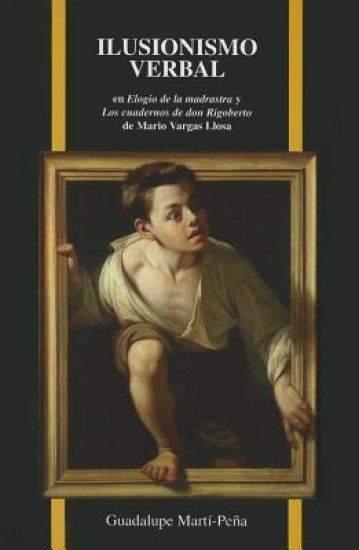
Ilusionismo verbal en Elogio de la madrastra y Los cuadernos de don Rigoberto de Mario Vargas Llosa
Among the multiple approaches to be taken on an author as multifaceted and prolific as the recent Nobel Laureate Peruvian writer Mario Vargas Llosa, Guadalupe Martí-Peña has chosen to look at the novelist as an illusionist. She studies this land of fantasies and daydreams, that seemingly harmless battlefield where literature, theatre, and painting contend and join together with the writer, the dreamer, and the illusionist to oust reality. Focusing on Elogio de la madrastra and Los cuadernos de don Rigoberto, and the effect of illusion on the reading process, she argues that by referring to theatrical, pictorial, and mystical patterns Vargas Llosa entices us to experience, along with his characters, the unreal as real, the dream as reality, the magic of fiction as an empowering act.The book looks first at the theatricality and theatrics that enliven both texts. In the light of reader/spectator-response theories and theater semiotics, Martí-Peña shows how the novelist turns narrating into acting, fiction into performance, and reading into seeing. She next reflects upon the role that painting plays in the materialisation of the characters’ desires and illusions. By funneling pictorial aesthetics through the prism of narration, and by engaging with theory concerned with issues of text-image interrelations, she examines the various functions paintings play within the linguistic system. Finally, she compares Rigoberto’s writing exercises to the writings of self-examination described by Michel Foucault in L’écriture de soi. Both texts encapsulate the main active ingredient in all of Vargas Llosa’s writings: that fiction is not a submission to life, but rather an insurrection against it. Verbal illusionism becomes the most efficient tactic to carry out such a rebellion.The text of this book is in Spanish.
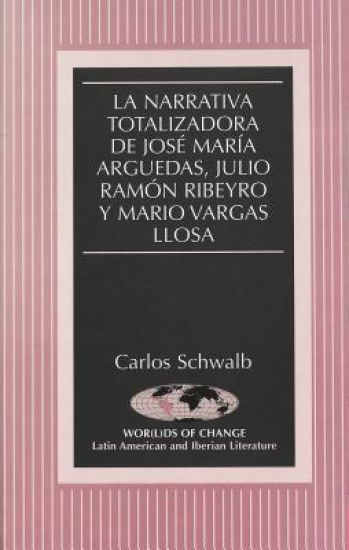
La Narrativa Totalizadora de Jose Maria Arguedas, Julio Ramon Ribeyro y Mario Vargas Llosa
El libro es un estudio de la llamada novela total, en boga en Latinoamerica durante las decadas del sesenta y setenta. Se analizan sus presupuestos ideologicos y artisticos a la vez que las razones que llevan a su cuestionamiento o abandono en la novelistica mas reciente. Segun el autor, este cambio refleja el colapso de las utopias de unidad o totalidad, caracteristicos de la modernidad, y el fin del papel del escritor latinoamericano como portavoz del todo social. El libro se centra en el analisis de la narrativa de tres autores peruanos, en particular de tres novelas que ilustran la crisis de las visiones totalizadoras en el Peru El zorro de arriba y el zorro de abajo, de Jose Maria Arguedas; Los geniecillos dominicales, de Julio Ramon Ribeyro, e Historia de Mayta, de Mario Vargas Llosa.
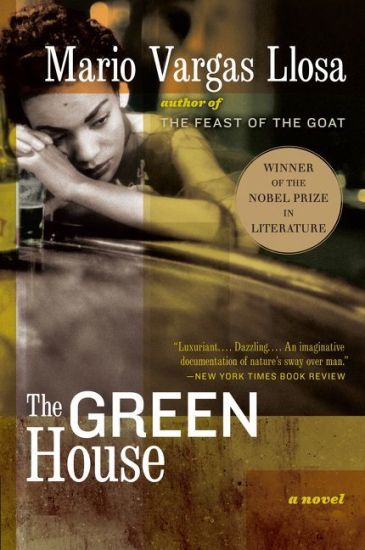
The Green House

The Green House

Mario Vargas Llosa

HARPERCOLLINS PUBLISHERS INC
2005
pokkari
"Dazzling. . . . An imaginative documentation of nature's sway over man." --New York Times Book ReviewFrom the winner of the Nobel Prize in Literature, an important and passionate novel set in Peru, that explores man's struggle with both nature and civilization Vargas Llosa's classic early novel takes place in Puira, a Peruvian town situated between desert and jungle, and which is torn by boredom and lust. Don Anselmo, a stranger in a black coat, builds a brothel on the outskirts of the town while he charms its innocent people, thus setting of a chain-reaction with extraordinary consequences. This brothel, called the Green House, brings together the innocent and the corrupt: Bonificia, a young Indian girl saved by the nuns only to become a prostitute: Father Garcia, struggling for the church; and four best friends drawn to both excitement and escape. The conflicting forces that haunt the Green House evoke a world balanced between savagery and civilization--and one which is cursed by not being able to discern between the two.
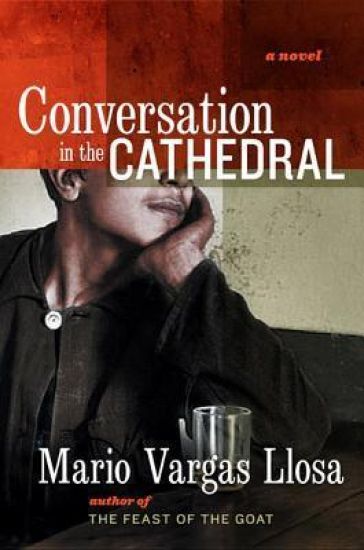
Conversation in the Cathedral

Conversation in the Cathedral

Mario Vargas Llosa

HARPER PERENNIAL
2005
nidottu
"Mario Vargas Llosa is one of the master storytellers of our time." -- Chicago TribuneFrom the winner of the Nobel Prize in Literature comes a haunting novel about power, corruption, and the complex search for identity.Conversation in The Cathedral takes place in 1950s Peru during the dictatorship of Manuel A. Odr a. Over beers and a sea of freely spoken words, the conversation flows between two individuals, Santiago and Ambrosia, who talk of their tormented lives and of the overall degradation and frustration that has slowly taken over their town.Through a complicated web of secrets and historical references, Mario Vargas Llosa analyzes the mental and moral mechanisms that govern power and the people behind it. More than a historic analysis, Conversation in The Cathedral is a groundbreaking novel that tackles identity as well as the role of a citizen and how a lack of personal freedom can forever scar a people and a nation.
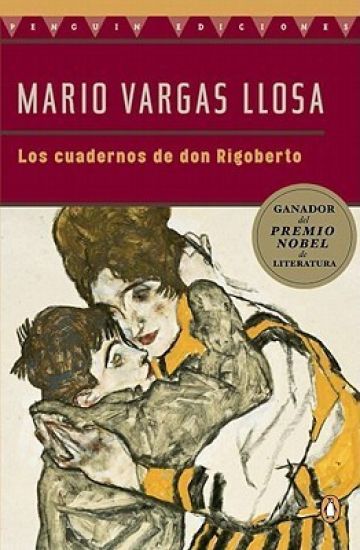
Los Cuadernos de Don Rigoberto

Los Cuadernos de Don Rigoberto

Mario Vargas Llosa

PENGUIN BOOKS
1998
nidottu
Set in Lima, Peru this is the story of a bizarre love triangle whose participants may be the creations of Don Rigoberto's fertile imagination. The central characters are Rigoberto himself, a dull insurance executive by day, a pornogapher and sexual enthusiast by night; Lucrecia, his second wife; and Alfonso, his angel-faced young son. Husband and wife have been separated for a year because of a sexual encounter between the boy and his stepmother. Rigoberto misses Lucrecia desperately--filling notebooks with his memories, fantasies, and letters he will never send. Meanwhile, Alfonso visits Lucrecia, attempting to both win her love and reunite her with his father. A companion volume to In Praise of the Stepmother--where we were first introduced to these passionate characters--The Notebooks of Don Rigoberto is a compelling mix of fantasy and reality that always keep the reader guessing.
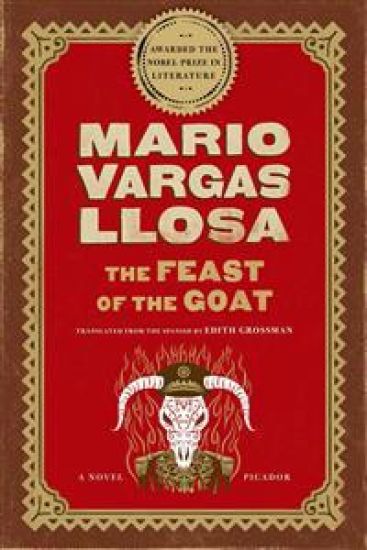
The Feast of the Goat

The Feast of the Goat

Mario Vargas Llosa

Picador USA
2002
nidottu
Haunted all her life by feelings of terror and emptiness, forty-nine-year-old Urania Cabral returns to her native Dominican Republic - and finds herself reliving the events of l961, when the capital was still called Trujillo City and one old man terrorized a nation of three million. Rafael Trujillo, the depraved ailing dictator whom Dominicans call the Goat, controls his inner circle with a combination of violence and blackmail. In Trujillo's gaudy palace, treachery and cowardice have become a way of life. But Trujillo's grasp is slipping. There is a conspiracy against him, and a Machiavellian revolution already underway that will have bloody consequences of its own. In this 'masterpiece of Latin American and world literature, and one of the finest political novels ever written' (Bookforum), Mario Vargas Llosa recounts the end of a regime and the birth of a terrible democracy, giving voice to the historical Trujillo and the victims, both innocent and complicit, drawn into his deadly orbit.
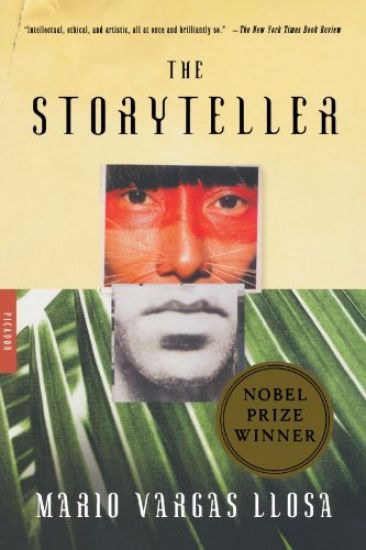
The Storyteller

The Storyteller

Mario Vargas Llosa

Picador Paper
2001
nidottu
WINNER OF THE NOBEL PRIZE IN LITERATURE At a small gallery in Florence, a Peruvian writer happens upon a photograph of a tribal storyteller deep in the jungles of the Amazon. He is overcome with the eerie sense that he knows this man...that the storyteller is not an Indian at all but an old school friend, Saul Zuratas. As recollections of Zuratas flow through his mind, the writer begins to imagine Zuratas's transformation from a modern to a central member of the unacculturated Machiguenga tribe. Weaving the mysteries of identity, storytelling, and truth, Vargas Llosa has created a spellbinding tale of one man's journey from the modern world to our origins, abandoning one in order to find meaning in both.
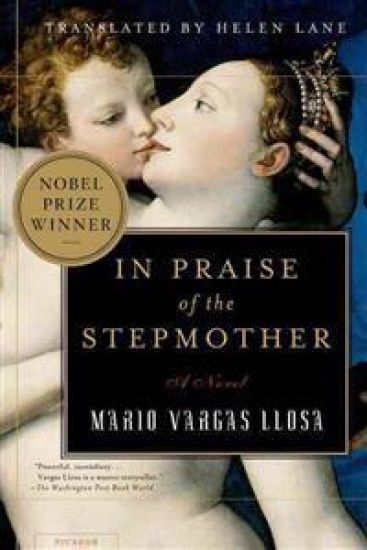
In Praise of the Stepmother

In Praise of the Stepmother

Mario Vargas Llosa

St. Martins Press-3pl
2002
nidottu
WINNER OF THE NOBEL PRIZE IN LITERATURE With meticulous observation and the seductive skill of a great storyteller, Vargas Llosa lures the reader into the shadow of perversion that, little by little, darkens the extraordinary happiness and harmony of his characters. The mysterious nature of happiness and above all, the corrupting power of innocence are the themes that underlie these pages, and the author has perfectly met the demands of the erotic novel, never dimming for an instant the fine poetic polish of his writing.
Letters to a Young Novelist

Letters to a Young Novelist

Mario Vargas Llosa

St. Martins Press-3pl
2003
nidottu
WINNER OF THE NOBEL PRIZE IN LITERATURE Mario Vargas Llosa condenses a lifetime of writing, reading, and thought into an essential manual for aspiring writers. Drawing on the stories and novels of writers from around the globe-Borges, Bierce, C line, Cort zar, Faulkner, Kafka, Robbe-Grillet-he lays bare the inner workings of fiction, all the while urging young novelists not to lose touch with the elemental urge to create. Conversational, eloquent, and effortlessly erudite, this little book is destined to be read and re-read by young writers, old writers, would-be writers, and all those with a stake in the world of letters.
The Language of Passion: Selected Commentary

The Language of Passion: Selected Commentary

Mario Vargas Llosa

Picador USA
2004
nidottu
WINNER OF THE NOBEL PRIZE IN LITERATURE Internationally acclaimed novelist Mario Vargas Llosa has contributed a biweekly column to Spain's major newspaper, El Pa s, since 1977. In this collection of columns from the 1990s, Vargas Llosa weighs in on the burning questions of the last decade, including the travails of Latin American democracy, the role of religion in civic life, and the future of globalization. But Vargas Llosa's influence is hardly limited to politics. In some of the liveliest critical writing of his career, he makes a pilgrimage to Bob Marley's shrine in Jamaica, celebrates the sexual abandon of Carnaval in Rio, and examines the legacies of Vermeer, Bertolt Brecht, Frida Kahlo, and Octavio Paz, among others.
The Way to Paradise

The Way to Paradise

Mario Vargas Llosa

St. Martins Press-3pl
2004
nidottu
WINNER OF THE NOBEL PRIZE IN LITERATURE A New York Times Notable Book Flora Trist n, the illegitimate child of a wealthy Peruvian father and French mother, grows up in poverty and journeys to Peru to demand her inheritance. On her return in 1844, she makes her name as a champion of the downtrodden, touring the French countryside to recruit members for her Workers' Union. In 1891, Flora's grandson, struggling painter and stubborn visionary Paul Gauguin, abandons his wife and five children for life in the South Seas, where his dreams of paradise are poisoned by syphilis, the stifling forces of French colonialism, and a chronic lack of funds, though he has his pick of teenage Tahitian lovers and paints some of his greatest works. Flora died before her grandson was born, but their travels and obsessions unfold side by side in this double portrait, a rare study in passion and ambition, as well as the obstinate pursuit of greatness in the face of illness and death.
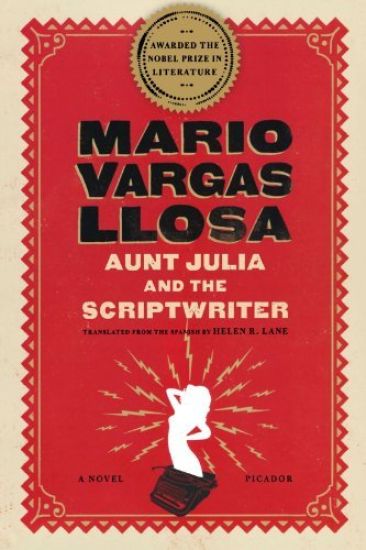
Aunt Julia and the Scriptwriter

Aunt Julia and the Scriptwriter

Mario Vargas Llosa

Picador USA
2007
nidottu
WINNER OF THE NOBEL PRIZE IN LITERATURE Mario Vargas Llosa's brilliant, multilayered novel is set in the Lima, Peru, of the author's youth, where a young student named Marito is toiling away in the news department of a local radio station. His young life is disrupted by two arrivals. The first is his aunt Julia, recently divorced and thirteen years older, with whom he begins a secret affair. The second is a manic radio scriptwriter named Pedro Camacho, whose racy, vituperative soap operas are holding the city's listeners in thrall. Pedro chooses young Marito to be his confidant as he slowly goes insane. Interweaving the story of Marito's life with the ever-more-fevered tales of Pedro Camacho, Vargas Llosa's novel is hilarious, mischievous, and masterful, a classic named one of the best books of the year by the New York Times Book Review.