Kirjahaku
Etsi kirjoja tekijän nimen, kirjan nimen tai ISBN:n perusteella.
207 tulosta hakusanalla "Simone Weil"
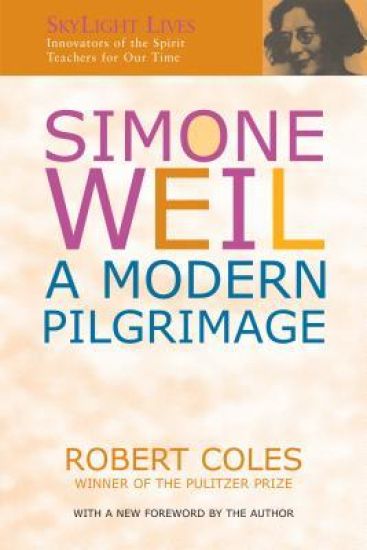
A brilliant portrait of a beloved and controversial figure in twentieth-century spirituality. Simone Weil (1906-1943) was a writer and philosopher who devoted her life to a search for God—while avoiding membership in organized religion. She wrote with the clarity of a brilliant mind educated in the best French schools, the social conscience of a grass-roots labor organizer, and the certainty and humility of a mystic—and she persistently carried out her search in the company of the poor and oppressed. Robert Coles's study of this strange and compelling figure includes the details of her short, eventful life: her academic career, her teaching, her political and social activism, and her mystical experiences. Coles also analyzes the major themes her life encompassed: her politics, her Jewish identity, her moral concerns, her intellect, and her experience of grace. This is the best, most accessible introduction to the woman who was a spiritual influence on the life and work of so many, among them T. S. Eliot, Flannery O'Connor, Adrienne Rich, and Albert Camus. Robert Coles, M.D., was awarded the Pulitzer Prize for his five-volume Children of Crisis series. He is Professor of Psychiatry and Medical Humanities at Harvard Medical School and the James Agee Professor of Social Ethics at Harvard University, and is the author of many books, including The Spiritual Life of Children, The Moral Life of Children, and Dorothy Day: A Radical Devotion.

A brilliant portrait of a beloved and controversial figure in twentieth-century spirituality. Simone Weil (1906-1943) was a writer and philosopher who devoted her life to a search for God—while avoiding membership in organized religion. She wrote with the clarity of a brilliant mind educated in the best French schools, the social conscience of a grass-roots labor organizer, and the certainty and humility of a mystic—and she persistently carried out her search in the company of the poor and oppressed. Robert Coles's study of this strange and compelling figure includes the details of her short, eventful life: her academic career, her teaching, her political and social activism, and her mystical experiences. Coles also analyzes the major themes her life encompassed: her politics, her Jewish identity, her moral concerns, her intellect, and her experience of grace. This is the best, most accessible introduction to the woman who was a spiritual influence on the life and work of so many, among them T. S. Eliot, Flannery O'Connor, Adrienne Rich, and Albert Camus. Robert Coles, M.D., was awarded the Pulitzer Prize for his five-volume Children of Crisis series. He is Professor of Psychiatry and Medical Humanities at Harvard Medical School and the James Agee Professor of Social Ethics at Harvard University, and is the author of many books, including The Spiritual Life of Children, The Moral Life of Children, and Dorothy Day: A Radical Devotion.
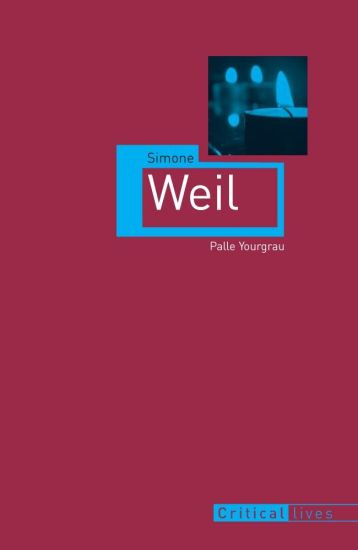
Simone Weil, legendary French philosopher, mystic and political activist who died in England in 1943 at the age of thirty-four, belongs to a select group of thinkers: as with St Augustine, Pascal and Nietzsche, so with Weil a single phrase can permanently change one’s life. In this book, Palle Yourgrau follows Weil on her life’s journey, from her philosophical studies at the École Normale Supérieure, to her years as a Marxist labour organizer, her explosive encounter with Leon Trotsky, her abortive attempt to fight against Franco in the Spanish Civil War, her mystical experience in the town of Assisi. We see how Weil’s struggle to make sense of a world consumed by despotism and war culminated in her monumental attempt, following St Augustine, to re-imagine Christianity along Platonistic lines, to find a bridge between human suffering and divine perfection.How seriously, however, should Weil's ideas be taken? They were admired by Albert Camus and T. S. Eliot, yet Susan Sontag wrote famously that ‘I can’t imagine more than a handful of the tens of thousands of readers she has won . . . really share her ideas.’ If this is really true, Palle Yourgrau must count as one of the handful. Though he brings to life the pathos of Weil's tragi-comic journey, Yourgrau devotes equal attention to the question of truth. He shines a bright light on the paradox of Simone Weil: at once a kind of modern saint, and a bête noire, a Jew accused of having abandoned her own people in their hour of greatest need. The result is a critical biography that is in places as disturbing as Weil's own writings, an account that confronts head-on her controversial critique of the Hebrew Bible, as well as her radical rejection of the received wisdom that the Resurrection lies at the heart of Christianity.

Simone Weil
Maria-Clara Lucchetti Bingemer; Emmanuel Gabellieri
Ouverture Philosophique
2020
nidottu

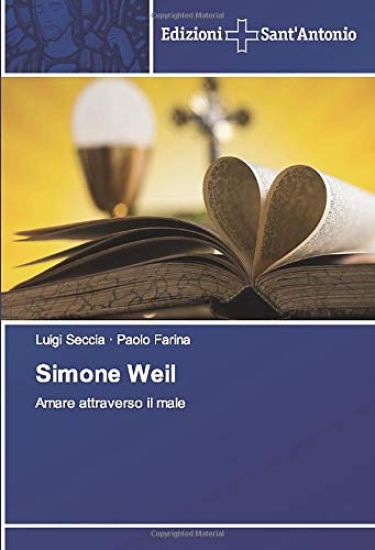
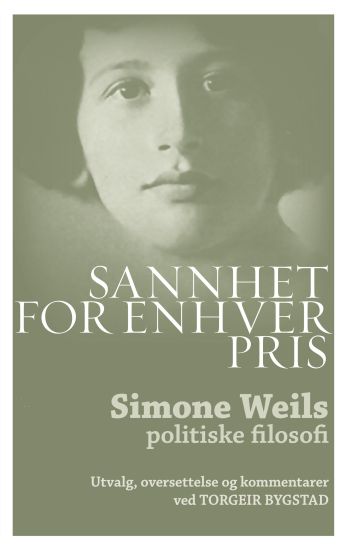
Finnes det en troverdig fremgangsmåte for å kjenne rettferdigheten? Er det mulig å tale om sannhet i etiske spørsmål? Og har etikk og rettferdighet egentlig noe med politikkens maktspill å gjøre? Den franske filosofen Simone Weil svarer bekreftende på disse spørsmålene. At sannhet og rettferdighet eksisterer i ordenes mest opphøyede betydning, er ifølge henne selve grunnlaget for politikken. Og Weil legger stor vekt på å gi rettferdigheten et konkret uttrykk i begrepet forpliktelse. Noe av det mest tankevekkende i Weils filosofi er at hun tar til orde for en korrigering av den europeiske menneskerettighetstenkningen; det vi har oversett helt siden 1700-tallet, er at det ikke er våre rettigheter som er det mest grunnleggende, men vår forpliktelse overfor medmennesket. Simone Weil er en av 1900-tallets mest betydelige politiske tenkere. I Frankrike er det en fornyet interesse for henne. Mange ser på Simone Weil som en alliert i vår tids idékamper. Denne boken gir et nært og fyndig møte med kvinnen som nobelprisvinner Albert Camus kalte «den eneste store ånd i vår tid». «En viktig bok, velskrevet og intelligent.» Nils Heyerdahl, idéhistoriker og tidligere sjef for Radioteatret, NRK.
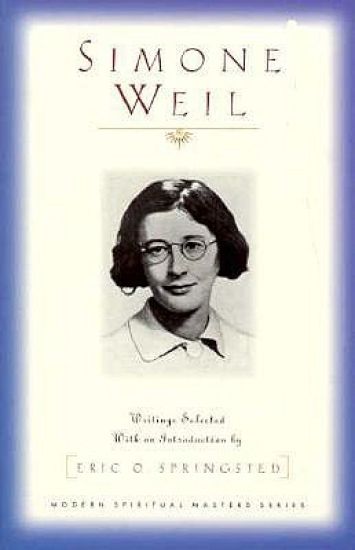
Simone Weil was a French philosopher, activist, and mystic who repeatedly sought to enter into the world of the workers and the poor. Though her mystical experiences brought her to the threshold of the Church, she chose not to enter. Yet many consider her one of the most significant religious witnesses of our time. In this short book Stephen Plant explores her life and the paradoxes of her work from a sympathetic, but not uncritical perspective. Her value lies not simply in the content of her thought but, as she would say, in "the amount of illumination thrown upon the things of this world."
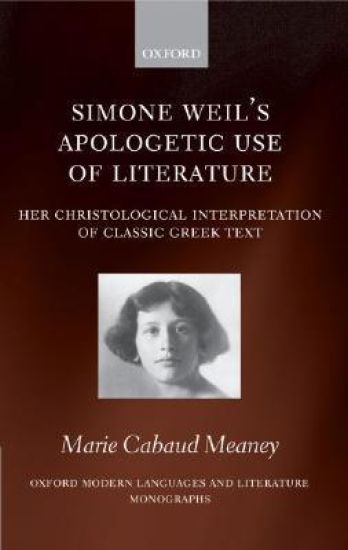
Marie Cabaud Meaney looks at Simone Weil's Christological interpretations of the Sophoclean Antigone and Electra, the Iliad and Aeschylus' Prometheus Bound. Apart from her article on the Iliad, Weil's interpretations are not widely known, probably because they are fragmentary and boldly twist the classics, sometimes even contradicting their literal meaning. Meaney argues that Weil had an apologetic purpose in mind: to the spiritual ills of ideology and fanaticism in World War II she wanted to give a spiritual answer, namely the re-Christianization of Europe to which she (though not baptized herself) wished to contribute in some way. To the intellectual agnostics of her day she intended to show through her interpretations that the texts they cherished so much could only be fully understood in light of Christ; to the Catholics she sought to reveal that Catholicism was much more universal than generally believed, since Greek culture already embodied the Christian spirit - perhaps to a greater extent than the Catholic Church ever had. Despite or perhaps because of this apologetic slant, Weil's readings uncover new layers of these familiar texts: Antigone is a Christological figure, combating Creon's ideology of the State by a folly of love that leads her to a Passion in which she experiences an abandonment similar to that of Christ on the Cross. The Iliad depicts a world as yet unredeemed, but which traces objectively the reign of force to which both oppressors and oppressed are subject. Prometheus Bound becomes the vehicle of her theodicy, in which she shows that suffering only makes sense in light of the Cross. But the pinnacle of the spiritual life is described in Electra which, she believes, reflects a mystical experience - something Weil herself had experienced unexpectedly when 'Christ himself came down and took her' in November 1938. In order to do justice to Weil's readings, Meaney not only traces her apologetic intentions and explains the manner in which she recasts familiar Christian concepts (thereby letting them come alive - something every good apologist should be able to do), but also situates them among standard approaches used by classicists today, thereby showing that her interpretations truly contribute something new.
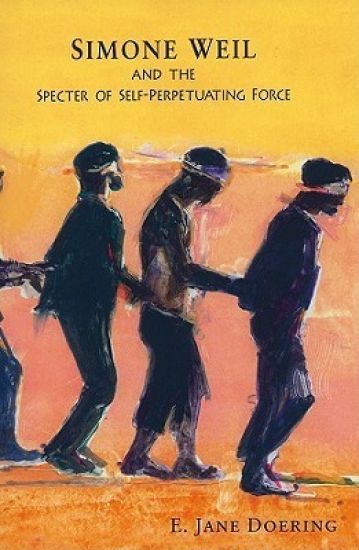
Simone Weil and the Specter of Self-Perpetuating Force
E. Jane Doering
University of Notre Dame Press
2010
nidottu
Simone Weil's philosophical and social thought during her short life (1909-1943) was intimately engaged with the nature of power and force, both human and natural, and the problems inherent in the use of force. Weil argued vehemently for pacifism, then moved toward a guarded acceptance of the use of force under very specific circumstances, in the context of the rise of Nazism. Ultimately she came to a nuanced and unique perspective on force and on the preservation of human dignity, in the aftermath of several profound mystical experiences during the last years of her life. E. Jane Doering carefully examines and analyzes the material in Weil's notebooks and lesser-known essays to illuminate her evolving thought on violence, war, and injustice. In addition, Doering addresses Weil's engagement with the Bhagavad Gita during her final years, a text that reoriented and enlightened Weil's activist and intellectual search for moral value in a violent world. Apart from small excerpts, none of the four volumes of Weil's notebooks, only recently published in French, have been translated into English. Simone Weil and the Specter of Self-Perpetuating Force contains Doering's expert translations of numerous notebook entries. The book will interest Weil scholars, those in French studies, and those who explore interdisciplinary topics in philosophy, religious studies, history, and political science.

Simone Weil for the Twenty-First Century
Eric O. Springsted
University of Notre Dame Press
2021
sidottu
This in-depth study examines the social, religious, and philosophical thought of Simone Weil. Simone Weil for the Twenty-First Century presents a comprehensive analysis of Weil's interdisciplinary thought, focusing especially on the depth of its challenge to contemporary philosophical and religious studies. In a world where little is seen to have real meaning, Eric O. Springsted presents a critique of the unfocused nature of postmodern philosophy and argues that Weil's thought is more significant than ever in showing how the world in which we live is, in fact, a world of mysteries. Springsted brings into focus the challenges of Weil's original (and sometimes surprising) starting points, such as an Augustinian priority of goodness and love over being and intellect, and the importance of the Crucifixion. Springsted demonstrates how the mystical and spiritual aspects of Weil's writings influence her social thought. For Weil, social and political questions cannot be separated from the supernatural. For her, rather, the world has a sacramental quality, such that life in the world is always a matter of life in God—and life in God, necessarily a way of life in the world. Simone Weil for the Twenty-First Century is not simply a guide or introduction to Simone Weil. Rather, it is above all an argument for the importance of Weil's thought in the contemporary world, showing how she helps us to understand the nature of our belonging to God (sometimes in very strange and unexpected ways), the importance of attention and love as the root of both the love of God and neighbor, the importance of being rooted in culture (and culture's service to the soul in rooting it in the universe), and the need for human beings to understand themselves as communal beings, not as isolated thinkers or willers. It will be essential reading for scholars of Weil, and will also be of interest to philosophers and theologians.
Simone Weil for the Twenty-First Century
Eric O. Springsted
University of Notre Dame Press
2021
nidottu
This in-depth study examines the social, religious, and philosophical thought of Simone Weil. Simone Weil for the Twenty-First Century presents a comprehensive analysis of Weil's interdisciplinary thought, focusing especially on the depth of its challenge to contemporary philosophical and religious studies. In a world where little is seen to have real meaning, Eric O. Springsted presents a critique of the unfocused nature of postmodern philosophy and argues that Weil's thought is more significant than ever in showing how the world in which we live is, in fact, a world of mysteries. Springsted brings into focus the challenges of Weil's original (and sometimes surprising) starting points, such as an Augustinian priority of goodness and love over being and intellect, and the importance of the Crucifixion. Springsted demonstrates how the mystical and spiritual aspects of Weil's writings influence her social thought. For Weil, social and political questions cannot be separated from the supernatural. For her, rather, the world has a sacramental quality, such that life in the world is always a matter of life in God—and life in God, necessarily a way of life in the world. Simone Weil for the Twenty-First Century is not simply a guide or introduction to Simone Weil. Rather, it is above all an argument for the importance of Weil's thought in the contemporary world, showing how she helps us to understand the nature of our belonging to God (sometimes in very strange and unexpected ways), the importance of attention and love as the root of both the love of God and neighbor, the importance of being rooted in culture (and culture's service to the soul in rooting it in the universe), and the need for human beings to understand themselves as communal beings, not as isolated thinkers or willers. It will be essential reading for scholars of Weil, and will also be of interest to philosophers and theologians.
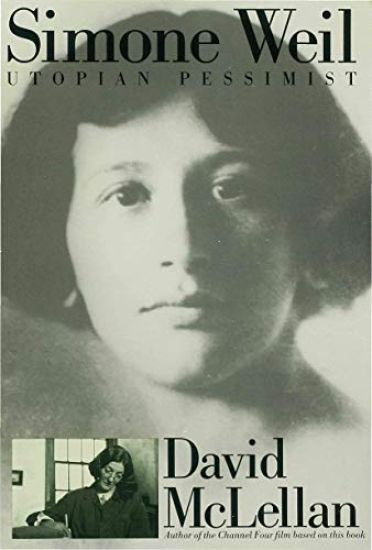
Simone Weil's short life was as extraordinary as her writings. Born in 1909, she was a brilliant philosophy student in the Paris of the 1920s and colleague of Jean-Paul Sartre and Simone de Beauvoir. She fought on the anarchist side in the Spanish Civil War and died, at the age of only thirty-four, while serving with de Gaulle and the Free French in London. This life of intense activity was united with a profoundly religious outlook on life. Many consider her the best spiritual writer of our century and a true saint for modern times. Simone Weil published almost nothing during her lifetime. The publication of her complete works is only now beginning in France. They reveal a mind of amazing lucidity and depth. This biography draws on hitherto unpublished material to explain her thought in the context of her life. Its comprehensive coverage at last makes available to the public the most intriguing personality of our age.
Simone Weil (1909-1943) was a defining figure of the twentieth century; a philosopher, Christian (although never baptised), resistance fighter, Labour activist and teacher, described by Albert Camus as 'the only great spirit of our time'. In 1941 Weil was introduced to Father Joseph-Marie Perrin, a Dominican priest whose friendship became a key influence on her life. When Weil asked Perrin for work as a farm hand he sent her to Gustave Thibon, a farmer and Christian philosopher. Weil stayed with the Thibon family, working in the fields and writing the notebooks which became Gravity and Grace and other posthumous works.Perrin and Thibon met Weil at a time when her spiritual life and creative genius were at their height. During the short but deep period of their acquaintance with her, they came to know her as she actually was. First published in English in 1953, and now introduced by J.P. Little, this unique portrait depicts Weil through the eyes of her friends, not as a strange and unaccountable genius but as an ardent and human person in search of truth and knowledge.

This book examines the religious, social, and political thought of Simone Weil in the context of the rigorous philosophical thinking out of which it grew. It also explores illuminating parallels between these ideas and ideas that were simultaneously being developed by Ludwig Wittgenstein. Simone Weil developed a conception of the relation between human beings and nature which made it difficult for her to explain mutual understanding and justice. Her wrestling with this difficulty coincided with a considerable sharpening of her religious sensibility, and led to a new concept of the natural and social orders involving a supernatural dimension, within which the concepts of beauty and justice are paramount. Professor Winch provides a fresh perspective on the complete span of Simone Weil's work, and discusses the fundamental difficulties of tracing the dividing line between philosophy and religion.
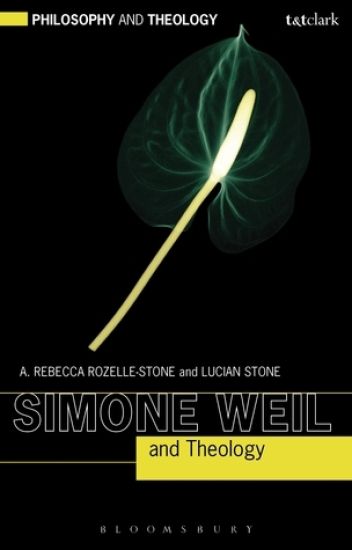
Simone Weil - philosopher, religious thinker, mystic, social/political activist - is notoriously difficult to categorize, since her life and writings challenge traditional academic boundaries. As many scholars have recognized, she set out few, if any, systematic theories, especially when it came to religious ideas. In this book, A. Rebecca Rozelle-Stone and Lucian Stone illuminate the ways in which Weil stands outside Western theological tradition by her use of paradox to resist the clamoring for greater degrees of certainty. Beyond a facile fallibilism, Simone Weil's ideas about the super-natural, love, Christianity, and spiritual action, and indeed, her seeming endorsement of a sort of atheism, detachment, foolishness, and passivity, begin to unravel old assumptions about what it is to encounter the divine.
Simone Weil - philosopher, religious thinker, mystic, social/political activist - is notoriously difficult to categorize, since her life and writings challenge traditional academic boundaries. As many scholars have recognized, she set out few, if any, systematic theories, especially when it came to religious ideas. In this book, A. Rebecca Rozelle-Stone and Lucian Stone illuminate the ways in which Weil stands outside Western theological tradition by her use of paradox to resist the clamoring for greater degrees of certainty. Beyond a facile fallibilism, Simone Weil's ideas about the super-natural, love, Christianity, and spiritual action, and indeed, her seeming endorsement of a sort of atheism, detachment, foolishness, and passivity, begin to unravel old assumptions about what it is to encounter the divine.