
Kirjahaku
Etsi kirjoja tekijän nimen, kirjan nimen tai ISBN:n perusteella.
1000 tulosta hakusanalla "The Tree"

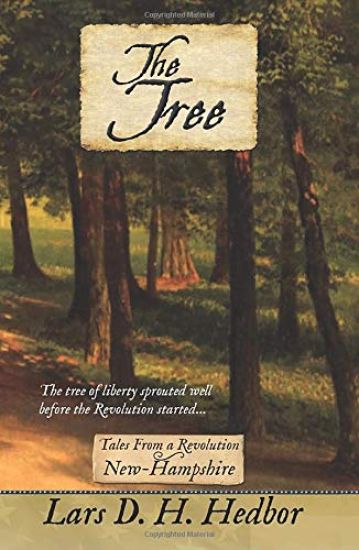
New-Hampshire, 1772: The tree of liberty sprouted well before the Revolution started...Abe is haunted by the sudden loss of both of his parents. Left to manage a New-Hampshire time grant with only his eccentric aunt to guide him, he finds comfort in a new friendship with Betty, a decidedly odd neighbor. Defying the grasping British officials and his aunt's commands, Abe makes choices that put him on a collision course with both. With rebellion in the air, Abe must escape detection by the Royal Governor's agents and solve the puzzle of Betty's past in order to secure his future.The Tree is the New-Hampshire volume in the Tales From a Revolution series, in which each standalone novel examines the American War of Independence as it unfolded in a different colony. If you like moving stories of little-known historical incidents, you'll love The Tree.Buy your copy of The Tree today and see the earliest stirrings of the American Revolution for yourself
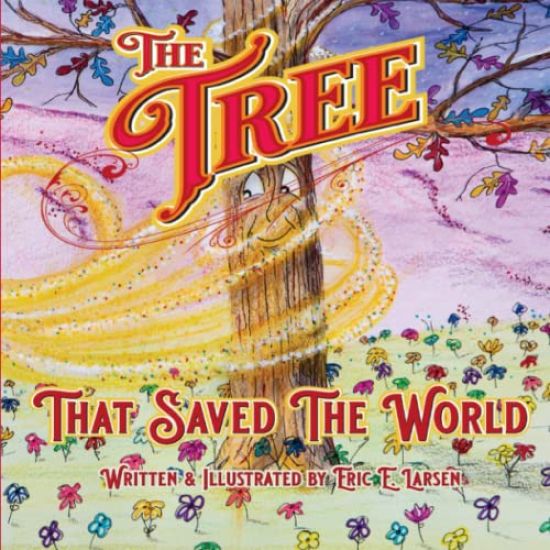
Ever wonder where the first cross came from? To think two simple pieces of wood have become themost powerful symbol of belief in God.As a child it is hard to understand the importance of such a symbol. The Tree That Saved The Worldstarted out as any other tree. It sprouted into a stem and grew into a mighty tree and then wasfashioned into the cross our Lord and Savior was crucified upon.That tree had a story of how it came to be the symbol of love, peace, and comfort to millions if notbillions of people over the centuries.This is that story.

The Tree is a story about a little tree that had a difficult time growing up, however; though love and nurturing became stronger and rose above it all.
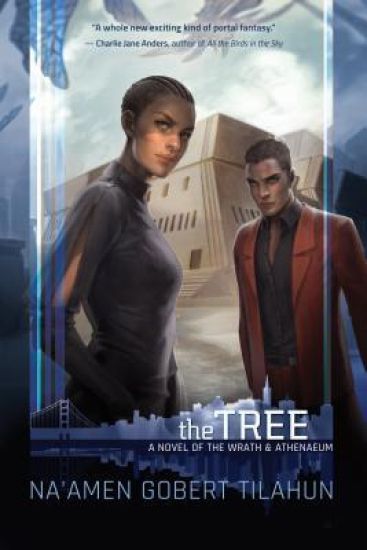
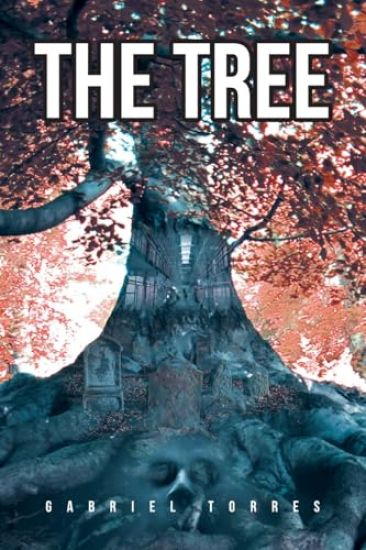
The sequel to The Root, a compelling urban fantasy series set between modern-day San Francisco and an alternate dimension filled with gods and worlds of dark magic. In Corpiliu, an alternate dimension to our own, a darkness grows, devouring whole cities as it spreads. Robbed of her greatest power, separated from her siblings and thrown among people she does not trust, Lil, a ’dant from the city Zebub, must find a way to turn everything around, to trust in a power she knows nothing about. Erik travels from San Francisco to Zebub, haunted by the ghost of his ex, still coming to terms with his true identity as a descendant of the gods, and unsure how to fight what seems to have no weakness. Pushing back against taboos meant to keep the true history of Corpiliu secret, he gains many enemies and few allies, and strange visions will make him question his own sanity. Between Earth and Corpiliu, a war is developing on two fronts, one that might well mean the end of both dimensions. In The Tree, the dynamic follow-up to the exciting fantasy debut The Root, long-held secrets will be revealed, and long-trusted loyalties will be put to the test.
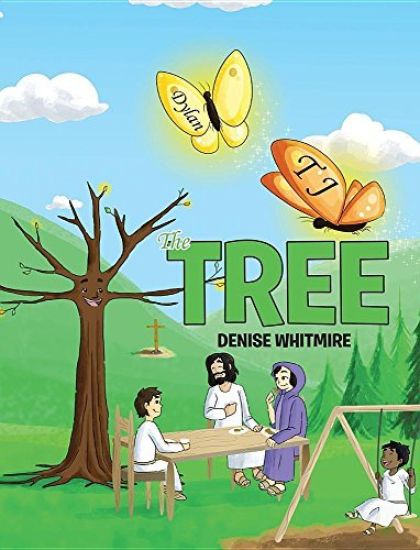
The Tree offers a whimsical way to deliver a message for the young and old. The message that we must remember that God has a very special plan and purpose for our lives. While we may not always understand what God has planned, we need to remember to trust Him and know that what He has planned goes beyond our expectations.
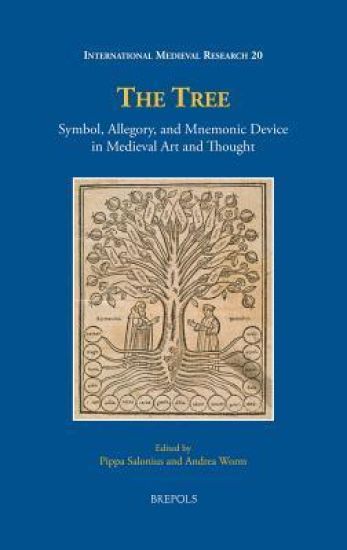
The Tree
Brepols N.V.
2014
muu
With its vital character - growing, flowering, extending its roots into the ground, and its branches and leaves to the sky - the tree is a polyvalent metaphor, a suggestive symbol, and an allegorical subject. During the Middle Ages, a number of iconographic schemata were based on the image and structure of the tree, including the Tree of Jesse and the Tree of Virtues and Vices. From the late eleventh century onwards such formulae were increasingly used as devices for organizing knowledge and representing theoretical concepts. Despite the abstraction inherent in these schemata, however, the semantic qualities of trees persist in their usage. The analysis of different manifestations of trees in the Middle Ages is highly instructive for visual, intellectual, and cultural history. Essays in this volume concentrate on the formative period for arboreal imagery in the medieval West, that is, the eleventh to fifteenth centuries. Using a range of methodological strategies and examining material from different media, ranging from illuminated manuscripts to wall painting, stained glass windows, and monumental sculpture, the articles in this volume show how different arboreal structures were conceived, employed, and appropriated by their specific contexts, how they functioned in their original framework, and how they were perceived by their audience.
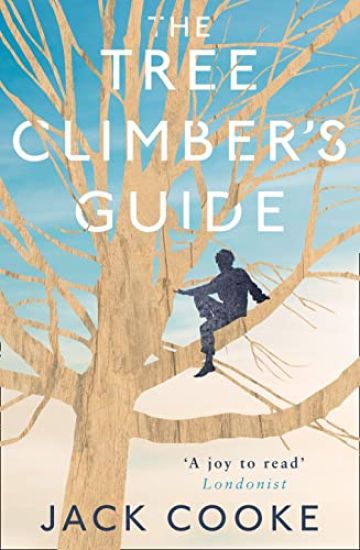
‘After I finished this book I alarmed my family by going into the garden and climbing the apple tree.’ – Damian Whitworth, The Times ‘One of the publishing sensations of the year … For anyone who has ever felt a little overwhelmed in a big city, or wanted to step out of the rat race for an hour or two, Jack Cooke will be something of an inspiration.’ – Robert Hardman, Daily Mail A wonderful cocktail of engaging writing, beautiful illustration and heartfelt appreciation for the natural world. An essential oddity for any book collection. In this charming, witty and exquisitely illustrated companion, Jack Cooke explores the city through its canopy; teetering on the edge of an oak’s branches, scurrying up a Scots pine, spying views from the treetops that few have ever had the chance to see. He takes us through the parks, over the canals and rivers and into secret gardens on his journey sometimes only ten foot above the street. Part guidebook, part meditation on the consolations of nature, The Tree Climber’s Guide is as uniquely odd, alluring and motley as the trees themselves. It is a journey into the tangle of bark and branches that surround us all and a welcome reminder that the best things in life are free – they just sometimes require a step in the right direction.

A timeless and majestic portrait of Africa by renowned writer Peter Matthiessen (1927-2014), author of the National Book Award-winning The Snow Leopard and the new novel In Paradise A finalist for the National Book Award when it was released in 1972, this vivid portrait of East Africa remains as fresh and revelatory now as on the day it was first published. Peter Matthiessen exquisitely combines nature and travel writing to portray the sights, scenes, and people he observed firsthand in several trips over the course of a dozen years. From the daily lives of wild herdsmen and the drama of predator kills to the field biologists investigating wild creatures and the anthropologists seeking humanity's origins in the rift valley, The Tree Where Man Was Born is a classic of journalistic observation. This Penguin Classics edition features an introduction by groundbreaking British primatologist Jane Goodall. For more than seventy years, Penguin has been the leading publisher of classic literature in the English-speaking world. With more than 1,700 titles, Penguin Classics represents a global bookshelf of the best works throughout history and across genres and disciplines. Readers trust the series to provide authoritative texts enhanced by introductions and notes by distinguished scholars and contemporary authors, as well as up-to-date translations by award-winning translators.

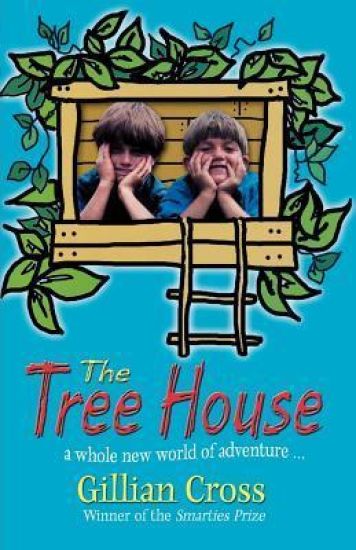
William and his brother are desperate to have a tree house in the grand old tree at the bottom of the garden. Their father has to go away, but is determined that the tree house should be built. So every month he sends a parcel home to the boys - a parcel containing things they'll need for the tree house. But will their father be home in time for Christmas - in time to join them in the tree house to eat the chestnuts that are growing there . . . Gillian Cross has won many major awards including the Carnegie Medal, the Smarties Prize, and the Whitbread Award.
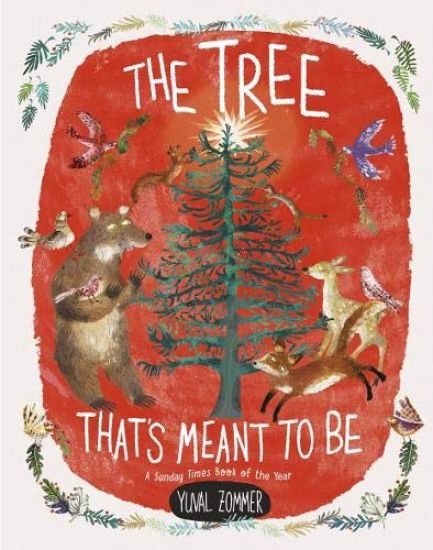
A gorgeous Christmas picture book that's destined to become a festive classic. A little fir tree is too small and too imperfect to be chosen at Christmas time. But being left alone in the forest brings more rewards than the tree could ever have hoped for . . . This is a charming and classic-feeling Christmas picture book with a heartfelt message about love and embracing what makes us different. Families will love sharing the story and talking about kindness, generosity, and the true meaning of Christmas. Award-winning author of books such as The Big Book of Bugs and The Big Book of Beasts, Yuval Zommer puts the living world at the heart of his powerful storytelling.
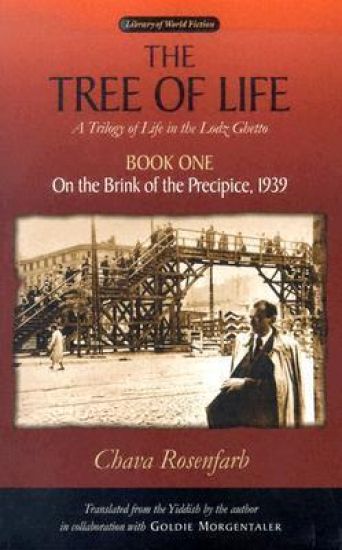
The Tree of Life Bk. 1; on the Brink of the Precipice, 1939
Chava Rosenfarb
University of Wisconsin Press
2004
nidottu
On the Brink of the Precipice, the first volume of the trilogy The Tree of Life, describes the lives of the novel's ten protagonists in the Lodz Ghetto before the outbreak of World War II. The author, herself a survivor of the Lodz Ghetto, Auschwitz, and Bergen-Belsen, creates realistic characters who struggle daily to retain a sense of humanity and dignity.
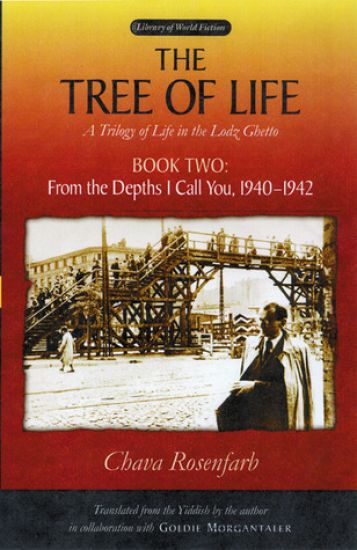
The Tree of Life Bk. 2; from the Depths I Call You, 1940-1942
Chava Rosenfarb; Goldie Morgentaler
University of Wisconsin Press
2005
nidottu
This volume describes the lives of the novel's protagonists in the Lodz Ghetto at the beginning of World War II. Chava Rosenfarb, herself a survivor of the Lodz Ghetto, Auschwitz, and Bergen-Belsen, draws on her own history to create realistic characters who struggle daily to retain a sense of humanity and dignity despite the physical and psychological effects of ghetto life. Although horrendous experiences are depicted, the light of faith in the human spirit shines through this novel's every page. This novel is the winner of the 1972 J. J. Segal Prize and the 1979 Manger Prize for Yiddish Literature, published in 1985, Cloth, English-language edition, Globe Press, Australia.
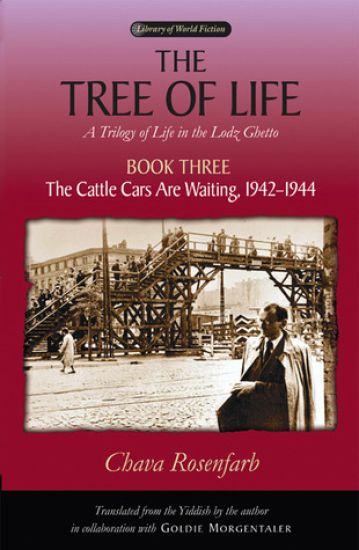
The Tree of Life Bk. 3; Cattle Cars Are Waiting, 1942-1944
Chava Rosenfarb
University of Wisconsin Press
2006
nidottu
The third and final volume in this powerful trilogy, ""The Cattle Cars are Waiting"" follows the tragic fate of the inhabitants of the ghetto. Chava Rosenfarb, herself a survivor of the Lodz Ghetto, Auschwitz, and Bergen-Belsen, draws on her own history to create characters who struggle daily to retain a sense of humanity and dignity despite the physical and psychological effects of ghetto life. Although the novel depicts horrendous experiences, the light of faith in the human spirit shines through every page.
The Tree: A Natural History of What Trees Are, How They Live, and Why They Matter
Colin Tudge
Crown Publishing Group (NY)
2007
nidottu
A blend of history, science, philosophy, and environmentalism, The Tree is an engaging and elegant look at the life of the tree and what modern research tells us about their future. There are redwoods in California that were ancient by the time Columbus first landed, and pines still alive that germinated around the time humans invented writing. There are Douglas firs as tall as skyscrapers, and a banyan tree in Calcutta as big as a football field. From the tallest to the smallest, trees inspire wonder in all of us, and in The Tree, Colin Tudge travels around the world--throughout the United States, the Costa Rican rain forest, Panama and Brazil, India, New Zealand, China, and most of Europe--bringing to life stories and facts about the trees around us: how they grow old, how they eat and reproduce, how they talk to one another (and they do), and why they came to exist in the first place. He considers the pitfalls of being tall; the things that trees produce, from nuts and rubber to wood; and even the complicated debt that we as humans owe them. Tudge takes us to the Amazon in flood, when the water is deep enough to submerge the forest entirely and fish feed on fruit while river dolphins race through the canopy. He explains the "memory" of a tree: how those that have been shaken by wind grow thicker and sturdier, while those attacked by pests grow smaller leaves the following year; and reveals how it is that the same trees found in the United States are also native to China (but not Europe). From tiny saplings to centuries-old redwoods and desert palms, from the backyards of the American heartland to the rain forests of the Amazon and the bamboo forests, Colin Tudge takes the reader on a journey through history and illuminates our ever-present but often ignored companions.
A daughter's grief . . . A mother's madness . . . And a daring act of love that defied every law . . . "The best mystery writer anywhere in the English-speaking world."--The Boston Globe Mopsa, driven by a past scarred by madness and violence. Benet, stricken by the most grievous loss any woman can bear. Carol, trapped in a life of crushing drabness no lover can change. Three mothers joined by a single thread of terror, whirled into a spiral of kidnapping, murder, and a final, reckless affirmation of love. Praise for The Tree of Hands "A consummate artist who commands style, plot and character . . . A storyteller of a high order."--Washington Post"An excellent piece of suspense writing."--San Diego Union"Densely plotted, deeply emotional . . . The design of this book is brilliant. . . . It moves forward in a series of inexorable events that leave the reader panting from suspense and shaken from the sheer emotion of it all."--Cleveland Plain Dealer"Here is Ruth Rendell at the top of her form--topping it, in fact, with a suspense chiller enchanted by a contemporary topicality that strikes to the heart."--Judith Christ
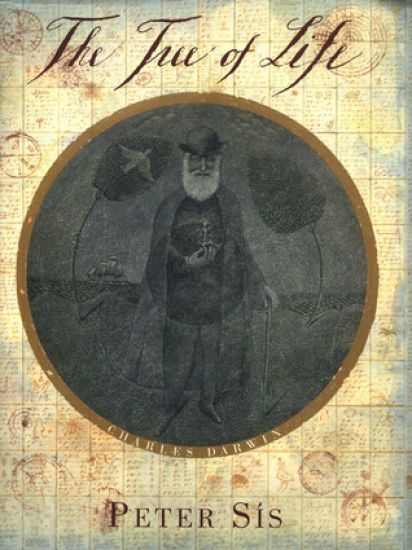
As far as I can judge, I am not apt to follow blindly the lead of other men . . . Charles Darwin was, above all else, an independent thinker who continues even now to influence the way we look at the natural world. His endless curiosity and passion for detail resulted in a wealth of notebooks, diaries, correspondence, and published writings that Peter Sis transforms into a visual treasure trove. A multilayered journey through Darwin's world, The Tree of Life begins with his childhood and traces the arc of his life through university and career, following him around the globe on the voyage of the Beagle, and home to a quiet but momentous life devoted to science and family. Sis uses his own singular vision to create a gloriously detailed panorama of a genius's trajectory through investigating and understanding the mysteries of nature. In pictures executed in fine pen and ink and lush watercolors - cameo portraits, illustrated pages of diary, cutaway views of the Beagle, as well as charts, maps, and a gatefold spread - Peter Sis has shaped a wondrous introduction to Charles Darwin.