

Kirjahaku
Etsi kirjoja tekijän nimen, kirjan nimen tai ISBN:n perusteella.
29 tulosta hakusanalla "Thomas Berry"
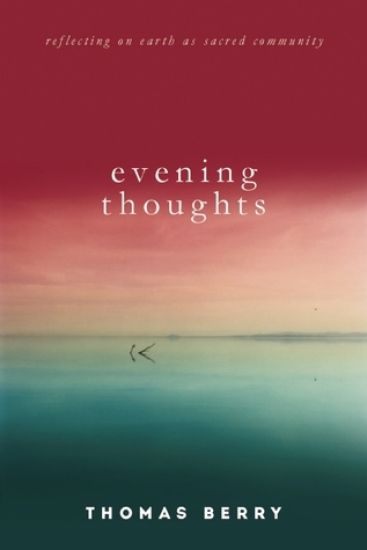
Among the contemporary voices for the Earth, none resonates like that of noted cultural historian Thomas Berry. His teaching and writings have inspired a generation's thinking about humankind's place in the Earth Community and the universe, engendering widespread critical acclaim and a documentary film on his life and work.This new collection of essays, from various years and occasions, expands and deepens ideas articulated in his earlier writings and also breaks new ground. Berry opens our eyes to the full dimensions of the ecological crisis, framing it as a crisis of spiritual vision. Applying his formidable erudition in cultural history, science, and comparative religions, he forges a compelling narrative of creation and communion that reconciles modern evolutionary thinking and traditional religious insights concerning our integral role in Earth's society.While sounding an urgent alarm at our current dilemma, Berry inspires us to reclaim our role as the consciousness of the universe and thereby begin to create a true partnership with the Earth Community. With Evening Thoughts, this wise elder has lit another beacon to lead us home.

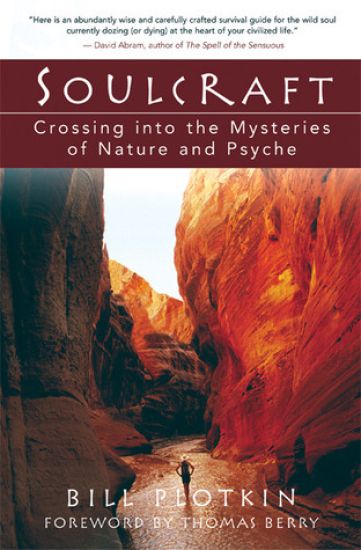
Since 1980, depth psychologist Bill Plotkin has been guiding women and men into the wilderness--the redrock canyons and snow-crested mountains of the American West--but also into the wilds of the soul. He calls this work soulcraft. There's a great longing in all people to uncover the secrets and mysteries of our individual lives, to find the unique gift we were born to bring to our communities, and to experience our full membership in the more-than-human world. This journey to soul is a descent into layers of the self much deeper than personality, a journey meant for each one of us, not just for the heroes and heroines of mythology. A modern handbook for the journey, Soulcraft is not an imitation of indigenous ways, but a contemporary nature-based approach born from wilderness experience, the traditions of Western culture, and the cross-cultural heritage of all humanity. Filled with stories, poems, and guidelines, Soulcraft introduces over 40 practices that facilitate the descent to soul, including dreamwork, wilderness vision fasts, talking across the species boundaries, council, self-designed ceremony, nature-based shadow work, and the arts of romance, being lost, and storytelling.
Sacramental Commons
John Hart; Leonardo Boff; Thomas Berry
Rowman Littlefield Publishers
2006
sidottu
The increasing awareness of environmental issues as ultimately moral issues has led to the intersection of religion and environment. Sacramental Commons presents a unique way of looking at this topic by relating the Christian word "sacrament" (signs of divine presence) to the term "commons" (shared place and shared goods, among people and between people and the natural world), suggesting that local natural settings and local communities can be a source for respect and compassion. Sacramental Commons uses Earth-oriented biblical teachings, and ideas from such thinkers as Hildegard, St. Francis, John Muir, and Black Elk, to provide insights about divine immanence in creation, human commitments to creation, and human accountability to the Spirit, Earth, and biotic community. It extends the concept of "natural rights" beyond humans to include all nature, and affirms intrinsic value in ecosystems in whole and in part. Sacramental Commons declares that the Earth commons and its goods should be shared equitably by human communities and individuals living in interdependent relationships with other members of the community of life. It suggests essential values that will stimulate care for the commons, and embodies them in principles of an innovative Christian Ecological Ethics.
Sacramental Commons
John Hart; Leonardo Boff; Thomas Berry
Rowman Littlefield Publishers
2006
nidottu
The increasing awareness of environmental issues as ultimately moral issues has led to the intersection of religion and environment. Sacramental Commons presents a unique way of looking at this topic by relating the Christian word 'sacrament' (signs of divine presence) to the term 'commons' (shared place and shared goods, among people and between people and the natural world), suggesting that local natural settings and local communities can be a source for respect and compassion. Sacramental Commons uses Earth-oriented biblical teachings, and ideas from such thinkers as Hildegard, St. Francis, John Muir, and Black Elk, to provide insights about divine immanence in creation, human commitments to creation, and human accountability to the Spirit, Earth, and biotic community. It extends the concept of 'natural rights' beyond humans to include all nature, and affirms intrinsic value in ecosystems in whole and in part. Sacramental Commons declares that the Earth commons and its goods should be shared equitably by human communities and individuals living in interdependent relationships with other members of the community of life. It suggests essential values that will stimulate care for the commons, and embodies them in principles of an innovative Christian Ecological Ethics.
Addiction, argues Albert LaChance in this insightful book, affects more than the individual who suffers from it. "Greenspirit shows how contemporary lifestyles have become addictive, consuming the planet's resources -- soil, air, water -- in a destructive way that comprises earth's life systems and endangers the survival of both humankind and other species. "Greenspirit presents a 12-step program for recovery from these dangerous lifestyles. Identifying such traits as egocentricity, materialism, overeating and drinking, and apathy as products of addiction, the author draws on the world's spiritual traditions -- Hinduism, Buddhism, shamanism, Christianity, and others -- to show individuals and communities how to work together to overcome these problems. The 12-step Greenspirit program empowers people to change the way they live in their environment. This "cultural therapy" in turn creates a renewed culture dedicated to protecting -- and respecting -- the planet.