Kirjojen hintavertailu. Mukana 11 627 363 kirjaa ja 12 kauppaa.

Kirjahaku

Etsi kirjoja tekijän nimen, kirjan nimen tai ISBN:n perusteella.

1000 tulosta hakusanalla A M Salinger

Perjury for Pay: An Exposé of the Methods and Criminal Cunning of the Modern Malingerer; A Legal History of Personal Injury Court Cases vs. Railroad Companies in the 1800s (Hardcover)
Willis P. King was a doctor working for an American railroad company in the late 1800s - he examined patients who sued for compensation due to injury, finding many fabricated claims in order to gain money.Dr. King confronts the charge of favorable bias toward his employer, or that his employer might have paid him to write a book. Prior to becoming examining physician at the railroad firm, King was a trusted family doctor with a strong reputation for ethical practice. He contrasts his record to that of litigants, many of whom coached friends or relatives to lie in court in pursuit of financial gain.Cases reported on by King were notorious at the time; examples including apparently crippled defendants who, upon gaining cash settlements, discard crutches and limb braces within weeks of receiving the money. Dr. King himself reports resisting anger and confrontation when seeing such individuals walking in public, sometimes mere streets away from the courthouse that delivered verdicts in their favor.
Perjury for Pay: An Exposé of the Methods and Criminal Cunning of the Modern Malingerer; A Legal History of Personal Injury Court Cases vs. Railroad Companies in the 1800s
Willis P. King was a doctor working for an American railroad company in the late 1800s - he examined patients who sued for compensation due to injury, finding many fabricated claims in order to gain money.Dr. King confronts the charge of favorable bias toward his employer, or that his employer might have paid him to write a book. Prior to becoming examining physician at the railroad firm, King was a trusted family doctor with a strong reputation for ethical practice. He contrasts his record to that of litigants, many of whom coached friends or relatives to lie in court in pursuit of financial gain.Cases reported on by King were notorious at the time; examples including apparently crippled defendants who, upon gaining cash settlements, discard crutches and limb braces within weeks of receiving the money. Dr. King himself reports resisting anger and confrontation when seeing such individuals walking in public, sometimes mere streets away from the courthouse that delivered verdicts in their favor.
a.m.

a.m.

Michael Ayres

Salt Publishing
2003
nidottu
a.m. achieves something quite remarkable: a calm that is a sublimated urgency, a meditation on distance that opens into a habitat for human intimacy: `the emptiness that forms before love comes’. Distance here is a prerequisite for relation, and this writing is in relentless and passionate pursuit, courting `you’ for its extended family, placating `all of these things with their gaping beaks / of light and shape and weight, all asking / not to be left out’. One of the many joys of this artful construction is that it is a public building, at pains to resist `an outmoded binary opposition between luxury and necessity’. Mandelstam claimed `To read Pasternak’s poetry is to clear your throat, to fortify your breathing, to fill your lungs; surely such poetry could provide a cure for tuberculosis’. In a.m., Ayres has set his sights on the common cold.
A&M Postcards

A&M Postcards

J. B. Stroud

Lulu.com
2010
pokkari
In 1878, Mississippi Agricultural and Mechanical College was created near Starkville, Mississippi. In 1932, the name was changed to Mississippi State College, and later to Mississippi State University. Over ninety postcards contained in this volume show the campus during the A. & M. years. Included are student cadets, athletics, buildings, and other campus scenes. Full size front and rear views of the cards will be of interest to postcard collectors. In addition, the cards give insight into higher education, especially on the land-grant campus, during the early twentieth century. Those familiar with Mississippi State will find the differences (and similarities) between the current campus and that of the early days of the school both interesting and intriguing. Several current views are included in the book and compared with early postcards containing the same views.
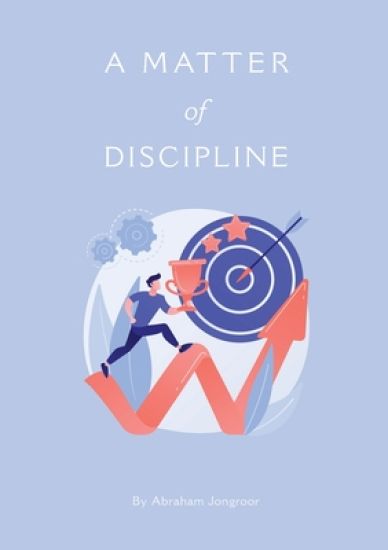
A M AT T E R of DISCIPLINE

A M AT T E R of DISCIPLINE

Abraham Jongroor

Africa World Books Pty Ltd
2021
pokkari
We must be disciplined to achieve our life dreams. This book discusses all kinds of disciplines and how discipline help us out in any situation, especially self-discipline. It also provides many examples of how discipline especially self-discipline could possibly guide our ways out of enormous difficulties to reach our destinations. Had my life not been fundamentally established on a strong foundation of self-discipline, I would have not made it to where I am today. This book reflected on experiences of failures and successes. This book doesn't discuss the discipline of specific age-groups, genders, or certain professional fields, but is for all and in all.It also discusses how self-discipline makes you a life champion for many and positively attributes to the World at large. Why is this book so important to you in public life is because it arms you with all elements of discipline like conformity, social norms, self-esteem, obedience, conscience, influence, fear of self-destruction, selflessness, altruism, self-respect, compliance, etc.
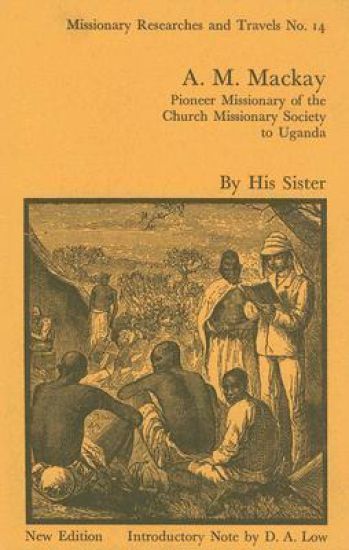
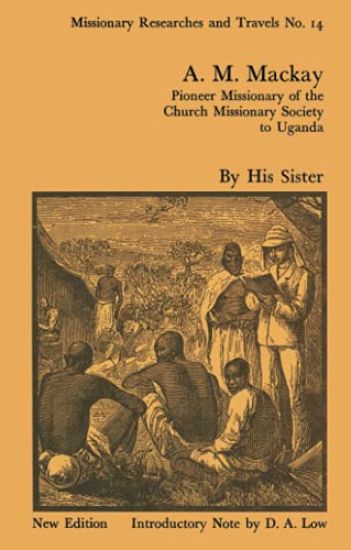
A.M. Mackay

A.M. Mackay

J.W.H. Mackay

Routledge
1970
sidottu
First published in 1970. This series includes a selection of historically important nineteenth and early twentieth century narratives written about Africa by missionaries and other figures connected with the church. The introductions are designed to place the narratives in their appropriate historical contexts, offer fresh biographical studies of the authors, and provide a critique of modern scholarship. This is number 14 and looks at A.M.Mackay.
A.M. Klein

A.M. Klein

Zailig Pollock

University of Toronto Press
1994
sidottu
Throughout his career A.M. Klein was concerned primarily with his relationship to his community, seeing himself, and all serious artists, as necessarily shaping and being shaped by the community in which they are rooted. Yet Klein's vision of this relationship was profoundly ambivalent, and this ambivalence is reflected most clearly in his troubled attitude to the two dominant strains in his work, Jewishness and modernism. In this study of A.M. Klein's work, Zailig Pollock focuses on 'the story of the poet,' which Klein retells again and again at major turning points in his career. Pollock argues that the story reflects Klein's attempt to mediate between his dual Jewish and modernist ambitions. While Klein's Jewishness gave him a sense of rootedness and vocation, it placed constraints on his personal and artistic freedom. Modernism offered Klein freedom for personal exploration and artistic expression, but the rootlessness implicit in modernism repelled him. The story of the poet who engages in a strategic inner retreat from a hostile or, at best, indifferent society, eventually returning as a redeemer of the society which spurned him, was first formulated in 'Out of the Pulver and the Polished Lens.' It was most fully articulated in 'Portrait of the Poet as Landscape' and The Second Scroll, and abandoned only in the despairing works which immediately preceded Klein's final breakdown and silence. This is the first book to survey all of Klein's poetry, prose, and journalism, published and unpublished, and place it in the context of its times.
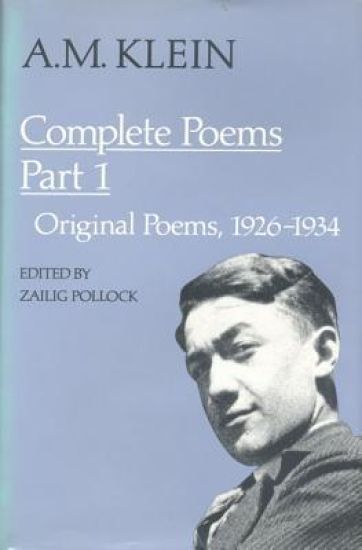
A.M. Klein: Complete Poems

A.M. Klein: Complete Poems

A.M. Klein

University of Toronto Press
1990
sidottu
It is for his poetry that A.M. Klein is best known and most warmly remembered. This collection includes all Klein's poetry, both original works and translations from Hebrew, Yiddish, Aramaic, and Latin. Many of them, coming from all periods of his careers, have never been published. The poems are arranged chronologically according to date of composition. This makes possible, for the first time, an appreciation of Klein's poetic development. The editor's introduction places this development in the perspective of Klein's life and time, and in particular explores Klein's lifelong struggle to reconcile his dual vocations as both a Jewish and a modernist writer. The textual apparatus identifies all authoritative versions for each poem and lists all emendations and all substative variants in both published and mauscript versions. The explanatory notes gloss obscure terms and references. They also provide a rich context for appreciation and interpretation by drawing connections with Klein's life, his wide reading, and his work as a whole. Wherever possible, Klein's own numerous, but scattered, comments on his poems have been cited.
A.M. Klein

A.M. Klein

Zailig Pollock

University of Toronto Press
1994
pokkari
Throughout his career A.M. Klein was concerned primarily with his relationship to his community, seeing himself, and all serious artists, as necessarily shaping and being shaped by the community in which they are rooted. Yet Klein's vision of this relationship was profoundly ambivalent, and this ambivalence is reflected most clearly in his troubled attitude to the two dominant strains in his work, Jewishness and modernism. In this study of A.M. Klein's work, Zailig Pollock focuses on 'the story of the poet,' which Klein retells again and again at major turning points in his career. Pollock argues that the story reflects Klein's attempt to mediate between his dual Jewish and modernist ambitions. While Klein's Jewishness gave him a sense of rootedness and vocation, it placed constraints on his personal and artistic freedom. Modernism offered Klein freedom for personal exploration and artistic expression, but the rootlessness implicit in modernism repelled him. The story of the poet who engages in a strategic inner retreat from a hostile or, at best, indifferent society, eventually returning as a redeemer of the society which spurned him, was first formulated in 'Out of the Pulver and the Polished Lens.' It was most fully articulated in 'Portrait of the Poet as Landscape' and The Second Scroll, and abandoned only in the despairing works which immediately preceded Klein's final breakdown and silence. This is the first book to survey all of Klein's poetry, prose, and journalism, published and unpublished, and place it in the context of its times.

A.M. Homes: Appendix A

A.M. Homes: Appendix A

Artspace Books,U.S.
1996
sidottu
Appendix A is an elaboration on A.M. Homes' novel The End of Alice, and lays bare the process of creating a character and building a fiction. The End of Alice is a tale told by an aging sex offender drawn into a summer correspondence with a college student. At first the criminal and his correspondent are merely pen pals, teasing each other, but as their epistolary exchange grows increasingly seductive, the full story of the criminal unfolds. Functioning as a compendium of evidence, Appendix A gathers an array of evidence--a photo album, paintings, assorted trinkets, teeth, a watch--remnants of the narrator's lingering and deadly infatuation with a little girl called Alice. An elaboration of the act of novel writing, Appendix A is unique exploration of the troubled boundary between truth and fiction, art and evidence.
A-M-O-R: And Other stories

A-M-O-R: And Other stories

Scott Richmond

4rivers Press
2019
nidottu
Ten short stories about the diverse and often eccentric fly fishing guides, ranchers, river drifters, and anglers that frequent tiny Maupin, Oregon, on the Deschutes River. Friendship and affection, lust and passion, family and duty bubble to the surface with results ranging from poignant to hilarious. You have to wonder: Is the god of love delicate and deft--or blind and bumbling? Or all of these at the same time? "Richmond writes about real people in real situations and reveals the forces that either drive us apart or bind us together."
A.M. Mackay

A.M. Mackay

J.W.H. Mackay

Routledge
2016
nidottu
First published in 1970. This series includes a selection of historically important nineteenth and early twentieth century narratives written about Africa by missionaries and other figures connected with the church. The introductions are designed to place the narratives in their appropriate historical contexts, offer fresh biographical studies of the authors, and provide a critique of modern scholarship. This is number 14 and looks at A.M.Mackay.