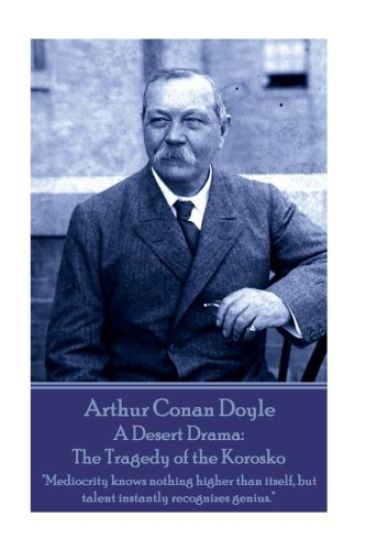
Sir Arthur Conan Doyle is one of those authors whose literary creation is much more famous than the man himself. Those who do know the name Arthur Conan Doyle tend to know him only as the inventor of the world's greatest detective, Sherlock Holmes. A smaller segment of this group goes further and remembers Doyle as the inventor of the great detective who squandered his fame with crackpot beliefs in faeries and the supernatural. Sadly, there is so much more to the man who revolutionized the writing not just of detective fiction but also of the genre of horror, the supernatural, and even influenced history itself. This two volume anthology's point is to put Doyle back on the pedestal he so rightly deserves. Its aim is twofold. First, to introduce readers to Doyle's lesser known (yet no less important) works. These works speak for themselves in showing a master writer at his craft. The stories are timeless, enjoyable, and hopefully will lead to new fans embracing a great author's somewhat forgotten tales. The second aim is to show the relevance of Doyle's works.Through a collection of articles written by current scholars and experts, readers can see just how revolutionary Doyle's writings remain even today.
Would you like some help understanding the beginnings of the detective genre?The Sign of Four is one of the earliest detective mystery novels and had significant impact on the genre.This guide will allow you to understand the development of the detective genre and details the historical background to the story.It offersIntroduction to the detective mystery genre;Annotated list of characters;Historical background of the story;Each chapter is given a helpful commentary following guiding questions. The questions encourage readers to a deeper understanding of the background, themes, and characters of the text. They are designed to stimulate thought, discussion and interpretation.A range of graphic organizers allows the reader to make concise notes on Holmes' scientific method of solving a case.
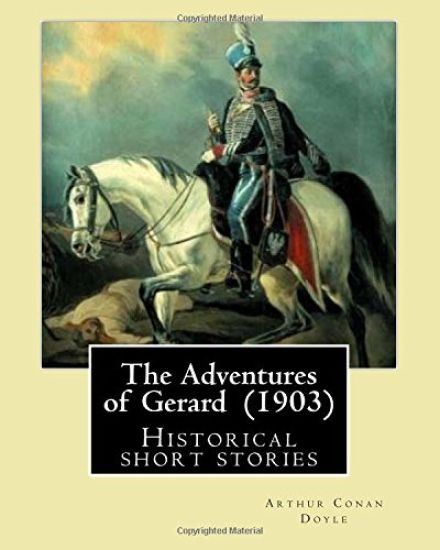
The Adventures of Gerard is a compilation of short stories that Sir Arthur Conan Doyle wrote regarding a French Brigadier named Etienne Gerard who thinks very highly of himself as can be reflected in how he told his stories. The book is divided into chapters containing different segments of his life as a soldier under the leadership of Napoleon together with his personal exploits and the romance that swept his way in between. Typical of war stories, some depicts bloody encounters with his enemies and how he was able to escape those encounters. However, there were soft moments particularly his encounter with women along the way even if she is from their enemy.Brigadier Gerard is the hero of a series of historical short stories by the British writer Arthur Conan Doyle. The hero, Etienne Gerard, is a Hussar officer in the French Army during the Napoleonic Wars. Gerard's most notable attribute is his vanity - he is utterly convinced that he is the bravest soldier, greatest swordsman, most accomplished horseman and most gallant lover in all France. Gerard is not entirely wrong, since he displays notable bravery on many occasions, but his self-satisfaction undercuts this quite often. Obsessed with honour and glory, he is always ready with a stirring speech or a gallant remark to a lady. Conan Doyle, in making his hero a vain, and often rather uncomprehending, Frenchman, was able to satirise both the stereotypical English view of the French and - by presenting them from Gerard's baffled point of view - English manners and attitudes....Gerard tells the stories from the point of view of an old man now living in retirement in Paris. We discover that he was born in Gascony in the early 1780s (he is 25 in "How the Brigadier Captured Saragossa"). In "How the Brigadier Rode to Minsk" he attends a review of troops about to depart for the Crimea (1854-5), and this is the last identifiable date in his life, although "The Last Adventure of the Brigadier" has a still later setting, with Gerard about to return to his Gascon homeland. He first joins the 2nd Hussars - the Hussars of Chamberan - around 1799, serving as a lieutenant and junior captain. He first sees action at Marengo in Italy in 1800. He transfers to the 3rd Hussars of Conflans in 1807 as a senior captain. He speaks somewhat idiosyncratic English, having learned it from an officer of the Irish Brigade of the French Army. By 1810 he is colonel of the 2nd Hussars. He serves in Spain, Portugal, Italy, Germany and Russia. He is awarded the Grand-Cross of the L gion d'honneur by Napoleon in 1814. There are various discrepancies in the accounts of his life, not the least that in none of the stories except the last is he married. Conan Doyle enthusiasts have noted that Gerard is modelled on the real-life Baron Jean Baptiste Antoine Marcellin de Marbot, a noted French light cavalry officer during the Napoleonic Wars. Conan Doyle wrote with great affection about Marbot's memoirs in Through the Magic Door. The fictional Gerard is not to be confused with the real Napoleonic officer Etienne Maurice G rard (1777-1852), who rose to become a Marshal and later Prime Minister of France.... Sir Arthur Ignatius Conan Doyle KStJ, DL (22 May 1859 - 7 July 1930) was a British writer and physician, most noted for creating the fictional detective Sherlock Holmes and writing stories about him which are generally considered milestones in the field of crime fiction. He is also known for writing the fictional adventures of a second character he invented, Professor Challenger, and for popularising the mystery of the Mary Celeste. He was a prolific writer whose other works include fantasy and science fiction stories, plays, romances, poetry, nonfiction and historical novels.
A remarkable annotated collection of previously unpublished private correspondence from the creator of Sherlock Holmes This extraordinary annotated collection of Sir Arthur Conan Doyle's private correspondence offers unique insight into one of the world's most popular authors. Detailing Conan Doyle's life from his beginnings as a country doctor to his struggle with the success of Sherlock Holmes and his ultimate calling as the foremost spokesman for Spiritualism, Conan Doyle's letters expose his innermost thoughts on literature, world events, and matters of the heart. Under the stewardship of editors renowned for their expertise on both Conan Doyle's life and the Sherlock Holmes stories, this remarkable volume reveals a man whose character and exploits rival that of his famous creation.
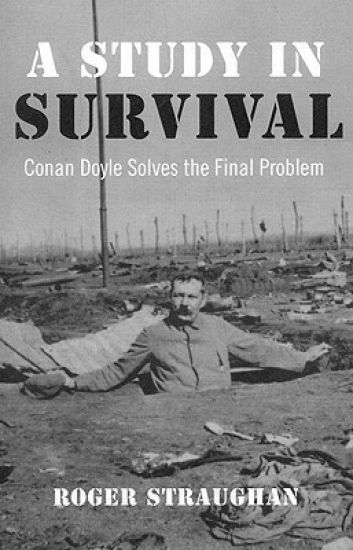
Here is dramatic new evidence for the survival of our individual personalities after death. It is provided by an astonishing series of recent communications from a man who died in 1930 and whose mission, when alive, was to bring just such evidence to the notice of the widest possible audience - Sir Arthur Conan Doyle. This 'study in survival' describes in vivid detail the intriguing twists and turns of an investigation worthy of the immortal Sherlock Holmes himself, whose legendary return from apparent death uncannily foreshadows that of his famous creator. The novel and ingenious method of communication used and the actual content of many of the messages are shown to be characteristic of Sir Arthur, reflecting many aspects of his colorful personality and action-packed life, as well as demonstrating paranormal knowledge of current affairs and major news events.
If ever a writer needed an introduction Arthur Conan Doyle would not be considered that man. After all, Sherlock Holmes is perhaps the foremost literary detective of any age. Add to this canon his stories of science fiction and his poems, his historical novels, his plays, his political campaigning, his efforts in establishing a Court of Appeal and it is easy to understand why he is so rightly admired. Born in Arthur Conan Doyle was born on 22 May 1859 at 11 Picardy Place, Edinburgh, Scotland. From 1876 - 1881 he studied medicine at the University of Edinburgh following which he was employed as a doctor on the Greenland whaler Hope of Peterhead in 1880 and, after his graduation, as a ship's surgeon on the SS Mayumba during a voyage to the West African coast in 1881. Arriving in Portsmouth in June of that year with less than 10 ( 700 today) to his name, he set up a medical practice at 1 Bush Villas in Elm Grove, Southsea. The practice was initially not very successful. While waiting for patients, Conan Doyle again began writing stories and composed his first novel The Mystery of Cloomber. Although he continued to study and practice medicine his career was now firmly set as a writer. And thereafter great works continued to pour out of him.