Kirjojen hintavertailu. Mukana 11 627 373 kirjaa ja 12 kauppaa.

Kirjahaku

Etsi kirjoja tekijän nimen, kirjan nimen tai ISBN:n perusteella.

1000 tulosta hakusanalla A. Kanni Raj

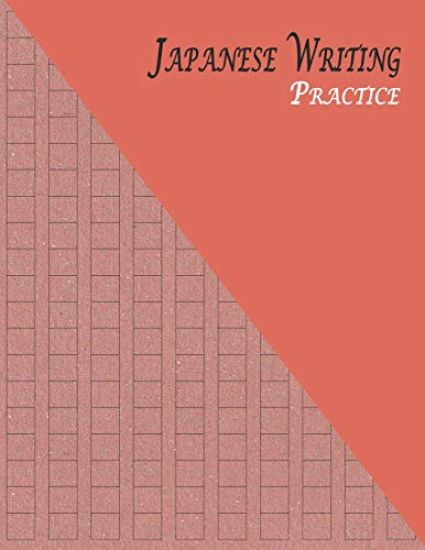
Japanese Writing Practice: A Book for Kanji, Kana, Hiragana, Katakana & Genkouyoushi Alphabet - Rustic (Maroon Brown)
JAPANESE ALPHABET WRITING PRACTICE 110 PAGES PAPER FOR PRACTICING JAPANESE WRITING - HIRAGANA, KATAKANA, GENKOUYOUSHI & KANJIThis volume of Japanese Writing Practice contains 110 pages with columns of squares for practicing writing Japanese lettering. Each large square can hold one Japanese character (Kanji, Hiragana or Katakana) and is divided into four quadrants to guide the correct positioning of each element of the character. The books are available in separate volumes with different cover designs to match your personal preferences. Each volume contains: 110 pages, white paperSize 8.5" x 11" (A4)Non-spiral boundGood quality paperSoft, sturdy matte coverBook cover designs available include the following: Vol. 1 ISBN: 9781796711882 Vol. 2 ISBN: 9781796712308 Vol. 3 ISBN: 9781796712636Vol. 4 ISBN: 9781796713022 They can easily be located using the ISBN numbers provided. Just type (or copy & paste) the numbers onto the Amazon search bar and you would be able to find them.
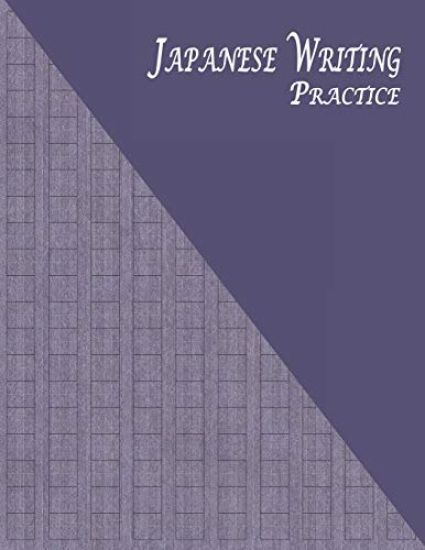
Japanese Writing Practice: A Book for Kanji, Kana, Hiragana, Katakana & Genkouyoushi Alphabet - Striped Kraft (Purple)
JAPANESE ALPHABET WRITING PRACTICE 110 PAGES PAPER FOR PRACTICING JAPANESE WRITING - HIRAGANA, KATAKANA, GENKOUYOUSHI & KANJIThis volume of Japanese Writing Practice contains 110 pages with columns of squares for practicing writing Japanese lettering. Each large square can hold one Japanese character (Kanji, Hiragana or Katakana) and is divided into four quadrants to guide the correct positioning of each element of the character. The books are available in separate volumes with different cover designs to match your personal preferences. Each volume contains: 110 pages, white paperSize 8.5" x 11" (A4)Non-spiral boundGood quality paperSoft, sturdy matte coverBook cover designs available include the following: Vol. 1 ISBN: 9781796711882 Vol. 2 ISBN: 9781796712308 Vol. 3 ISBN: 9781796712636Vol. 4 ISBN: 9781796713022 They can easily be located using the ISBN numbers provided. Just type (or copy & paste) the numbers onto the Amazon search bar and you would be able to find them.
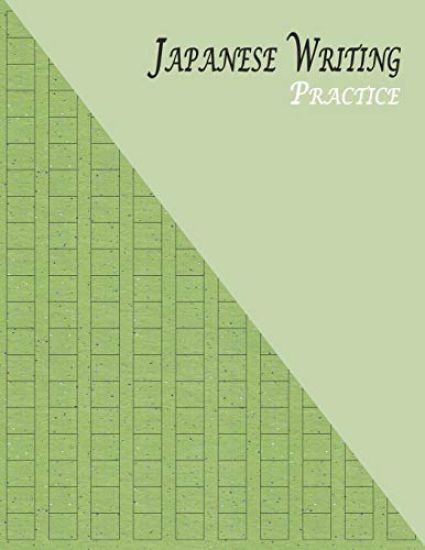
Japanese Writing Practice: A Book for Kanji, Kana, Hiragana, Katakana & Genkouyoushi Alphabet - Glitter (Green)
JAPANESE ALPHABET WRITING PRACTICE 110 PAGES PAPER FOR PRACTICING JAPANESE WRITING - HIRAGANA, KATAKANA, GENKOUYOUSHI & KANJIThis volume of Japanese Writing Practice contains 110 pages with columns of squares for practicing writing Japanese lettering. Each large square can hold one Japanese character (Kanji, Hiragana or Katakana) and is divided into four quadrants to guide the correct positioning of each element of the character. The books are available in separate volumes with different cover designs to match your personal preferences. Each volume contains: 110 pages, white paperSize 8.5" x 11" (A4)Non-spiral boundGood quality paperSoft, sturdy matte coverBook cover designs available include the following: Vol. 1 ISBN: 9781796711882 Vol. 2 ISBN: 9781796712308 Vol. 3 ISBN: 9781796712636Vol. 4 ISBN: 9781796713022 They can easily be located using the ISBN numbers provided. Just type (or copy & paste) the numbers onto the Amazon search bar and you would be able to find them.

Kanji Practice Notebook: Japanese Writing Genkouyoushi Paper a Workbook to Write Kanji, Kana, Katakana or Hiragana
Blank Genkouyoushi Paper, Kanji Practice PotebookThis Genkouyoushi Paper contains blank pages with columns of squares for practicing writing Japanese lettering. Each large square can hold one Japanese character (Kanji, Hiragana or Katakana) and is divided into four quadrants to guide the correct positioning of the elements of the character.Notebook journals also makes a perfect gift anytime of year including birthday, christmas, friendship gifts, journal for mothers, journal for daughters notebook for friends or just - to inspire someone you love today Paper journals never need to be charged and no batteries are required You only need your thoughts and dreams and something to write with.Perfect journal notebook sized at: 8,5"x11" (21.6x27.9 cm)High-quality paper is perfect for ink, gel pens, pencils or colored pencils110 Genkouyoushi pages Mate cover for silky finish what will feel amazing in your hands Perfect for gift giving
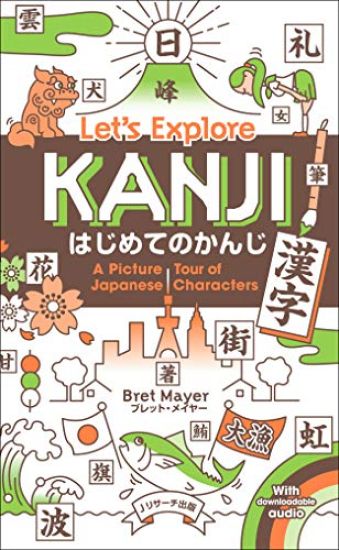
Let's Explore Kanji: A Picture Tour of the Japanese Characters
This is an introduction to kanji for foreigners who know little or no Japanese. Its written by an American who loves kanji, and he carefully selects 100 kanji commonly used in daily life, focusing on the basic kanji learned in the first and second grades of elementary school. Interesting phrases using kanji are introduced along with cute illustrations. It also presents familiar kanji characters by field, such as body, numbers, and colors. This book gets you interested in kanji and makes you love kanji.-- (9/1/2019 12:00:00 AM)
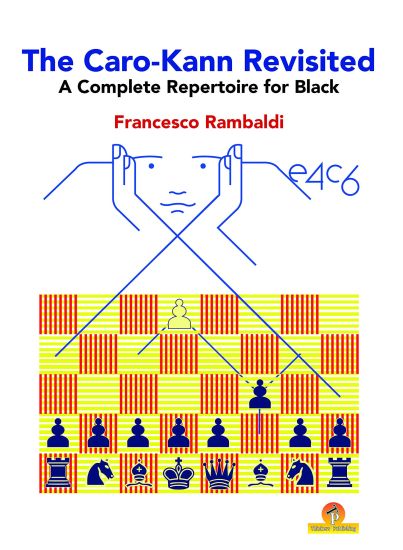
The Caro-Kann Revisited - A Complete Repertoire for Black
This book presents a comprehensive, ready-to-use, and high-quality repertoire for Black against 1.e4. With meticulous analysis and in-depth explanations, the author demonstrates how the Caro-Kann Defense can be used successfully by players of any level. He also draws on his experience and on his trove of novel ideas to present a new take on the Caro-Kann: one that emphasizes Black’s dynamic options while maintaining a solid and flexible setup.
Kanji Clues: A Mnemonic Approach to Mastering Japanese Characters
Kanji Clues: A Mnemonic Approach to Mastering Japanese Characters introduces a novel approach to character acquisition that combines the ancient practice of memory enhancement with a modern appreciation for active learning.By placing phonology at the center of the reading-writing process, the learner establishes an essential link between sound and meaning before addressing each character’s orthography, much in the way native speakers do. Another prominent feature of these volumes is that the lessons are organized thematically according to components in order to enhance their retention and to distinguish between similar looking kanji. As a result, character order is determined by the frequency of their primary elements or components. Once a character is learned, it retains the same meaning when it appears as an element in other characters. There is thus an internal recycling of components and characters throughout the course that serves as an additional aid to their retrieval. Proceeding from components and characters, each lesson then introduces ten new compounds, half of which appear in sentences. Here again, the learner actively forges meaningful links by responding to the clues provided. Indeed, the entire learning sequence is based upon mnemonic principles, such as attention, association, and elaboration, which, when employed together, comprise a memory-enhancing network that facilitates accurate recall and retention.Designed for students who wish to master the Japanese reading/writing system, each volume is comprised of a year’s worth of lessons, which can be used alongside a primary textbook, as well as for self-study, reference, or review. Upon completion of the course, the learner will have not only mastered all the 2,136 everyday use characters, but also be familiar with more than 1,200 kanji compounds and the most common sentence patterns in the Japanese language, thereby providing a deep understanding of the inner workings of the language and the tools to decipher new words.Volume 1 is an ideal supplementary resource for students throughout their first year of Japanese-language study.
Kanji Clues: A Mnemonic Approach to Mastering Japanese Characters
Kanji Clues: A Mnemonic Approach to Mastering Japanese Characters introduces a novel approach to character acquisition that combines the ancient practice of memory enhancement with a modern appreciation for active learning.By placing phonology at the center of the reading-writing process, the learner establishes an essential link between sound and meaning before addressing each character’s orthography, much in the way native speakers do. Another prominent feature of these volumes is that the lessons are organized thematically according to components in order to enhance their retention and to distinguish between similar looking kanji. As a result, character order is determined by the frequency of their primary elements or components. Once a character is learned, it retains the same meaning when it appears as an element in other characters. There is thus an internal recycling of components and characters throughout the course that serves as an additional aid to their retrieval. Proceeding from components and characters, each lesson then introduces ten new compounds, half of which appear in sentences. Here again, the learner actively forges meaningful links by responding to the clues provided. Indeed, the entire learning sequence is based upon mnemonic principles, such as attention, association, and elaboration, which, when employed together, comprise a memory-enhancing network that facilitates accurate recall and retention.Designed for students who wish to master the Japanese reading/writing system, each volume is comprised of a year’s worth of lessons, which can be used alongside a primary textbook, as well as for self-study, reference, or review. Upon completion of the course, the learner will have not only mastered all the 2,136 everyday use characters, but also be familiar with more than 1,200 kanji compounds and the most common sentence patterns in the Japanese language, thereby providing a deep understanding of the inner workings of the language and the tools to decipher new words.Volume 1 is an ideal supplementary resource for students throughout their first year of Japanese-language study.
Kanji Clues: A Mnemonic Approach to Mastering Japanese Characters
Kanji Clues: A Mnemonic Approach to Mastering Japanese Characters introduces a novel approach to character acquisition that combines the ancient practice of memory enhancement with a modern appreciation for active learning.By placing phonology at the center of the reading-writing process, the learner establishes an essential link between sound and meaning before addressing each character’s orthography, much in the way native speakers do. Another prominent feature of these volumes is that the lessons are organized thematically according to components in order to enhance their retention and to distinguish between similar looking kanji. As a result, character order is determined by the frequency of their primary elements or components. Once a character is learned, it retains the same meaning when it appears as an element in other characters. There is thus an internal recycling of components and characters throughout the course that serves as an additional aid to their retrieval. Proceeding from components and characters, each lesson then introduces ten new compounds, half of which appear in sentences. Here again, the learner actively forges meaningful links by responding to the clues provided. Indeed, the entire learning sequence is based upon mnemonic principles, such as attention, association, and elaboration, which, when employed together, comprise a memory-enhancing network that facilitates accurate recall and retention.Designed for students who wish to master the Japanese reading/writing system, each volume is comprised of a year’s worth of lessons, which can be used alongside a primary textbook, as well as for self-study, reference, or review. Upon completion of the course, the learner will have not only mastered all the 2,136 everyday use characters, but also be familiar with more than 1,200 kanji compounds and the most common sentence patterns in the Japanese language, thereby providing a deep understanding of the inner workings of the language and the tools to decipher new words.Volume 2 is an ideal supplementary resource for students throughout their second year of Japanese-language study.
Kanji Clues: A Mnemonic Approach to Mastering Japanese Characters
Kanji Clues: A Mnemonic Approach to Mastering Japanese Characters introduces a novel approach to character acquisition that combines the ancient practice of memory enhancement with a modern appreciation for active learning.By placing phonology at the center of the reading-writing process, the learner establishes an essential link between sound and meaning before addressing each character’s orthography, much in the way native speakers do. Another prominent feature of these volumes is that the lessons are organized thematically according to components in order to enhance their retention and to distinguish between similar looking kanji. As a result, character order is determined by the frequency of their primary elements or components. Once a character is learned, it retains the same meaning when it appears as an element in other characters. There is thus an internal recycling of components and characters throughout the course that serves as an additional aid to their retrieval. Proceeding from components and characters, each lesson then introduces ten new compounds, half of which appear in sentences. Here again, the learner actively forges meaningful links by responding to the clues provided. Indeed, the entire learning sequence is based upon mnemonic principles, such as attention, association, and elaboration, which, when employed together, comprise a memory-enhancing network that facilitates accurate recall and retention.Designed for students who wish to master the Japanese reading/writing system, each volume is comprised of a year’s worth of lessons, which can be used alongside a primary textbook, as well as for self-study, reference, or review. Upon completion of the course, the learner will have not only mastered all the 2,136 everyday use characters, but also be familiar with more than 1,200 kanji compounds and the most common sentence patterns in the Japanese language, thereby providing a deep understanding of the inner workings of the language and the tools to decipher new words.Volume 2 is an ideal supplementary resource for students throughout their second year of Japanese-language study.
Japanese Writing Practice Book Genkouyoushi Paper: Kanji Notebook a Workbook to Write Kanji, Kana, Katakana or Hiragana
Blank Genkouyoushi Paper, Kanji Practice PotebookThis Genkouyoushi Paper contains blank pages with columns of squares for practicing writing Japanese lettering. Each large square can hold one Japanese character (Kanji, Hiragana or Katakana) and is divided into four quadrants to guide the correct positioning of the elements of the character.Notebook journals also makes a perfect gift anytime of year including birthday, christmas, friendship gifts, journal for mothers, journal for daughters notebook for friends or just - to inspire someone you love today Paper journals never need to be charged and no batteries are required You only need your thoughts and dreams and something to write with.Perfect journal notebook sized at: 8,5"x11" (21.6x27.9 cm)High-quality paper is perfect for ink, gel pens, pencils or colored pencils110 Genkouyoushi pages Mate cover for silky finish what will feel amazing in your hands Perfect for gift giving