Kirjojen hintavertailu. Mukana 12 366 627 kirjaa ja 12 kauppaa.

Kirjahaku

Etsi kirjoja tekijän nimen, kirjan nimen tai ISBN:n perusteella.

1000 tulosta hakusanalla Aaron M. Powell

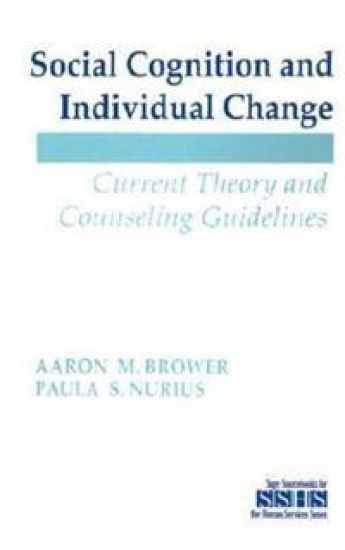
Social Cognition and Individual Change

Social Cognition and Individual Change

Aaron M. Brower; Paula S. Nurius

SAGE Publications Inc
1993
nidottu
Use the following for Social Work catalogs: Social Cognition and Individual Change provides a much needed link among several perspectives in social work practice (such as the ecological or generalist model) and the myriad of atheoretical "techniques" that social work practitioners must choose from. This new social work practice book makes more concrete and practical the basic premises of "person-environment interaction" and 'starting where the client is." It details the processes through which people perceive and interpret the social world, how problems arise, and how understanding these processes can significantly sharpen our assessments, intervention planning, goal selection, and evaluation. It draws upon the best up-to-date work in cognitive and emotional functioning, self-concept formation and change, and coping with stress. This book goes beyond introductory practice texts in describing how social work theory can guide practice. Special topics include clinical reasoning, the structure of memory, and social-cognitive explanations for psychodynamic phenomenon. Social Cognition and Individual Change should be included in courses for advanced practice and social work practice theory. Use this ad copy for psych: In recent years, there have been some major developments in the area of person-environment interaction--specifically the study of social cognition. Although knowledge of this literature is critical for the helping professional, social cognition in clients has been among the more difficult to adequately assess and use for intervention. Until now. Clear and succinct, Social Cognition and Individual Change offers a comprehensive introduction to a "cognitive-ecological" approach to counseling and clinical practice. To provide a solid conceptual grounding for the reader, the theoretical underpinnings of the cognitive-ecological model are described in detail, including its key components, strengths, and limitations. The model is then applied to relevant stages of practice such as assessment, goal setting, intervention planning, and evaluation. In addition, the authors provide numerous examples to illustrate how practitioners can use the model to enhance their work. Among the other topics covered are social perception and the practitioner, and feedback and follow-through. Social Cognition and Individual Change is perfectly suitable for courses on human behavior in the social environment and courses on practice methods. Human service practitioners, who would like an updated resource to fill a gap in their social psychological training, will also appreciate this volume. "The structure of this book allows one to use it for training students as well as a resource for professional practitioners. The material presented in each chapter is reinforced by the material in the succeeding chapter. The authors systematically develop the theoretical underpinnings and practice behaviors requisite for empowering clients and workers." --Families in Society Use this for social work catalog: "In this era of the cognitive revolution, books that address the use of cognitive techniques to facilitate personal change are abundant. None, however, match the conceptual depth and clarity offered by Brower and Nurius. . . . By using clear conceptual descriptions, vivid and relevant examples, step-by-step procedural guidelines, chapter introductions, and capsule summaries, Brower and Nurius deftly follow their own prescriptions about how to capture attention, prime associations, and facilitate recall." --from the foreword by Sharon B. Berlin, The University of Chicago Use this quote for Psych crowd: "Brower and Nurius have put together a valuable and practical blend of theory and research from areas of social cognition, self psychology, and counseling practice. I recommend it highly." --Michael J. Mahoney, University of North Texas
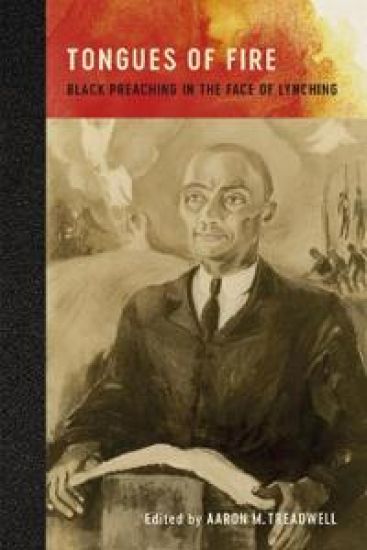
Tongues of Fire

Tongues of Fire

Aaron M. Treadwell

LOUISIANA STATE UNIVERSITY PRESS
2025
sidottu
Tongues of Fire is a collection of sermons and other writings by Black preachers that speak directly to lynching in the Jim Crow era. The collection, expertly edited and annotated by Aaron M. Treadwell, features more than forty pastors and fifty sermons. The sermons illuminate how Black churches, particularly the African Methodist Episcopal Church, stood at the forefront of antilynching efforts during the Nadir era as Black clergymen used their preaching to help protect their congregations from danger. Known as theological protectionism, this form of preaching sought to thwart or avert lynchings—and occasionally succeeded. Emphasizing radical, pious, or constitutional forms of theological protectionism, the sermons reveal yet another way that Black Americans fought back against the wave of extralegal executions that swept the nation in the late nineteenth and early twentieth centuries. The collection exposes an early development of African American resistance ideology—a concept that aligned with and perhaps ignited the long civil rights movement. Included are sermons that support the use of self-defense with firearms, the public shaming and condemnation of white churches, and reparation strategies that pinpoint lynching as a qualifier for federal aid. In their efforts to protect their congregations, preachers showed a willingness to utilize a theology that saw beyond the divinity of Christ to encompass his humanity as a fellow victim of lynching. Protection theology highlighted a symbiotic relationship in which serving a lynched deity could motivate Black people to, in the words of a Black hymnist, "make it over." In his introduction to each sermon, Treadwell explains and contextualizes the acts of racial caste violence that inspired these Black preachers. Tongues of Fire is the only book-length compilation of these vastly important yet understudied sermons, which reveal how Black churches fought against the scourge of lynching.
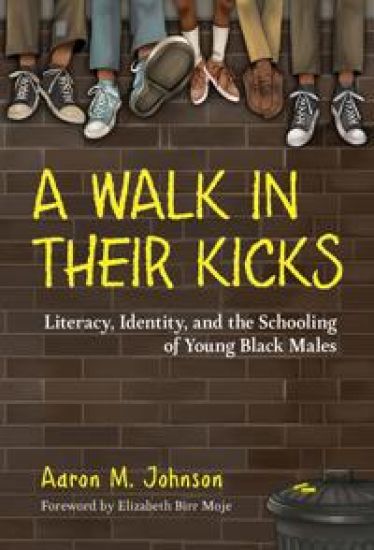
A Walk in Their Kicks

A Walk in Their Kicks

Aaron M. Johnson

Teachers' College Press
2018
nidottu
Through research data and conversations among teachers, readers will explore the impact that trauma has on the lives of African American students, examine how their own identities and perceptions of these students influence their text selections and instruction, and identify the conditions that need to be present to engage African American male students in literacy.
The Old World, the New World, and the Creation of the Modern World, 1400–1650
“The Old World, the New World, and the Creation of the Modern World, 1400–1650: An Interpretive History” provides a unique look at the early years of European discovery and colonization, examining the impact of this period on the historical development of both the New and Old Worlds. The text is enhanced by the incorporation of a wide variety of original source material, allowing readers to benefit from a more first-hand experience of the historical events of the period. Providing the essential facts in conjunction with expert analysis, the volume poses a number of important questions to enable readers to construct their own analysis of the evidence presented. Uniquely, the volume goes beyond the standard textbook formula of “what, when and where” to delve more deeply into the specific (as well as the wider) significance of historical developments, thereby providing the platform for a textured, interpretive understanding of the history of the Atlantic world.
The Old World, the New World, and the Creation of the Modern World, 1400–1650
“The Old World, the New World, and the Creation of the Modern World, 1400–1650: An Interpretive History” provides a unique look at the early years of European discovery and colonization, examining the impact of this period on the historical development of both the New and Old Worlds. The text is enhanced by the incorporation of a wide variety of original source material, allowing readers to benefit from a more first-hand experience of the historical events of the period. Providing the essential facts in conjunction with expert analysis, the volume poses a number of important questions to enable readers to construct their own analysis of the evidence presented. Uniquely, the volume goes beyond the standard textbook formula of “what, when and where” to delve more deeply into the specific (as well as the wider) significance of historical developments, thereby providing the platform for a textured, interpretive understanding of the history of the Atlantic world.
The Ending is Everything

The Ending is Everything

Aaron M Carpenter

Aaron M. Carpenter
2018
pokkari
I began writing this story, as soon as I realized the world would never be the same. Yes, I am sure there will be countless accounts of the events that took place in November, 2024. But those would relate to the leaders, governments and the prominent level of society. I wanted to write about the nobodies. Me and my friends. How we survived this event. How we were changed. The little people. So, if you are asking yourself, why should I read about some nobody, in California, and his nobody friends, and their ridiculous choices? Honesty. The version of events that will be released in the near future, may or may not be accurate. And will be colored by the choices of those in charge. If you do decide to read this, after falling into your hands, please don't judge. We only did what we had to, to survive. - Blake Anderson
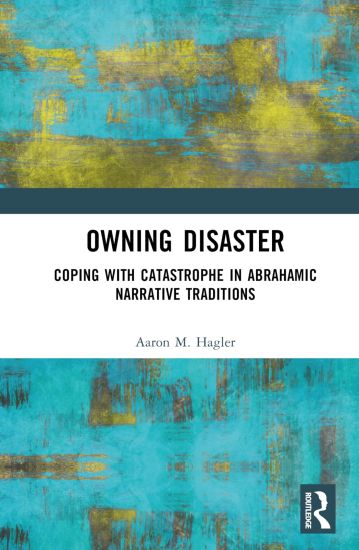
Owning Disaster

Owning Disaster

Aaron M. Hagler

TAYLOR FRANCIS LTD
2023
sidottu
Delving into the intertwined tapestry of Jewish, Christian, and Muslim sacred texts, exegesis, philosophy, theology, and historiography, this book explores the similar coping mechanisms across Abrahamic communities in reconciling the implications of disasters without abandoning their faith. Belief in a single, omnipotent God carries with it the challenge of explaining and contextualizing disasters that seem to contravene God’s supposed will. Through explorations of Jewish responses to the destruction of both the First and Second Temples, Christian responses to the Arab Muslim conquests, Muslim responses to the Crusades, and a variety of responses to the Mongol conquests, Aaron M. Hagler unveils the shared patterns and responses that emerge within these communities when confronted by calamity. Initial responses come in the forms of horrified lamentations, but as the initial shock dissipates, a complex dance of self-blame and collective introspection unfolds, as writers and theologians seek to contextualize the tragedy and guide their communities toward hope, resilience, and renewal. Of interest to scholars, theologians, and individuals seeking to explore interconnected notions of resilience within Abrahamic communities, Owning Disaster will resonate with readers eager to contemplate the intricate relationship between religious dogma, human resilience, and the profound questions that emerge when confronted with calamity.
Owning Disaster

Owning Disaster

Aaron M. Hagler

TAYLOR FRANCIS LTD
2025
nidottu
Delving into the intertwined tapestry of Jewish, Christian, and Muslim sacred texts, exegesis, philosophy, theology, and historiography, this book explores the similar coping mechanisms across Abrahamic communities in reconciling the implications of disasters without abandoning their faith. Belief in a single, omnipotent God carries with it the challenge of explaining and contextualizing disasters that seem to contravene God’s supposed will. Through explorations of Jewish responses to the destruction of both the First and Second Temples, Christian responses to the Arab Muslim conquests, Muslim responses to the Crusades, and a variety of responses to the Mongol conquests, Aaron M. Hagler unveils the shared patterns and responses that emerge within these communities when confronted by calamity. Initial responses come in the forms of horrified lamentations, but as the initial shock dissipates, a complex dance of self-blame and collective introspection unfolds, as writers and theologians seek to contextualize the tragedy and guide their communities toward hope, resilience, and renewal. Of interest to scholars, theologians, and individuals seeking to explore interconnected notions of resilience within Abrahamic communities, Owning Disaster will resonate with readers eager to contemplate the intricate relationship between religious dogma, human resilience, and the profound questions that emerge when confronted with calamity.