Kirjahaku
Etsi kirjoja tekijän nimen, kirjan nimen tai ISBN:n perusteella.
1000 tulosta hakusanalla Abdul Al-Azzawi
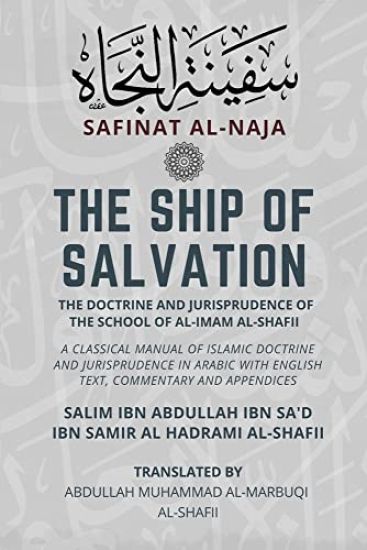
This book has been prepared for the beginner, especially those students studying at a "madrasah". Many Arabic terminologies have been maintained with the translation in the bracket. Footnotes provide assistance for teacher in explaining the text. The students are required to be familiar with the text of Safīnat al-najāʾ. It is better if the students can memorize the Arabic text so that they gain acquaintance with the jurisprudence or at least be able to read it fluently. Every effort was made to present a precise and accurate translation with proper explanations. The explanations were mostly derived from "Kāshifat al-sajāʾ sharh Safīnat al-najāʾ", "Umdatus Salik - Reliance of the Traveller" and "al-Iqnāʿ fī halli alfāẓi matn Abī Shujāʿ".The additional chapter of Ḥajj and ʿUmrah was taken from the "Al-Fiqh al-manhaji ʿalā madhhab al-Imām al-Shāfiʿī, " and "Reliance of the Traveller".The measurements and conversions were based on the book, "al-Maqādīr al-sharʿiyyah" by Dr. Najm al-dīn al-Kurdī. The biographical notes were taken from the book, "Reliance of the Traveller".
Biochemical characteraztion of ( CA15-3) in Sera and Tissues of Breast Tumors I: Tumor Markers Studies
Salwa Hameed Al-Rubaei; Sami Abdul Al-Mudhaffar Dr
Createspace Independent Publishing Platform
2015
nidottu
Biochemical characteraztion of ( CA15-3) in Sera and Tissues of Breast Tumors IBy Prof Sami Abdul-Mohdi Al-Mudhaffar Dr., Dr. Salwa Hameed Al-Rubaei
Development of Raw Materials Specification in Food Industry
Syed Moazzem Hossain; Mohammad Abdul-Al-Murad Chowdhury
LAP Lambert Academic Publishing
2012
pokkari
Recurrent aborted Iraqi women: Genetic and Immunological study
Rana S. Jawad; Nahi Yaseen; Abdul Al-Ameer Al-Rekabi
SCHOLARS' PRESS
2016
nidottu
Shu'ara Al Arab Abdul Rahman Al Abnoodi
Hasan Yahya
Createspace Independent Publishing Platform
2013
nidottu
T.S. Eliot's and Abdul-Wahab Al-Bayyati's Multi-layered Intertextualiy
Abdullah Kurraz
Lap Lambert Academic Publishing
2016
nidottu
Taba'i3 Al-Istibdad Lil-Kawakbi: Forward by Hasan Yahya
Abdul Rahman Al-Kawakbi
Createspace Independent Publishing Platform
2011
nidottu
The Ahl al-Bait are the people of the household of the Prophet (saws). They are those for whom the charity is prohibited, and they are his wives, his children and every Muslim male and female from the descendants of Abdul Muttalib; and they are also the Banu Hashim bin Abdu Manaf.
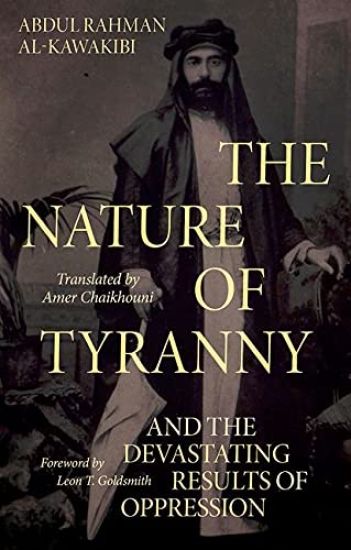
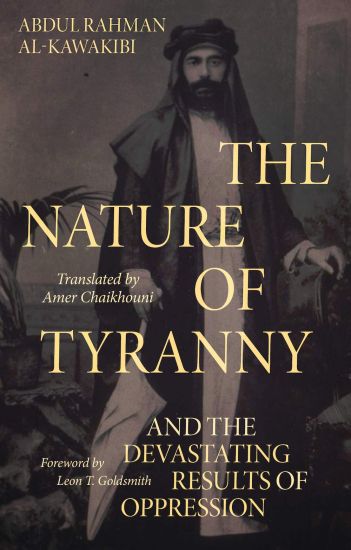
The Nature of Tyranny: And the Devastating Results of Oppression
Abdul Rahman Al-Kawakibi; Amer Chaikhouni
Oxford University Press, USA
2022
sidottu
The Nature of Tyranny was written and published at the dawn of the twentieth century by Abdul Rahman Al-Kawakibi, one of the pioneering thinkers of the Arab world. More than a century later, another Arab awakening exploded, led by a new generation of youth who chanted Al-Kawakibi's words in revolutionary cries from Aleppo, his hometown, to Cairo's Tahrir Square. Today this seminal text appears in English for the first time, with a foreword from Leon T. Goldsmith offering an overview of Al-Kawakibi's intellectual contributions. The first chapter of the text provides a definition of tyranny, presenting it as akin to a sickness or malaise that seeps into all classes of society, leaving behind decay. The following seven chapters apply this conception of tyranny to what Al-Kawakibi sees as society's crucial elements: religion, knowledge, honor, economy, ethics and progress. Having laid a theoretical framework for understanding the centrality of tyranny, its characteristics and its devastating effects, Al-Kawakibi concludes by setting forth a brief program for remedying the 'disease' of tyranny. The final chapter outlines another book in which he had planned to elaborate upon his ideas-but, ultimately, his fate arrived too soon.
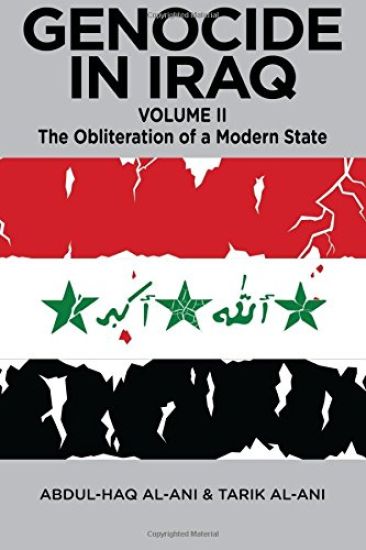
Hussein's trial marked the first time since the UN was created that a head of state had been put on trial by an invading, occupying power. Dr. Al-Ani seeks to alert public attention to the threat this precedent poses to developing nations, and to its distortive influence on international law.
The current horrific malaise in the state of Iraq has its roots in the US-led destruction of Iraq in 1991, followed by a decade of harsh US-led international sanctions against the entire Iraqi population that killed millions -- one of the most heinous crimes of the 20th century. A second "shock and awe" war of aggression on Iraq in 2003 enabled the US/UK military occupation that ensued. Though based on fraudulent pretexts and later admitted as an illegal war by then Secretary-General Kofi Annan, the UN provided a veneer of legitimacy to what in effect would be the obliteration of an effective and functional modern state, redefining its national character via the redrafting of state policies and law, even deliberately sowing seeds that could lead to its future implosion. Volume II of Genocide in Iraq addresses Bremer's introduction of the imperialist design for Iraq as part of a wider strategy for the Middle East. It details the scale of post-2003 destruction and redesign, showing clearly how every step was intended to change Iraq irreversibly to a slave state of extreme neoliberal capitalism. It documents the extent of intentional and ongoing damage as it relates to killing, torture and displacement, cultural cleansing and genocide, and ensuing problems in health, child education, psychological well being, malnutrition, child disabilities, child labor and mortality, as well as drug abuse and the impact on women. It tracks the divestment and disposal of Iraqi oil. These Nuremberg-level crimes are then reviewed in international legal context as the crime of aggression, crimes against humanity, and violations of the most basic of human rights, as it relates to the right of remedy, in the hope of providing guidance to Iraqi individuals or governments seeking recourse in future.
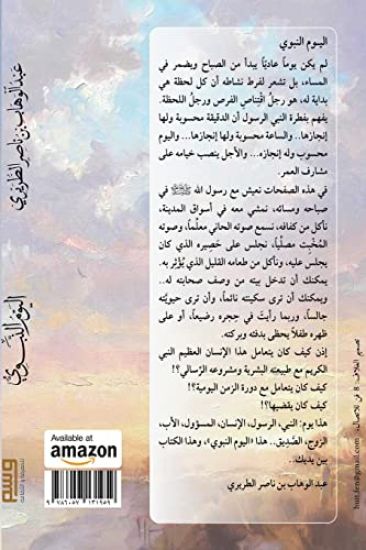
This edition contains a description of the days of the Prophet's life, such as Friday, the day of Eid, the days of Ramadan, the most difficult day, and the happiest day in his life. It also attached drawings and pictures showing the prophetic environment, building, food and dishes.
Die Reinigung der Seele
Abdul-Qadir Al Gilani
Createspace Independent Publishing Platform
2013
nidottu
Vorliegende bersetzung ist eine 41-teilige Reihe von Reden, die der noch heute hochverehrte Sheikh Abdul-Qadir Gilani in Baghdad gehalten hat und die von seinen Sch lern niedergeschrieben wurden. Die Originale der Niederschriften befinden sich teils im Nationalmuseum des Iraq, in der Bibliothek der Moschee nahe des Grabmals von Imam Jilani und in der Bibliothek des Ministeriums f r religi se Angelegenheiten des Iraq. Sie sind eine Hilfe und eine Leitung f r den, der Allahs N he sucht und richten sich an die Wahrhaftigen, von denen es schon zu Zeiten des Imam Gilani nur noch wenige gab. M ge Allah ihm die h chsten R nge des Paradieses zuteil werden lassen
Mesopotamia and Britain: A Study in British Foreign Affairs
Abdul-Haq Al-Ani; W. N. Medlicott; Zaki Saleh
Createspace Independent Publishing Platform
2016
nidottu
A timely book by a very astute Iraqi academic into the history of British foreign policy in the Middle East.Zaki Saleh was Professor and the Head of the Department of History at Baghdad University. Saleh offers a study of over three centuries of the main features of the history of British foreign policy concerning Iraq and its neighbouring Middle Eastern countries. It is a vital reference book to all students of the Middle East.
Called "a major innovator in his art form" by "The New York Times", Baghdad-born poet Abdul Wahab Al-Bayati broke with over fifteen centuries of Arabic poetic tradition to write in free verse and became world famous in the process. "Love, Death, and Exile: Poems Translated from Arabic" is a rare, bilingual facing-page edition in both the original Arabic text and a highly praised English translation by Bassam K. Frangieh, containing selections from eight of Al-Bayati's books of poetry. Forced to spend much of his life in exile from his native Iraq, Al-Bayati created poetry that is not only revolutionary and political, but also steeped in mysticism and allusion, moving and full of longing. This collection is a superb introduction to Al-Bayati, Arabic language, and Arabic literature and culture as well. On Al-Bayati's death in 1999, "The New York Times" obituary quoted him as saying once that his many years of absence from his homeland had been a "tormenting experience" that had great impact on his poetry. "I always dream at night that I am in Iraq and hear its heart beating and smell its fragrance carried by the wind, especially after midnight when it's quiet".
The Nature of Tyranny was written and published at the dawn of the twentieth century by Abdul Rahman Al-Kawakibi, one of the pioneering thinkers of the Arab world. More than a century later, another Arab awakening exploded, led by a new generation of youth who chanted Al-Kawakibi's words in revolutionary cries from Aleppo, his hometown, to Cairo's Tahrir Square. Today this seminal text appears in English for the first time, with a foreword from Leon T. Goldsmith offering an overview of Al-Kawakibi's intellectual contributions. The first chapter of the text provides a definition of tyranny, presenting it as akin to a sickness or malaise that seeps into all classes of society, leaving behind decay. The following seven chapters apply this conception of tyranny to what Al-Kawakibi sees as society's crucial elements: religion, knowledge, honour, economy, ethics and progress. Having laid a theoretical framework for understanding the centrality of tyranny, its characteristics and its devastating effects, Al-Kawakibi concludes by setting forth a brief programme for remedying the 'disease' of tyranny. The final chapter outlines another book in which he had planned to elaborate upon his ideas-but, ultimately, his fate arrived too soon.
Manche bevorzugen es, den Ausdruck "Rabb" mit "Herr" zu bersetzen. Angesichts der Tatsache, dass es sich beim Letzteren um einenbiblischen Ausdruck handelt, der sich angeblich auf den Diener Allahs, denPropheten Jesus, bezieht, w re es besser, das arabische Wort beizubehalten, denn das Wort "Herr", welches sich auf Meister, F hrer, Besitzer oder Herrscherbegrenzt, kann niemals die umfassende Bedeutung des Ausdrucks "Rabb" bermitteln. Im Arabischen bedeutet der Ausdruck "Rabb" der Sch pfer, derGestalter, der Ern hrer, der Einzige, von Dem die M glichkeit der Existenz allerGesch pfe abh ngt, und der Einzige, der Leben gibt und den Tod veranlasst.����������������(Diin) Das Wort, das allgemein als Religion bersetzt wird ist Diin, wasim Arabischen gew hnlich auf eine Lebensart hinweist, die sowohl privat alsauch ffentlich ist. Es umfasst alle Handlungen des Gottesdienstes, politischeVorg nge und detaillierte Angaben zur Lebensf hrung und den Umgang.
(Rabb) Manche bevorzugen es, den Ausdruck "Rabb" mit "Herr"zu bersetzen. Angesichts der Tatsache, dass es sich beim Letzteren umeinen biblischen Ausdruck handelt, der sich angeblich auf den DienerAllahs, den Propheten Jesus, bezieht, w re es besser, das arabische Wortbeizubehalten, denn das Wort "Herr", welches sich auf Meister, F hrer, Besitzer oder Herrscher begrenzt, kann niemals die umfassende Bedeutungdes Ausdrucks "Rabb" bermitteln. Im Arabischen bedeutet der Ausdruck"Rabb" der Sch pfer, der Gestalter, der Ern hrer, der Einzige, von Dem dieM glichkeit der Existenz aller Gesch pfe abh ngt, und der Einzige, derLeben gibt und den Tod veranlasst.دين =(Diin) Das Wort, das allgemein als Religion bersetzt wird ist Diin, was im Arabischen gew hnlich auf eine Lebensart hinweist, die sowohlprivat als auch ffentlich ist. Es umfasst alle Handlungen desGottesdienstes, politische Vorg nge und detaillierte Angaben zurLebensf hrung und den Umgang.