Kirjojen hintavertailu. Mukana 11 342 296 kirjaa ja 12 kauppaa.

Kirjahaku

Etsi kirjoja tekijän nimen, kirjan nimen tai ISBN:n perusteella.

1000 tulosta hakusanalla Adam Thomas

The Poor Man's Guide to Heaven, or the Gospel way of Salvation Plainly Taught. In a Sermon From Titus ii. 11, 12, By the Rev. Thomas Adam
The 18th century was a wealth of knowledge, exploration and rapidly growing technology and expanding record-keeping made possible by advances in the printing press. In its determination to preserve the century of revolution, Gale initiated a revolution of its own: digitization of epic proportions to preserve these invaluable works in the largest archive of its kind. Now for the first time these high-quality digital copies of original 18th century manuscripts are available in print, making them highly accessible to libraries, undergraduate students, and independent scholars.The Age of Enlightenment profoundly enriched religious and philosophical understanding and continues to influence present-day thinking. Works collected here include masterpieces by David Hume, Immanuel Kant, and Jean-Jacques Rousseau, as well as religious sermons and moral debates on the issues of the day, such as the slave trade. The Age of Reason saw conflict between Protestantism and Catholicism transformed into one between faith and logic -- a debate that continues in the twenty-first century.++++The below data was compiled from various identification fields in the bibliographic record of this title. This data is provided as an additional tool in helping to insure edition identification: ++++British LibraryT088400York: printed by and for T. Wilson and R. Spence, 1788. 24p.; 18
Evangelical Sermons. By Thomas Adam,

Evangelical Sermons. By Thomas Adam,

Thomas Adam

Gale Ecco, Print Editions
2018
sidottu
The 18th century was a wealth of knowledge, exploration and rapidly growing technology and expanding record-keeping made possible by advances in the printing press. In its determination to preserve the century of revolution, Gale initiated a revolution of its own: digitization of epic proportions to preserve these invaluable works in the largest archive of its kind. Now for the first time these high-quality digital copies of original 18th century manuscripts are available in print, making them highly accessible to libraries, undergraduate students, and independent scholars.The Age of Enlightenment profoundly enriched religious and philosophical understanding and continues to influence present-day thinking. Works collected here include masterpieces by David Hume, Immanuel Kant, and Jean-Jacques Rousseau, as well as religious sermons and moral debates on the issues of the day, such as the slave trade. The Age of Reason saw conflict between Protestantism and Catholicism transformed into one between faith and logic -- a debate that continues in the twenty-first century.++++The below data was compiled from various identification fields in the bibliographic record of this title. This data is provided as an additional tool in helping to insure edition identification: ++++British LibraryT088399London: printed for J. Buckland; and T. Browne, at Hull, 1781. xliv,377, 1]p.; 8
An Exercise by way of Question and Answer, Preparatory to Confirmation. And Likewise Recommended to the Consideration of Others. By Thomas Adam, ... The Second Edition
The 18th century was a wealth of knowledge, exploration and rapidly growing technology and expanding record-keeping made possible by advances in the printing press. In its determination to preserve the century of revolution, Gale initiated a revolution of its own: digitization of epic proportions to preserve these invaluable works in the largest archive of its kind. Now for the first time these high-quality digital copies of original 18th century manuscripts are available in print, making them highly accessible to libraries, undergraduate students, and independent scholars.The Age of Enlightenment profoundly enriched religious and philosophical understanding and continues to influence present-day thinking. Works collected here include masterpieces by David Hume, Immanuel Kant, and Jean-Jacques Rousseau, as well as religious sermons and moral debates on the issues of the day, such as the slave trade. The Age of Reason saw conflict between Protestantism and Catholicism transformed into one between faith and logic -- a debate that continues in the twenty-first century.++++The below data was compiled from various identification fields in the bibliographic record of this title. This data is provided as an additional tool in helping to insure edition identification: ++++Bodleian Library (Oxford)T190887London: printed by H. Cock, and sold by Messrs. Hitch and Hawes, 1758. 24p.; 12
Practical Lectures on the Church Catechism. By Thomas Adam, ... The Fourth Edition
The 18th century was a wealth of knowledge, exploration and rapidly growing technology and expanding record-keeping made possible by advances in the printing press. In its determination to preserve the century of revolution, Gale initiated a revolution of its own: digitization of epic proportions to preserve these invaluable works in the largest archive of its kind. Now for the first time these high-quality digital copies of original 18th century manuscripts are available in print, making them highly accessible to libraries, undergraduate students, and independent scholars.The Age of Enlightenment profoundly enriched religious and philosophical understanding and continues to influence present-day thinking. Works collected here include masterpieces by David Hume, Immanuel Kant, and Jean-Jacques Rousseau, as well as religious sermons and moral debates on the issues of the day, such as the slave trade. The Age of Reason saw conflict between Protestantism and Catholicism transformed into one between faith and logic -- a debate that continues in the twenty-first century.++++The below data was compiled from various identification fields in the bibliographic record of this title. This data is provided as an additional tool in helping to insure edition identification: ++++British LibraryT142751With a final advertisement leaf.London: printed for Messrs. Hawes, Clarke and Collins, 1763. 2],118, 2]p.; 12
Practical Lectures on the Church-catechism. By Thomas Adam, ... The Fifth Edition. To Which is now Added, An Exercise, by way of Question and Answer, Preparatory to Confirmation
The 18th century was a wealth of knowledge, exploration and rapidly growing technology and expanding record-keeping made possible by advances in the printing press. In its determination to preserve the century of revolution, Gale initiated a revolution of its own: digitization of epic proportions to preserve these invaluable works in the largest archive of its kind. Now for the first time these high-quality digital copies of original 18th century manuscripts are available in print, making them highly accessible to libraries, undergraduate students, and independent scholars.The Age of Enlightenment profoundly enriched religious and philosophical understanding and continues to influence present-day thinking. Works collected here include masterpieces by David Hume, Immanuel Kant, and Jean-Jacques Rousseau, as well as religious sermons and moral debates on the issues of the day, such as the slave trade. The Age of Reason saw conflict between Protestantism and Catholicism transformed into one between faith and logic -- a debate that continues in the twenty-first century.++++The below data was compiled from various identification fields in the bibliographic record of this title. This data is provided as an additional tool in helping to insure edition identification: ++++British LibraryT088405London: printed for Messrs. Hawes, Clarke, and Collins, 1767. 120p.; 12
Intercultural Transfers and the Making of the Modern World, 1800-2000
For far too long, the history of the modern era has been written as a history of isolated nation states. This book which presents both interpretation and primary source documents challenges a nation-centred account, exploring the interconnected and interrelated nature of societies in the nineteenth and twentieth century. Responding to the burgeoning interest and number of courses in global and world history, Intercultural Transfers and the Making of the Modern World introduces both the methods and materials of transnational history. Case studies highlight transnational connections through the examples of cooperatives, housing reform, education, eugenics and non-violent resistance. By embracing the interconnected nature of human history across continents and oceans and by employing the concept of intercultural transfer, Adam explores the roots and global distribution of major transformations and their integration into local, regional, and national contexts. This is an invaluable resource for the study of global, world and transnational history.
Intercultural Transfers and the Making of the Modern World, 1800-2000
For far too long, the history of the modern era has been written as a history of isolated nation states. This book which presents both interpretation and primary source documents challenges a nation-centred account, exploring the interconnected and interrelated nature of societies in the nineteenth and twentieth century. Responding to the burgeoning interest and number of courses in global and world history, Intercultural Transfers and the Making of the Modern World introduces both the methods and materials of transnational history. Case studies highlight transnational connections through the examples of cooperatives, housing reform, education, eugenics and non-violent resistance. By embracing the interconnected nature of human history across continents and oceans and by employing the concept of intercultural transfer, Adam explores the roots and global distribution of major transformations and their integration into local, regional, and national contexts. This is an invaluable resource for the study of global, world and transnational history.
Buying Respectability

Buying Respectability

Thomas Adam

Indiana University Press
2009
sidottu
In 19th-century Leipzig, Toronto, New York, and Boston, a newly emergent group of industrialists and entrepreneurs entered into competition with older established elite groups for social recognition as well as cultural and political leadership. The competition was played out on the field of philanthropy, with the North American community gathering ideas from Europe about the establishment of cultural and public institutions. For example, to secure financing for their new museum, the founders of the Metropolitan Museum of Art organized its membership and fundraising on the model of German art museums. The process of cultural borrowing and intercultural transfer shaped urban landscapes with the building of new libraries, museums, and social housing projects. An important contribution to the relatively new field of transnational history, this book establishes philanthropy as a prime example of the conversion of economic resources into social and cultural capital.
Singularities

Singularities

Thomas Adam Pepper

Cambridge University Press
1997
sidottu
The possibility of literary theory has been repeatedly put at risk by the apparently simple question 'What is a literary text?' Throughout the twentieth century the epistemological status of literature, the problem of language's claim to true representation, has challenged our received notions of ontology and being. Thus the question 'What is literature?' has frequently sponsored highly philosophical interrogations of our inherited ways of comprehending the external world. In Singularities, Thomas Pepper addresses the relationship between textuality, value, and critical difficulty. In a rich sequence of nuanced close readings of especially demanding philosophical and literary texts, Singularities addresses key moments in Adorno, Blanchot, de Man, Derrida, Foucault, Althusser, Levinas and Celan. By offering a critique of the very process of thematic reading, this book addresses the whole question of truth and being, language and value, in a series of readings of sustained critical power.
Singularities

Singularities

Thomas Adam Pepper

Cambridge University Press
1997
pokkari
The possibility of literary theory has been repeatedly put at risk by the apparently simple question ‘What is a literary text?’ Throughout the twentieth century the epistemological status of literature, the problem of language’s claim to true representation, has challenged our received notions of ontology and being. Thus the question ‘What is literature?’ has frequently sponsored highly philosophical interrogations of our inherited ways of comprehending the external world. In Singularities, Thomas Pepper addresses the relationship between textuality, value, and critical difficulty. In a rich sequence of nuanced close readings of especially demanding philosophical and literary texts, Singularities addresses key moments in Adorno, Blanchot, de Man, Derrida, Foucault, Althusser, Levinas and Celan. By offering a critique of the very process of thematic reading, this book addresses the whole question of truth and being, language and value, in a series of readings of sustained critical power.
Converge Bible Studies: Who Is Jesus?

Converge Bible Studies: Who Is Jesus?

Thomas Adam

Abingdon Press
2013
nidottu
Have you ever stopped to think just how much better Jesus Christ knows you than you know him? It's a pretty staggering thought really. Not only that, Jesus knows you better than you know yourself. And although you'll never know Jesus as well as he knows you, part of following the Son of God is getting to know him better. But you don't want to fall into the trap of learning stuff "about" Jesus. Rather, you want to know Jesus himself. This study invites you to get to know four elements of what makes Jesus who he is: his name, his voice, his life, and his peace. In Who Is Jesus? you'll discover that the more you know Jesus, the more Jesus will teach you who you are. Converge Bible Studies is a series of topical Bible studies. Each title in the series consists of four studies on a common topic or theme. Converge can be used by small groups, classes, or individuals. Primary Scripture passages from the Common English Bible are included for ease of study, as are questions designed to encourage both personal reflection and group conversation. The topics and Scriptures in Converge come together to transform readers' relationships with others, themselves, and God.
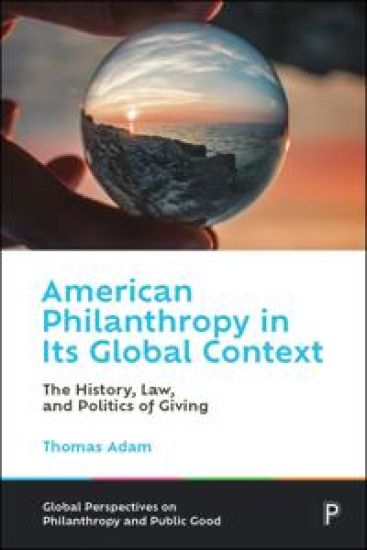
American Philanthropy in Its Global Context

American Philanthropy in Its Global Context

Thomas Adam

Bristol University Press
2025
sidottu
Philanthropy has become a staple of American society and culture. Associations, endowments, foundations, and limited dividend companies have funded education, culture, healthcare, religion, and social welfare. Yet American philanthropy is not as exceptional as it appears to European observers. American philanthropy was built upon European and Mediterranean precedents and evolved through the constant influence of philanthropic practices in other parts of the world. This book explores how philanthropic practices and institutions were introduced into American society and how they were Americanised during the 19th century. It provides a comprehensive history of American philanthropy and positions it within its wider global context.
The History of College Affordability in the United States from Colonial Times to the Cold War
This book examines how tuition and student loans became an accepted part of college costs in the first half of the twentieth century. The author argues that college was largely free to nineteenth-century college students since local and religious communities, donors, and the state agreed to pay the tuition bill in the expectation that the students would serve society upon graduation. College education was essentially considered a public good. This arrangement ended after 1900. The increasing secularization and professionalization of college education as well as changes in the socio-economic composition of the student body—which included more and more students from well-off families—caused educators, college administrators, and donors to argue that students pursued a college degree for their own advancement and therefore should be made to pay for it. Students were expected to pay tuition themselves and to take out student loans in order to fund their education.