Kirjojen hintavertailu. Mukana 11 244 527 kirjaa ja 12 kauppaa.

Kirjahaku

Etsi kirjoja tekijän nimen, kirjan nimen tai ISBN:n perusteella.

1000 tulosta hakusanalla Adams Janus

Adams Family Correspondence

Adams Family Correspondence

Adams Family

Harvard University Press
1992
sidottu
“I cannot O! I cannot be reconcil’d to living as I have done for 3 years past… Will you let me try to soften, if I cannot wholy releave you, from your Burden of Cares and perplexities?” So begins Abigail Adams’s correspondence to her husband in these volumes: a plea to end their long separation, as John Adams represented the United States in Europe while Abigail tended to family and farm in Massachusetts, and passed on to John crucial political information from Congress.In October 1782, the Adams family was as widely scattered as it would ever be, with young John Quincy Adams in St. Petersburg, John at The Hague, and Abigail in Braintree with her daughter and younger sons. With the summer of 1784, however, Abigail would have her fondest wish, as most of the family reunited to spend nearly a year together in Europe. As the Adams family traveled, and as the children came of age, so their correspondence expanded to include an ever larger and more fascinating range of Cultural topics and international figures. The record of this remarkable expansion, these volumes document John Adams’s diplomatic triumphs, his wife and daughter’s participation in the cosmopolitan scenes of Paris and London, and his son John Quincy’s travels in Europe and America. These pages also welcome Thomas Jefferson, who soon became one of Abigail’s closest friends, into the family correspondence. From the intimacies of the children’s education, sentimental and worldly, to the details of the firm friendship between Abigail and Madame Lafayette, to the grand drama of Edmund Burke and William Pitt the Younger debating in Parliament, the contents of these letters draw an incredibly rich picture of international life in the 1780s and an incomparable portrait of America’s first family of politics and letters.
Adams Family Correspondence

Adams Family Correspondence

Adams Family

The Belknap Press
2005
sidottu
This volume continues the incredible family saga of the Adamses of Massachusetts as told through their myriad letters to one another, to their extended family, and to such other notable correspondents as Thomas Jefferson and Mercy Otis Warren. The book opens in January 1786, when John and Abigail resided at Grosvenor Square in London, partaking of the English social scene, while John made slow progress on negotiations for an Anglo-American commercial treaty. Daughter Abigail ("Nabby"), also in London, had begun a courtship with William Stephens Smith that would culminate in their marriage in June 1786. Back in Massachusetts, John Quincy had rejoined his brothers Charles and Thomas, entered Harvard College, and begun to make preparations to study law. Writing back and forth across the Atlantic, the Adamses interspersed observations about their own family life--births and deaths, illnesses and marriages, new homes and new jobs, education and finances--with commentary on the most important social and political events of their day, from the scandals in the British royal family to the deteriorating political situation in Massachusetts that eventually culminated in Shays' Rebellion. As in the previous volumes in this series of the Adams Papers, the correspondence presented here offers a unique perspective on the eighteenth century from a preeminent American family.
Adams Family Correspondence

Adams Family Correspondence

Adams Family

The Belknap Press
2007
sidottu
By early 1787, as this latest volume of the award-winning series Adams Family Correspondence opens, John and Abigail Adams were eagerly planning their return home to Massachusetts from Great Britain, frustrated by John's lack of progress in his diplomatic mission and anxious for a reunion with family and friends. Arriving in Massachusetts in mid-1788, they anticipated a quiet retirement from government service as they returned to running their farm. But they barely had time to settle in before they were pulled back into the public sphere by John's election as the first vice president under the new Constitution. Moving to New York City in 1789 with their daughter Nabby, and her family, John and Abigail found themselves once again center stage in American political life.The Adamses serve as prescient and thoughtful observers of the world around them, from the manners and mores of English court life to the political intrigues of the new federal government in New York. Beyond that wider world, however, these letters observe the more intimate domestic concerns of a New England family. With more of the forthright candor that marks the Adamses' correspondence, this volume offers a unique perspective on a crucial period in American history.
Adams Family Correspondence

Adams Family Correspondence

Adams Family

The Belknap Press
2009
sidottu
The years 1790 to 1793 marked the beginning of the American republic, a contentious period as the nation struggled to create a functioning government amid increasingly bitter factionalism. On the international stage, the turmoil of the French Revolution raised important questions about the nature of government. As usual, the Adams family found itself in the midst of it all. Vice President John Adams chaired Senate sessions even as he was prevented from participating in any meaningful fashion. Abigail joined him when her health permitted, but even from afar she provided important advice and keen observations on politics and society.All four Adams children are well represented here, especially Charles and Thomas Boylston, who, for the first time, appear as correspondents in their own right. Both embarked on legal careers, Charles in New York and Thomas in Philadelphia, while John Quincy did the same in Boston. Daughter Nabby cared for her growing family as her ambitious husband, William Stephens Smith, pursued financial schemes. This volume offers both insight into the family and the frank commentary on life that readers have come to expect from the Adamses.
Adams Family Correspondence

Adams Family Correspondence

Adams Family

The Belknap Press
2011
sidottu
This volume offers over 300 letters from the irrepressible Adamses, including many between John and Abigail never before printed. As always, Adams family members serve as important observers of and commentators on national and international events, from America’s growing tensions with Britain and France to its internal struggles with increasingly virulent political factionalism and the Whiskey Rebellion. John, languishing as vice president in Philadelphia, reported extensively on congressional debates and growing divisions within the Washington administration but also found time to improve his sons’ legal education. Abigail’s letters juxtapose her own political insights with lively accounts of her farm management and the day-to-day happenings in Quincy.The most significant event of the period for the Adams clan was John Quincy’s appointment as U.S. minister resident at The Hague, the beginning of a long and storied diplomatic career. Accompanying him overseas was his brother Thomas Boylston, the only Adams child who had not yet seen Europe. Arriving just as the French Army began its final march into the Netherlands, John Quincy and Thomas Boylston became first-hand observers of the European war and the impact of the French Revolution on the broader society. Back in the United States, Charles continued to build his legal career, expanding his law office and acquiring two clerks, while Nabby’s family grew with the birth of the Adamses’ first granddaughter, Caroline Amelia Smith.
Adams Family Correspondence

Adams Family Correspondence

Adams Family

The Belknap Press
2013
sidottu
The letters in this volume of Adams Family Correspondence span the period from July 1795 to the eve of John Adams’s inauguration, with the growing partisan divide leading up to the election playing a central role. The fiery debate over funding the Jay Treaty sets the political stage, and the caustic exchanges between Federalists and Democratic-Republicans only grow as rumors surface of George Washington’s impending retirement. From Philadelphia, John’s equanimity in reporting to Abigail and his children on the speculation about the presidential successor gives way to expectation and surprise at the voracity of electioneering among political allies and opponents alike. Although remaining in Quincy throughout this period, Abigail offers keen, even acerbic, commentary on these national events.From Europe, John Quincy and Thomas Boylston shed light on the rise of the French Directory, the shifts in the continental war, and the struggles within the Batavian government. Their letters also testify to the broader scale of the U.S. presidential election by chronicling French and British attempts to influence American politics. On a more personal note, John Quincy’s engagement to Louisa Catherine Johnson in London opens the next great collection of correspondence documenting the Adams family saga.
Adams Family Correspondence

Adams Family Correspondence

Adams Family

The Belknap Press
2019
sidottu
John and Abigail Adams’ reflections on an emerging nation as they move into the new President’s House in Washington, D.C., are a highlight of the nearly 280 letters written over seventeen months printed in volume 14 of Adams Family Correspondence. The volume opens with the Adamses’ public and private expressions on the death of George Washington and concludes with John’s defeat in the contentious presidential election of 1800. Electoral College maneuvering, charges of sedition, and state-by-state strategizing are debated by the Adamses and their correspondents as the election advances toward deadlock and finally victory for Thomas Jefferson in the House of Representatives. John’s retirement from public life had some sweet mixed with the bitter. The U.S. mission to France resulted in the Convention of 1800 that ended the Quasi-War and the so-called midnight appointments at the close of his presidency ushered in the transformative U.S. Supreme Court era of John Marshall, a coda anticipated in Abigail’s request to John in the final days of his administration—“I want to see the list of judges.”The domestic life of the Adamses was equally dynamic. Abigail and John endured the crushing loss of their son Charles, whose struggle with alcohol ended in repudiation and death in New York. Son Thomas Boylston and daughter Nabby spent the period in relative stability, while John Quincy chronicled a tour of Silesia in letters home from Europe. At the volume’s close, the correspondence between John and Abigail comes to an end. As they retired to Quincy, their rich observations on the formation of the American republic would continue in letters to others if not to each other.
Adams Family Correspondence

Adams Family Correspondence

Adams Family

The Belknap Press
2022
sidottu
John and Abigail Adams remained fully engaged in American political life after they left Washington, DC, for retirement in Quincy. A highlight of Volume 15 of Adams Family Correspondence is a series of letters between Abigail Adams and Thomas Jefferson that debated fundamental questions of the nation’s tumultuous early years. A new generation rose in prominence in the period covered in the volume, with John Quincy Adams returning from abroad to take a seat in the United States Senate just in time to break with the Federalists and support the Louisiana Purchase. The family commented on other events of the era—Jefferson’s dismantling of John Adams’s judicial reforms, the mobilization of the US Navy for the Barbary wars, the growing bane of British impressment, and the duel that killed Alexander Hamilton.Equally compelling family stories emerge in the volume’s 251 letters. The failure of a British banking firm proved calamitous to the family’s finances, compelling John Quincy to quietly finance his parents’ retirement. Thomas Boylston Adams, acting as an occasional editor of the Port Folio, carved out his public persona as a man of letters. Louisa Catherine Adams wrote of motherhood and adjusting to a new country of residence while providing a spirited perspective on Washington society. As always, the heart of Adams Family Correspondence is Abigail Adams, who survived a near-fatal fall to continue providing letters of insight and wit that once again show why the correspondence of the Adams family is a national treasure.
Adams Family Correspondence

Adams Family Correspondence

HARVARD UNIVERSITY PRESS
2025
sidottu
A growing tension between the United States and Great Britain permeates the 236 letters printed in Volume 16 of Adams Family Correspondence. The Embargo Act of 1807 cut off trade with the British in response to the harassment of American ships. John and Abigail Adams witnessed their neighbors’ ensuing economic hardships and felt the sting of knowing that their son played a role in its passage. The efforts of US Senator John Quincy Adams to balance conscience with party and family loyalties are revealed in earnest correspondence, culminating in his resignation in the face of withering Federalist criticism. Louisa Catherine Adams’s loyalties were always with her senator husband, though her attentions were focused on raising their children. Family concerns also occupied Thomas Boylston Adams. He married Ann Harrod, and together they added two children to the growing flock under Abigail’s wing at Peacefield.Farther afield was the Adamses’ daughter, Nabby, who from New York shepherded her maturing sons through school and into adulthood. Nabby’s son William was caught up in foreign intrigue when he joined an expedition of Francisco de Miranda aimed at liberating Venezuela from Spanish rule. To the relief of all the Adamses, William safely returned home. In the background of all these activities was the concern of the Adamses and of all Americans who wondered if the young republic would survive a military test with Britain. The letters printed in this volume tell these stories and more, providing invaluable commentary by the people who again experienced uncertain days in the early American republic.
Adams Family Correspondence

Adams Family Correspondence

Adams Family

The Belknap Press
2015
sidottu
Volume 12 of Adams Family Correspondence, with 276 documents spanning from March 1797 through April 1798, opens with the inauguration of John Adams as president and closes just after details of the XYZ affair are made public in America. Through private networks of correspondence, the Adamses reveal both their individual concerns for the well-being of the nation and the depth of their public and political engagement with the republic. Abigail’s letters to friend and foe demonstrate the important role she played as an unofficial member of the administration. John Quincy and Thomas Boylston’s letters from The Hague, Paris, London, and finally Berlin offer keen observations about the political turmoil in France and its consequences, the shifting European landscape as a result of the war, and court life in Berlin following the coronation of Frederick William III.In the midst of crisis, the family’s domestic life and personal connections challenged and sustained them. The marriage of John Quincy and Louisa Catherine Johnson in London in July 1797 gave the family cause for celebration, while John’s appointment of John Quincy as U.S. minister to Prussia created a minor rift as the scrupulous younger Adams struggled with concerns about nepotism. Visits between the elder Adamses and their children Nabby and Charles in New York provided welcome distractions, even as John and Abigail worried about Nabby’s domestic situation. With the characteristic candor and perception expected from the Adamses, this volume again features forthright commentary from one family at the center of it all.
Adams Family Correspondence

Adams Family Correspondence

Adams Family

The Belknap Press
2017
sidottu
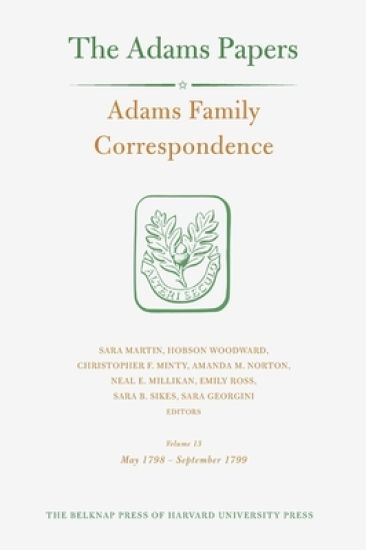
The almost 300 letters in volume 13 of Adams Family Correspondence were written during seventeen tumultuous months of John Adams’s presidency. Consumed with executive duties, he depended on surrogates for much of his correspondence with family members. From Quincy, an ailing Abigail Adams wrote frequent letters to Philadelphia and received lively responses from son Thomas Boylston and the president’s secretary, nephew William Smith Shaw. These letters attest to John’s popularity in the wake of the XYZ Affair. However, they also chronicle passage of the Alien and Sedition Acts and the Kentucky and Virginia Resolutions, which laid the groundwork for future debates on the relative roles of state and federal governments. Following the break in diplomacy with France, John sensed a change in the footing of the French, acted unilaterally in ordering a second mission to seek a negotiated settlement of the Quasi-War, and faced widespread skepticism about his foreign policy as his envoys departed for Europe.John and Abigail lamented yet another absence from each other. After completing service in Berlin as secretary to diplomat John Quincy, Thomas Boylston established himself as a Philadelphia lawyer, offering thoughtful commentary on political life in the capital. From his post in Prussia, John Quincy struggled with his brother Charles’s mismanagement of his financial affairs, but his letters also provide detailed updates on developments in Europe, including Napoleon’s invasion of Egypt. The candid letters of John and Abigail Adams and their children offer a rich perspective on life in America during its infancy.
Adams of Fleet Street, Instrument Makers to King George III

Adams of Fleet Street, Instrument Makers to King George III

John R. Millburn

Ashgate Publishing Limited
2000
sidottu
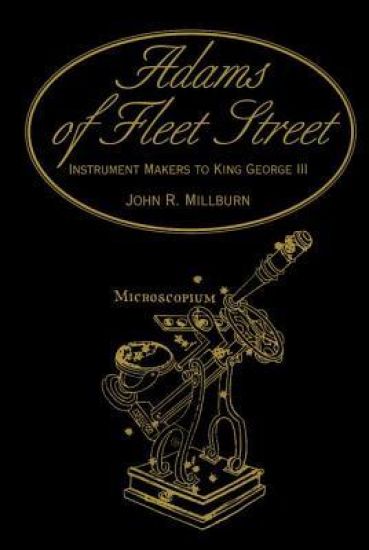
’G. Adams in Fleet Street London’ is the signature on some of the finest scientific instruments of the eighteenth century. This book is the first comprehensive study of the instrument-making business run by the Adams family, from its foundation in 1734 to bankruptcy in 1817. It is based on detailed research in the archival sources as well as examination of extant instruments and publications by George Adams senior and his two sons, George junior and Dudley. Separate chapters are devoted to George senior’s family background, his royal connections, and his new globes; George junior’s numerous publications, and his dealings with van Marum; and to Dudley’s dabbling with ’medico-electrical therapeutics’. The book is richly illustrated with plates from the Adams’s own publications and with examples of instruments ranging from unique museum pieces - such as the ’Prince of Wales’ microscope - and globes to the more common, even mundane, items of the kind seen in salesrooms and dealers - the surveying, navigational and military instruments that formed the backbone of the business. The appendices include facsimiles of trade catalogues and an annotated short-title listing of the Adams family’s publications, which also covers American and Continental editions, as well as the posthumous ones by W. & S. Jones.
Adams Ceramics

Adams Ceramics

David A. Furniss

Schiffer Publishing Ltd
1999
sidottu
By studying primary source material, the authors have compiled the most authentic and readable record of the prolific Adams ceramic wares from England, including earthenware, bone china, jasper, stoneware, basalt, and Parian made over a 200 year period. Over 1250 color photographs illustrate the comprehensive text. Ceramics historians and collectors, archaeologists, antiques dealers, museum curators, and auctioneers everywhere will find this unique and complete study of the Adams potteries to be the essential reference.
Adams and Jefferson

Adams and Jefferson

Merrill Peterson; Andrew Burstein

UNIVERSITY OF GEORGIA PRESS
2021
nidottu
Adams and Jefferson: A Revolutionary Dialogue documents the public lives and personal friendship of John Adams and Thomas Jefferson, from their first meeting as delegates to the Second Continental Congress to their deaths on the fiftieth anniversary of the Declaration of Independence. This study takes a look at some of the famous correspondence between the two statesmen who devoted their lives to a new chapter of freedom and self-government.Peterson draws an extended parallel between the backgrounds, experiences, personalities, and intellectual styles of Adams and Jefferson and examines their work in the achievement of independence and the design of new governments for Massachusetts and Virginia. While Adams and Jefferson had much in common, their ideas of human nature, history, society, and government included many differences that would reveal themselves in the course of time. Merrill D. Peterson looks at Adams and Jefferson’s relationship across their lives, including their disputes in the midst of the coming French Revolution, their excitement for the establishment of a new American government under the Constitution, their contest for the presidency in 1796, and their eventual reconciliation.The Georgia Open History Library has been made possible in part by a major grant from the National Endowment for the Humanities: Democracy demands wisdom. Any views, findings, conclusions, or recommendations expressed in this collection, do not necessarily represent those of the National Endowment for the Humanities.
Adams and Jefferson

Adams and Jefferson

Merrill Peterson; Andrew Burstein

UNIVERSITY OF GEORGIA PRESS
2021
sidottu
Adams and Jefferson: A Revolutionary Dialogue documents the public lives and personal friendship of John Adams and Thomas Jefferson, from their first meeting as delegates to the Second Continental Congress to their deaths on the fiftieth anniversary of the Declaration of Independence. This study takes a look at some of the famous correspondence between the two statesmen who devoted their lives to a new chapter of freedom and self-government.Peterson draws an extended parallel between the backgrounds, experiences, personalities, and intellectual styles of Adams and Jefferson and examines their work in the achievement of independence and the design of new governments for Massachusetts and Virginia. While Adams and Jefferson had much in common, their ideas of human nature, history, society, and government included many differences that would reveal themselves in the course of time. Merrill D. Peterson looks at Adams and Jefferson’s relationship across their lives, including their disputes in the midst of the coming French Revolution, their excitement for the establishment of a new American government under the Constitution, their contest for the presidency in 1796, and their eventual reconciliation.The Georgia Open History Library has been made possible in part by a major grant from the National Endowment for the Humanities: Democracy demands wisdom. Any views, findings, conclusions, or recommendations expressed in this collection, do not necessarily represent those of the National Endowment for the Humanities.
Adams' Synchronological Chart Or Map Of History - Teacher's
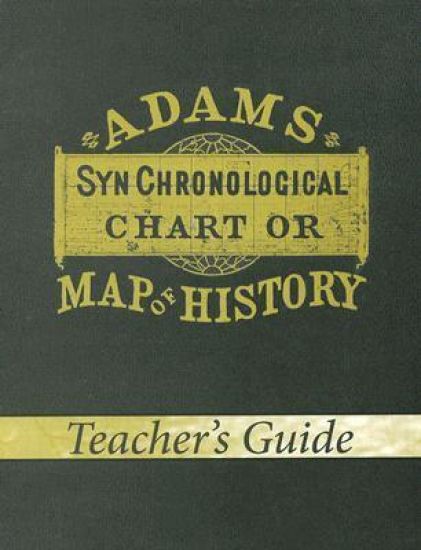
Integrate into your educational program This modern teacher's guide will help you make the most of your Adams' Chart of History. Filled with suggested activities, sample skill tests, and ideas it makes it easy to utilize this great resource in your educational program in a variety of topic areas. This guide takes you deep into the time-line highlighting features and providing discussion topics to engage students of all ages in this unique journey through history "
Adams County, Mississippi 1802-1804, Minutes of the Court.

Adams County, Mississippi 1802-1804, Minutes of the Court.

Work Projects Administration

Southern Historical Press
2017
nidottu
By: Work Projects Administration, Orig. Pub. 1942, Reprinted 2017, 284 pages, Index, ISBN #0-89308-421-2.The Mississippi Territory was created in 1798 and shortly thereafter Adams County was created in 18 . It lies in the Southwestern corner of the state boarding Lousiana and Florida, and is refered to as the Natchez District. It is the parent county for: Amite, Franklin, and Wilkinson.
Adams of the Bounty

Adams of the Bounty

Erle Wilson

Hassell Street Press
2021
sidottu
This work has been selected by scholars as being culturally important and is part of the knowledge base of civilization as we know it.This work is in the public domain in the United States of America, and possibly other nations. Within the United States, you may freely copy and distribute this work, as no entity (individual or corporate) has a copyright on the body of the work.Scholars believe, and we concur, that this work is important enough to be preserved, reproduced, and made generally available to the public. To ensure a quality reading experience, this work has been proofread and republished using a format that seamlessly blends the original graphical elements with text in an easy-to-read typeface.We appreciate your support of the preservation process, and thank you for being an important part of keeping this knowledge alive and relevant.