

Kirjahaku
Etsi kirjoja tekijän nimen, kirjan nimen tai ISBN:n perusteella.
1000 tulosta hakusanalla Adolf Harnack


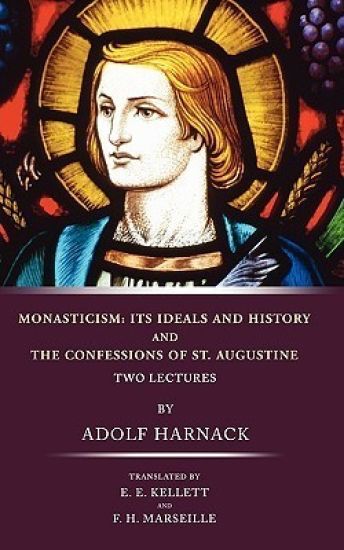
Adolf Harnack was a prodigious writer. Known primarily for his ground-breaking 'History of Dogma', Harnack also penned a score of essays. Here are two of his most popular and interesting shorter works on monasticism and Augustine's 'Confessions'.
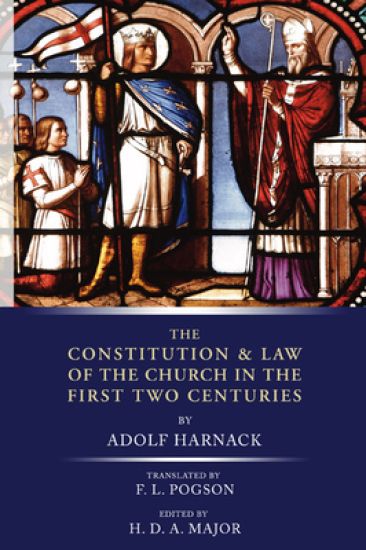
Constitution and Law of the Church in the First Two Centuries
Adolf Harnack
Wipf Stock Publishers
2004
pokkari
Adolf von Harnack (1851-1930) is recognized as one of the outstanding church historians of his day. He was Professor of Church History successively in the universities of Leipzig, Giessen, Marburg, and Berlin. His great work, A History of Dogma, has exerted an important influence upon modern theological study. Other titles translated into English include A History of the Expansion of Christianity, The Apostles Creed, and The Acts of the Apostles.
Trieste Publishing has a massive catalogue of classic book titles. Our aim is to provide readers with the highest quality reproductions of fiction and non-fiction literature that has stood the test of time. The many thousands of books in our collection have been sourced from libraries and private collections around the world.The titles that Trieste Publishing has chosen to be part of the collection have been scanned to simulate the original. Our readers see the books the same way that their first readers did decades or a hundred or more years ago. Books from that period are often spoiled by imperfections that did not exist in the original. Imperfections could be in the form of blurred text, photographs, or missing pages. It is highly unlikely that this would occur with one of our books. Our extensive quality control ensures that the readers of Trieste Publishing's books will be delighted with their purchase. Our staff has thoroughly reviewed every page of all the books in the collection, repairing, or if necessary, rejecting titles that are not of the highest quality. This process ensures that the reader of one of Trieste Publishing's titles receives a volume that faithfully reproduces the original, and to the maximum degree possible, gives them the experience of owning the original work.We pride ourselves on not only creating a pathway to an extensive reservoir of books of the finest quality, but also providing value to every one of our readers. Generally, Trieste books are purchased singly - on demand, however they may also be purchased in bulk. Readers interested in bulk purchases are invited to contact us directly to enquire about our tailored bulk rates.
2011 Reprint of 1901 Edition. Full facsimile of the original edition, not reproduced with Optical Recognition Software. Adolf von Harnack (1851-1930), was a German theologian and prominent church historian. He produced many religious publications from 1873-1912. This work is a history of early Christian literature down to Eusebius of Caesarea, Harnack traced the influence of Hellenistic philosophy on early Christian writing and called on Christians to question the authenticity of doctrines that arose in the early Christian church. He rejected the historicity of the gospel of John in favor of the synoptic gospels, criticized the Apostles' Creed, and promoted the Social Gospel.
This classic by Harnack was an epoch-making historical work that set the standard for any history of doctrinal development. Harnack locates the origins and traces the development of the authoritative Christian doctrinal system from its beginnings down to the Reformation, with a brief survey of later developments through 1870.
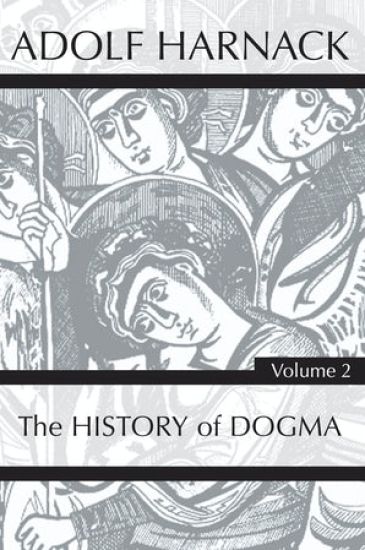
This classic by Harnack was an epoch-making historical work that set the standard for any history of doctrinal development. Harnack locates the origins and traces the development of the authoritative Christian doctrinal system from its beginnings down to the Reformation, with a brief survey of later developments through 1870.
This classic by Harnack was an epoch-making historical work that set the standard for any history of doctrinal development. Harnack locates the origins and traces the development of the authoritative Christian doctrinal system from its beginnings down to the Reformation, with a brief survey of later developments through 1870.
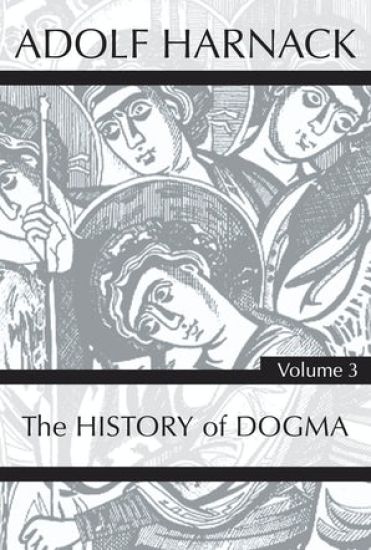
This classic by Harnack was an epoch-making historical work that set the standard for any history of doctrinal development. Harnack locates the origins and traces the development of the authoritative Christian doctrinal system from its beginnings down to the Reformation, with a brief survey of later developments through 1870.
This classic by Harnack was an epoch-making historical work that set the standard for any history of doctrinal development. Harnack locates the origins and traces the development of the authoritative Christian doctrinal system from its beginnings down to the Reformation, with a brief survey of later developments through 1870.
This classic by Harnack was an epoch-making historical work that set the standard for any history of doctrinal development. Harnack locates the origins and traces the development of the authoritative Christian doctrinal system from its beginnings down to the Reformation, with a brief survey of later developments through 1870.
This classic by Harnack was an epoch-making historical work that set the standard for any history of doctrinal development. Harnack locates the origins and traces the development of the authoritative Christian doctrinal system from its beginnings down to the Reformation, with a brief survey of later developments through 1870.
This classic by Harnack was an epoch-making historical work that set the standard for any history of doctrinal development. Harnack locates the origins and traces the development of the authoritative Christian doctrinal system from its beginnings down to the Reformation, with a brief survey of later developments through 1870.
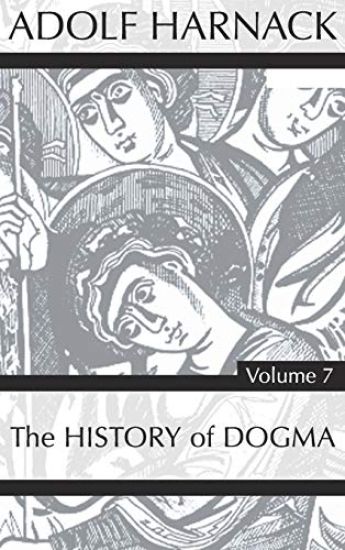
This classic by Harnack was an epoch-making historical work that set the standard for any history of doctrinal development. Harnack locates the origins and traces the development of the authoritative Christian doctrinal system from its beginnings down to the Reformation, with a brief survey of later developments through 1870.