

Kirjahaku
Etsi kirjoja tekijän nimen, kirjan nimen tai ISBN:n perusteella.
1000 tulosta hakusanalla Alain Avanti
L'Instruction Primaire En France Avant La Révolution (Éd.1881)
Ernest Allain
Hachette Livre - BNF
2012
pokkari

Les Déterminants Du Délai Avant La Première Naissance
Abdirahman Osman Alin
Editions Notre Savoir
2024
pokkari
La situation actuelle en Somalie en ce qui concerne l' ge du mariage et le calendrier des grossesses s' carte des normes et recommandations mondiales. Les mariages d'enfants sont fr quents, un pourcentage important de femmes tant mari es avant l' ge de 18 ans. L' tude cherche combler cette lacune en identifiant les facteurs contribuant aux mariages et aux grossesses pr coces, dans le but de promouvoir la sensibilisation et de mettre en oeuvre des interventions susceptibles d'am liorer les r sultats en mati re de sant g n sique. Enfin, l' tude cherche fournir des informations sur les moteurs de la maternit pr coce et contribuer une meilleure compr hension de la question afin d' clairer les politiques et les interventions visant retarder l' ge de la premi re naissance.
Contribution A L'Histoire De L'Instruction Primaire Dans La Gironde Avant La Revolution (1895)
Ernest Allain
KESSINGER PUBLISHING, LLC
2010
pokkari
Contribution À l'Histoire de l'Instruction Primaire Dans La Gironde Avant La Révolution (Éd.1895)
Ernest Allain
Hachette Livre - BNF
2012
pokkari

Contribution À l'Histoire de l'Instruction Primaire Dans La Gironde Avant La Révolution
Ernest Allain
Hachette Livre - BNF
2017
pokkari

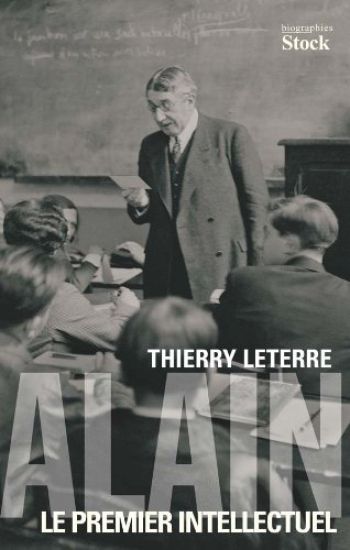
Alain
LIBRAIRIE ARTHEME FAYARD
2012
muu
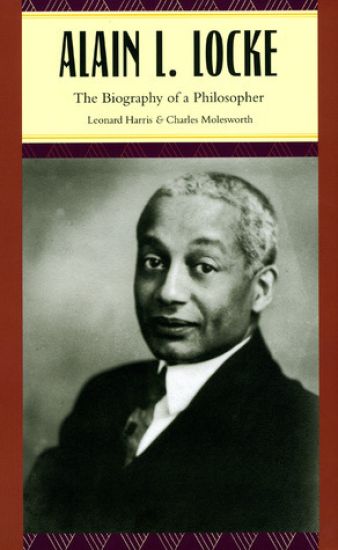
Alain L. Locke, in his famous 1925 anthology "The New Negro", declared that 'the pulse of the Negro world has begun to beat in Harlem'. The first biography of this extraordinarily gifted philosopher and writer, Alain L. Locke narrates the untold story of his profound impact on twentieth-century America's cultural and intellectual life. The heart of this narrative illuminates Locke's heady years in 1920s New York City and his forty-year career at Howard University, where he helped spearhead the adult education movement of the 1930s and wrote on topics ranging from the philosophy of value to the theory of democracy.
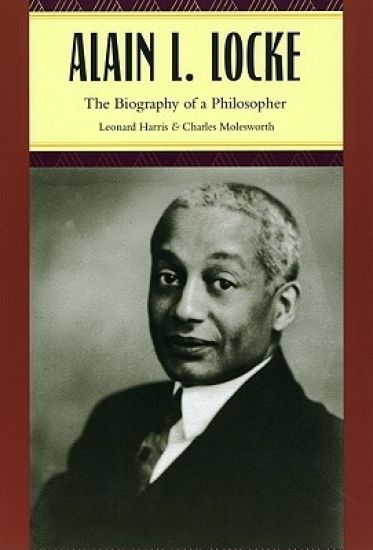
Alain L. Locke, in his famous 1925 anthology "The New Negro", declared that 'the pulse of the Negro world has begun to beat in Harlem'. The first biography of this extraordinarily gifted philosopher and writer, Alain L. Locke narrates the untold story of his profound impact on twentieth-century America's cultural and intellectual life. The heart of this narrative illuminates Locke's heady years in 1920s New York City and his forty-year career at Howard University, where he helped spearhead the adult education movement of the 1930s and wrote on topics ranging from the philosophy of value to the theory of democracy.
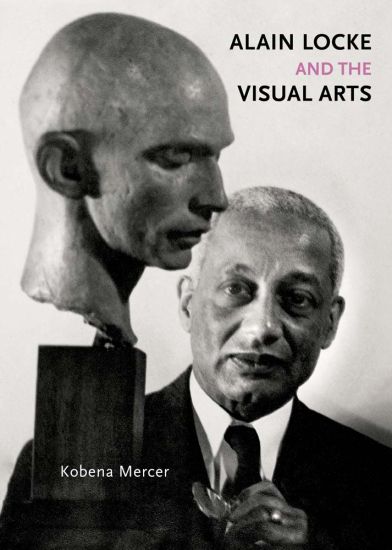
A fresh perspective on the influential critic, offering new ways of understanding the art of the Harlem Renaissance “Mercer’s sumptuously illustrated study . . . succeeds in positioning Locke as an important philosophical voice in the ‘not yet finalized story of Afro-modern art and culture.’”—Douglas Field, Times Literary Supplement Alain Locke (1885–1954), leading theorist of the Harlem Renaissance, maintained a lifelong commitment to the visual arts. Offering an in-depth study of Locke’s writings and art world interventions, Kobena Mercer focuses on the importance of cross-cultural entanglement. This distinctive approach reveals Locke’s vision of modern art as a dynamic space where images and ideas generate new forms under the fluid conditions of diaspora. Positioning the philosopher as an advocate for an Afromodern aesthetic that drew from both formal experiments in Europe and the iconic legacy of the African past, Mercer shows how Aaron Douglas, Loïs Mailou Jones, and other New Negro artists acknowledged the diaspora’s rupture with the ancestral past as a prelude to the rebirth of identity. In his 1940 picture book, The Negro in Art, Locke also explored the different ways black and white artists approached the black image. Mercer’s reading highlights the global mobility of black images as they travel across national and ethnic frontiers. Finally, Mercer examines how Locke’s investment in art was shaped by gay male aestheticism. Black male nudes, including works by Richmond Barthé and Carl Van Vechten, thus reveal the significance of queer practices in modernism’s cross-cultural genesis. Published in association with the Hutchins Center for African & African American Research, Harvard University

Washington provides the first systematic critical look at the life and work of Alain Locke, an important American philosopher, in the context of a thoroughgoing analysis of the values, ideals, aspirations, and problems of the Black community. Alain Locke contributed significantly to the twentieth-century dialogue on ethics and society. Drawing particularly on the work of William James and Josiah Royce, Locke was perhaps the first to bring philosophy to bear on the problems of race relations and social justice in a multiracial society. He argued that racial problems in the United States stem from the fact that white Americans hold up their values as the only controlling and only acceptable model, to which other groups are forced to conform. First discussing what is meant by Black philosophy and what its concerns include, the author examines Locke's philosophic interpretation of Black America's historical experience, contributions to culture, and struggles for social justice. He provides a critique of Locke's model of the political community, with special reference to the work of Hannah Arendt. Looking at the impact of Locke, DuBois, and others on the Black community, he discusses their relation to the Black Elite, their encouragement of Black artists and their positions on educational issues such as teaching Black history, parity for Blacks, and school desegregation. Other subjects considered are the New Negro, the Harlem Renaissance, African art and culture, and Locke's views in light of changes that have occurred since his death in 1954.An important work on a philosopher whose insights are of continuing significance today, this book will be of interest for Afro-American studies, as well as for courses on American philosophy and American social and intellectual history.
Alain Robbe-Grillet had traditionally been seen as an austere experimentalist in fiction, addicted to arid and interminable descriptions of objects like coffee pots, erasers and pieces of string. His own rather bellicose theoretical pronouncements were partly to blame for this unattractive picture, belied by the immense popular success of the film Last Year at Marienbad (1961) (made by Alain Resnais from Robbe-Grillet’s script) and the high critical esteem in which novels like Jealousy and The Voyeur are held. In his original study, first published in 1983, John Fletcher attempts to resolve this paradox by offering a new interpretation of Robbe-Grillet’s work which stresses the subversive qualities of his imagination and the disturbing power of his vision of a world of labyrinths and bizarre sexual stereotypes, haunted by images of love and loss.

Alain Robbe-Grillet had traditionally been seen as an austere experimentalist in fiction, addicted to arid and interminable descriptions of objects like coffee pots, erasers and pieces of string. His own rather bellicose theoretical pronouncements were partly to blame for this unattractive picture, belied by the immense popular success of the film Last Year at Marienbad (1961) (made by Alain Resnais from Robbe-Grillet’s script) and the high critical esteem in which novels like Jealousy and The Voyeur are held. In his original study, first published in 1983, John Fletcher attempts to resolve this paradox by offering a new interpretation of Robbe-Grillet’s work which stresses the subversive qualities of his imagination and the disturbing power of his vision of a world of labyrinths and bizarre sexual stereotypes, haunted by images of love and loss.
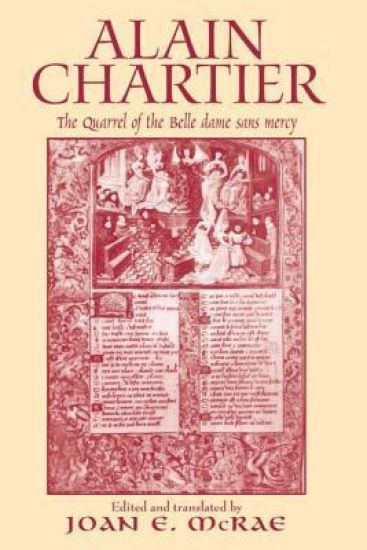
Alain Chartier
Routledge
2004
sidottu
Belle dame sans merci (Beautiful lady with no mercy) (1424) is not readily available in moden English translation elsewhere, making this an essential addition to any library with a medieval literature or French literature collection.
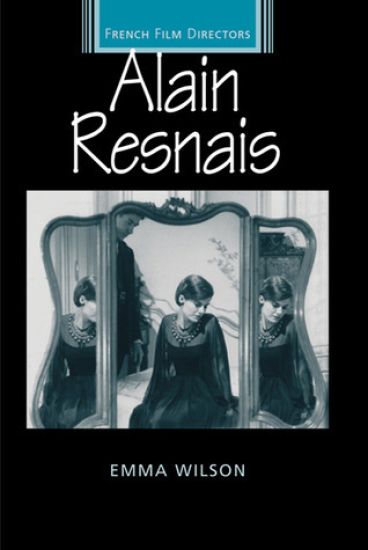
Alain Resnais, director of 'Hiroshima mon amour' (1959) and 'L'Annee derniere a Marienbad' (1961), has transformed the representation of memory, fantasy and desire in modern cinema. This illuminating introduction to his work, extending from his earliest documentaries to the musical films of the last decade, traces the evolving patterns of his filmmaking, its changing reflections on mortality, guilt, chance and human doubt. Exploring questions of the time-image, of trauma, of the senses, this volume sets Resnais' films in the context of important current debates in film theory, and provides a concise account of critical discussions of his work in France and beyond. Yet it also offers a highly personal and detailed engagement with individual images and scenes in Resnais' films. A passionate and partial defence of Resnais' work, old and new, this volume stands apart in its attention to the more tangible and moving pleasures of his films, their pathos, rigour and visual beauty.
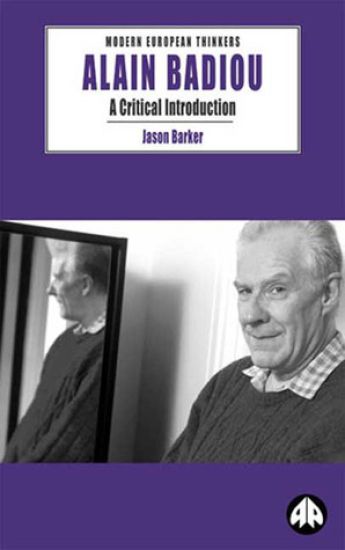
Alain Badiou is rapidly emerging as one of the most radical and influential philosophers of our time. Badiou opposes the contemporary reduction of philosophy to nothing but a matter of language and premature announcements of the end of philosophy and thus sets himself against both analytic and continental modes of philosophy. Setting the traditional platonic concerns of philosophy, truth and being, against the modern sophists of postmodernism, Badiou has articulated a powerful systematic philosophy with profound ethical and political consequences.

Alain Badiou is rapidly emerging as one of the most radical and influential philosophers of our time. Badiou opposes the contemporary reduction of philosophy to nothing but a matter of language and premature announcements of the end of philosophy and thus sets himself against both analytic and continental modes of philosophy. Setting the traditional platonic concerns of philosophy, truth and being, against the modern sophists of postmodernism, Badiou has articulated a powerful systematic philosophy with profound ethical and political consequences.
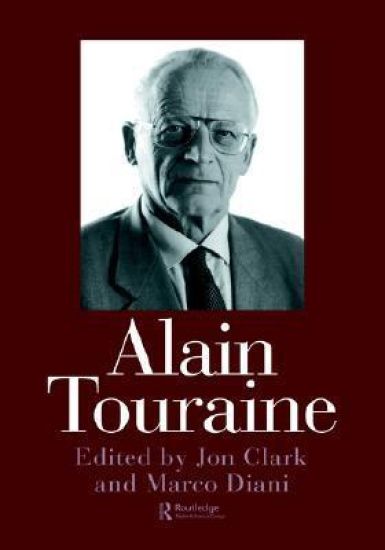
Alain Touraine
Routledge Falmer
1996
sidottu
First published in 2004. The seventeen essays in this volume discuss the work of Alain Touraine and consider his contribution to the social sciences. The text includes his most recent thinkings on the market and communities.