The only available book on the church-sponsored children's home, this work brings together in one volume, for board members, church groups, and staff, a collection of fourteen papers given by Dr. Keith-Lucas to denominational and regional groups from Florida to Texas during the past six years. Dr. Keith-Lucas is Alumni Distinguished Professor of Social Work and director of the Group Child Care Project in The University of North Carolina at Chapel Hill.A UNC Press Enduring Edition -- UNC Press Enduring Editions use the latest in digital technology to make available again books from our distinguished backlist that were previously out of print. These editions are published unaltered from the original, and are presented in affordable paperback formats, bringing readers both historical and cultural value.
Kendall's Advanced Theory of Statistics and Kendall's Library of Statistics The development of modern statistical theory is reflected in the history of the late Sir Maurice Kenfall's volumes, The Advanced Theory of Statistics. This landmark publication began life as a two-volume work and grew steadily as a single-authored work until the 1950s. In this edition, there is new material on skewness and kurtosis, hazard rate distribution, the bootstrap, the evaluation of the multivariate normal integral and ratios of quadratic forms. It also includes over 200 new references, 40 new exercises, and 20 further examples in the main text.
The development of statistical theory in the past fifty years is faithfully reflected in the history of the late Sir Maurice Kendall’s volumes The Advanced Theory of Statistics. The Advanced Theory began life as a two volume work (Volume 1, 1943; Volume 2, 1946) and grew steadily, as a single authored work until the late fifties. At that point Alan Stuart became involved and the Advanced Theory was rewritten in three volumes. When Keith Ord joined in the early eighties, Volume 3 became the largest and plans were developed to expand it into a series of monographs called the Kendall's Library of Statistics which would devote a book to each of the modern developments in statistics. This series is well on the way with 5 titles in print and a further 7 on the way. A new volume on Bayesian Inference was also commissioned from Tony O'Hagan and published in 1994 as Volume 2B of the Advanced Theory. This Volume 2A is therefore the completely updated Volume 2 - Classical Inference and Relationship. A new author, Steven Arnold, was invited to join Keith Ord and they have between them produced a work of the highest quality. References have been updated and material revised throughout. A new chapter on the linear model and least squares estimation has been added.
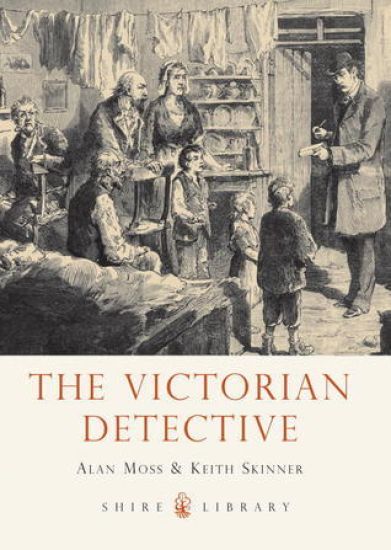
At the dawn of the Victorian age there was effectively no police detective force in Britain and detecting methods were rudimentary; by the end of Victoria’s reign the Criminal Investigation Department had been established and basic forensic tests were in use. This book explores the development of the professional detective during the nineteenth century, giving examples of the methods he used to track down criminals and to convict them of offences ranging from petty theft to brutal murder. It also explains the development of forensics, from fingerprinting to tests that could identify whether or not blood was human. Mysteries such as the Jack the Ripper murders are examined, as well as the work of famous sleuths like the ‘Prince of Detectives’ Jonathan Whicher – the real-life counterpart of the legendary Sherlock Holmes.
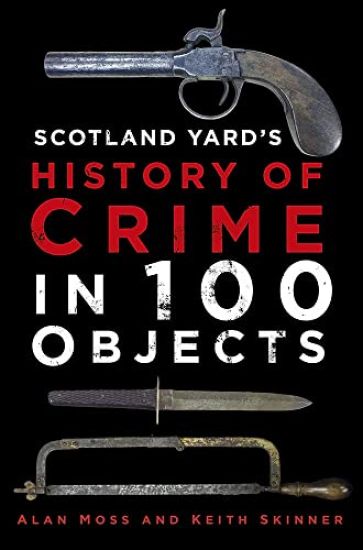
Explore Britain’s dark criminal history through the fascinating objects that have been hidden away in the Crime Museum at Scotland Yard, a collection that, although world-famous, is so sensitive it is not open to public view. Each object tells its own story: the briefcase with a concealed syringe owned by the notorious Kray twins; the gun Ruth Ellis used to murder her lover David Blakely; a burnt-out computer from the Glasgow airport car bomb; a picture from the property of Dennis Nilsen of the grisly drain that was blocked with human body parts; and the gun that Edward Oxford fired at Queen Victoria that failed to assassinate her.Updated to feature new objects that have entered the collection since 2015, Scotland Yard’s History of Crime in 100 Objects is an absorbing, sometimes shocking and often disturbing journey through criminal history. Peer within to experience a unique insight into the crimes and criminals dealt with by Scotland Yard.
First published in 1998, this volume is based upon the files of the Royal Commission on the Electoral System plus extensive interviews with the Commissioners, cabinet ministers, MPs and officials, as well as leaders of the principal pressure groups. It seeks to place this highly important change in context, reviewing both the long-term trends and shorter term considerations which led to the adoption of MMP, as well as the immediate consequences It is an axiom of political science that whatever promises political parties may make about electoral reform, as governments they do not kick away the ladder that brought them to power.This book seeks to discover how and why that axiom was disregarded in New Zealand, and, above all, how a reputedly conservative party was ultimately responsible for the change. It provides an object lesson in both how, and how not to change an electoral system and should be of particular interest in countries with simple plurality electoral systems.
First published in 1998, this volume is based upon the files of the Royal Commission on the Electoral System plus extensive interviews with the Commissioners, cabinet ministers, MPs and officials, as well as leaders of the principal pressure groups. It seeks to place this highly important change in context, reviewing both the long-term trends and shorter term considerations which led to the adoption of MMP, as well as the immediate consequences It is an axiom of political science that whatever promises political parties may make about electoral reform, as governments they do not kick away the ladder that brought them to power.This book seeks to discover how and why that axiom was disregarded in New Zealand, and, above all, how a reputedly conservative party was ultimately responsible for the change. It provides an object lesson in both how, and how not to change an electoral system and should be of particular interest in countries with simple plurality electoral systems.
The glory days of rock from the perspective of Canada’s original music magazine. The story of Music Express is told through the unique perspective of Keith Sharp, the magazine’s founder and editor. During its seventeen-year existence, Music Express rose from a small, Calgary-based regional magazine to an international publication. The interviews, anecdotes, and stories cover the golden era of Canadian music, with the rise to global status of such icons as Bryan Adams, Loverboy, Rush, Celine Dion, and Triumph. Their stories, as well as many more, are captured together with an array of classic rock photography that provides a unique time capsule. From Sharp’s Calgary roots in 1976 to the heady heights of his publication’s growth, he details foreign adventures covering the likes of David Bowie in Australia, KISS in West Germany, and Iron Maiden in Poland, along with other high-profile interviews including U2, Paul McCartney, Iron Maiden, and Rod Stewart.
The biggest baddest DC Universe Bounty Hunter has arrived in a big ol compendium written by Lobo creator Keith Giffen. Everyone s favorite bastich gets his own series of fraggin compendiums that are just as big and bombastic as the Main Man himself! Collects Lobo (miniseries) #1-4,Lobo #0-9, Lobo Annual #1-2, Lobo Paramilitary Christmas Special #1, Lobo s Back #1-4,Lobo: Blazing Chain of Love #1, Lobo: Infanticide #1-4, Lobo: Portrait of a Victim #1,Lobo: Unamerican Gladiators #1-4, Lobo Convention Special #1, Lobo: A Contract onGawd #1-4, Lobo: In the Chair #1, Green Lantern Corps Quarterly #8, Superman: TheMan of Steel #30, The Demon #11-15, The Omega Men #3, profile pages from Who sWho #8, and the Lobocop #1 parody.
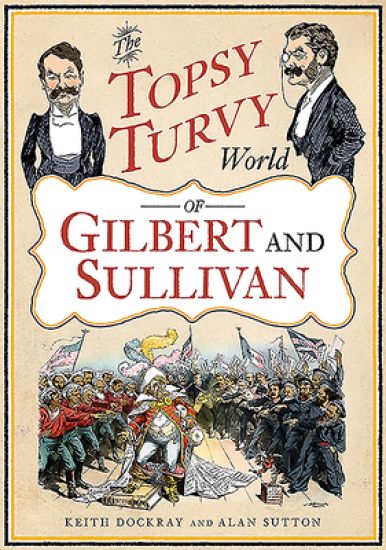
No musical partnership has enjoyed greater success during its time span, or bequeathed a more powerful and enduring legacy, than that of Gilbert and Sullivan in the later nineteenth century. Even before their first successful collaboration in 1875, both William Schwenk Gilbert (1836-1911) and Arthur Seymour Sullivan (1842-1900) had already forged considerable reputations for themselves. Thereafter, between 1877 and 1896, Gilbert wrote the librettos, and Sullivan the music, for no fewer than a dozen Savoy operas, among them the still regularly performed ‘H.M.S. Pinafore’ (1878), ‘The Pirates of Penzance’ (1879), ‘Iolanthe’ (1882), ‘The Mikado’ (1885), ‘The Yeomen of the Guard’ (1888) and ‘The Gondoliers’ (1889). Not only are the plots ingenious, the lyrics witty and the music compelling, the operas also present modern audiences with splendidly rich and satirical evocations of Victorian England and its society: the prime subject matter of this book!
This book marks a milestone in Economics publishing. Sustainable Economics is *the* subject of the moment, as businesses across the globe face up to peak oil prices, climate instability, increasingly complex environmental legislation and the challenge of adapting to a new business landscape. Sustainable Economics: Context, Challenges and Opportunities for the 21st Century Practitioner debugs the language of sustainable development. It explores the strengths and weaknesses of the many and diverse schools of thought. The book enables the modern business student and practitioner to disentangle the complex, often convoluted debate relating to sustainability, and it provides the tools necessary to lead their organizations through the murky waters of current times and prepare for the challenges of the future. Eschewing the linear – take, make and waste – approach of current business and manufacturing thinking, this book revisits the ecological models underpinning recent economic sustainability theory, and re-examines the consequences of modern ecological thought upon business strategies relating to sustainability. A chapter is also dedicated to the "circular economy", already in common parlance at policy levels in the UK, and notably in China and other developing countries.Packed with the most recent research papers, Sustainable Economics is an essential resource for the 21st-century business practitioner and legislator.The book is supported with a large array of teaching and learning material, for both formal and informal use, ranging from role play to data analysis which are available on request with the purchase of this book.
This book marks a milestone in Economics publishing. Sustainable Economics is *the* subject of the moment, as businesses across the globe face up to peak oil prices, climate instability, increasingly complex environmental legislation and the challenge of adapting to a new business landscape. Sustainable Economics: Context, Challenges and Opportunities for the 21st Century Practitioner debugs the language of sustainable development. It explores the strengths and weaknesses of the many and diverse schools of thought. The book enables the modern business student and practitioner to disentangle the complex, often convoluted debate relating to sustainability, and it provides the tools necessary to lead their organizations through the murky waters of current times and prepare for the challenges of the future. Eschewing the linear – take, make and waste – approach of current business and manufacturing thinking, this book revisits the ecological models underpinning recent economic sustainability theory, and re-examines the consequences of modern ecological thought upon business strategies relating to sustainability. A chapter is also dedicated to the "circular economy", already in common parlance at policy levels in the UK, and notably in China and other developing countries. Packed with the most recent research papers, Sustainable Economics is an essential resource for the 21st-century business practitioner and legislator. The book is supported with a large array of teaching and learning material, for both formal and informal use, ranging from role play to data analysis which are available on request with the purchase of this book.
This volume covers the period between the 1890s and 1930s, a period that witnessed revolutions in the arts and society which set the agenda for the rest of the century. In philosophy, the period saw the birth of analytic philosophy, the development of new programmes and new modes of inquiry, the emergence of phenomenology as a new rigorous science, the birth of Freudian psychoanalysis, and the maturing of the discipline of sociology. This period saw the most influential work of a remarkable series of thinkers who reviewed, evaluated and transformed 19th-century thought. A generation of thinkers - among them, Henri Bergson, Emile Durkheim, Sigmund Freud, Martin Heidegger, Edmund Husserl, Karl Jaspers, Max Scheler, and Ludwig Wittgenstein - completed the disenchantment of the world and sought a new re-enchantment.
This volume covers the period between the 1890s and 1930s, a period that witnessed revolutions in the arts and society which set the agenda for the rest of the century. In philosophy, the period saw the birth of analytic philosophy, the development of new programmes and new modes of inquiry, the emergence of phenomenology as a new rigorous science, the birth of Freudian psychoanalysis, and the maturing of the discipline of sociology. This period saw the most influential work of a remarkable series of thinkers who reviewed, evaluated and transformed 19th-century thought. A generation of thinkers - among them, Henri Bergson, Emile Durkheim, Sigmund Freud, Martin Heidegger, Edmund Husserl, Karl Jaspers, Max Scheler, and Ludwig Wittgenstein - completed the disenchantment of the world and sought a new re-enchantment.
Electrochemistry is a discipline of wide scientific and technological interest. Scientifically, it explores the electrical properties of materials and especially the interfaces between different kinds of matter. Technologically, electrochemistry touches our lives in many ways that few fully appreciate; for example, materials as diverse as aluminum, nylon, and bleach are manufactured electrochemically, while the batteries that power all manner of appliances, vehicles, and devices are the products of electrochemical research. Other realms in which electrochemical science plays a crucial role include corrosion, the disinfection of water, neurophysiology, sensors, energy storage, semiconductors, the physics of thunderstorms, biomedical analysis, and so on. This book treats electrochemistry as a science in its own right, albeit resting firmly on foundations provided by chemistry, physics, and mathematics. Early chapters discuss the electrical and chemical properties of materials from which electrochemical cells are constructed. The behavior of such cells is addressed in later chapters, with emphasis on the electrodes and the reactions that occur on their surfaces. The role of transport to and from electrodes is a topic that commands attention, because it crucially determines cell efficiency. Final chapters deal with voltammetry, the methodology used to investigate electrode behavior. Interspersed among the more fundamental chapters are chapters devoted to applications of electrochemistry: electrosynthesis, power sources, “green electrochemistry”, and corrosion. Electrochemical Science and Technology is addressed to all who have a need to come to grips with the fundamentals of electrochemistry and to learn about some of its applications. It will constitute a text for a senior undergraduate or graduate course in electrochemistry. It also serves as a source of material of interest to scientists and technologists in various fields throughout academia, industry, and government – chemists, physicists, engineers, environmentalists, materials scientists, biologists, and those in related endeavors. This book: Provides a background to electrochemistry, as well as treating the topic itself.Is accessible to all with a foundation in physical science, not solely to chemists.Is addressed both to students and those later in their careers.Features web links (through www.wiley.com/go/EST) to extensive material that is of a more tangential, specialized, or mathematical nature.Includes questions as footnotes to support the reader’s evolving comprehension of the material, with fully worked answers provided on the web.Provides web access to Excel® spreadsheets which allow the reader to model electrochemical events.Has a copious Appendix of relevant data.
Electrochemistry is a discipline of wide scientific and technological interest. Scientifically, it explores the electrical properties of materials and especially the interfaces between different kinds of matter. Technologically, electrochemistry touches our lives in many ways that few fully appreciate; for example, materials as diverse as aluminum, nylon, and bleach are manufactured electrochemically, while the batteries that power all manner of appliances, vehicles, and devices are the products of electrochemical research. Other realms in which electrochemical science plays a crucial role include corrosion, the disinfection of water, neurophysiology, sensors, energy storage, semiconductors, the physics of thunderstorms, biomedical analysis, and so on. This book treats electrochemistry as a science in its own right, albeit resting firmly on foundations provided by chemistry, physics, and mathematics. Early chapters discuss the electrical and chemical properties of materials from which electrochemical cells are constructed. The behavior of such cells is addressed in later chapters, with emphasis on the electrodes and the reactions that occur on their surfaces. The role of transport to and from electrodes is a topic that commands attention, because it crucially determines cell efficiency. Final chapters deal with voltammetry, the methodology used to investigate electrode behavior. Interspersed among the more fundamental chapters are chapters devoted to applications of electrochemistry: electrosynthesis, power sources, “green electrochemistry”, and corrosion. Electrochemical Science and Technology is addressed to all who have a need to come to grips with the fundamentals of electrochemistry and to learn about some of its applications. It will constitute a text for a senior undergraduate or graduate course in electrochemistry. It also serves as a source of material of interest to scientists and technologists in various fields throughout academia, industry, and government – chemists, physicists, engineers, environmentalists, materials scientists, biologists, and those in related endeavors. This book: Provides a background to electrochemistry, as well as treating the topic itself.Is accessible to all with a foundation in physical science, not solely to chemists.Is addressed both to students and those later in their careers.Features web links (through www.wiley.com/go/EST) to extensive material that is of a more tangential, specialized, or mathematical nature.Includes questions as footnotes to support the reader’s evolving comprehension of the material, with fully worked answers provided on the web.Provides web access to Excel® spreadsheets which allow the reader to model electrochemical events.Has a copious Appendix of relevant data.
Solid Fuels and Heavy Hydrocarbon Liquids: Thermal Characterisation and Analysis, Second Edition integrates the developments that have taken place since publication of the first edition in 2006. This updated material includes new insights that help unify the thermochemical reactions of biomass and coal, as well as new developments in analytical techniques, including new applications in size exclusion chromatography, several mass spectrometric techniques, and new applications of nuclear magnetic spectroscopy to the characterization of heavy hydrocarbon liquids The topics covered are essential for the energy and fuels research community, including academics, students, and research engineers working in the power, oil and gas, and renewable energy industries.
Plant cell walls are complex, dynamic cellular structures essential for plant growth, development, physiology and adaptation. Plant Cell Walls provides an in depth and diverse view of the microanatomy, biosynthesis and molecular physiology of these cellular structures, both in the life of the plant and in their use for bioproducts and biofuels. Plant Cell Walls is a textbook for upper-level undergraduates and graduate students, as well as a professional-level reference book. Over 400 drawings, micrographs, and photographs provide visual insight into the latest research, as well as the uses of plant cell walls in everyday life, and their applications in biotechnology. Illustrated panels concisely review research methods and tools; a list of key terms is given at the end of each chapter; and extensive references organized by concept headings provide readers with guidance for entry into plant cell wall literature.Cell wall material is of considerable importance to the biofuel, food, timber, and pulp and paper industries as well as being a major focus of research in plant growth and sustainability that are of central interest in present day agriculture and biotechnology. The production and use of plants for biofuel and bioproducts in a time of need for responsible global carbon use requires a deep understanding of the fundamental biology of plants and their cell walls. Such an understanding will lead to improved plant processes and materials, and help provide a sustainable resource for meeting the future bioenergy and bioproduct needs of humankind.