Kirjojen hintavertailu. Mukana 11 244 527 kirjaa ja 12 kauppaa.

Kirjahaku

Etsi kirjoja tekijän nimen, kirjan nimen tai ISBN:n perusteella.

1000 tulosta hakusanalla Alan Neil

A Study of Teaching

A Study of Teaching

Alan Schoenfeld; Neil Pateman

National Council of Teachers of Mathematics,U.S.
2009
nidottu
This volume represents the efforts of a number of scholars to study a brief excerpt of teaching in fine detail. The scholars wrote separate analyses of a single, 6-minute video clip taken from a mathematics lesson being given in a third-grade classroom. Each chapter presents a different analysis of the 6 minute clip followed by commentary on the various approaches that were taken in the reviews.
Later Prehistoric and Romano-British Burial and Settlement at Hucclecote, Gloucestershire

Later Prehistoric and Romano-British Burial and Settlement at Hucclecote, Gloucestershire

Alan Thomas; Neil Holbrook; Clifford Bateman

Cotswold Archaeological Trust Ltd
2003
nidottu
Excavations in advance of the construction of the Gloucester Business Park Link Road, Hucclecote, in 1998 revealed alluvium deposited by the Horsbere Brook, in places up to 2m deep. Radiocarbon dating demonstrates that the alluvium had been deposited by the 12th century BC. Three or four Middle Bronze Age cremation burials were probably part of a flat cemetery, the site subsequently occupied by a Late Bronze Age or Early Iron Age settlement which contained in excess of four post-built roundhouses. In the 1st century AD a settlement that contained a number of probable mass-walled roundhouses was constructed. It was extensively reorganised in the early 2nd century when a series of ditched enclosures were linked to Ermin Street by a 320m-long trackway. A small cemetery of 12 inhumations is noteworthy as it demonstrates that the Late Iron Age tradition of burial by crouched inhumation persisted into the 2nd century AD. Several of the burials were accompanied by grave goods, and one of the males suffered from a very rare form of dwarfism to his forearms, a condition that would have been obvious to his contemporaries. The settlement continued in use until the late 3rd or early 4th century, although the trackway ditches continued to accumulate material into the later 4th century. The trackway and enclosures appear to have survived as visible earthworks into the medieval period as their orientation influenced the alignment of medieval field systems.
Poetry in the Clinic

Poetry in the Clinic

Alan Bleakley; Shane Neilson

TAYLOR FRANCIS LTD
2021
sidottu
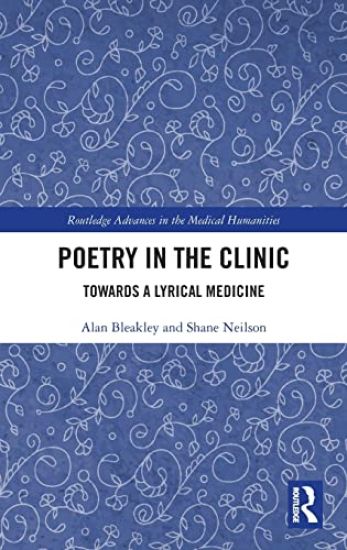
This book explores previously unexamined overlaps between the poetic imagination and the medical mind. It shows how appreciation of poetry can help us to engage with medicine in more intense ways based on ‘de-familiarising’ old habits and bringing poetic forms of ‘close reading’ to the clinic. Bleakley and Neilson carry out an extensive critical examination of the well-established practices of narrative medicine to show that non-narrative, lyrical poetry does different kind of work, previously unexamined, such as place eclipsing time. They articulate a groundbreaking ‘lyrical medicine’ that promotes aesthetic, ethical and political practices as well as noting the often-concealed metaphor cache of biomedicine. Demonstrating that ambiguity is a key resource in both poetry and medicine, the authors anatomise poetic and medical practices as forms of extended and situated cognition, grounded in close readings of singular contexts. They illustrate structural correspondences between poetic diction and clinical thinking, such as use of sound and metaphor. This provocative examination of the meaningful overlap between poetic and clinical work is an essential read for researchers and practitioners interested in extending the reach of medical and health humanities, narrative medicine, medical education and English literature.
Poetry in the Clinic

Poetry in the Clinic

Alan Bleakley; Shane Neilson

TAYLOR FRANCIS LTD
2024
nidottu
This book explores previously unexamined overlaps between the poetic imagination and the medical mind. It shows how appreciation of poetry can help us to engage with medicine in more intense ways based on ‘de-familiarising’ old habits and bringing poetic forms of ‘close reading’ to the clinic. Bleakley and Neilson carry out an extensive critical examination of the well-established practices of narrative medicine to show that non-narrative, lyrical poetry does different kind of work, previously unexamined, such as place eclipsing time. They articulate a groundbreaking ‘lyrical medicine’ that promotes aesthetic, ethical and political practices as well as noting the often-concealed metaphor cache of biomedicine. Demonstrating that ambiguity is a key resource in both poetry and medicine, the authors anatomise poetic and medical practices as forms of extended and situated cognition, grounded in close readings of singular contexts. They illustrate structural correspondences between poetic diction and clinical thinking, such as use of sound and metaphor. This provocative examination of the meaningful overlap between poetic and clinical work is an essential read for researchers and practitioners interested in extending the reach of medical and health humanities, narrative medicine, medical education and English literature.
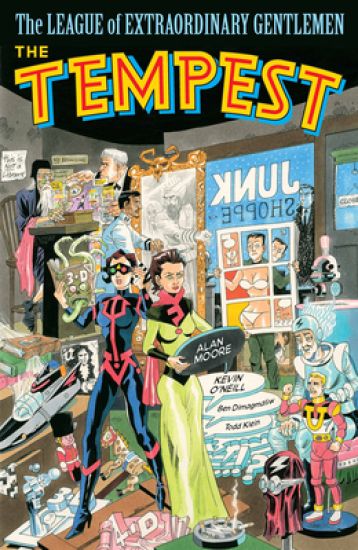
The League of Extraordinary Gentlemen: Nemo Trilogy

The League of Extraordinary Gentlemen: Nemo Trilogy

Alan Moore; Kevin O'Neill

Top Shelf Productions
2015
sidottu
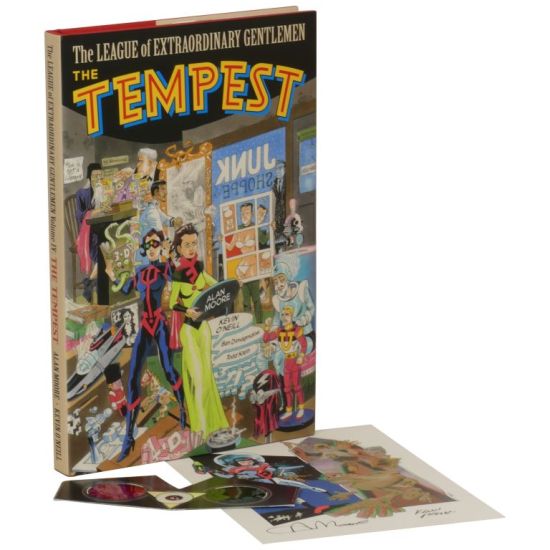
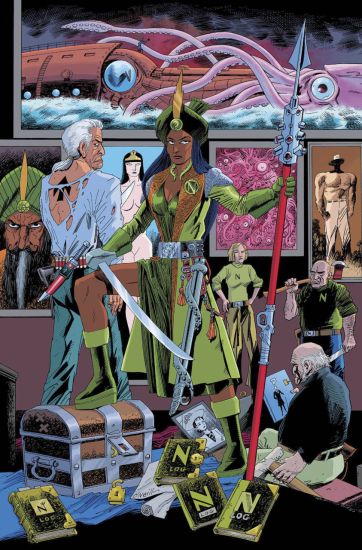
Alan Moore & Kevin O'Neill explore new horizons in their League of Extraordinary Gentlemen universe with the bestselling Nemo trilogy Pounding with the spirit of adventure, these spinoff graphic novels follow the terrifying pirate queen Janni Nemo in a trio of adventures that span the globe and the 20th century. First, it's a race to the bottom of the world, where time is broken, the mountains bring madness, and unearthly Antarctic horrors await, in Heart of Ice. Then, in 1941, Nemo will do anything to save her family from a host of mechanical metropolitan monstrosities and the clownish--and all the more terrifying because of it--despot that leads them, in The Roses of Berlin. Finally, depraved tropical tyrants may prove the lesser threat when our aging hero faces the spirits of her past on a fateful trip down the Amazon in River of Ghosts. Now, all three handsome hardcovers are joined in a magnificent slipcase gloriously illustrated by Kevin O'Neill.
Understanding Living Things (2nd Ed)

Understanding Living Things (2nd Ed)

O'Neill Janet; Alan Jones; Purnell Roy

Brilliant Publications
2014
nidottu
The Brilliant Support Activities series contains reproducible activities for use with slower learners or pupils with various learning difficulties operating at the lower levels of understanding at Key Stage 1 and Key Stage 2. The activities in the books follow the areas of science outlined in the Programmes of Study of the 2014 Science National Curriculum for years 1-3 and selected topics of years 4 and 5. The books introduce one concept per sheet, using simple language and clear, black line illustrations making them easy to read and understand. Understanding Living Things contains 41 reproducible sheets to help pupils understand some aspects of 'Everyday Biology - Plants and Animals'. The activities included in the book will help to develop the essential scientific enquiry skills as outlined in the National Curriculum (Working Scientifically), namely those of Observation, Predicting, Recording and Drawing Conclusions. The worksheets focus on life processes common to all living things, humans and other animals and green plants, as well as on how living things relate to their environment.
League of Extraordinary Gentlemen Vol. 1: The Absolute Edition
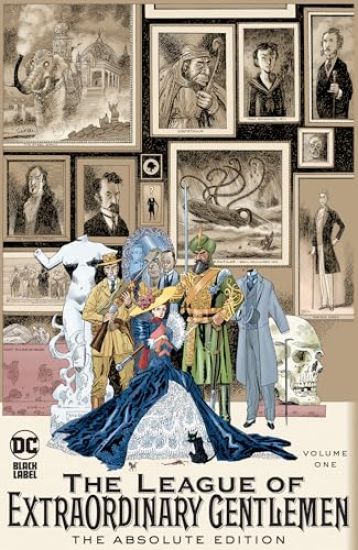
London, 1898. The Victorian Era draws to a close and the twentieth century approaches. It is a time of great change and an age of stagnation, a period of chaste order and ignoble chaos. It is an era in need of champions. In this amazingly imaginative tale, literary figures from throughout time and various bodies of work are brought together to face any and all threats to Britain. Allan Quatermain, Mina Murray, Captain Nemo, Dr. Henry Jekyll and Edward Hyde and Hawley Griffin, the Invisible Man, form a remarkable legion of intellectual aptitude and physical prowess: The League of Extraordinary Gentlemen.
Designing Reality

Designing Reality

Neil Gershenfeld; Alan Gershenfeld; Joel Cutcher-Gershenfeld

Basic Books
2017
sidottu
The 20th century witnessed two digital revolutions. Computing power has revolutionized every industry, from finance to agriculture to pharmaceuticals. We've got computers at work and at home, in our pockets and our bags, on our wrists, and even embedded in the architecture of our houses. At the same time a revolution in digital communication unfolded, which has forever altered our lives-work, social, and private-by enabling a world in which we're never impossible to reach and have nearly limitless power to express ourselves. But no one saw the downsides of these: powerful computers threaten to displace human labor from a range of jobs, both blue and white collar, and, after an election in which the Internet played such a pivotal role in spreading disinformation-not to mention the simple problem of never being able to escape our jobs if our email goes with us everywhere-the possible pitfalls of free communication become clearer.And now, as Neil Gershenfeld, Joel Cutcher-Gershenfeld, and Alan Gershenfeld make clear, we are in the early years of the third digital revolution: from computation and communication comes fabrication. Fabrication includes everything from 3D printing to laser cutters to machines that can assemble anything, including themselves, by precisely controlling the placement of individual atoms. We will soon be able to program matter the same way we can now program a computer. This may sound outlandish, but just as the smartphone is the logical conclusion of trends in computing that began in the 1960s, so is this fabrication technology of the future the extension of today's trends in manufacturing. Neil Gershenfeld, an MIT professor, is at the forefront of making it a reality, through his scientific work as well as his championing of Fab Labs, a sort of low-cost personal factory. In Designing Reality, he and his brothers Alan and Joel explore not just the promise but the perils of this revolution in fabrication. On one extreme, it promises self-sufficient cities, the end of work, and the ability for each of us to design and create anything we can imagine. On the other, it could lead to the concentration of wealth in very few hands. Neither guaranteeing utopia nor insisting that our worst nightmares are about to come true, the Gershenfelds are trying to anticipate the future and teach us how best to prepare for it, personally and as a society, across education, employment and more. The first two digital revolutions caught us flat-footed, and there has been a heavy price to pay. Let us prepare for the future, not simply react to it.
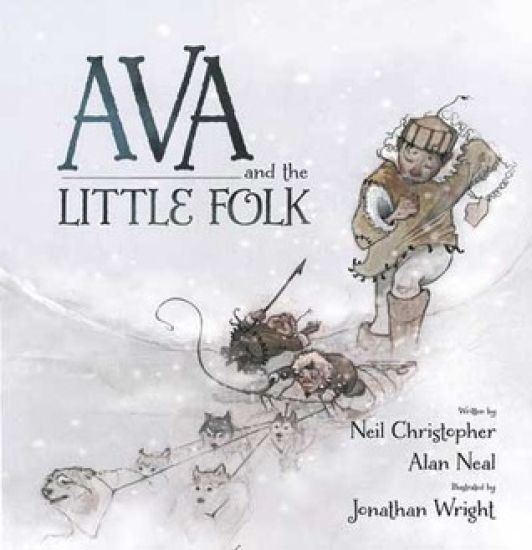
Ava and the Little Folk

Ava and the Little Folk

Neil Christopher; Alan Neal

Inhabit Media Inc
2012
sidottu
The most magical things can come in tiny packages! In the Arctic, tales of tiny people who live on the land abound. This children's story follows the adventures of an orphan named Ava who is left to fend for himself by the adults in his village. One day, cold and alone, Ava stumbles upon a group of magical dwarves who finally show him how it feels to have a home of his own. Co-authored by CBC personality Alan Neal and accompanied by Jonathan Wright's ethereal watercolour illustrations, this contemporary tale of Arctic magic will ignite the imaginations of young readers.
Environmental Values

Environmental Values

John O'Neill; Alan Holland; Andrew Light

Routledge
2007
sidottu
We live in a world confronted by mounting environmental problems; increasing global deforestation and desertification, loss of species diversity, pollution and global warming. In everyday life people mourn the loss of valued landscapes and urban spaces. Underlying these problems are conflicting priorities and values. Yet dominant approaches to policy-making seem ill-equipped to capture the various ways in which the environment matters to us. Environmental Values introduces readers to these issues by presenting, and then challenging, two dominant approaches to environmental decision-making, one from environmental economics, the other from environmental philosophy. The authors present a sustained case for questioning the underlying ethical theories of both of these traditions. They defend a pluralistic alternative rooted in the rich everyday relations of humans to the environments they inhabit, providing a path for integrating human needs with environmental protection through an understanding of the narrative and history of particular places. The book examines the implications of this approach for policy issues such as biodiversity conservation and sustainability.Written in a clear and accessible style for an interdisciplinary audience, this volume will be ideal for student use in environmental courses in geography, economics, philosophy, politics and sociology.
Environmental Values

Environmental Values

John O'Neill; Alan Holland; Andrew Light

Routledge
2007
nidottu
We live in a world confronted by mounting environmental problems; increasing global deforestation and desertification, loss of species diversity, pollution and global warming. In everyday life people mourn the loss of valued landscapes and urban spaces. Underlying these problems are conflicting priorities and values. Yet dominant approaches to policy-making seem ill-equipped to capture the various ways in which the environment matters to us. Environmental Values introduces readers to these issues by presenting, and then challenging, two dominant approaches to environmental decision-making, one from environmental economics, the other from environmental philosophy. The authors present a sustained case for questioning the underlying ethical theories of both of these traditions. They defend a pluralistic alternative rooted in the rich everyday relations of humans to the environments they inhabit, providing a path for integrating human needs with environmental protection through an understanding of the narrative and history of particular places. The book examines the implications of this approach for policy issues such as biodiversity conservation and sustainability.Written in a clear and accessible style for an interdisciplinary audience, this volume will be ideal for student use in environmental courses in geography, economics, philosophy, politics and sociology.