Delving into the history of gambling and corruption in intercollegiate sports, Cheating the Spread recounts all of the major gambling scandals in college football and basketball. Digging through court records, newspapers, government documents, and university archives and conducting private interviews, Albert J. Figone finds that game rigging has been pervasive and nationwide throughout most of the sports' history. The insidious practice has spread to implicate not only bookies and unscrupulous gamblers but also college administrators, athletic organizers, coaches, fellow students, and the athletes themselves. Naming the players, coaches, gamblers, and go-betweens involved, Figone discusses numerous college basketball and football games reported to have been fixed and describes the various methods used to gain unfair advantage, inside information, or undue profit. His survey of college football includes early years of gambling on games between established schools such as Yale, Princeton, and Harvard; Notre Dame's All-American halfback and skilled gambler George Gipp; and the 1962 allegations of insider information between Alabama coach Paul "Bear" Bryant and former Georgia coach James Wallace "Wally" Butts; and many other recent incidents. Notable events in basketball include the 1951 scandal involving City College of New York and six other schools throughout the East Coast and the Midwest; the 1961 point-shaving incident that put a permanent end to the Dixie Classic tournament; the 1978 scheme in which underworld figures recruited and bribed several Boston College players to ensure a favorable point spread; the 1994-95 Northwestern scandal in which players bet against their own team; and other recent examples of compromised gameplay and gambling.
By 1933, the Pennsylvania Railroad had been in existence for nearly ninety years. During this time, it had grown from a small line, struggling to build west from the state capital in Harrisburg, to the dominant transportation company in the United States. In Volume 2 of The Pennsylvania Railroad, Albert J. Churella continues his history of this giant of American transportation. At the beginning of the twentieth century, the Pennsylvania Railroad was the world's largest business corporation and the nation's most important railroad. By 1917, the Pennsylvania Railroad, like the nation itself, was confronting a very different world. The war that had consumed Europe since 1914 was about to engulf the United States. Amid unprecedented demand for transportation, the federal government undertook the management of the railroads, while new labor policies and new regulatory initiatives, coupled with a postwar recession, would challenge the company like never before. Only time would tell whether the years that followed would signal a new beginning for the Pennsylvania Railroad or the beginning of the end. The Pennsylvania Railroad: The Age of Limits, 1917–1933, represents an unparalleled look at the history, the personalities, and the technologies of this iconic American company in a period that marked the shift from building an empire to exploring the limits of their power.
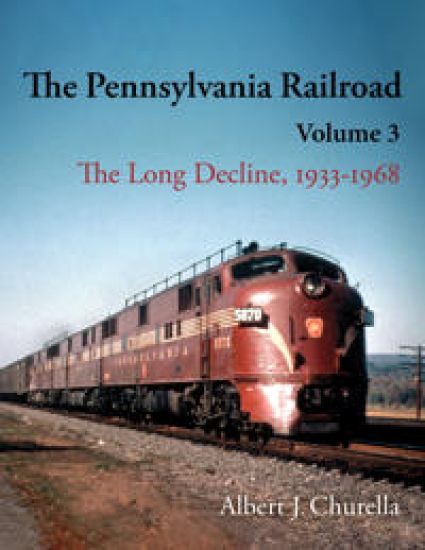
The final volume of Albert J. Churella's landmark series, The Pennsylvania Railroad, concludes the story of the iconic transportation company, covering its long decline from the 1930s to its merger with the New York Central Railroad in 1968. Despite some parallels with World War I, the experience of World War II had a substantially different impact on the Pennsylvania Railroad. The introduction of new technologies, personnel, and commuter routes had significant effects on this giant of American transportation. The recession of 1958 sparked a period of decline from which it and many other railroads struggled to fully recover. The Pennsylvania Railroad: The Long Decline, 1933-1968 provides an unparalleled look at the final years of this legendary company, which in its prime was the largest corporation in the world, with a budget second only to that of the US federal government.
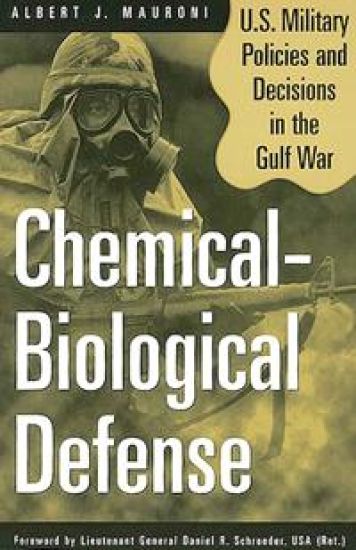
The Gulf War has been the only conflict in the last half-century that featured the possible use of chemical-biological weapons against U.S. forces. Vulnerability to such an attack spurred the Department of Defense to action from the first hint of trouble in August 1990 through the end of hostilities in March 1991. Nearly disbanded in 1972, the U.S. Army Chemical Corps would be the prime force in ensuring that U.S. forces could both survive and sustain combat operations under chemical-biological warfare conditions. Focussing on the work of senior Army officials, this account assesses the degree of readiness achieved by the ground war's initiation and the lessons learned since the conflict.For an appropriately trained and equipped military force, chemical weapons pose not the danger of mass destruction but the threat of mass disruption, no more deadly than smart munitions or B-52 air strikes. This book will reveal a coordinated response to train and equip U.S. forces did take place prior to the feared Iraqi chemical and biological attacks. Undocumented in any other book, it details the plans that rushed sixty Fox reconnaissance vehicles to the Gulf, the worldwide call for protective suits and masks, and the successful placement of biological agent detectors prior to the air offensive. In addition, the work addresses what really happened at Khamisiyah. Were troops exposed to chemical weapons and what is behind the mysterious Gulf War Syndrome?
Fear and ignorance have colored the perception of chemical and biological (CB) warfare both in the public and military spheres. Media coverage following the alleged gassing of sheep at Dugway Proving Ground in 1968 has led most people to believe that CB warfare is an unstoppable doomsday weapon of mass destruction. Yet, in 1972, General Creighton Abrams, the Army Chief of Staff, attempted to disestablish the Chemical Corps because he saw no need for it. Had that decision not been reversed in 1976, there would not have been any chemical defense specialists or equipment available for Operation Desert Storm in 1990.This study tracks events relating to the Department of Defense's CB warfare program between 1968 and 1990, as it evolved up to the Gulf War. It also details how the military develops and procures CB defense equipment to protect today's soldiers. Mauroni draws parallels between the development of binary chemical weapons, the chemical demilitarization program, and the DoD CB terrorism response efforts, as each has very similar issues and solutions. He seeks to educate leading officials and the general public about the facts behind CB warfare and the options for coping with it in the future. With proper training and equipment, the challenge of CB warfare can be met and dealt with on the modern battlefield.
The Gulf War has been the only conflict in the last half-century that featured the possible use of chemical-biological weapons against U.S. forces. Vulnerability to such an attack spurred the Department of Defense to action from the first hint of trouble in August 1990 through the end of hostilities in March 1991. Nearly disbanded in 1972, the U.S. Army Chemical Corps would be the prime force in ensuring that U.S. forces could both survive and sustain combat operations under chemical-biological warfare conditions. Focussing on the work of senior Army officials, this account assesses the degree of readiness achieved by the ground war's initiation and the lessons learned since the conflict. For an appropriately trained and equipped military force, chemical weapons pose not the danger of mass destruction but the threat of mass disruption, no more deadly than smart munitions or B-52 air strikes. This book will reveal a coordinated response to train and equip U.S. forces did take place prior to the feared Iraqi chemical and biological attacks. Undocumented in any other book, it details the plans that rushed sixty Fox reconnaissance vehicles to the Gulf, the worldwide call for protective suits and masks, and the successful placement of biological agent detectors prior to the air offensive. In addition, the work addresses what really happened at Khamisiyah. Were troops exposed to chemical weapons and what is behind the mysterious Gulf War Syndrome?
For more than 15 years, the Army's chemical demilitarization program has been criticized and castigated as a potentially dangerous effort, poorly executed without concern for the public. By reviewing the chemical demilitarization program as a public policy area, Mauroni offers a different perspective on how the Army worked with Congress and the public to offer the safest program possible. The Army was forced to delay its own schedule and increase the breadth and depth of the program to address political demands and idealistic environmental concerns. Mauroni contends that Army and Department of Defense leadership's insistence on treating this program as a strictly technical effort, rather than as a public policy concern is in part responsible for the public's misunderstanding of the Army's execution of the program.Despite its challenges, the Army is well on its way to accomplishing its goal of destroying the U.S. chemical weapons stockpile with no impact on the public or environment. They have stumbled through, however, rather than planned their exit. According to Mauroni, the Army needs to examine this program carefully to identify how to address public policy questions better in the future, to include responding to chemical and biological terrorism, developing a biological warfare vaccine program, and addressing future Gulf War illness questions. Their failure to learn will otherwise result in a continued inability to address critical questions on how they respond to chemical and biological warfare issues.
Riding with patrol cars in four major northern cities, walking with policemen on the beat, observing what goes on in police stations, analyzing who telephones the police, what crimes are reported, who reports them, and why, Albert J. Reiss, Jr., seeks to understand the ways in which we can make our society more civil, our police more humane, our population more responsible. Reiss devotes most of his first chapter to describing the experiences of two police officers during an ordinary night in a patrol car. He then considers the many ways in which police and public interact – and how and why they often do not. In a chapter entitled “Police Manners and Morals,” the author investigates situations where policemen may themselves break the law – and how such actions relate to the subculture of an individual neighborhood or beat. Finally, Reiss outlines his understanding of how we may become a more civil society, presenting his view that the morality of the public and the morality of the police are intimately related, that one cannot be expected to improve unless the other does.
Deciding how best to help an abused or neglected child can be an agonizing process for protective service workers. Should caseworkers recommend that the child be removed from the home temporarily and placed in foster care? Should the child be allowed to remain at home with support services to bolster the parents’ ability to provide a safe and nurturing environment? Should the child be separated permanently from parents and be eligible for adoption? This book provides practical guidelines for workers who must make decisions about these and other issues. The authors, a psychoanalyst, a social worker, and a research scientist, discuss thirty-five cases of child abuse and neglect that have come to the attention of the courts and caseworkers in Connecticut but that are typical of cases throughout the United States. The children represent a range of ages and ethnic and socio-economic backgrounds. The cases illustrate a variety of placement issues including sexual abuse, abandonment, adoption, and visitation conflicts. In each case, the authors attempt to demonstrate that the least harmful decision-making is based on sound principles of child development: the child’s need for continuity of affectionate relationships and his or her need to feel wanted by at least one responsible adult. The book, illustrating useful ways of resolving child-placement conflicts, will be an essential guide and resource for all who work in this complex field.
Designed to accompany Nelson Textbook of Pediatricsand Nelson Essentials of Pediatrics, Pediatric Decision-Making Strategies is a concise, user-friendly reference uses a unique algorithmic approach to facilitate diagnosis, testing, basic treatment of common pediatric disorders. For any given symptom, an algorithm guides the reader through the appropriate investigative procedures and lab tests to reach definitive diagnoses. An updated format that enhances usability makes this medical reference book a must-have for medical students, residents, and practitioners treating pediatric patients. "...it demonstrates a way of thinking about medicine that is useful in paediatrics and in all other specialties." Reviewed by Seminars in Fetal and Neonatal Medicine , Apr 2015 Explore concise, focused, and updated algorithms that cover the most common pediatric problems. Gain imperative knowledge from an expert author team that includes Dr. Robert M. Kliegman (of the Nelson line of textbooks), as well as references to related chapters in both Nelson Textbook of Pediatrics and Nelson Essentials of Pediatrics. Quickly access important information with a new standard format and trim size for practicality and usability. Expert Consult eBook version included with purchase. This enhanced eBook experience allows you to search all of the text, figures, algorithms, and references from the book on a variety of devices.
Explore concise, focused, and updated algorithms that cover the most common pediatric problems. Gain imperative knowledge from an expert author team that includes Dr. Robert M. Kliegman (of the Nelson line of textbooks), as well as references to related chapters in both Nelson Textbook of Pediatrics and Nelson Essentials of Pediatrics. Quickly access important information with a new standard format and trim size for practicality and usability. Expert Consult eBook version included with purchase. This enhanced eBook experience allows you to search all of the text, figures, algorithms, and references from the book on a variety of devices.
Wilkin's Clinical Assessment in Respiratory Care, 8th Edition, is the world-leading respiratory care text devoted exclusively to patient assessment. This comprehensive book prepares you to assist physicians in the decision-making process regarding treatment, evaluation of the treatment's effectiveness, and determining if changes in the treatment need to be made. Written by Dr. Albert Heuer, and Dr. Craig Scanlan, it emphasizes learning objectives through well-organized need-to-know information and tips. Plus, this streamlined edition helps you focus on key content and prepare for the CRT credentialing exam by aligning material within the book to the NBRC exam matrices. Case studies offer real-life clinical scenarios challenging you to interpret data and make accurate patient assessments. Questions to Ask boxes identify what practitioners should ask patients (i.e., coughing, sputum, shortness of breath) or questions to ask themselves on various subjects (i.e., lung sounds they are hearing, blood pressure, respiratory rate) in order to provide effective patient care. Learning objectives, chapter outlines, chapter overviews, and key terms lists in each chapter, help you focus on key content. Key Point summaries emphasize the learning objectives and provide an overview of important material. Simply Stated boxes highlight and promote understanding of important concepts. A comprehensive approach provides you with the important information you need to know in order to effectively assess patients. NEW! Thoroughly updated content reflects the most recent changes to the NBRC exam. NEW! Inclusion of the latest technological advancements relates to the assessment of critical care and non-critical care patients. NEW! Full-color design enhances learning and understanding by making key concepts easy to find.
Master the patient assessment skills you need to provide effective respiratory care! Wilkins' Clinical Assessment in Respiratory Care, 9th Edition prepares you to assist physicians in the decision-making process regarding treatment, evaluation of the treatment's effectiveness, and determining if changes in the treatment need to be made. Chapters are updated to reflect the latest standards of practice and the newest advances in technology. From lead author Dr. Albert Heuer, a well-known educator and clinician, this market-leading text also aligns content with National Board for Respiratory Care exam matrices to help you prepare for success on the NBRC's CRT and RRT credentialing exams. Comprehensive approach addresses all of the most important aspects and topics of assessment, so you can learn to assess patients effectively. Case studies provide real-life clinical scenarios challenging you to interpret data and make accurate patient assessments. Questions to Ask boxes identify the questions practitioners should ask patients (e.g., coughing, sputum, shortness of breath) or questions to ask themselves (e.g., lung sounds they are hearing, blood pressure, respiratory rate) when confronted with certain pathologies. Learning objectives, key terms, and chapter outlines begin each chapter and introduce the content to be mastered. Assessment questions in each chapter are aligned to the learning objectives and reflect the NBRC Exam format, with answers located on the Evolve companion website. Key Points at the end of each chapter emphasize the topics identified in the learning objectives, providing easy review. Simply Stated boxes highlight and summarize key points to help you understand important concepts. NEW! Updated content throughout the text reflects the latest evidence-based practices and clinical developments, including infection control measures, imaging techniques, assessment of critically ill patients, and the increased reliance on telehealth and electronic health records. NEW! Updated and revised content aligns with the latest NBRC credentialing exam matrix. NEW! Take-Home points are included for each chapter, plus cases as well as questions and answers for students to use in testing and applying their knowledge.
This book will help you deal with your employees and co-workers by giving you the keys to understanding the way their brains - and yours - work. Using the metaphor of the dinosaur brain, the authors detail a whole range of human responses dictated by a part of the human brain sometimes beyond our control. They then show you what to expect from that part of the brain and how to be prepared for it, including such problems as turf battles, reflexive competitiveness, and office courtship. Outlines the rules of lizard logic, and how to use them to your advantage.
This book introduces the class of dynamical systems called semiflows, which includes systems defined or modeled by certain types of differential evolution equations (DEEs). It focuses on the basic results of the theory of dynamical systems that can be extended naturally and applied to study the asymptotic behavior of the solutions of DEEs. The authors concentrate on three types of absorbing sets: attractors, exponential attractors, and inertial manifolds. They present the fundamental properties of these sets, and then proceed to show the existence of some of these sets for a number of dynamical systems generated by well-known physical models. In particular, they consider in full detail two particular PDEEs: a semilinear version of the heat equation and a corresponding version of the dissipative wave equation. These examples illustrate the most important features of the theory of semiflows and provide a sort of template that can be applied to the analysis of other models. The material builds in a careful, gradual progression, developing the background needed by newcomers to the field, and culminating in a more detailed presentation of the main topics than found in most sources. The authors' approach to and treatment of the subject builds the foundation for more advanced references and research on global attractors, exponential attractors, and inertial manifolds.
Much of the traditional approach to linear model analysis is bound up in complex matrix expressions revolving about the usual generalized inverse. Motivated by this important role of the generalized inverse. the research summarized here began as an interest in understanding. in geometric terms. the four conditions defining the qnique Moore-Penrose Inverse. Such an investigation. it was hoped. might lead to a better understanding. and possibly a simplification of. the usual matrix expressions. Initially this research was begun by Francis Hsuan and Pat Langenberg, without knowledge of Kruskal's paper published in 1975. This oversight was perhaps fortu nate. since if they had read his paper they may not have continued their effort. A summary of this early research appears in Hsuan. Langenberg and Getson (1985). This monograph is a summary of the research on {2}-inverses continued by Al Getson. while a graduate student. in collaboration with Francis Hsuan of the Depart ment of Statistics. School of Business Administration. at Temple University. Philadelphia. The literature on generalized inverses and related topics is extensive and some of what is present here has appeared elsewhere. Generally. this literature is not presented from the point of view of {2}-inverses. We have tried to do justice to . the relevant published works and appologize for those we have either overlooked or possibly misrepresented.
An introduction to electrochemical methods and their use in the synthetic laboratory. Covers the major organic electrochemical pathways of synthetic interest, while de-emphasizing the mechanistic literature. For each functional group covered, the essential features of its electrochemical behavior are outlined, including the presumed intermediates. This Second Edition has been revised, covering the literature through early 1988, and presents useful electrochemical reactions superior to, and, in some cases, without counterparts in, conventional chemical methods.
This book is a meditation on the theme of provincialism in American literature. With careful attention to the historical context, it identifies in the expressions of writers before the Civil War certain qualities of self-doubt and defensiveness, certain perceptions of displacement and decline, so profoundly characteristic as to amount to a defining trait of American literature. As a frontier nation, America lacked an organic culture of its own and embarked on the impossibly difficult task of creating a cultural life from imported forms and ideas. Albert von Frank shows the history of this effort to be one of a desperate conservatism struggling against the withering effects of time and distance on cherished standards of the past.
This book is a meditation on the theme of provincialism in American literature. With careful attention to the historical context, it identifies in the expressions of writers before the Civil War certain qualities of self-doubt and defensiveness, certain perceptions of displacement and decline, so profoundly characteristic as to amount to a defining trait of American literature. As a frontier nation, America lacked an organic culture of its own and embarked on the impossibly difficult task of creating a cultural life from imported forms and ideas. Albert von Frank shows the history of this effort to be one of a desperate conservatism struggling against the withering effects of time and distance on cherished standards of the past.