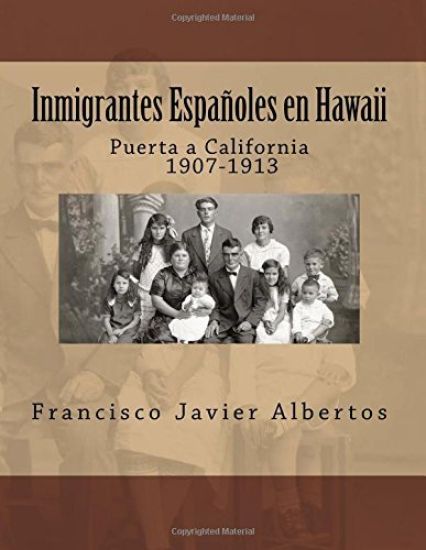
Relatos hist ricos de inmigrantes espa oles reclutados para trabajar en la industria de la ca a de az car en Hawai durante los a os 1907-1913. El barco con su " carga humana" naveg primeramente desde el puerto de M laga y posteriorment] zarparon desde Gibraltar a trav s del estrecho de Magallanes a Punta Arenas hacia Honolulu, Hawai. Gente extraordinaria e historia impresionante, viaje de 54 d as, nacimientos, enfermedades, muertes y entierros en el mar. Los emigrantes enfrent ron una tierra extranjera, nueva cultura, otro idioma. La historia de los buques: S.S. Heli polis 1907, Orteric 1911, Willesden 1911, Harpalion 1912, Willesden 1913, and Ascot 1913THE HAWAIIAN STARHonolulu, HawaiiThursday, December 13, 1906A THOUSAND SPANIARDS TO COMETHE BOARD OF IMMIGRATION WILL PROBABLY ORDER 1000 SPANIARDS FROM MALAGA WHO ARE REPORTED AVAILABLE.-STACKABLE IS CABLED FOR MORE INFORMATION.-FRASER REPORTS THEM AVAILABLE.-STACKABLE IS IN LONDON AT PRESENT.Se vuelve a decir que la emigraci n espa ola ser para reemplazar a los japoneses (that the Spaniards are being engaged by Hawaiian sugar interests to replace Japanese laborers.) (The Salt Lake Herald, 17.02.1907)"Ahora acaba de darse en M laga el esc ndalo de un vapor negrero atracado a aquel puerto para carga de campesinos espa oles... El espect culo ha sido extraordinariamente conmovedor... Los emigrantes lloraban con desconsuelo, despidi ndose de la tierra que les vio nacer... El pueblo que presenciaba aquel espect culo, agitaban los pa uelos despidiendo a los pobres pasajeros, que abandonan su tierra natal que les niega el pan para la vida" (El Pa s, 12.03.1907)Death busy since ship entered Pacific -Fever and measlesEste t tulo era del Hawaiian Gazette, 14.04.1911"Death stalked among the fifteen hundred Spanish and Portuguese immigrants aboard the British immigrant steamer Orteric, which arrived yesterday after its long voyage from Spain and Portugal. Fifty-eight deaths were recorded among the children during the voyage.Muerte de 58 ni os en el SS OrtericHAWAIIAN STARHonolulu, HawaiiThursday, April 13, 1911 p. 1]FIFTY-SEVEN CHILDREN DIED ON ORTERICThe immigrant steamer Orteric arrived this morning after a trip of forty-six days. As the vessel came alongside the Chanel wharf a heterogeneous crowd lined the ships side. The crowd was kept back from the wharf, and no one was allowed on except those who had business there.SS WILLESDEN (1er Viaje) GibraltarEl capit n Cox ten a que contar una terrible historia, sobre la forma en que, los inmigrantes, fueron embarcados en Gibraltar. Captain Cox had a terrible tale to tell of the way in which immigrants were shipped at Gibraltar.]Gibraltar, que desde que fue ocupado por los ingleses, ha sido siempre lugar de acogida de contrabandistas, desertores y malhechores, en este tema concreto de la emigraci n jug el siguiente papel: saltarse las leyes de emigraci n espa olas, exprimir a los pobres emigrantes, y tratarles peor que al ganado, In many places cattle were better penned up than were the people who awaited transportation].IMMIGRANTS PENNED UP.Captain Cox stated that at Gibraltar there were many hundreds of people ready to go wherever a ship would take them. They were huddled up in a compound, with very little to eat, and their baggage was scattered around. There was absolutely no protection from the four winds, not even a shed to keep the rain off. The people were lying there ready to go anywhere that offered. Had the Willesden been going to Rio Janeiro, Brazil, or anywhere else they would have gone aboard without demur. The people were picked out in families, and told to get on the vessel, and they went. In many places cattle were better penned up than were the people who awaited transportation.
Alberto Giacometti, one of the most important artists of the twentieth century, was also one of the most enigmatic. In this major new interpretation of Giacometti and his work, art historian and psychoanalyst Laurie Wilson demonstrates how the artist’s secret beliefs and emotional scars are reflected in his evocative sculpture, drawings, and paintings.Wilson’s Giacometti was an extremely imaginative child who entwined fantasy and real-life experiences. As he matured, the artist combined fact and fancy into evolving myths, part conscious and part unconscious. Drawing on biographical data uncovered during a decade of research, Wilson reconstructs traumatic events and issues in Giacometti’s life—including family births and deaths in early childhood, world wars and their aftermath, and his intense and ambivalent relationship with his parents—and examines their profound effects on his artistic evolution. These startling new interpretations will forever change the way we understand both the man and his work.
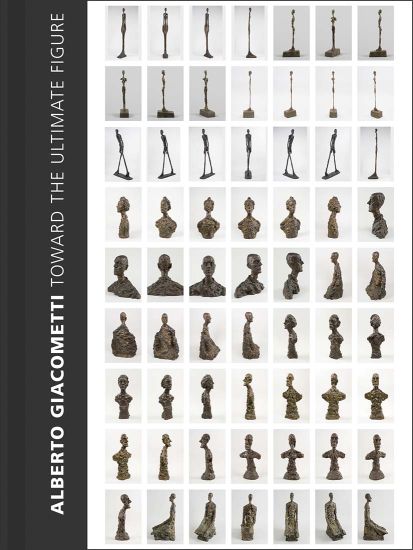
A comprehensive survey of the work of the legendary Swiss artist, this book illustrates and examines more than 100 of his sculptures, paintings, drawings, and prints This lavishly illustrated retrospective traces the early and midcareer development of the preeminent Swiss artist Alberto Giacometti (1901–1966), examining the emergence of his distinct figural style through works including a series of walking men, elongated standing women, and numerous busts. Rare paintings and drawings from his formative period show the significance of landscape in Giacometti’s work, while also revealing the influence of the postimpressionist painters that surrounded his father, the artist Giovanni Giacometti. Other areas of inquiry on which Alberto Giacometti casts new light are his studio practice—amply illustrated with photographs—his obsessive focus on depicting the human head, his collaborations with poets and writers, and his development of the walking man sculpture, thanks to numerous drawings, many of which have never been shown. Original essays by modern art and Giacometti specialists shed new light on era-defining sculptural masterpieces, including the Walking Man, the Nose, and the Chariot, or on key aspects of his work, such as the significance of surrealism, his drawing practice, or the question of space.Distributed for the Cleveland Museum of ArtExhibition Schedule:Cleveland Museum of Art (March 12–June 12, 2022)Seattle Art Museum (July 14–October 9, 2022)Museum of Fine Arts, Houston (November 13, 2022–February 12, 2023)The Nelson-Atkins Museum of Art, Kansas City (March 19–June 18, 2023)
Alberto Ginastera: A Research and Information Guide is the first bio-bibliographic study of the composer and the only published book on the subject in English. This work fills a critical gap in contemporary music studies by enriching our knowledge of one of the most compelling creative voices of the Americas. Given the lack of prior systematic attention to Ginastera, this book establishes a firm foundation for future scholarship. It includes a detailed biographical sketch of the composer that quotes extensively from his letters. It summarizes the defining features of his style and encompasses his infrequently explored late works. It offers the most comprehensive catalogue of Ginastera’s music to date and provides an annotated list of his published writings. This book contains over 400 annotated bibliographic entries that refer to critically selected sources in English, Spanish, French, German, and Italian. The last chapter offers new information about archival holdings and internet resources that facilitates research on this composer. An appendix featuring a detailed chronology of Ginastera’s career completes this work.
A rhyming interactive storybook to find a lost alpaca at Machu Picchu. Find Alberto as he travels on his first adventure along the Inca trail. Think: Where's Wally meets Dr Seuss. Allow yourself to be taken away and have fun in a mystery land.Search and find animals from Peru on each page. Navigate Secret mazes. Have fun while learning about Geography and History. This book is entertaining and educational.Spend quality time with your child or keep them busy with hours of interactive fun. Advanced readers can read on their own. This book is challenging for everyone. It will inspire you to travel, learn, read and concentrate. You'll be all over it like fur on an alpaca.Target: 4yrs to 10yrs old, parents can read to your children, fun for ALL the family.
Volume one of this beautiful new book features archival images of both artists among new texts by curator Joachim Pissarro and others, as well as never- before-translated texts by Isaku Yanaihara, Dino Buzzati, and Pierre Descargues. Detailed illustrated chronologies for each artist complete volume one, while the colorful second volume includes colour plates of all the works displayed during Gagosian Gallery s 2016 London exhibition of the same title, as well as installation images.





![[Oxford Lectures on Literature, 1907-1922]](/covers/9781172387410.jpg)