
Kirjahaku
Etsi kirjoja tekijän nimen, kirjan nimen tai ISBN:n perusteella.
1000 tulosta hakusanalla Albrecht Erlenmeyer







Reproduction of the original: Albrecht by Arlo Bates

This book has been considered important throughout the human history, and so that this work is never forgotten Alpha Editions has made efforts in its preservation by republishing this book in a modern format for the present and future generations. This whole book has been re-formatted, re-typed and re-designed. These books are not made of scanned copies of their original work, and hence the text is clear and readable.

Albrecht Dürer and the Epistolary Mode of Address
Shira Brisman
University of Chicago Press
2017
sidottu
Art historians have long looked to letters to secure biographical details; clarify relationships between artists and patrons; and present artists as modern, self-aware individuals. This book takes a novel approach: focusing on Albrecht D rer, Shira Brisman is the first to argue that the experience of writing, sending, and receiving letters shaped how he treated the work of art as an agent for communication. In the early modern period, before the establishment of a reliable postal system, letters faced risks of interception and delay. During the Reformation, the printing press threatened to expose intimate exchanges and blur the line between public and private life. Exploring the complex travel patterns of sixteenth-century missives, Brisman explains how these issues of sending and receiving informed D rer's artistic practices. His success, she contends, was due in large part to his development of pictorial strategies an epistolary mode of address marked by a direct and intimate appeal to the viewer, an appeal that also acknowledges the distance and delay that defers the message before it can reach its recipient. As images, often in the form of prints, coursed through an open market, and artists lost direct control over the sale and reception of their work, Germany's chief printmaker navigated the new terrain by creating in his images a balance between legibility and concealment, intimacy and public address.

Denkwürdigkeiten des Generals und Admirals Albrecht v. Stosch. Briefe und Tagebuchblätter.
Albrecht Von Stosch
Wentworth Press
2018
sidottu

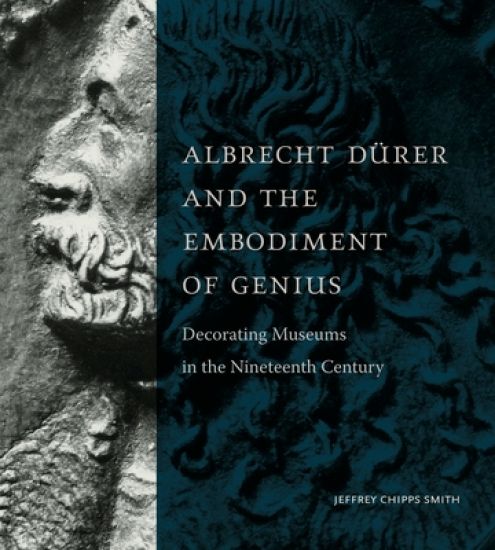
Albrecht Dürer and the Embodiment of Genius
Jeffrey Chipps Smith
Pennsylvania State University Press
2020
sidottu
During the nineteenth century, Albrecht Dürer’s art, piety, and personal character were held up as models to inspire contemporary artists and—it was hoped—to return Germany to international artistic eminence. In this book, Jeffrey Chipps Smith explores Dürer’s complex posthumous reception during the great century of museum building in Europe, with a particular focus on the artist’s role as a creative and moral exemplar for German artists and museum visitors.In an era when museums were emerging as symbols of civic, regional, and national identity, dozens of new national, princely, and civic museums began to feature portraits of Dürer in their elaborate decorative programs embellishing the facades, grand staircases, galleries, and ceremonial spaces. Most of these arose in Germany and Austria, though examples can be seen as far away as St. Petersburg, Stockholm, London, and New York City. Probing the cultural, political, and educational aspirations and rivalries of these museums and their patrons, Smith traces how Dürer was painted, sculpted, and prominently placed to accommodate the era’s diverse needs and aspirations. He investigates what these portraits can tell us about the rise of a distinct canon of famous Renaissance and Baroque artists—addressing the question of why Dürer was so often paired with Raphael, who was considered to embody the greatness of Italian art—and why, with the rise of German nationalism, Hans Holbein the Younger often replaced Raphael as Dürer’s partner.Accessibly written and comprehensive in scope, this book sheds new light on museum building in the nineteenth century and the rise of art history as a discipline. It will appeal to specialists in nineteenth-century and early modern art, the history of museums and collecting, and art historiography.

Albrecht Dürer (1471–1528) was hailed in his lifetime as a founder of the Northern Renaissance, and his work revolutionized the art of printmaking. Dürer was also the first artist outside Italy to leave behind a large body of writing. Contemporaries and succeeding generations added their accounts of him to this documentary legacy. Jeffrey Ashcroft’s new book provides the first English translation of the whole corpus of Dürer’s writings; the legal, financial, and administrative documentation of his life and work; and what others wrote about him during his life and in the following century. Translations of primary documents are accompanied by extensive commentary, providing Anglophone scholars access to German-language research. This unique combination of documentary evidence, current research, and exhaustive bibliography will doubtless become a definitive source for students and scholars of Dürer and his work, as well as for historians of early modern culture, language, and literature.

Albrecht Dürer and the Depiction of Cultural Differences in Renaissance Europe
Heather Madar
TAYLOR FRANCIS LTD
2023
sidottu
This book provides a comprehensive assessment of Dürer’s depictions of human diversity, focusing particularly on his depictions of figures from outside his Western European milieu.Heather Madar contextualizes those depictions within their broader artistic and historical context and assesses them in light of current theories about early modern concepts of cultural, ethnic, religious and racial diversity. The book also explores Dürer’s connections with contemporaries, his later legacy with respect to his imagery of the other and the broader significance of Nuremberg to early modern engagements with the world beyond Europe.The book will be of interest to scholars working in art history, Renaissance studies and Renaissance history.

Albrecht Dürer and the Depiction of Cultural Differences in Renaissance Europe
Heather Madar
TAYLOR FRANCIS LTD
2024
nidottu
This book provides a comprehensive assessment of Dürer’s depictions of human diversity, focusing particularly on his depictions of figures from outside his Western European milieu.Heather Madar contextualizes those depictions within their broader artistic and historical context and assesses them in light of current theories about early modern concepts of cultural, ethnic, religious and racial diversity. The book also explores Dürer’s connections with contemporaries, his later legacy with respect to his imagery of the other and the broader significance of Nuremberg to early modern engagements with the world beyond Europe.The book will be of interest to scholars working in art history, Renaissance studies and Renaissance history.

David Hotchkiss Price, a specialist in Renaissance cultural and ecclesiastical history, has broken new ground with this comprehensive analysis of Renaissance humanism as the foundation for Dürer's religious art and, in particular, for Dürer's reception of the Reformation movements. Price also offers an innovative study of the relationships between text and image, and a pioneering assessment of the representation of Jews in Dürer's religious art. David Price is Associate Professor of History and of Church History, Southern Methodist University.

Albrecht Durer was a master in various media, but it was in woodcut design that his creative genius reached its highest expression. Here are all of his extant woodcuts, a collection of over 300 great works containing all the familiar cuts long treasured by the world's art lovers: the celebrated series on the Life of the Virgin, The Apocalypse of John (17 cuts), The Great Passion, St. Jerome in his Study, Samson Fighting the Lion, The Fall of Icarus, The Six Knots, The Men's Bath, St. Christopher, The Virgin in Glory, The Rhinoceros, The Last Supper of 1523, illustrations from Durer's "The Art of Measurement" and from his four books on human proportion, and many others, including much little-known material. This book is the only available source for many of these works.Although sacred subjects predominate (the Holy Family, scenes from Christ's life, crucifixion, etc., the lives of the saints, Old Testament episodes), many other motifs are treated. There are portraits of prominent men of the ages, book illustrations (secular and religious), coats of arms, the celestial and terrestrial globes, animals, mythological and historical themes, etc. The plates are arranged generally in chronological order permitting the reader to view the development of Durer's art. From out of the gnarled figures and landscapes one can see the emergence of an individualistic style and skill unrivaled in this sphere.An introduction by Campbell Dodgson and a 34-page textual guide to the plates by Dr. Willi Kurth discuss the evidence and controversies surrounding the authenticity of each work, citing the opinions of all the important Durer scholars; they also furnish the reader with the historical background of the cuts and of Durer's life and times -- from the years of apprenticeship in Nuremberg to the last works of 1520-1528.All of the woodcuts are reproduced in excellent detail. This book is indispensable for the professional art historian and critic. To the layman with any aesthetic interests at all it will be a source of stimulation and satisfaction that only great art can provide.

The Complete Engravings, Etchings and Drypoints of Albrecht DüRer
Albrecht Dürer
Dover Publications Inc.
2000
nidottu
Albrecht Durer's 96 engravings, six etchings, and three dynamic drypoints are counted among his finest and best-known works. By the very nature of the medium, each fine line of an engraving is controlled by the artist and is dependent upon the pressure of the burin in his hand. In the engravings, Durer was therefore able to achieve an unprecedented intricacy of detail, subtlety of line, and three-dimensionality.All 105 of Durer's works in these three mediums are reproduced in this edition. Among them are his most famous works, -Knight, Death and Devil, - -Melencolia I, - and -St. Jerome in His Study-; also portraits of his contemporaries, including Erasmus of Rotterdam and Frederick the Wise, popular and religious subjects sold by Durer's wife at fairs, -Adam and Eve, - the Engraved Passion (15 subjects), and -The Virgin with the Dragonfly.- Many of these show him even more charming and subtle than do the comparative woodcuts. Reproductions of experimental impression offer the opportunity to study Durer's working method. Durer's subjects range from scenes of the New Testament and the life of the Saints to portrayals of peasant personalities and representations of portentous events, such as -The Four Witches- and -Sol Justitae, - done in 1499 in anticipation of the Final Judgment that was widely predicted for the end of the century. The engraving -The Monstrous Sow of Landser, - a pig born with one head, four ears, two bodies, eight feet, on six of which it stood, and with two tongues, - similarly recorded in event that was regarded as an ill omen.In the present edition, by means of shooting in most instances directly to lithographic film from the finest impressions, the engravings, where possible, have been printed so that even under a magnifying glass Durer's exact lines can be seen. Likewise, except in a very few cases, the sizes have been kept exactly to the originals, complete with border-lines where indicated. Walter L. Strauss has prepared the commentary for this edition with references to major catalogs, a summary of the statements of earlier commentators, and background material on the engravings, on Durer, and on the subjects of the works. If you are interested in Durer, a copy of this edition of the engravings is a must.