Kirjojen hintavertailu. Mukana 12 390 323 kirjaa ja 12 kauppaa.

Kirjahaku

Etsi kirjoja tekijän nimen, kirjan nimen tai ISBN:n perusteella.

1000 tulosta hakusanalla Aleksandr Solzhenitsyn

Prussian Nights: Bilingual Edition

Prussian Nights: Bilingual Edition

Aleksandr Solzhenitsyn

Farrar, Straus and Giroux
1977
nidottu
"The pictorial quality of the whole poem is an eye-opener. There is always a tendency, on the part of his detractors, to make of Solzhenitsyn something less than he is, but here is further evidence that he is something more than even his admirers thought." - Clive James, New Statesman
One Day in the Life of Ivan Denisovich

One Day in the Life of Ivan Denisovich

Aleksandr Solzhenitsyn

Farrar, Straus and Giroux
2014
nidottu
For the centenary of the Russian Revolution, a new edition of the Russian Nobel Prize-winning author's most accessible novel One Day in the Life of Ivan Denisovich is an undisputed classic of contemporary literature. First published (in censored form) in the Soviet journal Novy Mir in 1962, it is the story of labor-camp inmate Ivan Denisovich Shukhov as he struggles to maintain his dignity in the face of communist oppression. On every page of this graphic depiction of Ivan Denisovich's struggles, the pain of Aleksandr Solzhenitsyn's own decade-long experience in the gulag is apparent--which makes its ultimate tribute to one man's will to triumph over relentless dehumanization all the more moving. An unforgettable portrait of the entire world of Stalin's forced-work camps, One Day in the Life of Ivan Denisovich is one of the most extraordinary literary works to have emerged from the Soviet Union. The first of Solzhenitsyn's novels to be published, it forced both the Soviet Union and the West to confront the Soviet's human rights record, and the novel was specifically mentioned in the presentation speech when Solzhenitsyn was awarded the Nobel Prize in Literature in 1970. Above all, One Day in the Life of Ivan Denisovich establishes Solzhenitsyn's stature as "a literary genius whose talent matches that of Dostoevsky, Turgenev, Tolstoy" (Harrison Salisbury, The New York Times). This unexpurgated, widely acclaimed translation by H. T. Willetts is the only translation authorized by Solzhenitsyn himself.
August 1914: A Novel: The Red Wheel I

August 1914: A Novel: The Red Wheel I

Aleksandr Solzhenitsyn

Farrar, Straus and Giroux
2014
nidottu
The Russian Nobelist's major work, back in print for the centenary of World War I and the Russian Revolution In his monumental narrative of the outbreak of the First World War and the ill-fated Russian offensive into East Prussia, Aleksandr Solzhenitsyn has written "a dramatically new interpretation of Russian history" (Nina Krushcheva, The Nation). The assassination of the tsarist prime minister Pyotr Stolypin, a crucial event in the years leading up to the Revolution of 1917, is reconstructed from the alienating viewpoints of historical witnesses. The sole voice of reason among the advisers to Tsar Nikolai II, Stolypin died at the hands of the anarchist Mordko Bogrov, and with him Russia's last hope for reform perished. August 1914 is the first volume of Solzhenitsyn's epic, The Red Wheel; the second is November 1916. Each volume concentrates on a critical moment or "knot" in the history of the Russian Revolution.
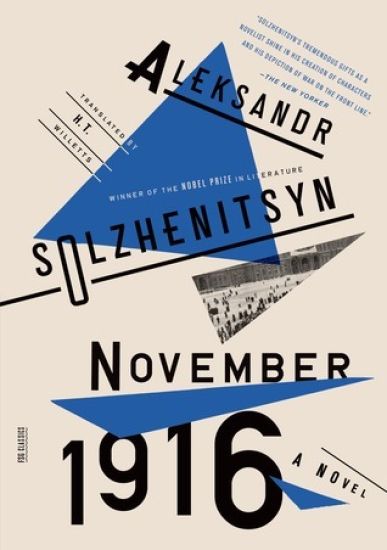
November 1916: A Novel: The Red Wheel II

November 1916: A Novel: The Red Wheel II

Aleksandr Solzhenitsyn

Farrar, Straus and Giroux
2014
nidottu
In time for the centenary of the beginning of the Russian Revolution, a new edition of the Russian Nobelist's major work The month of November 1916 in Russia was outwardly quiet--the proverbial calm before the storm--but beneath the placid surface, society seethed fiercely. In Petrograd, as St. Petersburg was then known, luxury-store windows are still brightly lit; the Duma debates the monarchy, the course of war, and clashing paths to reform; the workers in the miserable munitions factories veer toward sedition. At the front, all is stalemate, while in the countryside sullen anxiety among hard-pressed farmers is rapidly replacing patriotism. In Zurich, Lenin, with the smallest of all revolutionary groups, plots his sinister logistical miracle. With masterly and moving empathy, through the eyes of both historical and fictional protagonists, Solzhenitsyn unforgettably transports us to that time and place--the last of pre-Soviet Russia. November 1916 is the second volume in Aleksandr Solzhenitsyn's multipart work, The Red Wheel. This volume concentrates on a historical turning point, or "knot," as the wheel rolls inexorably toward revolution.
Cancer Ward

Cancer Ward

Aleksandr Solzhenitsyn

Farrar, Straus and Giroux
2015
nidottu
The Russian Nobelist's semiautobiographical novel set in a Soviet cancer ward shortly after Stalin's death One of the great allegorical masterpieces of world literature, Aleksandr Solzhenitsyn's Cancer Ward is both a deeply compassionate study of people facing terminal illness and a brilliant dissection of the cancerous Soviet police state.Cancer Ward, which has been compared to the masterpiece of another Nobel Prize winner, The Magic Mountain by Thomas Mann, examines the relationship of a group of people in the cancer ward of a provincial Soviet hospital in 1955, two years after Stalin's death. While the experiences of the central character, Oleg Kostoglotov, closely reflect the author's own--Solzhenitsyn became a patient in a cancer ward in the mid-1950s, on his release from a labor camp, and later recovered--the patients, as a group, represent a remarkable cross section of contemporary Russian characters and attitudes, both under normal circumstances and then reexamined at the eleventh hour of illness. A seminal work from one of the most powerful voices in twentieth century literature, Cancer Ward offers an extraordinary portrait of life in the Soviet Union.
Stories and Prose Poems

Stories and Prose Poems

Aleksandr Solzhenitsyn

Farrar, Straus and Giroux
2015
nidottu
A new edition of the Russian Nobelist's collection of novellas, short stories, and prose poems Stories and Prose Poems collects twenty-two works of wide-ranging style and character from the Nobel Prize-winner Aleksandr Solzhenitsyn, whose shorter pieces showcase the extraordinary mastery of language that places him among the greatest Russian prose writers of the twentieth century.When the two superb stories "Matryona's House" and "An Incident at Krechetovka Station" were first published in Russia in 1963, the Moscow Literary Gazette, the mouthpiece of the Soviet literary establishment, wrote: "His talent is so individual and so striking that from now on nothing that comes from his pen can fail to excite the liveliest interest." The novella For the Good of the Cause and the short story "Zakhar-the-Pouch" in particular--both published in the Soviet Union before Solzhenitsyn's exile--fearlessly address the deadening stranglehold of Soviet bureaucracy and the scandalous neglect of Russia's cultural heritage. But readers who best know Solzhenitsyn through his novels will be delighted to discover the astonishing group of sixteen "prose poems." In these works of varying lengths--some as short as an aphorism--Solzhenitsyn distills the joy and bitterness of Russia's fate into language of unrivaled lyrical purity.
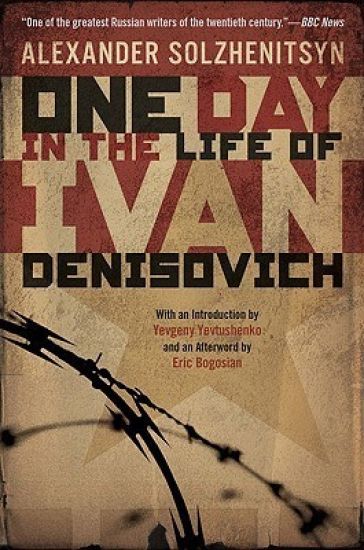
One Day in the Life of Ivan Denisovich

One Day in the Life of Ivan Denisovich

Aleksandr Solzhenitsyn

BERKLEY BOOKS
2009
nidottu
The first published novel from the controversial Nobel Prize winning Russian author of The Gulag Archipelago. In the madness of World War II, a dutiful Russian soldier is wrongfully convicted of treason and sentenced to ten years in a Siberian labor camp. So begins this masterpiece of modern Russian fiction, a harrowing account of a man who has conceded to all things evil with dignity and strength. First published in 1962, One Day in the Life of Ivan Denisovich is considered one of the most significant works ever to emerge from Soviet Russia. Illuminating a dark chapter in Russian history, it is at once a graphic picture of work camp life and a moving tribute to man's will to prevail over relentless dehumanization. Includes an Introduction by Yevgeny Yevtushenkoand an Afterword by Eric Bogosian
One Day in the Life of Ivan Denisovich: (50th Anniversary Edition)
The first published novel from the controversial Nobel Prize winning Russian author of The Gulag Archipelago. In the madness of World War II, a dutiful Russian soldier is wrongfully convicted of treason and sentenced to ten years in a Siberian labor camp. So begins this masterpiece of modern Russian fiction, a harrowing account of a man who has conceded to all things evil with dignity and strength. First published in 1962, One Day in the Life of Ivan Denisovich is considered one of the most significant works ever to emerge from Soviet Russia. Illuminating a dark chapter in Russian history, it is at once a graphic picture of work camp life and a moving tribute to man's will to prevail over relentless dehumanization. Includes an Introduction by Yevgeny Yevtushenkoand an Afterword by Eric Bogosian
One Day in the Life of Ivan Denisovich

One Day in the Life of Ivan Denisovich

Aleksandr Solzhenitsyn

Bantam Classics
1984
pokkari
"Stark . . . the story of how one falsely accused convict and his fellow prisoners survived or perished in an arctic slave labor camp after the war."--Time From the icy blast of reveille through the sweet release of sleep, Ivan Denisovich endures. A common carpenter, he is one of millions viciously imprisoned for countless years on baseless charges, sentenced to the waking nightmare of the Soviet work camps in Siberia. Even in the face of degrading hatred, where life is reduced to a bowl of gruel and a rare cigarette, hope and dignity prevail. This powerful novel of fact is a scathing indictment of Communist tyranny, and an eloquent affirmation of the human spirit. The prodigious works of Alexander Solzhenitsyn, including his acclaimed The Gulag Archipelago, have secured his place in the great tradition of Russian literary giants. Ironically, One Day in the Life of Ivan Denisovich is the only one of his works permitted publication in his native land. Praise for One Day in the Life of Ivan Denisovich "Cannot fail to arouse bitterness and pain in the heart of the reader. A literary and political event of the first magnitude."--New Statesman"Both as a political tract and as a literary work, it is in the Doctor Zhivago category."--Washington Post"Dramatic . . . outspoken . . . graphically detailed . . . a moving human record."--Library Journal
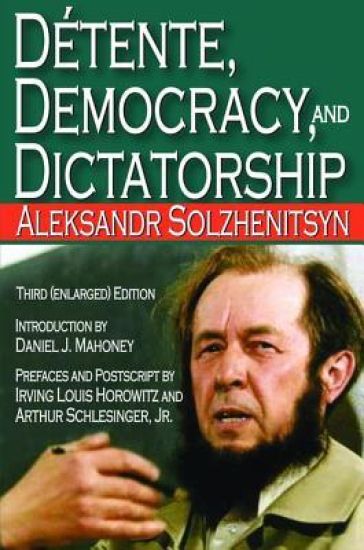
Detente, Democracy and Dictatorship

Detente, Democracy and Dictatorship

Aleksandr Solzhenitsyn

Routledge
2017
sidottu
The subject of Detente, Democracy and Dictatorship has been with us since the breakdown of the Cold War and the termination of the Soviet system, indeed, if not since the origins of Bolshevism. No more vigorous critic of the uneasy co-existence of democracy and dictatorship exists than the greatest writer that the Soviet era of Russian history produced, Aleksandr Solzhenitsyn.This third edition is based on major addresses, especially aimed at Americans, delivered in 1975 in Washington, D.C. and New York, and again, in 1978, at Harvard University in Cambridge, all on the subject of detente, democracy and dictatorship. It also includes Solzhenitsyn's final 2007 interview with the German publication Der Spiegel.These major statements are brilliant and forthright comment on the risks of confusing ideology with diplomacy. But more than that, they summarize the Soviet debacle, the theoretical underpinnings, and distill Solzhenitsyn's multi-volumed masterpiece, the Gulag Archipelago.
Detente, Democracy and Dictatorship

Detente, Democracy and Dictatorship

Aleksandr Solzhenitsyn

AldineTransaction
2009
nidottu
The subject of Detente, Democracy and Dictatorship has been with us since the breakdown of the Cold War and the termination of the Soviet system, indeed, if not since the origins of Bolshevism. No more vigorous critic of the uneasy co-existence of democracy and dictatorship exists than the greatest writer that the Soviet era of Russian history produced, Aleksandr Solzhenitsyn.This third edition is based on major addresses, especially aimed at Americans, delivered in 1975 in Washington, D.C. and New York, and again, in 1978, at Harvard University in Cambridge, all on the subject of detente, democracy and dictatorship. It also includes Solzhenitsyn's final 2007 interview with the German publication Der Spiegel.These major statements are brilliant and forthright comment on the risks of confusing ideology with diplomacy. But more than that, they summarize the Soviet debacle, the theoretical underpinnings, and distill Solzhenitsyn's multi-volumed masterpiece, the Gulag Archipelago.
Apricot Jam

Apricot Jam

Aleksandr Solzhenitsyn

Counterpoint
2012
pokkari
After years of living in exile, Aleksandr Solzhenitsyn returned to Russia in 1994 and published a series of eight powerfully paired stories. These groundbreaking worksinterconnected and juxtaposed using an experimental method Solzhenitsyn referred to as binary join Solzhenitsyn s already available fiction as some of the most powerful literature of the twentieth century. With Soviet and post-Soviety life as their focus, these stories weave and shift inside their shared setting, illuminating the Russian experience under the Soviet regime. In The Upcoming Generation, a professor promotes a dull but proletarian student purely out of good will. Years later, the same professor finds himself arrested and, in a striking twist of fate, his student becomes his interrogator. In Nastenka, two young women with the same name lead routine, ordered livesuntil the Revolution exacts radical change on them both. The most eloquent and acclaimed opponent of government oppression, Solzhenitsyn was awarded the Nobel Prize in Literature in 1970, and his work continues to receive international acclaim. Available for the first time in English, "Apricot Jam and Other Stories" is a striking example of Solzhenitsyn s singular style and only further solidifies his place as a true literary giant."
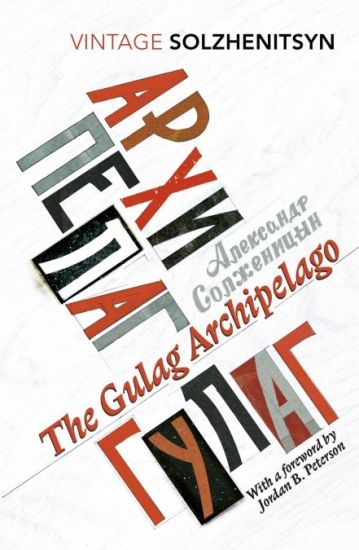
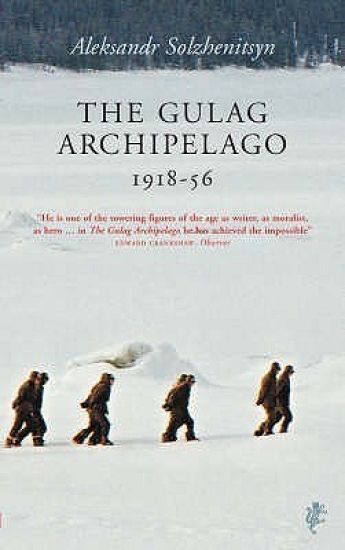
The Gulag Archipelago

The Gulag Archipelago

Aleksandr Solzhenitsyn

Vintage Classics
2018
pokkari
Solzhenitsyn spent eleven years in labour camps and in exile.This book is his masterwork, based on his own experiences as well as the testimony of some 200 survivors. A vast canvas of camps, prisons, transit centres and secret police, of informers and spies and interrogators but also of everyday heroism, it chronicles the story of those who dared to oppose Stalin, and for whom the key to survival lay not in hope but in despair. A thoroughly researched document and a feat of literary and imaginative power, this edition of The Gulag Archipelago was abridged into one volume at the request of the author.'Helped to bring down an empire. Its importance can hardly be exaggerated' Doris Lessing, Sunday Telegraph'Solzhenitsyn’s masterpiece...helped create the world we live in today' Anne ApplebaumWITH AN AFTERWORD BY JORDAN B. PETERSONTHE OFFICIALLY APPROVED ABRIDGEMENT OF THE GULAG ARCHIPELAGO VOLUMES I, II & III
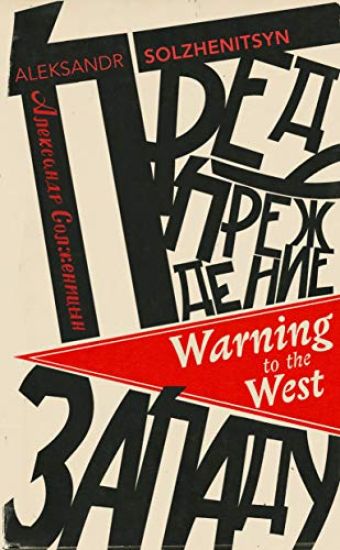
Warning to the West

Warning to the West

Aleksandr Solzhenitsyn

Vintage Publishing
2019
pokkari
From Solzhenitsyn's warnings about the allure of communism, to his rebuke that the West should not abandon its age-old concepts of 'good' and 'evil', the speeches collected in Warning to the West provide insight into Solzhenitsyn's uncompromising moral vision.
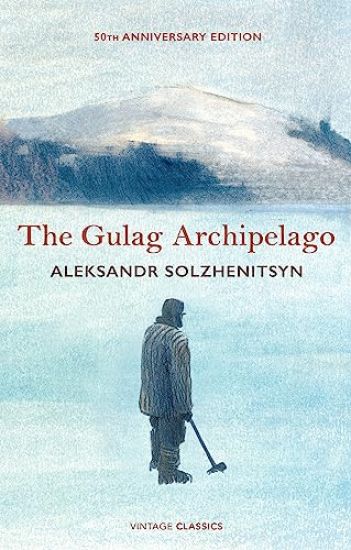
The Gulag Archipelago

The Gulag Archipelago

Aleksandr Solzhenitsyn

Vintage Publishing
2023
sidottu
'[The Gulag Archipelago] helped to bring down an empire. Its importance can hardly be exaggerated' Doris Lessing, Sunday TelegraphWITH A NEW INTRODUCTION BY NATALIA SOLZHENITSYNA vast canvas of camps, prisons, transit centres and secret police, of informers and spies and interrogators but also of everyday heroism, The Gulag Archipelago is Aleksandr Solzhenitsyn's grand masterwork. Based on the testimony of some 200 survivors, and on the recollection of Solzhenitsyn's own eleven years in labour camps and exile, it chronicles the story of those at the heart of the Soviet Union who opposed Stalin, and for whom the key to survival lay not in hope but in despair.A thoroughly researched document and a feat of literary and imaginative power, this edition of The Gulag Archipelago was abridged into one volume at the author's wish and with his full co-operation.'Solzhenitsyn's masterpiece...The Gulag Archipelago helped create the world we live in today' Anne ApplebaumTHE OFFICIALLY APPROVED ABRIDGEMENT OF THE GULAG ARCHIPELAGO VOLUMES I, II & III
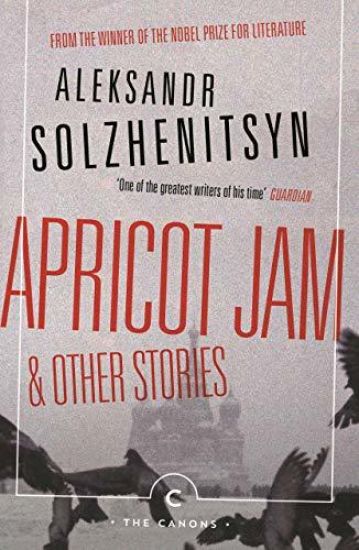
Apricot Jam and Other Stories

Apricot Jam and Other Stories

Aleksandr Solzhenitsyn

Canongate Canons
2018
pokkari
In this, his atmospheric final work of fiction, the Nobel Prize-winning author of One Day in the Life of Ivan Denisovich introduces an unforgettable set of characters whose day-to-day lives are transformed under the pressures of Soviet rule. These stories confirm Solzhenitsyn's position alongside Tolstoy, Dostoyevsky and Gogol as one of Russia's great writers.
The Gulag Archipelago

The Gulag Archipelago

Aleksandr Solzhenitsyn

Vintage Publishing
2003
pokkari
The Gulag Archipelago is Solzhenitsyn's masterwork, a vast canvas of camps, prisons, transit centres and secret police, of informers and spies and interrogators and also of heroism, a Stalinist anti-world at the heart of the Soviet Union where the key to survival lay not in hope but in despair.The work is based on the testimony of some two hundred survivors, and on the recollection of Solzhenitsyn's own eleven years in labour camps and exile. It is both a thoroughly researched document and a feat of literary and imaginative power. This edition has been abridged into one volume at the author's wish and with his full co-operation.
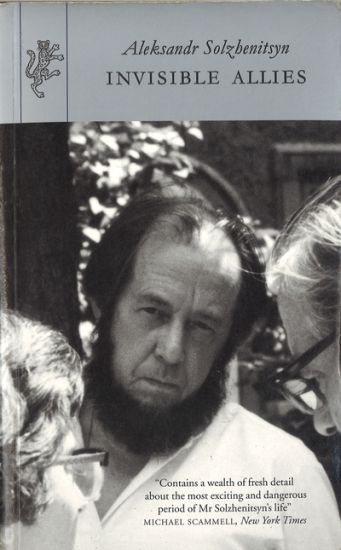
Invisible Allies

Invisible Allies

Aleksandr Solzhenitsyn

The Harvill Press
2014
nidottu
After his expulsion from Russia in 1974 for undermining the Communist regime, Solzhenitsyn wrote a secret record, while it was still fresh in his mind, of the courageous efforts of people who hid his writings and smuggled them to the West. Before the fall of Communism he could not have published Invisible Allies in conjunction with his memoir The Oak and the Calf without putting those friends in jeopardy. Now the facts may be revealed in this intimate account of the network of individuals who risked life and liberty to ensure that his works were concealed, circulated in "samizdat", and exported via illicit channels. These conspirators, often unknown to one another, shared a devotion to the dissident writer's work and a hatred of an oppressive regime of censorship and denunciation. The circle was varied enough to include scholars and fellow writers, and also elderly babushkas who acted as couriers. With tenderness, respect and humour, Solzhenitsyn speaks of these partners in conspiracy: the women who typed copies of his works under the noses of prying neighbours; the journalists and diplomats who covertly carried microfilms across borders; the friends who hid various drafts of his works from the vigilance of the secret police.