

Kirjahaku
Etsi kirjoja tekijän nimen, kirjan nimen tai ISBN:n perusteella.
1000 tulosta hakusanalla Alex Alexander



An Initiated Mechanic's View of the Seven Liberal Arts and Sciences
Alex Alexander
Authorhouse
2022
pokkari
This book called an initiated Mechanic's view of the seven liberal arts and sciences is written for initiated Mechanics. It has been prepared in the spirit of brotherhood for the purpose of shedding forth some light on the liberal arts. In the second Degree of Mechanism, the first part of four degrees belonging to the fellow-craft Mechanics Degrees mention "the study of the liberal arts, that valuable branch of education, which tends so effectually to polish and adorn the mind, is earnestly recommended to your consideration, especially the science of geometry or Mechanism." But the ritual did not tell the initiated Mechanics what those liberal arts were and the order in which they are structured. These liberal arts (called the Seven Liberal Arts and Sciences) had served as the basis for education anciently and throughout the Middle Ages when they were believed to be the sum total of all knowledge that was worth while to a complete education. They were known as "artes liberales" from the Latin "liber" meaning Free. In this sense they were the subjects available to free men and were a contrast from the "artes illiberales", which were taught for purely economic reasons that a man may earn a living. These arts were the operative arts of the workmen and were considered less desirable educational pursuits. While we have adopted the seven liberal arts and sciences from the Medieval era, they were known in the Pythagorean and Platonic eras. They were arranged in such a way as to show forth a progression in education. The first three liberal arts constituted what was called the trivium; the other four were called the quadrivium. The trivium consisted of Grammar, Logic, and Rhetoric. The trivium the path of three roads and they were the three paths or roads that lead to the truth of Mind. The quadrivium consisted of Arithmetic, Geometry, Music and Astronomy. The term quadrivium from the Latin "quatuor" mean four, thus the quadrivium was the four path or roads that lead to the truth of Matter. Thus, when one studies targeted subjects, such as those that constitute the trivium (grammar, logic, and rhetoric) and the quadrivium (arithmetic, geometry, music, and astronomy), precise areas of the brain are exposed to a pattern that enhance the brain's natural abilities in that region of the brain, thus brain function becomes more orderly, from chaos to order to help accomplish any goal in life. And that is the reason why initiated mechanics are earnestly recommended the studies of the Liberal Arts (or the seven liberal arts and sciences) which tends so effectually to polish and adorn the mind, that cause initiated Mechanics to be more conscious or aware of and responding to their surroundings.
An Initiated Mechanic's View of the Seven Liberal Arts and Sciences
Alex Alexander
Authorhouse
2022
sidottu
This book called an initiated Mechanic's view of the seven liberal arts and sciences is written for initiated Mechanics. It has been prepared in the spirit of brotherhood for the purpose of shedding forth some light on the liberal arts. In the second Degree of Mechanism, the first part of four degrees belonging to the fellow-craft Mechanics Degrees mention "the study of the liberal arts, that valuable branch of education, which tends so effectually to polish and adorn the mind, is earnestly recommended to your consideration, especially the science of geometry or Mechanism." But the ritual did not tell the initiated Mechanics what those liberal arts were and the order in which they are structured. These liberal arts (called the Seven Liberal Arts and Sciences) had served as the basis for education anciently and throughout the Middle Ages when they were believed to be the sum total of all knowledge that was worth while to a complete education. They were known as "artes liberales" from the Latin "liber" meaning Free. In this sense they were the subjects available to free men and were a contrast from the "artes illiberales", which were taught for purely economic reasons that a man may earn a living. These arts were the operative arts of the workmen and were considered less desirable educational pursuits. While we have adopted the seven liberal arts and sciences from the Medieval era, they were known in the Pythagorean and Platonic eras. They were arranged in such a way as to show forth a progression in education. The first three liberal arts constituted what was called the trivium; the other four were called the quadrivium. The trivium consisted of Grammar, Logic, and Rhetoric. The trivium the path of three roads and they were the three paths or roads that lead to the truth of Mind. The quadrivium consisted of Arithmetic, Geometry, Music and Astronomy. The term quadrivium from the Latin "quatuor" mean four, thus the quadrivium was the four path or roads that lead to the truth of Matter. Thus, when one studies targeted subjects, such as those that constitute the trivium (grammar, logic, and rhetoric) and the quadrivium (arithmetic, geometry, music, and astronomy), precise areas of the brain are exposed to a pattern that enhance the brain's natural abilities in that region of the brain, thus brain function becomes more orderly, from chaos to order to help accomplish any goal in life. And that is the reason why initiated mechanics are earnestly recommended the studies of the Liberal Arts (or the seven liberal arts and sciences) which tends so effectually to polish and adorn the mind, that cause initiated Mechanics to be more conscious or aware of and responding to their surroundings.

Times were hard in Texas after the Civil War. The carpetbaggers from the north had their own Tax Collectors working with the new Texas Government set up by the Federal Government. The Tax of all Texas Properties were now handled by them. The Tax Collector had two books one for the State Land Office and one for their carpetbaggers. The state got very little of what the Tax Collector called for. It was a very high tax which the property owner could not pay. The Tax Collector then took the property for their partners, the carpetbaggers who took the land without paying a penny. This aroused two men who took their thoughts to the Texas Judges who had contact with the United States Supreme Court and things in their part of Central Texas changed and the Carpetbaggers didn't like it. Them the trouble started.
20 Lessons From A 20 Year Old F*ckup: What I wish I knew When I was Younger
Alex Alexander Trubnikov
Independently Published
2019
nidottu
How motivated are you to change? It is one thing to read motivational books and watch inspirational videos, but it is another thing entirely to be-and stay-motivated and inspired enough to work toward your aspirations, daily.In this motivational self-help guide, Alex Trubnikov bares his truth with us about his life as a destitute Israeli who migrated to America with his family and had his entire perspective and outlook on life drastically altered-for the better The author offers a navigational step-by-step guide toward self-improvement. Using personal experience as fuel, 20 Lessons From a 20-Year-Old F*ckup assures us that anyone, no matter their background or situational stance, can change their life path by altering their mindset and actively applying the steps and advice offered in this guide.Here's just a taste of some of the astute nuggets of wisdom toward life improvement offered in this book: - The importance of knowledge- The relevance of networking- The imperativeness of self-investment- The power of saying, "No"- Your First Love Isn't Your Last One - Promise- The value of making time for family and friends- The significance of eliminating fear by facing fear- The prudence of financial management- The priority of mental and physical health- The reward and value of gratitudeAlex Trubnikov might be young, but his experiences are real. He has learned, and he has grown-mentally, intellectually, and physically-in his twenty years. He is determined, disciplined, inspired, and motivated, and he wants you to be, too. Writing this book is his first step toward helping and inspiring others to becoming the best version of themselves.If you are serious about improving not just your quality of life but also your attitude toward it, then do not pass up on this inspirational, motivational gem. You will leave the pages of this book open-eyed, galvanized, and determined.Get inspired. Stay inspired.

Notes on the Fenland
Thomas McKenny Hughes; Alex (Alexander)? MacAlister
Anson Street Press
2025
pokkari
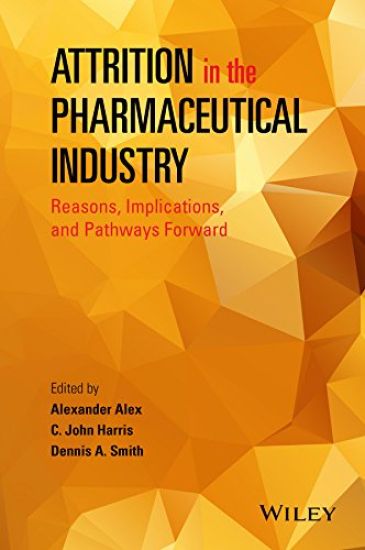
Attrition in the Pharmaceutical Industry
Alexander Alex; C. John Harris; Dennis A. Smith
John Wiley Sons Inc
2015
sidottu
With a focus on case studies of R&D programs in a variety of disease areas, the book highlights fundamental productivity issues the pharmaceutical industry has been facing and explores potential ways of improving research effectiveness and efficiency. Takes a comprehensive and holistic approach to the problems and potential solutions to drug compound attritionTackles a problem that adds billions of dollars to drug development programs and health care costsGuides discovery and development scientists through R&D stages, teaching requirements and reasons why drugs can failDiscusses potential ways forward utilizing new approaches and opportunities to reduce attrition




The Poems of Alexander Lawrence Posey: Alex Posey, the Creek Indian Poet
Alexander Lawrence Posey
Literary Licensing, LLC
2014
nidottu
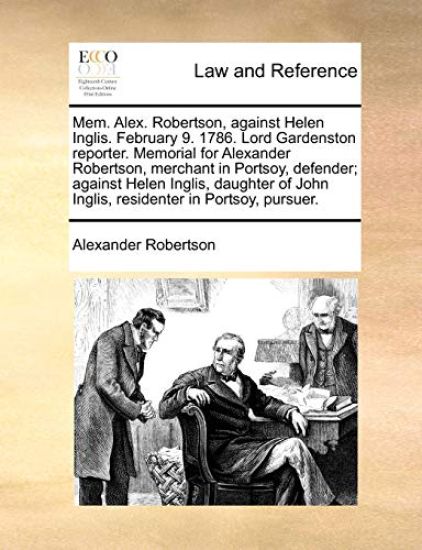
Mem. Alex. Robertson, Against Helen Inglis. February 9. 1786. Lord Gardenston Reporter. Memorial for Alexander Robertson, Merchant in Portsoy, Defender; Against Helen Inglis, Daughter of John Inglis, Residenter in Portsoy, Pursuer.
Alexander Robertson
Gale Ecco, Print Editions
2010
pokkari

Mem. Alex. Robertson, Against Helen Inglis. February 9. 1786. Lord Gardenston Reporter. Memorial for Alexander Robertson, Merchant in Portsoy, Defender; Against Helen Inglis, Daughter of John Inglis, Residenter in Portsoy, Pursuer
Alexander Robertson
Gale Ecco, Print Editions
2018
sidottu
The 18th century was a wealth of knowledge, exploration and rapidly growing technology and expanding record-keeping made possible by advances in the printing press. In its determination to preserve the century of revolution, Gale initiated a revolution of its own: digitization of epic proportions to preserve these invaluable works in the largest archive of its kind. Now for the first time these high-quality digital copies of original 18th century manuscripts are available in print, making them highly accessible to libraries, undergraduate students, and independent scholars.This collection reveals the history of English common law and Empire law in a vastly changing world of British expansion. Dominating the legal field is the Commentaries of the Law of England by Sir William Blackstone, which first appeared in 1765. Reference works such as almanacs and catalogues continue to educate us by revealing the day-to-day workings of society.++++The below data was compiled from various identification fields in the bibliographic record of this title. This data is provided as an additional tool in helping to insure edition identification: ++++Bodleian Library (Oxford)T213384The words "Lord Gardenston reporter" in the drop-head title are enclosed in square brackets. Edinburgh, 1786]. 29, 1]p.; 4
ââ?¬Ë?Popular history at its very best, thought-provoking and accessible. Underpinned by serious research, and written with panache, it summons up a vanished worldââ?¬â?¢ SUNDAY TELEGRAPH
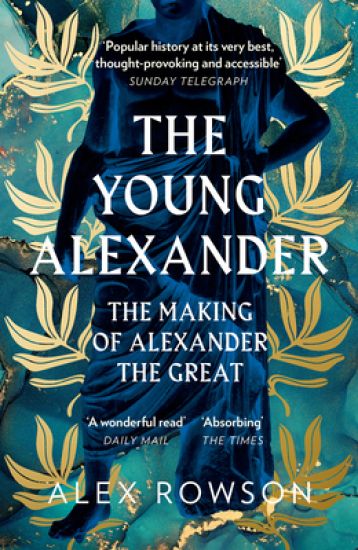
‘Popular history at its very best, thought-provoking and accessible. Underpinned by serious research, and written with panache, it summons up a vanished world’ SUNDAY TELEGRAPH This is an astonishing new account of Alexander the Great – one of the most important figures of the ancient world, whose earlier years have until now been a mystery. Alexander the Great’s story often reads like fiction: son to a snake-loving mother and a battle-scarred father; tutored by Aristotle; a youth from the periphery of the Greek world who took part in his first campaign aged sixteen, becoming king of Macedon at twenty and king of Asia by twenty-five; leading his armies into battle like a Homeric figure. Each generation has peered through the frosted glass of history and come to their own conclusion about Alexander, be it enlightened ruler, military genius, megalomaniac, drunkard or despot. Yet the first two decades of his life have until now been a mystery – a matter of legend and myth. This extraordinary history draws on new discoveries in archaeology to tell the early story of Alexander and his rise – including detail on the tempestuous relationship between Alexander’s parents, Philip and the Molossian princess Olympias, his education by Aristotle and the strict military training which would serve him so well in later years. And more than ever, it emerges, the story of Alexander’s reign confronts us with difficult questions that are still relevant today – of the relationship between East and West, the legacy of colonialism and the impacts of authoritarian rule. Drawing together startling modern archaeological discoveries, this book brings Alexander’s ancient world back into focus. With each fragment of this shattered past, excavated by shovel, pick and trowel, a new history is being written. The forgotten story of young Alexander is being unearthed.