Eberhard Arnold; Michael Plato; Alexi Sargeant; Susannah Black; Stephanie Bennett; Johann Christoph Arnold; Philip Britts; John Rhodes; Chico Fajardo-Heflin; Mark Bauerlein; Michael T. McRay; C. S. Lewis; Wendell Berry; Alfred Delp; Timothy Cardinal Dolan; Maureen Swinger
This issue of Plough Quarterly explores the effects of technology on human flourishing. Whether its artificial intelligence, genome editing, Big Tech monopolies, or social media–induced depression, we live in a world that is being reshaped by technology from the ground up. How do we stay human? This issue of Plough Quarterly addresses challenges ranging from the lure of transhumanism to the erosion of silence by the smartphone. Technophobia is no answer, our contributors agree, but neither is a refusal to tackle real dangers. They ask: Why not try living without a computer or a television? Why give tablets to children when Steve Jobs refused to give them to his kids? Why write using a keyboard when you could wield a fountain pen? Technological asceticism of this kind won’t solve society-wide dilemmas. But it can help us maintain the spiritual independence needed to respond to them rightly. Also in this issue: original poetry by Jacob Stratman; reviews of new books by Ian Johnson, Steve Roud, and Markus Rathey; insights from Wendell Berry, Viktor Frankl, Ivan Illich, Carl Sandburg, C. S. Lewis, Alfred Delp, and Christoph Blumhardt; and art by Pieter Bruegel the Elder, Jack Baumgartner, Nicholas Roerich, Rachel Newling, Kay Polk, Suellen McCrary, Stephen Scott Young, Jie Wei Zhou, Kiéra Malone, Torkel Pettersson, Mari Rast, Albrecht Dürer, René Magritte, and Kyle T. Webster. Plough Quarterly features stories, ideas, and culture for people eager to put their faith into action. Each issue brings you in-depth articles, interviews, poetry, book reviews, and art to help you put Jesus’ message into practice and find common cause with others.

Drawing on insights from language teaching experts and real students, this Level 5 (CEFR A1) Full Contact with Digital Pack covers all skills and focuses on the most effective and efficient ways to make progress in English. The pack includes the student's book, workbook with downloadable audio, video resource book, audio and video. It comes with an 18-month access code for the eBook and an interactive workbook that allows teachers to easily track the performance of their students. All digital content is online and works on smartphones as well as tablets, laptops and desktop computers.
Most entrepreneurs are told the only way to grow is to borrow big or chase investors but that path often trades independence for risk. This book reveals a smarter alternative: scaling entirely on the profits you already earn. It s a blueprint for building momentum without debt, diluting ownership, or sacrificing the stability you ve worked so hard to create. For solo founders and small businesses ready to expand, it offers a clear, tested framework for profit-driven growth turning lean operations, strategic reinvestment, and organic marketing into a self-funding engine. You ll discover how to set prices for lasting margins, manage cash flow with precision, and reinvest in the right places at the right time so every dollar compounds your capacity. Learn how to: -Bootstrap a business beyond its first stage without exhausting yourself or your resources -Build a self-funded startup strategy that thrives in any market cycle -Use lean operations to cut waste while protecting quality and customer trust -Create an organic marketing playbook that builds brand equity without a constant ad spend -Master reinvestment strategy to grow steadily without losing control Through real-world examples, actionable systems, and insight into what makes some companies last while others flame out, this book equips you to grow with confidence and clarity. You ll see why companies that resist the lure of quick capital often win bigger in the long run and how you can join them. If you re ready to grow from what you ve got, protect your independence, and scale without outside money, this is the no-nonsense guide that will show you exactly how to do it.
'What would happen if everyone acted that way?' This question is often used in everyday moral assessments, but it has a paradoxical quality: it draws not only on Kantian ideas of a universal moral law but also on consequentialist claims that what is right depends on the outcome. In this book, Alex Tuckness examines how the question came to be seen as paradoxical, tracing its history from the theistic approaches of the seventeenth century to the secular accounts of the present. Tuckness shows that the earlier interpretations were hybrid theories that included both consequentialist and non-consequentialist elements, and argues that contemporary uses of this approach will likewise need to combine consequentialist and non-consequentialist commitments.
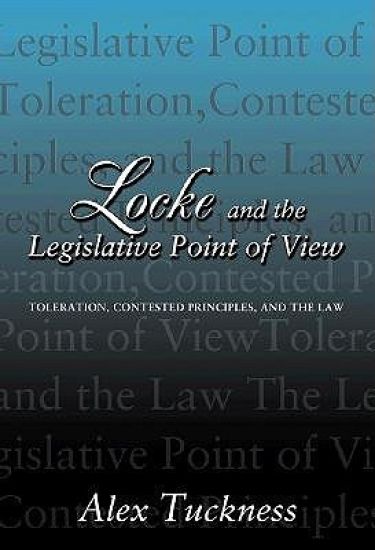
Determining which moral principles should guide political action is a vexing question in political theory. This is especially true when faced with the "toleration paradox": believing that something is morally wrong but also believing that it is wrong to suppress it. In this book, Alex Tuckness argues that John Locke's potential contribution to this debate--what Tuckness terms the "legislative point of view"--has long been obscured by overemphasis on his doctrine of consent. Building on a line of reasoning Locke made explicit in his later writings on religious toleration, Tuckness explores the idea that we should act politically only on those moral principles that a reasonable legislator would endorse; someone, that is, who would avoid enacting measures that could be self-defeating when applied by fallible human beings. Tuckness argues that the legislative point of view has implications that go far beyond the question of religious toleration. Locke suggests an approach to political justification that is a provocative alternative to the utilitarian, contractualist, and perfectionist approaches dominating contemporary liberalism. The legislative point of view is relevant to our thinking about many types of disputed principles, Tuckness writes. He examines claims of moral wrong, invocations of the public good, and contested political roles with emphasis on the roles of legislators and judges. This book is must reading not only for students and scholars of Locke but all those interested in liberalism, toleration, and constitutional theory.