Katie Petherick is young, beautiful and successful, but not content. For three years she has been earning a good living as an upmarket monthly live-in maternity nurse, working closely with wealthy couples and gaining their trust. It is not enough. Now it is decision time. Katie has a devious plan to make some serious cash, but there is considerable risk. She knows she is playing with fire, and she realises people are likely to get hurt - not least her boyfriend, Peter Dunkett. He is crazy about her, and he is too scrupulous ever to be happy about what she has in mind, but his need for money is even more pressing than Katie's.
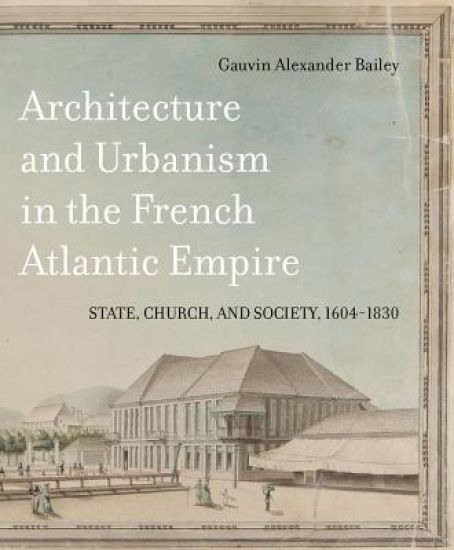
Spanning from the West African coast to the Canadian prairies and south to Louisiana, the Caribbean, and Guiana, France's Atlantic empire was one of the largest political entities in the Western Hemisphere. Yet despite France's status as a nation at the forefront of architecture and the structures and designs from this period that still remain, its colonial building program has never been considered on a hemispheric scale. Drawing from hundreds of plans, drawings, photographic field surveys, and extensive archival sources, Architecture and Urbanism in the French Atlantic Empire focuses on the French state's and the Catholic Church's ideals and motivations for their urban and architectural projects in the Americas. In vibrant detail, Gauvin Alexander Bailey recreates a world that has been largely destroyed by wars, natural disasters, and fires – from Cap-François (now Cap-Haïtien), which once boasted palaces in the styles of Louis XV and formal gardens patterned after Versailles, to failed utopian cities like Kourou in Guiana. Vividly illustrated with examples of grand buildings, churches, and gardens, as well as simple houses and cottages, this volume also brings to life the architects who built these structures, not only French military engineers and white civilian builders, but also the free people of colour and slaves who contributed so much to the tropical colonies. Taking readers on a historical tour through the striking landmarks of the French colonial landscape, Architecture and Urbanism in the French Atlantic Empire presents a sweeping panorama of an entire hemisphere of architecture and its legacy.
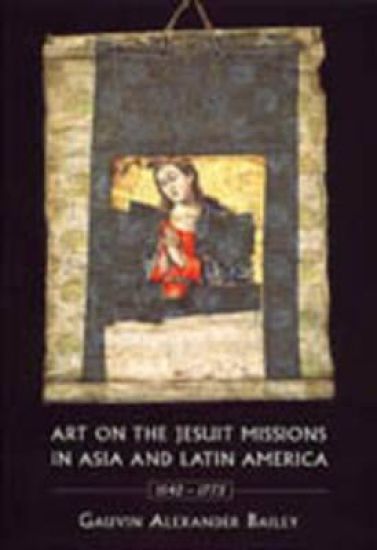
When the Jesuit missionaries ventured from Europe to newly discovered territories in Asia and Latin America, they brought with them the rich traditions of Renaissance and Baroque art and architecture. What happened to the artistic and social practices already thriving in the communities that the missionaries encountered is the story told by art historian and Jesuit specialist Gauvin Alexander Bailey. The Jesuits, determined to convert both spiritually and culturally, put great effort into imparting their own artistic techniques and knowledge. At the same time they were unusually tolerant of the non-European cultures, making artistic accommodations in order to communicate with each particular society. The resulting hybridization was complex: German, Italian, and Flemish as well as the dominant Spanish and Portuguese idioms mingled with multiple Asian and Amerindian traditions. Bailey argues that this cross-pollination of early modern art became the first truly global visual currency for cultural exchange. Through a sweeping look at Japan, China, Mughul India, and Paraguay, the author focuses on four of the most flourishing artistic encounters and discovers much unrecognized or misunderstood art. He overturns the simple thesis that art was imposed on subject cultures in favour of the more difficult paradigm of exchange. This meticulously researched book has over 100 beautiful illustrations and a thorough index. Winner of the 2000 Roland H. Bainton Prize Winner for Art and Music History - Sixteenth Century Studies Conference
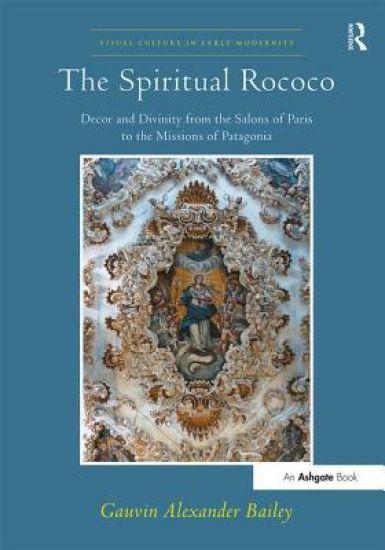
A groundbreaking approach to Rococo religious décor and spirituality in Europe and South America, The Spiritual Rococo addresses three basic conundrums that impede our understanding of eighteenth-century aesthetics and culture. Why did the Rococo, ostensibly the least spiritual style in the pre-Modern canon, transform into one of the world’s most important modes for adorning sacred spaces? And why is Rococo still treated as a decadent nemesis of the Enlightenment when the two had fundamental characteristics in common? This book seeks to answer these questions by treating Rococo as a global phenomenon for the first time and by exploring its moral and spiritual dimensions through the lens of populist French religious literature of the day-a body of work the author calls the ’Spiritual Rococo’ and which has never been applied directly to the arts. The book traces Rococo’s development from France through Central Europe, Portugal, Brazil, and South America by following a chain of interlocking case studies, whether artistic, literary, or ideological, and it also considers the parallel diffusion of the literature of the Spiritual Rococo in these same regions, placing particular emphasis on unpublished primary sources such as inventories. One of the ultimate goals of this study is to move beyond the cliché of Rococo’s frivolity and acknowledge its essential modernity. Thoroughly interdisciplinary, The Spiritual Rococo not only integrates different art historical fields in novel ways but also interacts with church and social history, literary and post-colonial studies, and anthropology, opening up new horizons in these fields.
A groundbreaking approach to Rococo religious décor and spirituality in Europe and South America, The Spiritual Rococo addresses three basic conundrums that impede our understanding of eighteenth-century aesthetics and culture. Why did the Rococo, ostensibly the least spiritual style in the pre-Modern canon, transform into one of the world’s most important modes for adorning sacred spaces? And why is Rococo still treated as a decadent nemesis of the Enlightenment when the two had fundamental characteristics in common? This book seeks to answer these questions by treating Rococo as a global phenomenon for the first time and by exploring its moral and spiritual dimensions through the lens of populist French religious literature of the day-a body of work the author calls the ’Spiritual Rococo’ and which has never been applied directly to the arts. The book traces Rococo’s development from France through Central Europe, Portugal, Brazil, and South America by following a chain of interlocking case studies, whether artistic, literary, or ideological, and it also considers the parallel diffusion of the literature of the Spiritual Rococo in these same regions, placing particular emphasis on unpublished primary sources such as inventories. One of the ultimate goals of this study is to move beyond the cliché of Rococo’s frivolity and acknowledge its essential modernity. Thoroughly interdisciplinary, The Spiritual Rococo not only integrates different art historical fields in novel ways but also interacts with church and social history, literary and post-colonial studies, and anthropology, opening up new horizons in these fields.
Between Renaissance and Baroque is a stunning achievement - the first book to be written about the original painting commissions of the Jesuits in Rome. Offering a uniquely comprehensive and comparative analysis of the paintings and stuccoes which adorned all of the Jesuit foundations in the city during their first half century of existence, the study treats some of the most crucial monuments of late Renaissance painting including the original decorations of the church of the Gesù and the Collegio Romano, and the martyrdom frescoes at S. Stefano Rotondo. Based on extensive new archival research from Rome, Florence, Parma, and Perugia, Gauvin Alexander Bailey's study presents an original, revisionist treatment of Italian painting in the last four decades of the sixteenth century, a critical transitional period between Renaissance and Baroque. Bailey relates the Jesuit painting cycles to the great religious and intellectual climate of the period, isolates the new stylistic trends which appeared after the Council of Trent, and looks at the different ways in which artists met the challenges for devotional art made by the religious climate of the post-Tridentine period. Bailey also succeeds in providing the first ever written reconstructions of the Jesuit churches of S. Tommaso di Canterbury, S. Saba, and S. Apollinare, and the original novitiate complex of S. Andrea al Quirinale, the site of the most complex and original hospital decoration in late Renaissance Italy. Through these reconstructions, Bailey sheds new light on such works as Louis Richeôme's meditation manual on the paintings at S. Andrea, Le peinture spirituelle, a lively and detailed treatise on late Renaissance art that has never before been the subject of a thorough study. Ultimately, Bailey provides us with a new understanding of the stylistic and iconographic strands which shortly afterward were woven together to form the Baroque.




![Doctor Victoria. a Picture from the Period. [A Novel.]](/covers/9781240898855.jpg)
![Doctor Victoria. a Picture from the Period. [A Novel.]](/covers/9781240898947.jpg)
![Doctor Victoria. A picture from the period. [A novel.]](/covers/9781240899241.jpg)