A Negro Explorer at the North Pole, has been considered an important book throughout the human history. So that this work is never forgotten we have made efforts in its preservation by republishing this book in a modern format for present and future generations. The whole book has been reformatted, retyped and designed. This book is not made of scanned copies and hence the text is clear and readable.
The Gospel of Saint Matthew - Vol. 2 is an unchanged, high-quality reprint of the original edition of 1892. Hansebooks is editor of the literature on different topic areas such as research and science, travel and expeditions, cooking and nutrition, medicine, and other genres. As a publisher we focus on the preservation of historical literature. Many works of historical writers and scientists are available today as antiques only. Hansebooks newly publishes these books and contributes to the preservation of literature which has become rare and historical knowledge for the future.
The main issue of the study is the translation of the Greek word "ἄφες" (forgive) as "patience" in the Farefare language of the Upper East Region of the Republic of Ghana. By examining the Farefare translation of the text, focusing on the use of the term "to have patience" instead of "to forgive," the research confirms that the Farefare translation consistently substitutes the verb "forgive" with the noun "patience," particularly in the context of human-to-human forgiveness. The researcher examined the usage of the word in the Bible, particularly in Matthew 6:12, and its translation in the Farefare Bible. The study maintains that the Farefare term suguru which is often used to translate "ἄφες," is inappropriate because suguru is a noun, while "ἄφες" is a verb. It is also established that the word bahɛ in Farefare, has the meaning of "forgive," and frequently accompanies the noun be'em (sin/wrongdoing). The cultural understanding of the Frafra people is that patience is necessary before granting forgiveness.
This study defines the relationship between humanism and liberalism by comparing the two Victorian figures who were most concerned with the preservation of humanistic values in a free and democratic society: Matthew Arnold and John Stuart Mill. The book sets apart Arnold and Mill from their contemporaries and points out their similarities to one another in discussions of their theories of history, poetry, their celebration of the contemplative life and their willingness to welcome democracy. At the same time it examines the differences between the two men, which he uses to create a dialogue between humanism and liberalism on the question of how a high cultural ideal can be realized in democratic society.
This study defines the relationship between humanism and liberalism by comparing the two Victorian figures who were most concerned with the preservation of humanistic values in a free and democratic society: Matthew Arnold and John Stuart Mill. The book sets apart Arnold and Mill from their contemporaries and points out their similarities to one another in discussions of their theories of history, poetry, their celebration of the contemplative life and their willingness to welcome democracy. At the same time it examines the differences between the two men, which he uses to create a dialogue between humanism and liberalism on the question of how a high cultural ideal can be realized in democratic society.
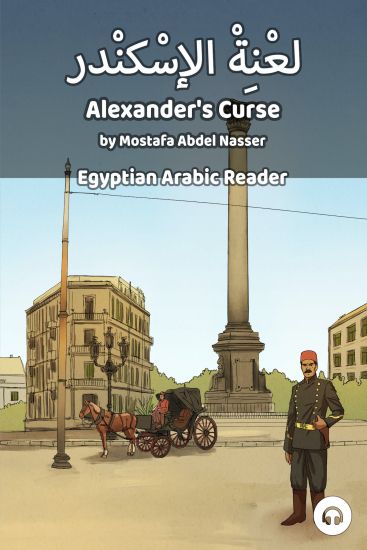
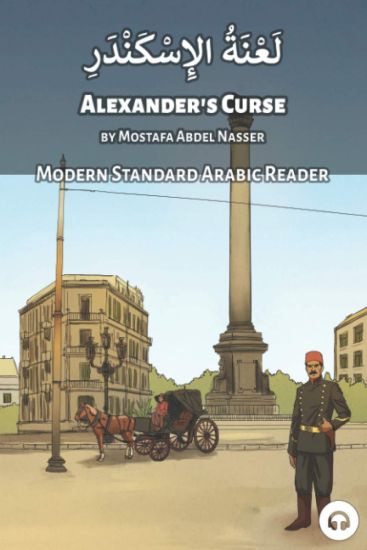
In British Colonial Egypt, Officer Qassem Sultan Afifi is sent to Alexandria to investigate the death of an Englishman. But will his own past be dug up in the process?The Egyptian Arabic Readers series aims to provide learners with much-needed exposure to authentic language. The fifteen books in the series are at a similar level (B1-B2) and can be read in any order. The stories are a fun and flexible tool for building vocabulary, improving language skills, and developing overall fluency. The main text is presented on left-facing pages with tashkeel (diacritics) to aid in reading, while parallel English translations on right-facing pages are there to help you better understand new words and idioms. A second version of the text is given at the back of the book, without the distraction of tashkeel and translations, for those who are up to the challenge.On the Lingualism website, you can find: free accompanying audio to download or stream (at variable playback rates)a guide to the Lingualism orthographic (spelling and tashkeel) systema blog with tips on using our Egyptian Arabic readers to learn effectively
The Gospel according to Matthew is an unchanged, high-quality reprint of the original edition of 1861. Hansebooks is editor of the literature on different topic areas such as research and science, travel and expeditions, cooking and nutrition, medicine, and other genres. As a publisher we focus on the preservation of historical literature. Many works of historical writers and scientists are available today as antiques only. Hansebooks newly publishes these books and contributes to the preservation of literature which has become rare and historical knowledge for the future.
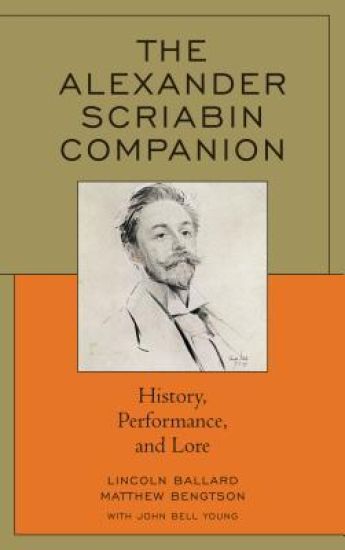
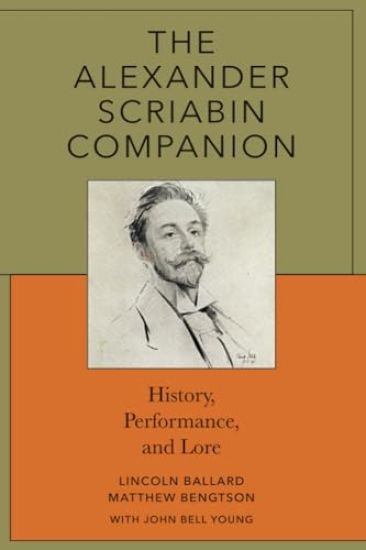
This unique collaboration between a musicologist and two pianists – all experts in Russian music – takes a fresh look at the supercharged music and polarizing reception of the Russian composer Alexander Scriabin. From his Chopin-inspired miniatures to his genre-bending symphonies and avant-garde late works, Scriabin left a unique mark on music history. Scriabin’s death centennial in 2015 brought wider exposure and renewed attention to this pioneering composer. Music lovers who are curious about Scriabin have been torn between specialized academic studies and popular sources that glamorize his interests and activities, often at the expense of historical accuracy. This book bridges the divide between these two branches of literature, and brings a modern perspective to his music and legacy. Drawing on archival materials, primary sources in Russian, and recently published books and articles, Part One details the reception and performance history of Scriabin’s solo piano and orchestral music. High quality recordings are recommended for each piece. Part Two explores four topics in Scriabin’s reception: the myths generated by Scriabin’s biographers, his claims to synaesthesia or “color-hearing,” his revival in 1960s America as a proto-Flower Child, and the charges of anti-Russianness leveled against his music. Part Three investigates stylistic context and performance practice in the piano music, and considers the domains of sound, rhythm, and harmony. It offers interpretive strategies for deciphering Scriabin’s challenging scores at the keyboard. Students, scholars, and music enthusiasts will benefit from the historical insights offered in this interdisciplinary book. Armed with this knowledge, readers will be able to better appreciate the stylistic innovations and colorful imagination of this extraordinary composer.
This unique collaboration between a musicologist and two pianists – all experts in Russian music – takes a fresh look at the supercharged music and polarizing reception of the Russian composer Alexander Scriabin. From his Chopin-inspired miniatures to his genre-bending symphonies and avant-garde late works, Scriabin left a unique mark on music history. Scriabin’s death centennial in 2015 brought wider exposure and renewed attention to this pioneering composer. Music lovers who are curious about Scriabin have been torn between specialized academic studies and popular sources that glamorize his interests and activities, often at the expense of historical accuracy. This book bridges the divide between these two branches of literature, and brings a modern perspective to his music and legacy. Drawing on archival materials, primary sources in Russian, and recently published books and articles, Part One details the reception and performance history of Scriabin’s solo piano and orchestral music. High quality recordings are recommended for each piece. Part Two explores four topics in Scriabin’s reception: the myths generated by Scriabin’s biographers, his claims to synaesthesia or “color-hearing,” his revival in 1960s America as a proto-Flower Child, and the charges of anti-Russianness leveled against his music. Part Three investigates stylistic context and performance practice in the piano music, and considers the domains of sound, rhythm, and harmony. It offers interpretive strategies for deciphering Scriabin’s challenging scores at the keyboard.Students, scholars, and music enthusiasts will benefit from the historical insights offered in this interdisciplinary book. Armed with this knowledge, readers will be able to better appreciate the stylistic innovations and colorful imagination of this extraordinary composer.