Kirjojen hintavertailu. Mukana 11 627 463 kirjaa ja 12 kauppaa.

Kirjahaku

Etsi kirjoja tekijän nimen, kirjan nimen tai ISBN:n perusteella.

1000 tulosta hakusanalla Alexander R. Mazziotti

One Body

One Body

Alexander R. Pruss

UNIVERSITY OF NOTRE DAME PRESS
2024
sidottu
This important philosophical reflection on love and sexuality from a broadly Christian perspective is aimed at philosophers, theologians, and educated Christian readers. Alexander R. Pruss focuses on foundational questions on the nature of romantic love and on controversial questions in sexual ethics on the basis of the fundamental idea that romantic love pursues union of two persons as one body. One Body begins with an account, inspired by St. Thomas Aquinas, of the general nature of love as constituted by components of goodwill, appreciation, and unitiveness. Different forms of love, such as parental, collegial, filial, friendly, fraternal, or romantic, Pruss argues, differ primarily not in terms of goodwill or appreciation but in terms of the kind of union that is sought. Pruss examines romantic love as distinguished from other kinds of love by a focus on a particular kind of union, a deep union as one body achieved through the joint biological striving of the sort involved in reproduction. Taking the account of the union that romantic love seeks as a foundation, the book considers the nature of marriage and applies its account to controversial ethical questions, such as the connection between love, sex, and commitment and the moral issues involving contraception, same-sex activity, and reproductive technology. With philosophical rigor and sophistication, Pruss provides carefully argued answers to controversial questions in Christian sexual ethics.
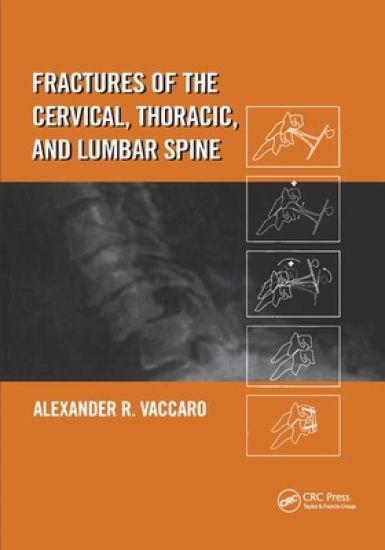
Fractures of the Cervical, Thoracic, and Lumbar Spine
This reference focuses on individualized spinal injury assessments, immobilization techniques, nonoperative and operative indications, operative fixation strategies, and prognoses. Containing over 1900 references, Fractures of the Cervical, Thoracic, and Lumbar Spine is an invaluable resource for orthopedic, spinal, and trauma surgeons; neurosurgeons; emergency medicine physicians; and neurologists; and residents, nurses, and medical school students in these disciplines.
The Principle of Sufficient Reason

The Principle of Sufficient Reason

Alexander R. Pruss

Cambridge University Press
2010
pokkari
The Principle of Sufficient Reason (PSR) says that all contingent facts must have explanation. In this 2006 volume, which was the first on the topic in the English language in nearly half a century, Alexander Pruss examines the substantive philosophical issues raised by the Principle Reason. Discussing various forms of the PSR and selected historical episodes, from Parmenides, Leibnez, and Hume, Pruss defends the claim that every true contingent proposition must have an explanation against major objections, including Hume's imaginability argument and Peter van Inwagen's argument that the PSR entails modal fatalism. Pruss also provides a number of positive arguments for the PSR, based on considerations as different as the metaphysics of existence, counterfactuals and modality, negative explanations, and the everyday applicability of the PSR. Moreover, Pruss shows how the PSR would advance the discussion in a number of disparate fields, including meta-ethics and the philosophy of mathematics.
The Principle of Sufficient Reason

The Principle of Sufficient Reason

Alexander R. Pruss

Cambridge University Press
2006
sidottu
The Principle of Sufficient Reason (PSR) says that all contingent facts must have explanation. In this 2006 volume, which was the first on the topic in the English language in nearly half a century, Alexander Pruss examines the substantive philosophical issues raised by the Principle Reason. Discussing various forms of the PSR and selected historical episodes, from Parmenides, Leibnez, and Hume, Pruss defends the claim that every true contingent proposition must have an explanation against major objections, including Hume's imaginability argument and Peter van Inwagen's argument that the PSR entails modal fatalism. Pruss also provides a number of positive arguments for the PSR, based on considerations as different as the metaphysics of existence, counterfactuals and modality, negative explanations, and the everyday applicability of the PSR. Moreover, Pruss shows how the PSR would advance the discussion in a number of disparate fields, including meta-ethics and the philosophy of mathematics.
Critical Rural Theory

Critical Rural Theory

Alexander R. Thomas; Brian Lowe; Greg Fulkerson; Polly Smith

Lexington Books
2013
nidottu
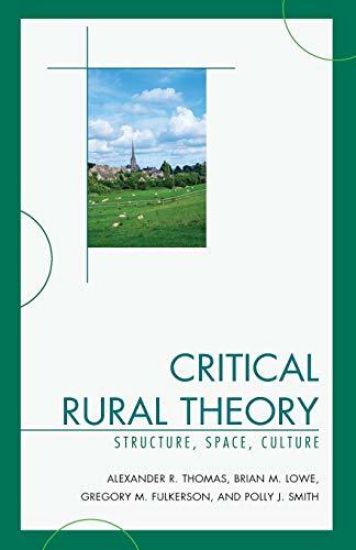
Critical Rural Theory is an attempt to bring together the concepts of structure, space, and culture in order to explain the relationship between rural communities and urban society. The overarching theme revolves around the many ways-structural, spatial, and cultural-in which urban systems create and maintain a hegemonic relationship with rural areas and people. Central to this theme is the concept of urbanormativity: the cultural assumption of the dominance and superiority of urban communities and patterns of life. Urbanormativity is an outgrowth of the structural forces in an urban society that favor the interests of cities over those of the countryside, of a generally exploitative relationship between the two. The structure of a society is encoded in the settlement space, which in turn influences one's experience. The experience of social space produces cultural dynamics that are reproduced from generation to generation. These mechanisms are explored through popular culture, physical patterns of urban expansion, and historical patterns of social change.
The Evolution of the Ancient City

The Evolution of the Ancient City

Alexander R. Thomas

Lexington Books
2010
sidottu
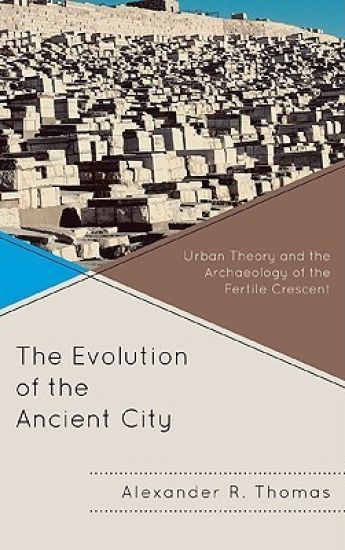
Urban theory and archaeology merge to create a readable discussion of how ancient cities came to be. Although many consider our modern social ills to be the consequence of Capitalism, many urban problems are traceable to pre-Capitalist times and thus are more related to Urbanization. Ancient cities shared many characteristics with modern cities. For instance, the ancient cities of Rome and Carthage at the time of Christ had population densities approaching that of Manhattan Island today. The Canaanites, fifteen hundred years before, lived in cities oriented toward trade and dependent upon mass production of such items as wine, olive oil, and the pottery to contain such goods. Over three thousand years before the Common Era, the city of Uruk was part of a larger "global system" that resembled in its own way the globalization that we know today. Cities first arose in Mesopotamia about 5,500 years ago, but for 5,500 years before the rise of cities the small agricultural village was the most complex form of human social organization—clearly there was nothing inevitable about the city. The Evolution of the Ancient City explores what we can learn of modern cities by tracing the development of ancient cities.
The Evolution of the Ancient City

The Evolution of the Ancient City

Alexander R. Thomas

Lexington Books
2012
nidottu
Urban theory and archaeology merge to create a readable discussion of how ancient cities came to be. Although many consider our modern social ills to be the consequence of Capitalism, many urban problems are traceable to pre-Capitalist times and thus are more related to Urbanization. Ancient cities shared many characteristics with modern cities. For instance, the ancient cities of Rome and Carthage at the time of Christ had population densities approaching that of Manhattan Island today. The Canaanites, fifteen hundred years before, lived in cities oriented toward trade and dependent upon mass production of such items as wine, olive oil, and the pottery to contain such goods. Over three thousand years before the Common Era, the city of Uruk was part of a larger "global system" that resembled in its own way the globalization that we know today. Cities first arose in Mesopotamia about 5,500 years ago, but for 5,500 years before the rise of cities the small agricultural village was the most complex form of human social organization—clearly there was nothing inevitable about the city. The Evolution of the Ancient City explores what we can learn of modern cities by tracing the development of ancient cities.
The Interface Effect

The Interface Effect

Alexander R. Galloway

Polity Press
2012
sidottu
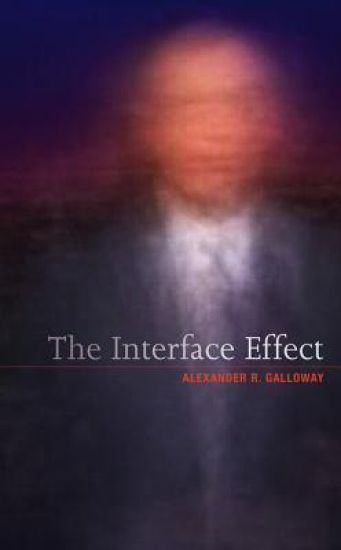
Interfaces are back, or perhaps they never left. The familiar Socratic conceit from the Phaedrus, of communication as the process of writing directly on the soul of the other, has returned to center stage in today's discussions of culture and media. Indeed Western thought has long construed media as a grand choice between two kinds of interfaces. Following the optimistic path, media seamlessly interface self and other in a transparent and immediate connection. But, following the pessimistic path, media are the obstacles to direct communion, disintegrating self and other into misunderstanding and contradiction. In other words, media interfaces are either clear or complicated, either beautiful or deceptive, either already known or endlessly interpretable. Recognizing the limits of either path, Galloway charts an alternative course by considering the interface as an autonomous zone of aesthetic activity, guided by its own logic and its own ends: the interface effect. Rather than praising user-friendly interfaces that work well, or castigating those that work poorly, this book considers the unworkable nature of all interfaces, from windows and doors to screens and keyboards. Considered allegorically, such thresholds do not so much tell the story of their own operations but beckon outward into the realm of social and political life, and in so doing ask a question to which the political interpretation of interfaces is the only coherent answer. Grounded in philosophy and cultural theory and driven by close readings of video games, software, television, painting, and other images, Galloway seeks to explain the logic of digital culture through an analysis of its most emblematic and ubiquitous manifestation – the interface.
The Interface Effect

The Interface Effect

Alexander R. Galloway

Polity Press
2012
nidottu
Interfaces are back, or perhaps they never left. The familiar Socratic conceit from the Phaedrus, of communication as the process of writing directly on the soul of the other, has returned to center stage in today's discussions of culture and media. Indeed Western thought has long construed media as a grand choice between two kinds of interfaces. Following the optimistic path, media seamlessly interface self and other in a transparent and immediate connection. But, following the pessimistic path, media are the obstacles to direct communion, disintegrating self and other into misunderstanding and contradiction. In other words, media interfaces are either clear or complicated, either beautiful or deceptive, either already known or endlessly interpretable. Recognizing the limits of either path, Galloway charts an alternative course by considering the interface as an autonomous zone of aesthetic activity, guided by its own logic and its own ends: the interface effect. Rather than praising user-friendly interfaces that work well, or castigating those that work poorly, this book considers the unworkable nature of all interfaces, from windows and doors to screens and keyboards. Considered allegorically, such thresholds do not so much tell the story of their own operations but beckon outward into the realm of social and political life, and in so doing ask a question to which the political interpretation of interfaces is the only coherent answer. Grounded in philosophy and cultural theory and driven by close readings of video games, software, television, painting, and other images, Galloway seeks to explain the logic of digital culture through an analysis of its most emblematic and ubiquitous manifestation – the interface.
Gilboa

Gilboa

Alexander R. Thomas

University Press of America
2005
nidottu
On the night of October 18, 1925, fire raged through the downtown area of the tiny Catskill Mountain Village of Gilboa, New York. Firefighters came from miles around to fight the inferno while tourists sat on the hilltops to watch the show. In the end, 18 buildings lay in smoldering ruins. Yet, this fire was not the end of Gilboa, merely a climax of events that were razing the community more slowly. Gilboa was in the way of the Schoharie Reservoir, one of the numerous artificial lakes collecting water for thirsty New Yorkers. In order for New York City to growing, the people of Gilboa would be forced to move, and the town would need to be burned to the ground. In Gilboa, Alexander Thomas traces the evolving dynamics between New York and its hinterland. Starting with the role of native inhabitants, their Dutch colonizers, and the role of British manor law, this historical investigation then explores the construction of the original reservoir, battles against a second reservoir in the 1970s, and battles over environmental regulations in the 1990s. Gilboa is a must read for those interested in urban and rural issues, social conflict and social movements, and anyone who enjoys New York-state and city-history.
Upstate Down

Upstate Down

Alexander R. Thomas; Polly J. Smith

University Press of America
2009
nidottu
Upstate New York is in a malaise. This husband and wife team of sociologists, Alexander Thomas and Polly Smith, wanted to know why. They take the reader on a tour of New York in order to diagnose the problems affecting the state and what can be done to address the issues. New York was built on the strengths of its strategic location and growing population to become the 'Empire State' during the nineteenth and early twentieth centuries. But a combination of unfortunate decisions and the creation of new technologies in which New York was no more competitive than other states translated into New York losing its dominant position in the world economy. The result has been several decades of deindustrialization and population loss. This book includes recommendations for ideas that can be further developed by the public.
In Gotham's Shadow

In Gotham's Shadow

Alexander R. Thomas

State University of New York Press
2003
pokkari
Examines the effects of globalization on three New York communities—Utica, Cooperstown, and Hartwick.In what may be the first explicitly comparative study of the effects of globalization on metropolitan and rural communities, In Gotham's Shadow examines how three central New York communities struggled over the last half century to survive in a global economy that seems to have forgotten them. Utica, formerly a city of one hundred thousand, experienced the same trends of suburbanization, deindustrialization, and urban renewal as nearly every American city, with the same mixed results. In Cooperstown and Hartwick, two small villages forty miles south of Utica, the same trends were at work, though with different outcomes. Hartwick may be seen as an example of how small towns have lost their core, while Cooperstown may be seen as an example of how a small town can survive by transforming itself into a tourist destination. Thomas provides extensive historical background mixed with newspaper excerpts and lively interviews that add a human dimension to the transformations these communities have experienced.