
Kirjahaku
Etsi kirjoja tekijän nimen, kirjan nimen tai ISBN:n perusteella.
1000 tulosta hakusanalla Alexandra Walker

Walderlebnispädagogik in Kindergarten und Grundschule. Konzept, Inhalte, Spielevorschläge
Alexandra Ludwig-Macke
Grin Publishing
2014
pokkari

Poetische Reise durch die Wälder Smålands
Alexandra Feurstein-Gratzer
BoD - Books on Demand
2020
sidottu

The Three Musketeers (with an Introduction by J. Walker McSpadden)
Alexandre Dumas
Digireads.com
2016
nidottu

The Works of Alexandre Dumas
Marguerite de Valois; J. Walker (INT) McSpadden
Kessinger Pub
2007
pokkari

This book makes the case for a critical turn in development thinking around universities and their contributions in making a more equal post-2015 world. It puts forward a normative approach based on human development and the capability approach, one which can gain a hearing from policy, scholarship, and practitioners dealing with practical issues of understanding policy, democratising research and knowledge, and fostering student learning - all key university functions.The book argues that such an approach can elucidate development debates drawing on local, national and international issues and examples to show why higher education matters for sustainable development goals both in educational and social terms. It advocates a new arena of engagement with universities as key sites of development and freedoms beyond human capital and challenges development omissions and gaps around university education. The book explores how the human development approach addresses the following core ideas: the meaning of well-being, the idea of agency, participation and democratic citizenship, how to address inequalities, the relation between local and global, and the idea of equitable partnerships.This book is addressed to researchers and postgraduate students in development studies, university education, the capability approach and human development community.
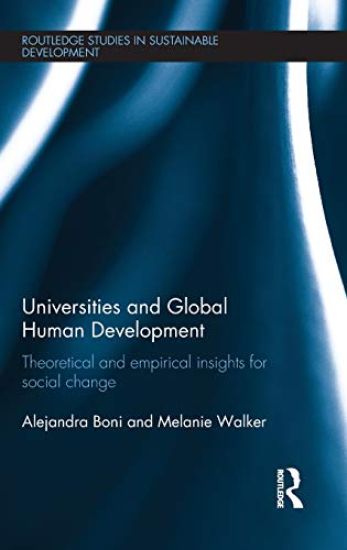
This book makes the case for a critical turn in development thinking around universities and their contributions in making a more equal post-2015 world. It puts forward a normative approach based on human development and the capability approach, one which can gain a hearing from policy, scholarship, and practitioners dealing with practical issues of understanding policy, democratising research and knowledge, and fostering student learning - all key university functions.The book argues that such an approach can elucidate development debates drawing on local, national and international issues and examples to show why higher education matters for sustainable development goals both in educational and social terms. It advocates a new arena of engagement with universities as key sites of development and freedoms beyond human capital and challenges development omissions and gaps around university education. The book explores how the human development approach addresses the following core ideas: the meaning of well-being, the idea of agency, participation and democratic citizenship, how to address inequalities, the relation between local and global, and the idea of equitable partnerships.This book is addressed to researchers and postgraduate students in development studies, university education, the capability approach and human development community.

Robert Alexander Walker
VDM Publishing House
2010
nidottu
Observera att förlaget som ger ut denna produkt baserar innehållet i sina produkter på fria källor som Wikipedia. Boken är med stor sannolikhet endast ett utdrag ur dessa informationskällor, alltså inte en vanlig bok i den bemärkelsen.

Traces the life and career of the popular film actress, describes her major roles, and recounts her work on behalf of UNICEF


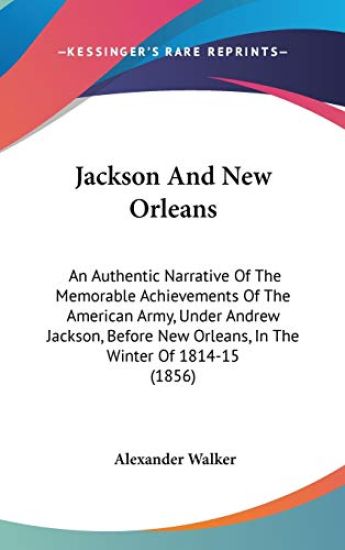
Jackson And New Orleans: An Authentic Narrative Of The Memorable Achievements Of The American Army, Under Andrew Jackson, Before New Orleans, In The W
Alexander Walker
KESSINGER PUBLISHING, LLC
2008
sidottu
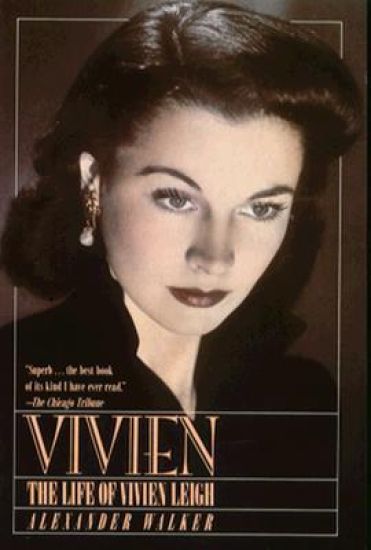
"My birth sign is Scorpio and they eat themselves up and burn themselves out. I swing between happiness and misery. I am part prude and part non-conformist. I say what I think and I don't pretend and I am prepared to accept the consequences of my actions."--Vivien Leigh When Vivien Leigh died in 1967, headlines around the world proclaimed, "Scarlett O'Hara is Dead!" Perhaps more than any of her contemporaries, Vivien Leigh became the very embodiment of the roles she made famous, from Gone With the Wind's immortal heroine to her harrowing portrayal of Blanche DuBois in A Streetcar Named Desire. Vivien's beauty, determination, and enormous charisma were her triumph, whether it was a matter of charming George Bernard Shaw in order to become his personal choice for the part of Scarlett--or winning the then-married Laurence Olivier as her husband. Her twenty-years' partnership with Olivier, both onstage and off, made them the "royal couple" of the theater, and garnered unparalleled critical and popular acclaim. But the achievement had its darker side, for Vivien became so immersed in her roles that she began to take on their characteristics in real life--often at enormous cost: playing Blanche DuBois actually "tipped her into madness"; and while filming Ship of Fools, she found herself hammering co-star Lee Marvin's face with very real--and painful--blows of her spiked heel. The public glamour of her fairy tale marriage to Olivier--so desperately important to them both--hid a private nightmare of violence and frequent infidelity. She was consumed by devastating battles against tuberculosis, to which she finally succumbed, and manic-depression, which she sought to keep at bay through a voracious sexual appetite, having affair after affair--sometimes serious, as with Peter Finch, sometimes with whichever taxi driver happened to bring her home. Based on previously unpublished interviews with her friends, family, and colleagues, as well as with Vivien Leigh herself, Vivien is an extraordinary picture of a unique and complex woman, as willful as she was beautiful, who knew what she wanted--whether the coveted role of Scarlett or that, equally coveted, of Lady Olivier--and got it. With its telling anecdotes, fascinating insights, and unforgettable glimpses into Hollywood's heyday, it is sure to stand as the definitive portrait of one of the most talented and tormented actresses of all time.

Disblair 1634-1884, Or An Old Oak Panel And Something Thereon
Alexander Walker
Wentworth Press
2019
pokkari
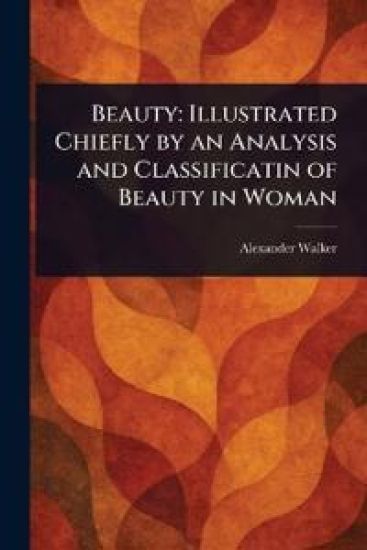

Woman Physiologically Considered As to Mind, Morals, Marriage, Matrimonial Slavery, Infidelity and Divorce
Alexander Walker
Hutson Street Press
2025
sidottu

Woman Physiologically Considered As to Mind, Morals, Marriage, Matrimonial Slavery, Infidelity and Divorce
Alexander Walker
Hutson Street Press
2025
pokkari