

Kirjahaku
Etsi kirjoja tekijän nimen, kirjan nimen tai ISBN:n perusteella.
1000 tulosta hakusanalla Alfred Polansky
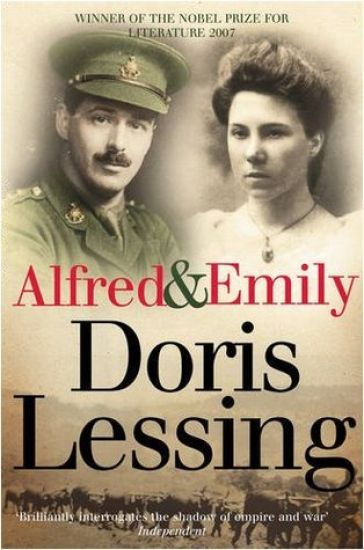
Doris Lessing’s first book after winning the Nobel Prize for Literature revisits her childhood in Southern Africa and the lives, both fictional and factual, that her parents led. ‘I think my father'’s rage at the trenches took me over, when I was very young, and has never left me. Do children feel their parents' emotions? Yes, we do, and it is a legacy I could have done without. What is the use of it? It is as if that old war is in my own memory, my own consciousness.’ In this extraordinary book, Doris Lessing explores the lives of her parents, both of them irrevocably damaged by the Great War. Her father wanted the simple life of an English farmer, but shrapnel almost killed him in the trenches, and thereafter he had to wear a wooden leg. Her mother Emily's great love was a doctor who drowned in the Channel, and she spent the war nursing the wounded in the Royal Free Hospital. In the first half of this book, Lessing imagines the lives her parents might have made for themselves had there been no war, a story that has them meeting at a village cricket match as children but leading separate lives. This is followed by a piercing examination of their lives as they actually came to be in the shadow of that war, their move to Rhodesia, a damaged couple hulking over Lessing’s childhood in a strange land. ‘Here I still am,’ says Doris Lessing, ‘trying to get out from under that monstrous legacy, trying to get free.’
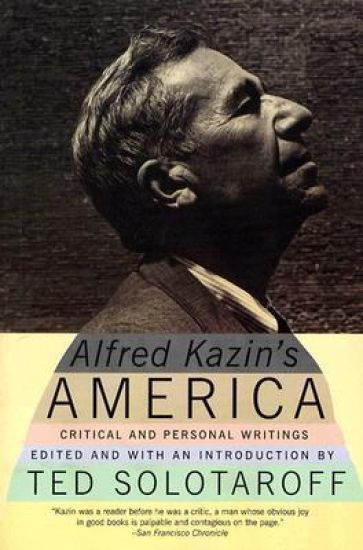
Alfred Kazin's America: Critical and Personal Writings
Alfred Kazin; Ted Solotaroff
HARPER PERENNIAL
2004
nidottu
"Alfred Kazin chose America as his subject, and his intellectual awakening is itself something of an American legend. . . . Ted Solotaroff's selection of his work is a fitting tribute, a book that will be a starting point for further reading, both of Kazin and of the native writers to whom he devoted himself" -- The New YorkerOver the course of 60 years, Alfred Kazin's writings confronted virtually all of our major imaginative writers, from Ralph Waldo Emerson and Emily Dickinson to James Wright and Joyce Carol Oates and including such unexpected figures as Abraham Lincoln, William James and Thorstein Veblen. It is fair to say that he succeeded Edmund Wilson as the secretary of American letters. At the same time this son of immigrant Russian Jews wrote out of the tensions of the outsider and the astute, outspoken leftist.Editor Ted Solotaroff has selected material from Kazin's three classic memoirs to accompany these critical writings. The excerpts include sharply etched portraits of the Brownsville, Greenwich Village, Upper West Side, and Cape Cod literary milieus and of such figures as Saul Bellow, Lionel Trilling, Edmund Wilson, and Hannah Arendt. Alfred Kazin's America provides an ongoing example of the spiritual freedom, individualism, and democratic contentiousness that he regarded as his heritage and endeavored to pass on.
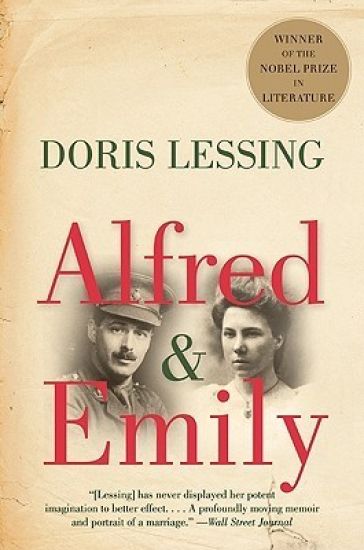
Alfred and Emily is an intimate and revealing book by Doris Lessing, the winner of the 2007 Nobel Prize in Literature and author of The Grass is Singing and The Golden Notebook, that explores the lives of her parents, each irrevocably damaged by the Great War.In this profoundly moving book, Nobel Laureate Doris Lessing explores the lives of her parents, each irrevocably damaged by the Great War. In the fictional first half of Alfred and Emily, she imagines the happier lives her parents might have made for themselves had there been no war. This is followed by a piercing examination of their relationship as it actually was in the shadow of the devastating global conflict."Here I still am," says Lessing, "trying to get out from under that monstrous legacy, trying to get free." Triumphantly, with Alfred and Emily, she has done just that.

A Lifetime Burning in Every Moment: From the Journals of Alfred Kazin
Alfred Kazin
HARPER PERENNIAL
1997
nidottu
From the journals of one of our most distinguished critics comes an extraordinary panorama of the intellectual, social and political culture of the last half century. Written with the vividness and power of first-rate fiction, it brings to life the great artists and thinkers who shaped the times, including Saul Bellow, Bernard Malamud and Hannah Arendt, and shares Kazin's insights on politics, literature, Jewish life after the Holocaust and American society. It is an immensely rich and resonant memoir from an observer whose eloquence can imbue each moment lived with a lifetime of thought and passion.
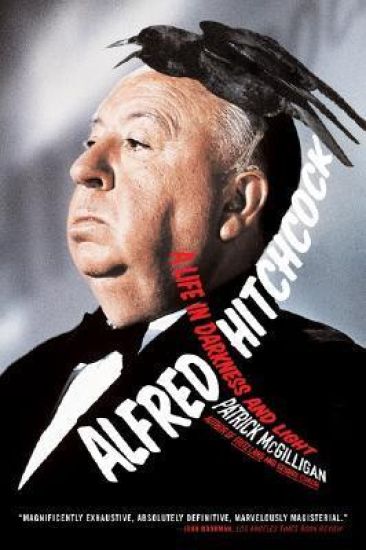
A portrait of the iconic filmmaker traces his six-decade career and numerous works, noting his role in the establishment of industry standards and the characteristics most associated with his persona while offering insight into his private, professional, and family life. Reprint. 25,000 first printing.

So how did this fearful figure become the one of the most respected film directors of the twentieth century?As an adult, Hitch rigorously controlled the press's portrait of himself, drawing certain carefully selected childhood anecdotes into full focus and blurring all others out.

Asser's Life of King Alfred, written in 893, is a revealing account of one of the greatest of medieval kings. Composed by a monk of St David's in Wales who became Bishop of Sherborne in Alfred's service and worked with him in his efforts to revive religion and learning in his kingdom, this life is among the earliest surviving royal biographies. It is an admiring account of King Alfred's life, written in absorbing detail - chronicling his battles against Viking invaders and his struggle to increase the strength and knowledge of his people, and to unite his people at a time of conflict, uncertainty and war.
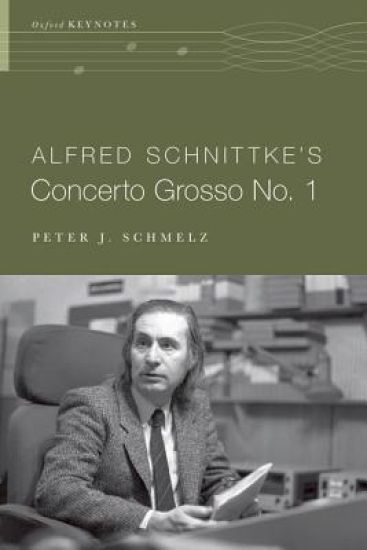
Concerto Grosso no. 1 is one of Alfred Schnittke's best-known and most compelling works, sounding the surface of late Soviet life while resonating with contemporary compositional currents around the world such as postmodernism. It marked a decisive point in Schnittke's development of the approach he called polystylism, which aimed to contain in a single composition the wide range of contemporary musical styles, including "jazz, pop, rock, or serial music." Thanks to it and his other similar compositions, Schnittke became one of the most-performed and most-recorded living composers at the end of the twentieth century. Peter J. Schmelz's Alfred Schnittke's Concerto Grosso no. 1 represents the first accessible and comprehensive study of this composition. The novel structure of the book engages with the piece conceptually, historically, musically, and phenomenologically, with the six movements of the composition framing the six chapters. Augmenting and complicating the insights of existing English, Russian, and German publications on the Concerto Grosso no. 1, the book adds new information from underused primary sources, including Schnittke's unpublished correspondence and his many published interviews. It engages further with his sketches for the piece, and with contemporary Soviet musical criticism, resulting in a more objective, historical account of this rich, multifaceted composition, its influences, and its impact on music making in the USSR and worldwide.
Concerto Grosso no. 1 is one of Alfred Schnittke's best-known and most compelling works, sounding the surface of late Soviet life while resonating with contemporary compositional currents around the world such as postmodernism. It marked a decisive point in Schnittke's development of the approach he called polystylism, which aimed to contain in a single composition the wide range of contemporary musical styles, including "jazz, pop, rock, or serial music." Thanks to it and his other similar compositions, Schnittke became one of the most-performed and most-recorded living composers at the end of the twentieth century. Peter J. Schmelz's Alfred Schnittke's Concerto Grosso no. 1 represents the first accessible and comprehensive study of this composition. The novel structure of the book engages with the piece conceptually, historically, musically, and phenomenologically, with the six movements of the composition framing the six chapters. Augmenting and complicating the insights of existing English, Russian, and German publications on the Concerto Grosso no. 1, the book adds new information from underused primary sources, including Schnittke's unpublished correspondence and his many published interviews. It engages further with his sketches for the piece, and with contemporary Soviet musical criticism, resulting in a more objective, historical account of this rich, multifaceted composition, its influences, and its impact on music making in the USSR and worldwide.

Alfred Hitchcock's Psycho
Oxford University Press Inc
2004
sidottu
Alfred Hitchcock's Psycho: A Casebook collects some of the finest essays on this groundbreaking film--a film that is ideal for teaching the language of cinema and the ways in which strong filmmakers can break Hollywood conventions. Psycho is a film that can be used to present the structures of composition and cutting, narrative and genre building, and point of view. The film is also a highpoint of the horror genre and an instigator of all the slasher films to come in its wake. The essays in the casebook cover all of these elements and more. They also serve another purpose: presented chronologically, they represent the changes in the methodologies of film criticism, from the first journalist reviews and early auteurist approaches, through current psychoanalytic and gender criticism. Other selections include an analysis of Bernard Hermann's score and its close relationship to Hitchcock's visual construction; the famous Hitchcock interview by François Truffaut; and an essay by Robert Kolker that, through the use of stills taken directly from the film, closely reads its extraordinary cinematic structure. Contributors include Robert Kolker, Stephen Rebello, Bosley Crowther, Jean Douchet, Robin Wood, Raymond Durgnat, Royal S. Brown, George Toles, Robert Samuels, and Linda Williams.

Alfred Hitchcock's Psycho
Oxford University Press Inc
2004
nidottu
Alfred Hitchcock's Psycho: A Casebook collects some of the finest essays on this groundbreaking film--a film that is ideal for teaching the language of cinema and the ways in which strong filmmakers can break Hollywood conventions. Psycho is a film that can be used to present the structures of composition and cutting, narrative and genre building, and point of view. The film is also a highpoint of the horror genre and an instigator of all the slasher films to come in its wake. The essays in the casebook cover all of these elements and more. They also serve another purpose: presented chronologically, they represent the changes in the methodologies of film criticism, from the first journalist reviews and early auteurist approaches, through current psychoanalytic and gender criticism. Other selections include an analysis of Bernard Hermann's score and its close relationship to Hitchcock's visual construction; the famous Hitchcock interview by François Truffaut; and an essay by Robert Kolker that, through the use of stills taken directly from the film, closely reads its extraordinary cinematic structure. Contributors include Robert Kolker, Stephen Rebello, Bosley Crowther, Jean Douchet, Robin Wood, Raymond Durgnat, Royal S. Brown, George Toles, Robert Samuels, and Linda Williams
The Letters of Alfred Lord Tennyson: Volume I: 1821-1850
Alfred Tennyson
Oxford University Press
1981
sidottu
The Letters of Alfred Lord Tennyson: Volume II: 1851-1870
Alfred Tennyson
Oxford University Press
1987
sidottu
The letters in this volume describe the most remarkable years in the life of one of the most eminent Victorians - the years during which Tennyson published In Memoriam , was married, and became Poet Laureate. His own letters are supported and illuminated by contemporary reviews and descriptions of Tennyson as public figure and private man. A valuable personal insight into the poet whose writings reflect so accurately the exact pitch of his age.
The Letters of Alfred Lord Tennyson: Volume III: 1871-1892
Alfred Tennyson
Clarendon Press
1990
sidottu
This third and final volume of The Letters of Alfred Lord Tennyson, the first collected edition, is notable for the light it throws on Tennyson's efforts as a dramatist and on his interactions with the leading theatre managers, actresses, and actors of the day, especially Henry Irving. The letters reveal his relations with many fellow-authors and literary men, both British and American. An important thread in the volume is his close association with Gladstone; and an extensive correspondence with the Australian, Sir Henry Parkes, reflects his continuing interest in the Empire. The volume ends with his death in 1892. To complete the edition a comprehensive index has been prepared, covering all three volumes. Previous volumes have been warmly praised by critics:
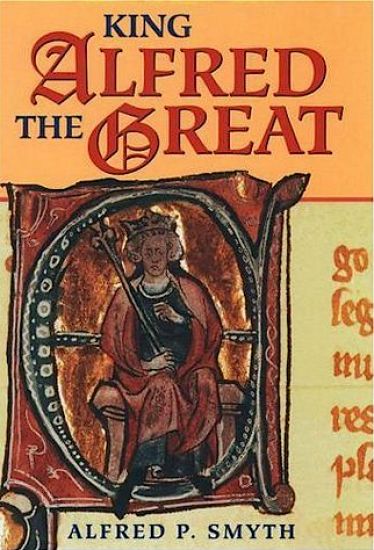
Warrior, law-giver, and scholar, Alfred the Great was an extraordinarily gifted and highly successful king, pushing back the Vikings to preserve what is now thought of as the heart of England. In this, the first major study of King Alfred since Plummer's biography of 1902, the career of King Alfred is followed chronologically and examined in depth. The author provides a detailed examination of the much-disputed medieval biography of King Alfred, attributed to the king's tutor, Asser. Professor Smyth argues that Asser's Life is a medieval forgery; a revelation with profound implications for our understanding of the whole of Anglo-Saxon history. The book also contains major studies on the writings of this gifted king, on the controversial charters of his reign, and on the origins of the Anglo-Saxon chronicle. Professor Smyth shows the Chronicle to have been much more closely connected with the court of King Alfred than has hitherto been allowed, and suggests a new date for the completion of the earliest Alfredian section of the Chronicle. The author also provides a fundamental reassessment of Alfred's military and political achievement in his wars against the Vikings, and compares the experiences of the English king with those of his Frankish contemporaries in their struggle with the same enemy on the other side of the English Channel. Professor Smyth's portrait of Alfred rejects the image of a neurotic and invalid king who supposedly remained a pious illiterate till he was almost 40. Instead, we are shown a man of remarkable energy and intelligence who took necessary steps to defend his people from the Norsemen. We are shown too, a king who had been a scholar all his life and who used his great knowledge to bolster the powers of his own kingship, and to overcome his enemies. Jacket illustration: Initial depicting King Alfred taken from the British Library Manuscript Cotton Claudius D.ii, f.8. This sumptuous compilation contains a collection of Anglo-Saxon, Norman, and Angevin law- codes (Liber legum antiquorum regum) which can be precisely dated to 1321. The inclusion of a Latin translation of the Laws of King Alfred indicates the esteem in which Alfred was held as a law-giver in the high Middle Ages.

This volume brings together the letters of the great Victorian naturalist Alfred Russel Wallace (1823-1913) during his famous travels of 1854-62 in the Malay Archipelago (now Singapore, Malaysia, and Indonesia), which led him to come independently to the same conclusion as Charles Darwin: that evolution occurs through natural selection. Beautifully written, they are filled with lavish descriptions of the remote regions he explored, the peoples, and fascinating details of the many new species of mammals, birds, and insects he discovered during his time there. John van Wyhe and Kees Rookmaaker present new transcriptions of each of the letters, including recently discovered letters that shed light on the voyage and on questions such as Wallace's reluctance to publish on evolution, and why he famously chose to write to Darwin rather than to send his work to a journal directly. A revised account of Wallace's itinerary based on new research by the editors forms part of an introduction that sets the context of the voyage, and the volume includes full notes to all letters. Together the letters form a remarkable and vivid document of one of the most important journeys of the 19th century by a great Victorian naturalist.
Alfred Russel Wallace
Oxford University Press
2015
nidottu
This volume brings together the letters of the great Victorian naturalist Alfred Russel Wallace (1823-1913) during his famous travels of 1854-62 in the Malay Archipelago (now Singapore, Malaysia, and Indonesia). it was these travels which led him to come independently to the same conclusion as Charles Darwin: that evolution occurs through natural selection. Beautifully written, the letters are filled with lavish descriptions of the remote regions he explored, the peoples, and fascinating details of the many new species of mammals, birds, and insects he discovered during his time there. John van Wyhe and Kees Rookmaaker present new transcriptions of each of the letters, including recently discovered letters that shed light on the voyage and on questions such as Wallace's reluctance to publish on evolution, and why he famously chose to write to Darwin rather than to send his work to a journal directly. A revised account of Wallace's itinerary based on new research by the editors forms part of an introduction that sets the context of the voyage, and the volume includes full notes to all letters. Together the letters form a remarkable and vivid document of one of the most important journeys of the 19th century by a great Victorian naturalist.
Filled with drama and action, here is the story of the ninth-century life and times of Alfred—warrior, conqueror, lawmaker, scholar, and the only king whom England has ever called "The Great." Based on up-to-date information on ninth-century history, geography, philosophy, literature, and social life, it vividly presents exciting views of Alfred in every stage of his long career and leaves the reader with a sharply-etched picture of the world of the Middle Ages.
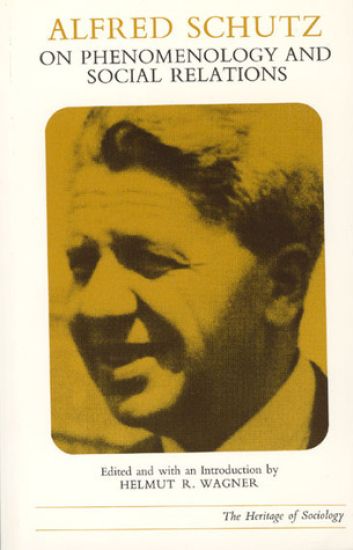
Alfred Schutz on Phenomenology and Social Relations
Alfred Schutz
University of Chicago Press
1999
nidottu
Alfred Schutz (1899-1959) stood simultaneously in the camps of philosophy and sociology, and his writings constitute the framework of a sociology based on phenomenological considerations. Schutz's basic contributions issue from a critical synthesis of Husserl's phenomenology and Weber's sociology of understanding. He proceeds on the basis of the irreducible souce of all human knowledge in the immediate experiences of the conscious, alert, and active individual. In this volume Helmut Wagner has selected and skillfully correlated various passages both from Schutz's book The Phenomenology of the Social World and from his scattered papers and essays.