
Kirjahaku
Etsi kirjoja tekijän nimen, kirjan nimen tai ISBN:n perusteella.
1000 tulosta hakusanalla Alice Adams
The patient, an old-fashioned man, thought the nurse made a mistake in keeping both of the windows open, and her sprightly disregard of his protests added something to his hatred of her. Every evening he told her that anybody with ordinary gumption ought to realize that night air was bad for the human frame. "The human frame won't stand everything, Miss Perry," he warned her, resentfully. "Even a child, if it had just ordinary gumption, ought to know enough not to let the night air blow on sick people yes, nor well people, either 'Keep out of the night air, no matter how well you feel.' That's what my mother used to tell me when I was a boy. 'Keep out of the night air, Virgil, ' she'd say. 'Keep out of the night air.'" "I expect probably her mother told her the same thing," the nurse suggested. "Of course she did. My grandmother--" "Oh, I guess your GRANDmother thought so, Mr. Adams That was when all this flat central country was swampish and hadn't been drained off yet. I guess the truth must have been the swamp mosquitoes bit people and gave 'em malaria, especially before they began to put screens in their windows. Well, we got screens in these windows, and no mosquitoes are goin' to bite us; so just you be a good boy and rest your mind and go to sleep like you need to."
Excerpt from Alice Adams: Illustrated by Arthur William Brown In his youth Adams might have been less resentful of sounds such as these when they interfered with his night's sleep: even during an illness he might have taken some pride in them as proof of his citizenship in a live town; but at fifty - five he merely hated them because they kept him awake. They pressed on his nerves, as he put it; and so did almost everything else, for that matter. He heard the milk-wagon drive into the cross-street beneath his windows and stop at each house. The milk man carried his jars round to the back porch, while the horse moved slowly ahead to the gate of the next customer and waited there. He's gone into Adams thought, following this progress. I hope it'll sour on 'em before breakfast. Delivered the Andersons'. Now he's getting out ours. Listen to the darn brute What's he care who wants to sleep His complaint was of the horse, who casually shifted weight with a clink of steel shoes on the worn brick pavement of the street, and then heartily shook himself in his harness, perhaps to dislodge a fly far ahead of its season. Light had just filmed the windows; and with that the first sparrow woke, chirped instantly, and roused neighbours in the trees of the small yard, including a loud-voiced robin. Vociferations began irregularly, but were soon unanimous. About the Publisher Forgotten Books publishes hundreds of thousands of rare and classic books. Find more at www.forgottenbooks.com This book is a reproduction of an important historical work. Forgotten Books uses state-of-the-art technology to digitally reconstruct the work, preserving the original format whilst repairing imperfections present in the aged copy. In rare cases, an imperfection in the original, such as a blemish or missing page, may be replicated in our edition. We do, however, repair the vast majority of imperfections successfully; any imperfections that remain are intentionally left to preserve the state of such historical works.
The novel begins with Virgil Adams confined to bed with an unnamed illness. There is tension between Virgil and his wife over how he should go about recovering, and she pressures him not to return to work for J. A. Lamb once he is well. Alice, their daughter, attempts to keep peace in the family before walking to her friend Mildred Palmer's house to see what Mildred will wear to a dance that evening.
The winner of the 1922 Pulitzer Prize in literature and the subject of several well-received film adaptations, Alice Adams is regarded as one of Booth Tarkington's most accomplished novels. The tale follows the exploits of the plucky young protagonist, who disregards her family's low social standing and pursues love with the well-heeled young man of her dreams.
The novel begins with Virgil Adams confined to bed with an unnamed illness. There is tension between Virgil and his wife over how he should go about recovering, and she pressures him not to return to work for J. A. Lamb once he is well. Alice, their daughter, attempts to keep peace in the family (with mixed results) before walking to her friend Mildred Palmer's house to see what Mildred will wear to a dance that evening.
Alice Adams is a 1921 novel by Booth Tarkington that received the 1922 Pulitzer Prize for the Novel. It was adapted as a film in 1923 by Rowland V. Lee and, more famously, in 1935 by George Stevens. The narrative centers on the character of a young woman (the eponymous Alice Adams) who aspires to climb the social ladder and win the affections of a wealthy young man named Arthur Russell. The story is set in a lower-middle-class household in an unnamed town in the Midwest shortly after World War I.



Reproduction of the original. The publishing house Megali specialises in reproducing historical works in large print to make reading easier for people with impaired vision.

Reproduction of the original. The publishing house Megali specialises in reproducing historical works in large print to make reading easier for people with impaired vision.



Alice Adams
Antigonos Verlag
2025
sidottu
Alice Adams: Original and Unabridged
Booth Tarkington
Createspace Independent Publishing Platform
2014
nidottu
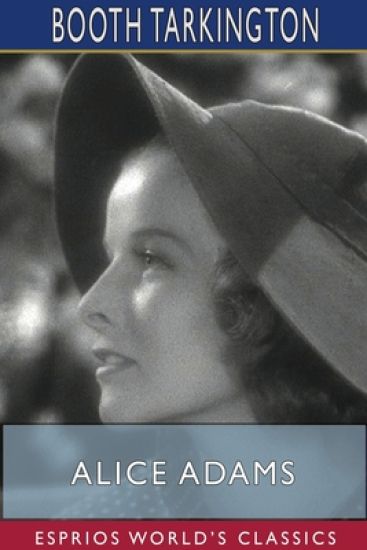
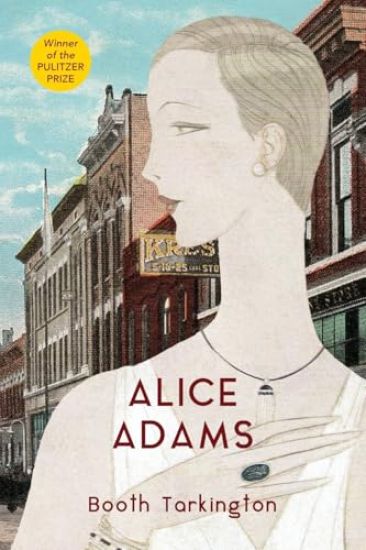
In post-World War I America, Alice Adams, a small-town girl with big ambitions, welcomes the attention of Arthur Russell, a handsome, eligible bachelor from the upper echelons of society. Alice and her family embark on a delicate game of pretense to conceal their desperate financial position and lower social standing. As she oscillates between fantasy and reality, Tarkington reveals Alice's inner turmoil and the shame, longing, and desperation that drive her decisions. Alice finds herself increasingly at odds with both her origins and the life she covets. With sharp psychological insight, Alice Adams tells a story of self-discovery, resilience, and, ultimately, a young woman's graceful embrace of her autonomy within the bounds of a socially constricted Midwestern community. Alice Adams, Tarkington's 1922 Pulitzer-Prize winning novel, was twice adapted for film; the 1935 film featured Katharine Hepburn in an Oscar-nominated performance as the indomitable Alice Adams. This Warbler Classics edition includes a detailed biographical timeline.